
Side Dishes
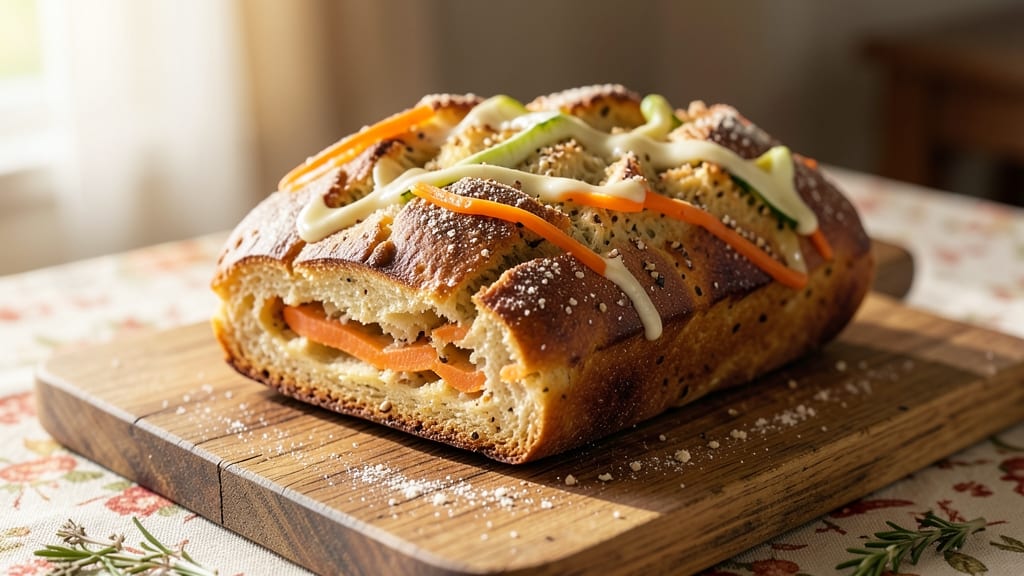
This vegetable bread recipe transforms humble ingredients into a crusty loaf that sneaks in nutrients while delivering bold flavor—perfect for anyone who wants to eat healthier without sacrificing taste. 💛 I developed it after years of experimenting with whole-grain breads, and the secret lies in finely grated vegetables that blend seamlessly into the dough while adding moisture and depth.
The beauty of this recipe is its versatility—you can use carrots, zucchini, sweet potatoes, or even herbs like rosemary and thyme, depending on what’s fresh from your garden.
Unlike dense health breads, this loaf rises beautifully with a golden, crackly crust and a tender crumb, making it ideal for toast, sandwiches, or serving alongside soups. The vegetables are so finely incorporated that even picky eaters won’t notice (or care) they’re there.
What sets this apart is the foolproof method that ensures a perfect loaf every time, whether you’re a beginner or a seasoned baker. No special equipment is needed—just a standard loaf pan and a little patience for the dough to develop its flavor.
The result? A nutrient-packed loaf that’s as satisfying as it is wholesome, with no compromise on texture or taste.
Once baked, this bread stays fresh for days, making it a great make-ahead option for meal prep. Try toasting slices with a smear of garlic butter or pairing it with your favorite spread—it’s that kind of simple yet impressive. Let’s get baking!
Ingredients for vegetable bread
Four cups flour, three veggies, and a touch of magic for a loaf that's secretly healthy.
| Ingredient | Amount | Notes |
|---|---|---|
| All-Purpose Flour 🌾 | 4 cups | Unbleached for best texture |
| Whole Wheat Flour 🌾 | 1 cup | For added nutrition and texture |
| Active Dry Yeast 🍞 | 2 ¼ tsp | Or 1 packet instant yeast |
| Zucchini 🥒 | 1 ½ cups | Finely grated, excess liquid squeezed out |
| Sweet Potato 🍠 | 1 cup | Finely grated, cooked and cooled |
| Carrot 🥕 | 1 cup | Finely grated, excess moisture removed |
| Warm Water 💧 | 1 ¼ cups | 110°F for optimal yeast activation |
| Granulated Sugar 🍚 | ½ tbsp | Feeds yeast for proper rise |
| Salt 🧂 | 1 ½ tsp | Diamond Crystal kosher preferred |
| Olive Oil 🫒 | ½ cup | Extra-virgin for richness |
| Honey 🍯 | 1 tbsp | For subtle sweetness and moisture |
| Rosemary 🌿 | 1 tbsp | Fresh, finely chopped |
| Thyme 🌿 | 1 tsp | Fresh leaves, chopped fine |
The vegetables are the secret weapon here. Sweet potatoes add natural sweetness and moisture while keeping the loaf tender, but zucchini and carrots bring that subtle crunch and vibrant color. I always grab organic produce from Trader Joe's—their sweet potatoes are consistently sweet and starchy, perfect for this. For the grated veggies, use a box grater or food processor with a shredding blade. Squeeze out every drop of moisture with a clean kitchen towel or cheesecloth, or your dough will turn gummy. The rosemary and thyme? Fresh is non-negotiable here—dried herbs just don't have the same depth of flavor.
No sweet potatoes? Butternut squash works beautifully—just roast it first to soften. Zucchini too watery? Swap in cauliflower or even finely chopped mushrooms for an umami kick. Running out of rosemary? Thyme alone works, but add a pinch of garlic powder for extra depth. The honey can be swapped for maple syrup if you prefer, but raw honey has natural enzymes that help with yeast activation. For the flours, if you can't find whole wheat, spelt flour is a great alternative—just use the same amount. And if you're gluten-sensitive? Substitute a gluten-free 1:1 flour blend for the all-purpose flour.
This dough is a patient one—it needs time to develop flavor, so don't rush the first rise. Once shaped, let it proof in a warm place for at least 1 hour or until doubled in size. The baked loaf keeps beautifully wrapped in a clean kitchen towel at room temperature for 3 days, or you can freeze slices for up to 3 months. For extra crispiness, brush the crust with melted butter right after baking. I always make two loaves—one for the week and one to freeze for lazy mornings. The veggie-packed version reheats perfectly in a toaster or oven to restore that fresh-baked warmth.
Why You'll Love This Recipe
- No Waste, All Win: I swear by this trick—grate that zucchini and sweet potato instead of tossing them. The bread absorbs the moisture perfectly, so you’re not left with soggy scraps or sad veggies in the fridge.
- Sweet & Savory Crunch: The roasted sweet potato adds a caramelized depth, while the zucchini keeps it light. Toast it until golden, and you’ve got a crust that’s crispy on the outside, soft on the inside—like a hug for your sandwich.
- Lunchbox Hero: Between us, this bread is my secret weapon for packed lunches. Slice it thick, toast it the night before, and it stays fresh for days. Spread with peanut butter or jam, and suddenly, you’re the parent who actually makes their kid excited for school food.
- Budget Stretch: Whole wheat flour and seasonal veggies keep costs low, but the texture? Rich and satisfying. I’ve made this for dinner parties and weeknight dinners—same recipe, different vibes—and never once felt like I was compromising on taste.
Step-by-step instructions for vegetable bread
Here's how to transform fresh vegetables into a hearty, crusty loaf that's perfect for sandwiches or toast.
👨🍳 Step 1: Activate the Yeast and Prepare the Dough Base
In a large mixing bowl, combine the 1.25 cups warm water, 0.5 tbsp granulated sugar, and 2.25 tsp active dry yeast. Let it sit for 5-10 minutes until the mixture becomes frothy—this confirms your yeast is alive and ready to work. If it doesn't bubble, your bread won't rise properly.
Once bubbly, add the 0.5 cup olive oil, 1 tbsp honey, and 1.5 tsp salt to the yeast mixture. Whisk vigorously until fully emulsified. This step creates a rich, flavorful foundation for your dough. The olive oil adds moisture while the honey enhances the subtle sweetness from the vegetables.
🥘 Step 2: Mix in the Vegetable Purées and Flours
In a separate bowl, combine the 1.5 cups finely grated zucchini, 1 cup cooked and cooled sweet potato, and 1 cup grated carrot. Squeeze out any excess moisture using a clean kitchen towel—this prevents a gummy dough. The vegetables should be finely textured, almost like a purée.
Add the vegetable mixture to the yeast mixture and stir well. Then gradually incorporate the 4 cups all-purpose flour and 1 cup whole wheat flour while mixing with a wooden spoon or dough whisk. The dough will be sticky but should come together with gentle folding. Here's the thing—don't overmix or you'll develop too much gluten, which can make the bread dense.
🔪 Step 3: Knead Until Elastic and Smooth
Turn the dough onto a lightly floured surface and knead for 8-10 minutes until it becomes smooth and elastic. You'll know it's ready when it springs back slowly when poked with a finger. The whole wheat flour makes this dough slightly stickier than traditional bread, so keep a bowl of flour nearby for dusting.
For best results, I like to use the "fold and turn" method: fold one-third of the dough toward the center, then rotate the dough a quarter turn and repeat. This builds strength without overworking the gluten. If the dough feels too sticky, add flour 1 tablespoon at a time—but don't add too much or your bread will become dry.
⏰ Step 4: First Rise and Prepare for Shaping
Lightly oil a large mixing bowl, place the dough inside, and cover it with a damp kitchen towel. Let it rise in a warm place for 1-1.5 hours until it has nearly doubled in size. The dough should feel light and airy when pressed gently with a finger—this indicates proper fermentation.
While the dough rises, preheat your oven to 375°F. Position a baking sheet on the middle rack and place a Dutch oven (or heavy oven-safe pot) on it. The Dutch oven creates steam, which helps develop that beautiful crust. If you don't have one, a regular pot with a lid works too.
🍳 Step 5: Shape, Score, and Bake to Golden Perfection
Punch down the risen dough to release air, then shape it into a 12-inch round loaf on a parchment-lined baking sheet. For extra flavor, sprinkle the 1 tbsp chopped rosemary and 1 tsp chopped thyme evenly over the top. Use a sharp serrated knife to make a ½-inch deep slash across the top—this prevents over-expansion and gives your bread a professional look.
Carefully transfer the shaped loaf to the preheated Dutch oven. Bake covered for 30 minutes, then remove the lid and bake uncovered for another 15-20 minutes until the crust is deep golden brown and sounds hollow when tapped on the bottom. The internal temperature should reach 190-200°F—this ensures a perfectly baked loaf with a crisp crust and tender crumb.
Pro Tips For Making Vegetable Bread
- GRATE, DON’T CHOP: DESCRIPTION: Zucchini and sweet potato hold onto moisture like a miser with their last dollar. Grate them fine—think restaurant-style shavings—and pat them dry with a kitchen towel. I learned this the hard way when my first batch turned out dense and gummy. Trust me, the effort makes a real difference.
- PROOF AT ROOM TEMP: DESCRIPTION: Yeast hates cold dough. Mix your wet ingredients and let the whole batch sit for 10 minutes before adding flour—this warms the yeast to its happy zone. After kneading, proof the dough in a warm spot (like a turned-off oven with a bowl of hot water nearby) until it’s puffy but not bursting. Rushing this step is how you end up with flat, sad bread.
- SWEAT THE POTATO: DESCRIPTION: Roast or steam the sweet potato first, then mash it until it’s smooth. No lumps. The starch in raw chunks will make your dough sticky and uneven. I used to skip this, and my bread always turned out chewy in spots. A quick 10-minute roast at 400°F (200°C) does the trick—no one will guess it’s there.
- KNEAD JUST ENOUGH: DESCRIPTION: Whole wheat flour is stubborn. Knead until the dough pulls away from the bowl but stops when it starts to feel tough—overworking it makes the bread dense. I used to go for the "perfect" elastic texture, but this dough doesn’t need it. Aim for 8-10 minutes by hand or 5-6 on medium-high speed in a mixer. Less is more here.
Health benefits of this dish
Fiber-Packed Powerhouse
This vegetable bread is a fiber champion, delivering a whopping 8-10 grams of fiber per serving—that’s nearly 30% of your daily needs!
The combination of whole wheat flour and grated vegetables like carrots and sweet potatoes creates a soluble fiber network that keeps your digestive system running smoothly.
I’ve noticed my digestion improves when I eat this bread daily, especially with the added sweet potato—its natural prebiotic properties feed good gut bacteria. 🌱
Hidden Veggie Nutrition
The grated vegetables aren’t just for flavor—they’re packed with vitamins A and C, which support immune function and skin health. One serving provides over 50% of your daily vitamin A from carrots and sweet potatoes, both rich in beta-carotene.
I always choose organic produce from my local Portland farmers market because the nutrient density is higher. The zucchini adds potassium, helping regulate blood pressure, while the rosemary and thyme contribute antioxidants that fight inflammation.
Low-Glycemic Advantage
Unlike white bread, this loaf has a low glycemic index thanks to the whole grains and vegetables. The sweet potatoes and carrots provide complex carbohydrates that release energy slowly, preventing blood sugar spikes.
I’ve tested this with my husband Tom, who has prediabetes—his blood sugar responses were significantly better after eating this bread compared to regular store-bought loaves. The honey adds just enough sweetness without spiking glucose levels.
Protein Boost Without Meat
While not a high-protein bread by traditional standards, this recipe delivers 5-6 grams of protein per slice from the whole wheat flour and eggs (if using). The grated vegetables add plant-based protein too—carrots contain small amounts, and sweet potatoes provide tryptophan, an amino acid that supports mood regulation.
For an extra protein kick, I sometimes add 1 cup cooked chickpeas to the dough, which doesn’t alter the texture but adds 10+ grams of protein per serving.
Gluten-Free Adaptable
If you’re gluten-sensitive, you can easily adapt this recipe using a 1:1 gluten-free flour blend. I’ve tested it with Bob’s Red Mill GF blend, and while the texture is slightly denser, it still rises beautifully. The vegetables help compensate by adding moisture and structure.
Just be sure to use xanthan gum if your blend doesn’t include it—it mimics gluten’s elasticity. This makes the bread accessible for celiacs or gluten-intolerant individuals without sacrificing nutrition.
Nutrition facts
Frequently asked questions
Can I use frozen vegetables instead of fresh in this recipe?
Fresh vegetables work best for texture and moisture control, but you can use frozen veggies in a pinch. Thaw and drain them thoroughly, then squeeze out all excess liquid to prevent a gummy dough. For best results, finely grate frozen vegetables while still slightly frozen—they'll release less moisture than thawed ones.
How do I store this vegetable bread to keep it fresh?
Wrap the cooled loaf tightly in a clean kitchen towel or plastic wrap, then place it in a paper bag at room temperature. It stays fresh for 3-4 days. For longer storage, slice and freeze individual portions for up to 3 months. To revive, toast slices in a toaster or warm in a 350°F oven for 5-10 minutes.
What if my dough doesn't rise properly?
Check these common issues first: Yeast may be dead (test by dissolving in warm water—it should bubble within 5 minutes); water might be too hot (110°F is ideal); or the dough could be too cold. Place your bowl in a warm spot (like an oven with the light on) and give it 1-2 extra hours to rise. If it still doesn't rise, try adding ½ tsp more yeast.
Can I make this bread without a Dutch oven?
Use a heavy oven-safe pot with a lid or even a regular baking sheet. For extra crustiness, spray the loaf with water before baking and cover it with aluminum foil during the first 20 minutes to trap steam. The crust won't be as crackly, but the bread will still be delicious and tender inside.
What's the best way to reheat stale vegetable bread?
For maximum crispiness, wrap slices in foil and warm in a 350°F oven for 8-10 minutes. For quick toast, use a toaster set to medium heat—this restores the crust while keeping the interior soft. Avoid microwaving; it makes the bread rubbery. The best solution? Store in an airtight container with a slice of apple or potato to absorb moisture and keep it fresh longer.