
Side Dishes
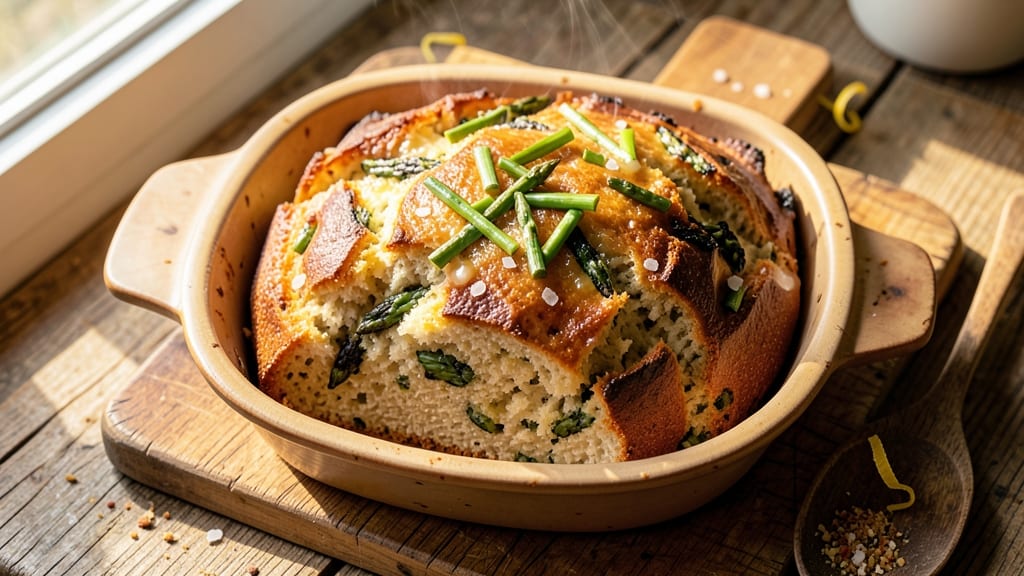
This asparagus bread recipe transforms spring’s brightest vegetable into a fragrant, herb-infused loaf that’s perfect for sandwiches or serving alongside soups. The secret lies in blending finely chopped asparagus into the dough—no one will guess it’s there until they taste the subtle, earthy depth.
I developed this recipe after realizing how much flavor asparagus adds when cooked down, and it’s become a staple in my kitchen for its versatility and hidden nutrition boost.
The dough comes together with simple pantry staples—flour, yeast, and a touch of garlic—while the asparagus (fresh or lightly steamed) infuses the bread with a delicate, grassy note that pairs beautifully with herbs like rosemary or thyme.
Baking yields a crust with just the right crunch and a tender crumb that holds up to slicing, making it ideal for meal prep or gifting. The process is straightforward, with no special equipment needed beyond a loaf pan and a little patience for the dough to rise.
What you’ll end up with is a loaf that’s aromatic enough to draw curious glances at the table, yet approachable enough for everyday meals.
The asparagus adds a subtle sweetness when baked, balancing the bread’s savory notes, while optional toppings like garlic butter or grated parmesan elevate it to special-occasion status. It’s the kind of recipe that turns a simple side into the star of the meal—without sacrificing ease.
Whether you’re looking to use up a bundle of asparagus or simply want to experiment with flavorful bread, this recipe delivers. The dough is forgiving, the asparagus blends seamlessly, and the result is a loaf that’s as impressive as it is practical. Ready to bake?
Ingredients for asparagus bread
Simple flour, yeast, and hidden asparagus create a fragrant loaf with subtle earthy depth.
| Ingredient | Amount | Notes |
|---|---|---|
| Fresh Asparagus 🌱 | 1 lb | Tough ends trimmed, chopped finely |
| All-Purpose Flour 🌾 | 4 cups | Plus 2 tbsp for dusting |
| Active Dry Yeast 🍞 | ¼ oz | Or 2 1/4 tsp (1 packet) |
| Granulated Sugar 🍚 | 1 tbsp | For yeast activation |
| Warm Water 💧 | 1 cup | 110°F for optimal yeast activation |
| Unsalted Butter 🧈 | ½ cup | Softened, full-fat preferred |
| Large Egg 🥚 | 1 whole | Room temperature for even mixing |
| Garlic Cloves 🧄 | 2 cloves | Minced, for aromatic depth |
| Fresh Rosemary 🌿 | 1 tbsp | Finely chopped, stems removed |
| Fresh Thyme 🌿 | 1 tbsp | Leaves only, finely chopped |
| Diamond Crystal Kosher Salt 🧂 | 1 ½ tsp | Adjust to taste after baking |
| Black Pepper 🌶️ | ½ tsp | Freshly cracked for brightness |
The asparagus is the star—opt for fresh, bright green stalks with tightly closed tips, available spring through summer. Whole Foods and local farmers markets carry the freshest varieties, though standard grocery stores work for this recipe. Trim the tough ends (about 1 inch) before chopping finely—food processor makes quick work of it. Lightly steam for 3 minutes if you prefer a softer texture, but raw works perfectly for infusion. For herbs, fresh rosemary and thyme elevate the flavor, but dried substitutes (half the amount) suffice in a pinch. The yeast should be fresh and potent—test by dropping a pinch in warm water; it should foam within 5 minutes.
No fresh asparagus? Frozen asparagus works, thawed and drained well, though texture will differ slightly. Substitute fresh spinach or kale at half the amount for a different but equally nutritious twist. Dried herbs lose potency—measure carefully and toast whole spices briefly to deepen flavor. For a richer dough, olive oil can replace half the butter, though the bread will be slightly softer. The garlic is non-negotiable; roasted garlic adds sweetness if you prefer a milder profile. If yeast is expired, instant yeast can be used directly in the dough without proofing.
Store the dough in the fridge for up to 24 hours to develop deeper flavor, or proceed immediately for a quicker rise. Once baked, the loaf stays fresh for 3-4 days at room temperature wrapped in a clean kitchen towel. For longer storage, freeze slices between parchment paper—reheat in a toaster or oven for crispiness. The asparagus-infused bread reheats beautifully; wrap in foil and warm at 350°F for 5 minutes. Portion into individual slices for easy meal prep, or slice fresh daily for the best texture.
Why You'll Love This Recipe
- No-Waste Wonder: Between us, I’ve tossed asparagus stalks before—until I realized the woody ends blend into this bread like magic. That crispy, nutty flavor? It’s the secret weapon hiding in your fridge.
- Sweet-Savory Magic: The sugar and yeast team up to create a tender crumb, while the asparagus adds a subtle earthiness that’s ridiculously satisfying. Honestly, it’s the kind of bread that makes you pause mid-bite.
- Weeknight Hero: Toss it together while dinner simmers—no fancy shaping, no waiting hours. My kids grab slices straight from the pan (yes, even on a Tuesday night), and it’s ready when the pasta’s done.
- Budget-Friendly Staple: A loaf costs less than takeout but feels like a treat. Freezes perfectly for lazy mornings, and those asparagus scraps? Suddenly, they’re worth saving. (No more food guilt here.)
Step-by-step instructions for herb-infused asparagus bread
Transforming fresh asparagus into a fragrant, flavorful loaf requires precision in technique and timing.
Prepare the Asparagus Puree
Preheat your oven to 400°F. Trim the tough ends from the 1 lb fresh asparagus and chop the remaining spears into ½-inch pieces. Spread the chopped asparagus on a baking sheet lined with parchment paper and roast for 15-18 minutes until tender and slightly charred around the edges.
Transfer the roasted asparagus to a food processor and pulse until smooth, adding 1 tablespoon warm water if needed to help blend. The result should be a vibrant green puree with no visible chunks. This puree forms the flavor base of your bread, infusing subtle asparagus notes throughout the dough. Set aside to cool completely before using.
Activate the Yeast and Mix the Dough
In a small bowl, combine the 0.25 oz active dry yeast and 1 tablespoon granulated sugar with ½ cup warm water (about 110°F). Let it sit for 5-7 minutes until foamy—this confirms the yeast is active. If it doesn't foam, your bread won't rise properly.
In a stand mixer fitted with the dough hook attachment, combine the 4 cups all-purpose flour, 1.5 teaspoons kosher salt, and 0.5 teaspoon black pepper. Mix on low speed for 30 seconds to aerate the flour. Add the yeast mixture, 0.5 cup softened butter, 1 whole large egg, and the cooled asparagus puree. Mix on low speed until combined, then increase to medium speed for 5-7 minutes until the dough pulls away from the sides of the bowl and forms a smooth, elastic ball.
Incorporate Herbs and Garlic
Remove the dough from the mixer and transfer it to a lightly floured surface. Gently fold in the 2 minced garlic cloves, 1 tablespoon finely chopped fresh rosemary, and 1 tablespoon finely chopped fresh thyme using your hands. The herbs should be evenly distributed throughout the dough without tearing it.
Knead the dough lightly for 2-3 minutes until the herbs are fully incorporated. This step ensures the aromatic compounds from the herbs and garlic are evenly dispersed, creating a fragrant loaf with complex flavor layers. If the dough feels too sticky, wet your hands slightly to prevent tearing.
First Rise and Shape the Loaf
Lightly grease a 9x5-inch loaf pan with butter or oil, then dust it with flour. Place the dough in the pan, covering it completely with a clean kitchen towel. Let it rise in a warm, draft-free place for 1-1.5 hours until it has nearly doubled in size. The dough should feel springy when pressed gently with a finger.
Once risen, punch down the dough to release air bubbles. Shape it into a rectangular loaf by pressing the edges toward the center, ensuring the top is smooth and even. This shaping step is crucial for achieving an even bake and a professional-looking crust. Place the shaped loaf back in the pan and let it rise for another 30-45 minutes until it expands slightly again.
Bake to Golden Perfection
Preheat your oven to 375°F. Brush the risen loaf with a beaten egg wash (the remaining 1 whole large egg beaten with 1 tablespoon water) for a glossy finish. Bake for 30-35 minutes until the bread is deep golden brown and sounds hollow when tapped on the bottom. If the top browns too quickly, tent the pan with foil to prevent over-browning.
Remove the bread from the oven and let it cool in the pan for 10 minutes, then transfer it to a wire rack to cool completely. The internal temperature should reach 190°F when checked with an instant-read thermometer. Slice when fully cooled for clean cuts and maximum flavor release.
Pro Tips For Making Asparagus Bread
- BLEND ASPARAGUS SMOOTH: Use a food processor or blender for the asparagus—chopping by hand leaves tough fibers that make the dough uneven. Pulse until it’s almost paste-like, then stir it into the wet ingredients to avoid clumps.
- CHILL DOUGH LONGER: Skip the rush and let the dough rest overnight in the fridge. The yeast works slower, deepening the flavor and making the bread’s texture lighter—no extra effort, just better results.
- MEASURE FLOUR RIGHT: Spoon flour into the cup, then level it off with a knife—don’t scoop directly from the bag. Packed flour weighs more, and this bread needs just enough structure without turning dense.
- STEAM THE LOAF: Place a shallow tray of boiling water in the oven when baking. The steam keeps the crust from drying out too fast, especially with the moisture from the asparagus—no soggy bottom, no dry top.
Best sauces and condiments for this dish
Garlic-Herb Butter
Spread a generous layer of garlic-herb butter on warm slices—mix ½ cup softened butter with 2 minced garlic cloves, 1 tbsp chopped fresh thyme, and a pinch of kosher salt.
This adds rich, aromatic depth that complements the asparagus's earthy notes. I like to melt it slightly before spreading for an extra-savory touch. 🧄
Lemon-Herb Aioli
Whisk together ½ cup mayonnaise, 2 tbsp fresh lemon juice, 1 tbsp chopped fresh dill, 1 tsp honey, and ½ tsp garlic powder for a bright, tangy dip.
The acidity cuts through the bread's richness while enhancing the asparagus's natural sweetness. Serve with sliced asparagus or as a sandwich spread. 🍋
Roasted Garlic Purée
Roast 4 whole garlic cloves in 1 tbsp olive oil at 400°F for 20 minutes, then blend with 2 tbsp sour cream and ½ tsp lemon zest. This velvety spread adds a mellow, sweet garlic flavor that pairs beautifully with the bread's herbal notes.
Store leftovers in an airtight container for up to 5 days. 🧅
Spicy Tomato Jam
Simmer 1 cup crushed tomatoes, 2 tbsp balsamic vinegar, 1 tbsp brown sugar, and ½ tsp red pepper flakes for 15 minutes until thickened. This jam adds a sweet-tangy contrast to the bread's savory profile. Drizzle over toasted slices or use as a sandwich filling. 🌶️
Whipped Ricotta Spread
Whip ½ cup ricotta cheese with 1 tbsp honey, 1 tsp lemon zest, and ½ tsp black pepper until smooth. This light, creamy spread balances the bread's texture while adding a subtle sweetness. Top with cracked black pepper and fresh rosemary for a gourmet touch. 🧀
Olive Oil & Sea Salt
Drizzle slices with high-quality extra-virgin olive oil and sprinkle with flaky sea salt for a simple yet elegant finish. The oil's fruity notes enhance the asparagus's natural flavors, while the salt amplifies the bread's crusty texture. This is my go-to for a no-fuss, restaurant-quality presentation. 🫒
Nutrition facts
Frequently asked questions
Can I use frozen asparagus instead of fresh?
Yes, but with a few adjustments! Thaw and drain frozen asparagus completely, then chop it finely. For best results, steam it for 3-4 minutes to soften before blending into puree. The texture will be slightly different, but the flavor remains excellent. Avoid using partially frozen asparagus, as it won't blend smoothly.
How do I know when the dough has risen enough?
The dough is ready when it nearly doubles in size and springs back slowly when pressed gently with one finger. For a 9x5-inch loaf pan, this typically takes 1-1.5 hours at room temperature. If using a glass bowl, you'll see the dough reach the top edge. Cold drafts can slow rising—place the dough in a warm spot (like near the oven with the light on) for even results.
What's the secret to making this bread extra flavorful?
Roast the asparagus until slightly charred—this deepens its natural sweetness. Add 1 extra garlic clove and ½ teaspoon smoked paprika to the dough for complexity. For a richer crust, brush with garlic-infused olive oil after baking instead of egg wash. The key is balancing the asparagus's earthiness with bright herbs and aromatic garlic.
Can I make this bread without a stand mixer?
Mix the dry ingredients in a large bowl, then create a well in the center. Add the wet ingredients (including asparagus puree) and mix with a wooden spoon until combined. Knead by hand for 8-10 minutes on a floured surface until smooth and elastic. The dough will be slightly stickier, so wet your hands occasionally. Patience is key—this method just requires more elbow grease!
Why did my bread turn out dense instead of light?
Dense bread usually results from underproofed yeast or overmixed dough. Make sure your yeast is fresh (test by dropping a pinch in warm water—it should foam in 5 minutes). Also, avoid overkneading after adding herbs, which can develop gluten too much. Let the dough rise until it springs back slowly when pressed, and don't skip the second rise after shaping. A 375°F oven is crucial too—too high a temperature can cause uneven baking.