
Side Dishes
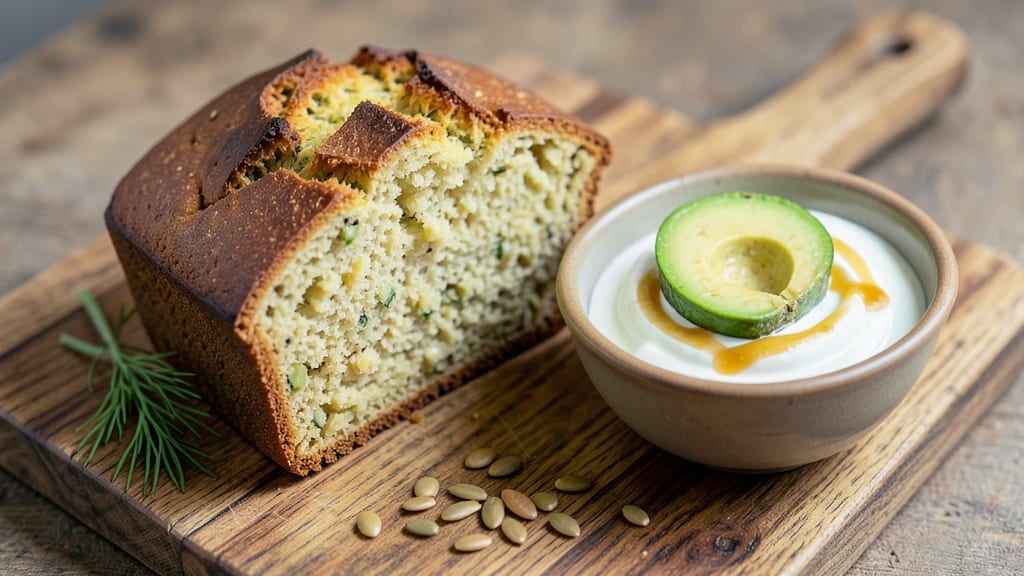
Avocado yogurt bread transforms simple ingredients into a loaf that’s fluffy, fragrant, and packed with hidden creaminess from ripe avocado and tangy yogurt. 🌿 The secret lies in blending these moist elements into the dough—no dry crumb here—while herbs like dill or chives add fresh brightness that keeps every slice interesting. This isn’t just bread; it’s a textural revelation with a soft, almost cake-like crumb and a golden crust that’s perfect for toasting.
The yogurt in this recipe does double duty: it tenderizes the dough for a lighter rise while adding subtle tang that balances the avocado’s richness. Unlike dense breads, this loaf stays moist for days, making it ideal for breakfast toast or as a base for open-faced sandwiches.
The avocado’s healthy fats also contribute to a satisfying richness without heaviness, proving that good nutrition and great flavor can go hand in hand.
Baking at 350°F for 35 minutes yields a loaf with a crisp exterior and a soft, pillowy interior—think of it as a cross between a quick bread and an artisanal loaf.
The crust develops just enough color to be appealing without sacrificing tenderness, while the interior remains tender enough to cut with a butter knife. This is the kind of bread that disappears faster than you can say “second slice.”
Serve it warm with a smear of herbed butter or a drizzle of olive oil, or let it cool slightly for sandwiches. The possibilities are endless, from breakfast toast with smoked salmon to a rustic side for soups. Let’s get baking—this loaf is about to become your new favorite.
Ingredients for avocado bread recipe with yogurt
Simple ingredients that transform into a loaf so fluffy it feels like cake.
| Ingredient | Amount | Notes |
|---|---|---|
| All-Purpose Flour 🌾 | 3 ½ cups | Sifted for light texture |
| Plain Yogurt 🧀 | 1 cup | Greek or regular, unsweetened |
| Ripe Avocado 🥑 | 1 whole | Pitted, flesh scooped out |
| Granulated Sugar 🍯 | ¼ cup | Light brown sugar works too |
| Active Dry Yeast 🍞 | 1 package | 2.25 tsp (1 packet) |
| Warm Water 💧 | 1 ¼ cups | 110°F for yeast activation |
| Extra-Virgin Olive Oil 🫒 | ¼ cup | Plus extra for greasing |
| Fresh Dill 🌿 | ¼ cup | Chopped, stems removed |
| Fresh Chives 🌱 | ⅛ cup | Chopped, for brightness |
| Salt 🧂 | 1 ½ tsp | Diamond Crystal preferred |
| Baking Powder 🍞 | 1 tsp | For extra lift |
| Lemon Zest 🍋 | 1 tbsp | Brightens the flavor |
The avocado is the star here—ripe but not mushy. Grab one from the store's produce section that's soft when gently squeezed, but not brown inside. Whole Foods or Trader Joe's usually have the best selection of ripe avocados. The yogurt should be plain and thick—Greek yogurt works best for that extra creaminess. If you're using regular yogurt, strain it for 10 minutes to thicken it up. The yeast? Always check the expiration date—old yeast won't activate properly, and you'll end up with flat bread. Store your yeast in the fridge to keep it fresh longer.
No ripe avocado? Mashed banana or pumpkin puree works in a pinch, but the flavor won't be quite the same. Can't find fresh dill? Dried dill at one-third the amount gets you close, but fresh is definitely better. Running out of chives? Green onion tops or parsley add a nice brightness. The olive oil matters here—use something fruity and high-quality. Trader Joe's has a great affordable option. If you're baking at high altitude, you might want to add an extra quarter cup of flour to prevent the bread from rising too much.
This bread keeps beautifully—3-4 days at room temperature wrapped in a towel, or 1 week in the fridge. For longer storage, slice it and freeze the pieces between parchment paper. Toast straight from frozen for that perfect crispy crust. The crust gets crispier as it cools, so it's even better the next day. I always make a double batch—this bread disappears fast, especially when you're serving it with herbed butter or avocado toast.
Why You'll Love This Recipe
- No-Fuss Mix-In: The dough comes together with just five ingredients—no fancy techniques, no waiting for special ingredients to arrive. I swear by this: toss the avocado right into the wet ingredients, mash it up with the yogurt, and let the yeast do the rest while you finish dinner. Honestly, it’s the kind of recipe that makes me feel like I’m cheating when I pull it off.
- Creamy, Not Greasy: That yogurt keeps it light, while the avocado adds a velvety richness without a trace of heaviness. The sugar caramelizes just enough to give it a subtle sweetness, but it’s the texture that wins me over—soft, slightly dense crumb with a tender crumb. (Yes, even on a Tuesday night.)
- Breakfast or Snack Hero: This bread is my go-to for toast in the morning, but it’s also the star of my lunchbox. Slice it thick, toast it, and slather with peanut butter or jam—it’s the kind of bread that makes you want to eat it straight from the pan. Between us, I’ve even used it for sandwiches when I’m in a hurry.
- Budget-Friendly Stretch: A single batch yields 12 slices, and the ingredients cost next to nothing. That ripe avocado sitting on your counter? Perfect. A cup of yogurt you already own? Even better. I’ve made this for guests, potlucks, and lazy Sundays—it’s my secret weapon for looking like you put in effort without breaking the bank.
Step-by-step instructions for avocado yogurt bread
Here's how to make this ultra-moist, herby loaf with a secret avocado boost.
👨🍳 Step 1: Activate the Yeast and Mash the Avocado
In a small bowl, whisk together the 1 package active dry yeast with 1.25 cups warm water (110°F) and 0.25 cup granulated sugar. Let it sit for 5-10 minutes until it becomes frothy—this means your yeast is alive and ready to work its magic. While that bubbles away, scoop out the flesh from the 1 whole ripe avocado and mash it with a fork in a separate bowl until completely smooth. You want no chunks—this ensures an even texture in your bread.
Here's the thing—ripe avocado is your secret weapon. It adds moisture without making the bread dense, and it keeps everything tender. I like to use a fork for mashing because it's quick and gets the job done without overworking the avocado. If your avocado is extra soft, add a pinch of salt to help balance its richness.
👨🍳 Step 2: Mix Wet Ingredients for a Smooth Dough
In a large mixing bowl, combine the mashed avocado with the 1 cup plain yogurt, 0.25 cup extra-virgin olive oil, 1 tbsp lemon zest, 1.5 tsp salt, and the now-frothy yeast mixture. Stir everything together until you have a smooth, creamy base—this is your dough's foundation. The yogurt and avocado will give you that signature tender crumb, while the lemon zest adds a bright pop of flavor that balances everything out.
I know it seems weird to mix the yeast with wet ingredients, but this method prevents dry spots in the dough. The yeast will activate fully in this warm, sugary environment, creating tiny bubbles that make your bread light as air. Don't rush this step—take your time to make sure all the ingredients are fully incorporated. The mixture should be thick but pourable.
👨🍳 Step 3: Combine Dry Ingredients and Form the Dough
In a separate bowl, whisk together the 3.5 cups all-purpose flour (sifted for that light texture), 1 tsp baking powder, 0.25 cup chopped fresh dill, and 0.125 cup chopped fresh chives. Then, gradually add this dry mixture to your wet ingredients while stirring with a wooden spoon. You'll want to mix just until the dough comes together—don't overmix or you'll develop too much gluten and end up with a tough loaf.
Once combined, turn the dough out onto a lightly floured surface and knead gently for about 2-3 minutes until smooth. This bread doesn't need a long kneading session because we're not developing gluten like we would for a baguette. Instead, we want a tender, slightly sticky dough that holds together. If it's too sticky to handle, wet your hands slightly—this prevents the dough from drying out.
⏰ Step 4: Let It Rise for Maximum Fluffiness
Lightly grease a 9x5-inch loaf pan with olive oil, then place the dough inside. Cover the pan with a damp kitchen towel and let it rise in a warm place for 1-1.5 hours or until it's puffed up about 50% larger than its original size. The dough should look domed and feel springy when you press it gently with a finger—this is your sign that it's ready for the oven.
I like to place my loaf pan in a slightly warm oven (turned off with a bowl of hot water inside) for rising. This creates a consistent environment that helps the dough rise evenly. Don't skip this step—rising time is what gives your bread that beautiful, airy texture. If your kitchen is cold, just give it extra time to rise properly.
🔥 Step 5: Bake to Golden Perfection
Preheat your oven to 350°F while the dough rises. Once the dough has doubled in size, remove the towel and place the pan in the preheated oven. Bake for 45-50 minutes until the top is golden brown and a toothpick inserted in the center comes out clean. The bread should smell amazing—like fresh herbs and warm bread with just a hint of avocado.
Here's a pro tip: If the top browns too quickly, tent the loaf with foil after 20 minutes to prevent over-browning while the center finishes cooking. Let the bread cool in the pan for 10 minutes before transferring it to a wire rack. This resting period helps the bread set properly and prevents it from falling apart when you slice it. Serve warm with butter or enjoy it at room temperature the next day—it keeps well for 3-4 days wrapped in plastic.
Pro Tips For Making Avocado Bread Recipe With Yogurt
- Mash the Avocado First: I learned this the hard way—dumping whole avocado chunks into the dough just leaves weird, unincorporated bits. Scoop the flesh directly into a bowl, mash it with a fork until it’s completely smooth (no streaks, no texture), then mix it into the wet ingredients. This ensures the bread gets that rich, even flavor instead of random avocado pockets.
- Use Warm Yogurt: Cold yogurt slows yeast activation, and this bread needs that rise to happen. Warm the yogurt to about 100°F (38°C)—just warm to the touch—before mixing it with the flour and sugar. The yeast will wake up faster, and your dough will develop properly in half the time.
- Don’t Overmix the Dough: I used to punch and fold this dough like I was making sourdough, and it turned out dense and tough. Once the flour, yogurt, and mashed avocado are combined, mix just until the ingredients come together—about 2 minutes by hand. Overworking it develops too much gluten, and you’ll end up with a brick instead of a tender, moist loaf.
- Let the Dough Rise Twice: Skipping the second rise is where most people mess up. After the first rise (when the dough doubles), punch it down and let it rise again for another 30–45 minutes. This second rise guarantees a lighter texture—no one wants a sad, flat avocado bread. (Yes, even if you’re impatient like me.)
Dietary considerations for this avocado bread recipe with yogurt
Gluten-Free Adaptation
For a gluten-free version, swap the 3.5 cups all-purpose flour with a 1:1 gluten-free blend like Bob's Red Mill 1-to-1. Add 1 extra tablespoon of xanthan gum to help bind the dough—this prevents crumbling.
You’ll need to let the dough rest for 15 minutes after mixing to hydrate the blend properly. Bake at 350°F for 50-55 minutes, checking for doneness with a toothpick. 🌾
Dairy-Free Option
Replace the 1 cup plain yogurt with 1 cup unsweetened coconut yogurt (like So Delicious brand) or a dairy-free Greek yogurt alternative. The texture stays tender, though the flavor will be slightly less rich.
For extra moisture, add 1 tablespoon of melted coconut oil to the wet ingredients. This version works well for vegan diets while keeping the bread’s signature softness.
Lower-Carb Version
Cut carbs by using 1.5 cups almond flour and 1 cup coconut flour instead of all-purpose flour. Add 2 extra eggs to bind the dough, as these flours absorb moisture differently. Reduce the yogurt to ½ cup and increase the avocado to 1.5 cups mashed for moisture.
Bake in a 350°F oven for 45 minutes, but expect a denser, cake-like texture. 🥑
Allergen-Friendly Tips
For nut-free kitchens, use a gluten-free oat flour blend instead of almond flour. If you’re avoiding eggs in the lower-carb version, try 1 tablespoon of ground flaxseed mixed with 3 tablespoons water as a binder.
Always check labels—some gluten-free blends contain traces of dairy or nuts. I keep a stash of King Arthur Measure for Measure gluten-free flour on hand for emergencies!
Protein Boost
Add ½ cup vital wheat gluten (for gluten-containing versions) or ½ cup ground flaxseed (for gluten-free) to increase protein. For extra protein without gluten, blend ½ cup cooked lentils into the wet ingredients—they add fiber and a subtle earthy note.
This works especially well with the herby flavors of dill and chives. 💪
Nutrition facts
Frequently asked questions
Why does this bread stay so moist for days?
The yogurt and avocado create a moisture reservoir that keeps the crumb tender. The yogurt's acidity also helps retain moisture while the avocado's healthy fats prevent drying. For best results, store in an airtight container with a damp towel—this mimics the bread's original baking environment.
Can I substitute Greek yogurt for regular yogurt?
Greek yogurt works beautifully and adds extra creaminess to the texture. If using regular yogurt, strain it for 10 minutes first to thicken it. The thicker the yogurt, the more tender and moist your bread will be. For a vegan version, coconut yogurt works well with added coconut oil for moisture.
What's the best way to tell when the bread is fully baked?
Look for a golden brown crust and use the toothpick test—insert a toothpick into the center. It should come out clean with no wet dough clinging. The internal temperature should reach 190°F. Tap the bottom of the loaf—it should sound hollow when done. If the top browns too quickly, tent with foil after 20 minutes.
How can I make this bread more flavorful?
Boost the flavor by adding 1 teaspoon of garlic powder to the dough or sprinkling 1 tablespoon of sesame seeds on top before baking. For extra zing, mix 1 tablespoon of lemon juice into the wet ingredients. Fresh herbs like thyme or basil also pair wonderfully with the dill and chives.
Can I make this bread without a loaf pan?
Yes! Shape the dough into a free-form loaf on a parchment-lined baking sheet. Brush with olive oil and sprinkle with seeds before baking. It'll have a rustic, artisan look and slightly crispier crust. Bake for 30-35 minutes at 350°F until golden. For even cooking, rotate the pan halfway through baking.