
Side Dishes
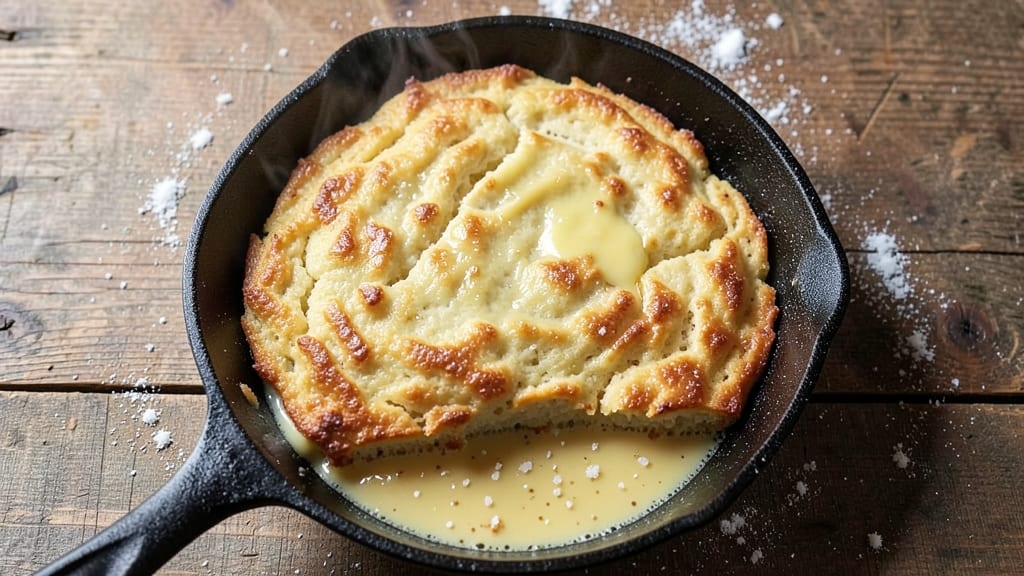
This old-fashioned spoon bread recipe brings back the comforting flavors of Southern kitchens with its golden, crispy top and tender cornmeal center. The technique is as simple as it is satisfying—just mix, pour, and bake until the edges turn golden brown.
I first discovered this dish while researching classic Appalachian recipes, and it quickly became a staple in my home for its versatility and rich, buttery taste.
The beauty of spoon bread lies in its simplicity: just cornmeal, milk, butter, and a pinch of salt come together to create something hearty enough for a main dish or a perfect side.
The crispy top forms naturally when baked in a cast-iron skillet, while the inside stays soft and custard-like. This recipe delivers the same comforting results as the versions my grandmother used to make—just with a few modern shortcuts.
What makes this spoon bread truly special is its ability to adapt to any meal. Serve it alongside stews or fried chicken for a classic Southern pairing, or drizzle it with honey for a sweet breakfast treat.
The crispy edges and creamy interior make every bite satisfying, whether you're feeding a family or enjoying a quiet dinner for one.
Ready in just 30 minutes, this recipe requires minimal effort but delivers maximum flavor. The key is patience—letting the batter rest before baking ensures a tender, even texture.
Once you try it, you’ll understand why this dish has been a kitchen staple for generations. Here’s how to make it perfectly every time.
Ingredients for old fashioned spoon bread
Just six simple ingredients transform into golden, crispy spoon bread with a tender heart.
| Ingredient | Amount | Notes |
|---|---|---|
| Medium-Grain Cornmeal 🌽 | 1 ½ cups | Stone-ground for best texture |
| Whole Milk 🥛 | 2 cups | Room temperature preferred |
| Unsalted Butter 🧈 | ½ cup | Cold, cubed for crispy top |
| Large Eggs 🥚 | 2 whole | Room temperature for smooth batter |
| Fine Sea Salt 🧂 | 1 tsp | Adjust to taste |
| Granulated Sugar 🍚 | 1 tbsp | Optional for slight sweetness |
| All-Purpose Flour 🌾 | ¼ cup | For lighter texture |
| Baking Powder 🍞 | 1 tsp | For extra crispiness |
| Cast-Iron Skillet 🍳 | 1 whole | 8-inch for perfect portion |
| Butter (for greasing) 🧈 | 1 tbsp | Melted for skillet |
| Honey (optional) 🍯 | ¼ cup | For drizzling on top |
The cornmeal is non-negotiable—stone-ground gives that authentic Southern texture. Bob's Red Mill or King Arthur are my go-tos, but any medium-grain works. For the milk, whole milk is best—it keeps the bread rich and moist, but 2% works in a pinch. The butter? Cold and cubed is key for that signature crispy top. If you're in a hurry, softened butter works too, but it won't be quite as crisp. And trust me on the cast-iron skillet—it's the secret to that perfect golden crust. If you don't have one, a heavy oven-safe skillet will do, but it won't be quite the same.
No cornmeal? Polenta or grits can stand in, but the texture will be different. Short on butter? Olive oil works, though it won't give that classic buttery flavor. The baking powder is optional, but it helps create that extra-crispy top—skip it if you prefer a softer bread. For the honey drizzle, local raw honey adds a nice depth of flavor, but any honey will do. The sugar is optional, but if you're serving this with a sweet glaze, leave it out to avoid over-sweetness. And if you're making this ahead, cover it tightly and reheat in a 350°F oven for 10-15 minutes—it reheats beautifully.
This keeps for 3-4 days in the fridge, wrapped tightly in foil. Reheat in the oven for the best results—10 minutes at 350°F brings back that crispy top. For leftovers, I like to slice it and toast it in the oven with a little extra butter—crispy spoon bread sandwiches are a thing, and they're amazing. Freezing? Wrap it well and it'll last for up to 3 months. Just thaw it in the fridge overnight before reheating—microwaving makes it soggy. And if you're serving this with honey, drizzle it right before eating so it doesn't get absorbed.
Why You'll Love This Recipe
- Five-Ingredient Magic: Honestly, I swear by this recipe because it’s that simple—just cornmeal, milk, butter, eggs, and salt. No fancy techniques, no last-minute grocery runs. The key? Whisking the batter until it’s silky smooth (no lumps!) and letting the butter melt into golden perfection in the oven.
- Buttery Corny Bliss: That crispy top with the tender, custardy center? It’s the kind of texture you’ll fight over at the table. The whole milk and butter create this rich, almost pudding-like richness, while the cornmeal gives it that satisfying bite—like a hug from Southern comfort food.
- Breakfast to Brunch: Between us, this is my secret weapon for lazy mornings or Sunday suppers. Serve it warm with honey and butter for breakfast, or pair it with fried chicken and gravy for a no-fuss family dinner. (Yes, even on a Tuesday night.)
- Budget-Friendly Staple: I make this at least once a month because it’s cheap, filling, and uses pantry basics. A single batch stretches for leftovers—slice it up for quick toast or reheat slices in the oven until crispy again. No waste, all flavor.
Step-by-step instructions for old fashioned spoon bread
Here's how to create that golden, crispy-topped spoon bread your grandma loved.
Prepare the Cast-Iron Skillet
Preheat your oven to 375°F. Place the 8-inch cast-iron skillet in the oven while it heats. This ensures even cooking and prevents the batter from absorbing heat too quickly. While the skillet warms, melt the 1 tablespoon butter for greasing in a small microwave-safe bowl for about 20 seconds or until completely liquid.
Here's the thing—don't skip the greasing. The butter creates a barrier that prevents sticking and helps that crispy top form. Once the skillet is hot, remove it from the oven and carefully brush the melted butter evenly over the bottom and sides using a paper towel. The skillet should be hot enough that the butter sizzles slightly when it touches—this tells you it's ready for the batter.
Whisk the Wet Ingredients
In a large mixing bowl, combine the 2 cups whole milk, 2 whole large eggs, 1 tablespoon granulated sugar, and 1 teaspoon fine sea salt. Use a whisk to blend them together until smooth and fully incorporated. The mixture should look uniform with no streaks of egg white or sugar granules.
I like to tap the bottom of the bowl gently against the counter a few times while whisking—this helps break up any egg membranes that might still be intact. Room-temperature ingredients blend more easily, so if your eggs or milk are cold, let them sit at room temperature for about 10 minutes before mixing. This step ensures your spoon bread will have a light, airy texture rather than a dense one.
Add Dry Ingredients and Create the Batter
In a separate bowl, sift together the 1.5 cups medium-grain cornmeal, 0.25 cup all-purpose flour, and 1 teaspoon baking powder. This sifting step prevents lumps and ensures even distribution of the baking powder, which is key for that extra crispiness. Gently fold the dry ingredients into the wet mixture using a rubber spatula, stirring just until combined—you should still see some cornmeal flecks throughout the batter.
Next, cut the 0.5 cup unsalted butter into small cubes and fold them into the batter using your spatula. The butter should be cold to create pockets of fat that will melt during baking, contributing to that signature crispy top. Be careful not to overmix—just combine until the butter is evenly distributed. The batter should be thick but pourable, similar to pancake batter.
Bake to Golden Perfection
Quickly pour the batter into the preheated, greased skillet. Spread it evenly using the back of a spoon or spatula, making sure to reach all the way to the edges. The reason we do this quickly is that the skillet is hot, and we want to maintain that temperature for even cooking. Return the skillet to the oven and bake for 30-35 minutes.
You'll know it's done when the top is a deep golden brown and the edges are pulling away slightly from the skillet. If you're unsure, insert a toothpick into the center—it should come out clean with just a few moist crumbs clinging to it. The center should be set but still slightly jiggly, indicating it's fully cooked but still tender. Avoid overbaking, or the top will become tough instead of crispy.
Serve Warm with Optional Honey
Remove the skillet from the oven and let the spoon bread rest for 5 minutes before serving. This resting period allows the center to set slightly and makes it easier to slice. To serve, run a thin metal spatula around the edges of the spoon bread, then invert it onto a serving plate. The crispy top will be on the bottom now, but that's the way it's traditionally served.
Drizzle with the 0.25 cup honey (optional) if desired—this adds a touch of sweetness that complements the rich, buttery flavor. Spoon bread is delicious on its own or paired with savory dishes like fried chicken or mashed potatoes. The contrast of the crispy top and creamy interior makes every bite worth it, and you'll have that old-fashioned comfort food feeling in no time.
Pro Tips For Making Old Fashioned Spoon Bread
- STIR THE CORNMEAL DRY FIRST: I learned this the hard way—adding milk to cornmeal without stirring it first leads to lumps like tiny concrete blocks. Use a whisk (not a spoon) to break up every single clump in the dry cornmeal before pouring in the milk. Yes, it takes 30 seconds, but your spoon bread won’t taste like gluey porridge.
- USE HOT MILK AND BUTTER: Warm the milk and butter together until just steaming (not boiling)—this melts the butter faster and makes the batter smoother from the start. Skip this, and you’ll end up chasing stubborn butter clumps while the eggs scramble. Trust me, your spoon bread will be lighter if you do it right.
- STOP BEFORE THE EDGES SET: Old-fashioned spoon bread is done when the top is golden and the edges pull away from the pan just slightly—not when they’re rock-hard. Overbaking dries it out faster than a summer picnic. If unsure, cut a tiny slit with a knife; it should come out clean, not rubbery.
- WHISK EGGS UNTIL THICK: Beat the eggs alone first until they’re ribbon-like (about 2 minutes) before folding them into the batter. This makes the spoon bread richer and less likely to collapse in the oven. I was skeptical until I tried it—now I never skip it.
Pro cooking tips for this recipe
Skillet Prep Secrets
The cast-iron skillet is non-negotiable for that signature crispy top, but how you prepare it makes all the difference. I always preheat the skillet in the oven for 10 minutes before greasing—this ensures even heat distribution.
Use unsalted butter (not margarine) and melt it just until liquid, then brush it on with a paper towel for even coverage. The butter should sizzle when it hits the hot skillet—this tells you it's ready.
Pro tip: Wipe off any excess butter with a clean towel after greasing to prevent a greasy crust. 🔥
Batter Consistency Matters
Your spoon bread's texture hinges on the batter's consistency. It should be thick enough to coat the back of a spoon but still pourable—like thick pancake batter. If it's too thin, add 1-2 tablespoons more cornmeal; if too thick, stir in 1 tablespoon milk.
The key is folding in the cold butter cubes gently—overmixing develops gluten and makes the bread dense. I use a rubber spatula and stir just until the butter disappears. The batter should have visible cornmeal flecks for that authentic texture. ⚡
Butter Temperature Hack
Cold butter cubes are essential for that crispy top, but they can be tricky to work with. I like to cut my ½ cup butter into ¼-inch cubes and chill them on a plate in the freezer for 10 minutes before folding them into the batter.
This ensures they stay firm during mixing. If your kitchen is warm, freeze the butter for 5 minutes first. The butter should melt slightly during baking, creating steam that puffs up the top into crispy perfection. 💡
Baking Time Precision
Oven temperature fluctuations can ruin your spoon bread, so I recommend using an oven thermometer to confirm your oven runs at 375°F. Most home ovens run hotter than their settings.
Bake for 30-35 minutes, but start checking at 28 minutes—the edges should be golden brown and pulling away from the skillet. A toothpick test works best: insert it into the center and pull out. If it comes out clean with a few moist crumbs, it's perfect.
If not, bake for 2-3 more minutes. Overbaking by even 1 minute can make the top tough. 🌡️
Resting Before Serving
This is where many home cooks go wrong—skipping the rest. Let your spoon bread rest for 5-10 minutes after baking before inverting. This allows the internal structure to set slightly, making it easier to slice and preventing crumbly edges. I also find that resting enhances the crispiness.
When ready to serve, run a thin metal spatula around the edges, then invert onto a plate. The crispy top will now be on the bottom, which is how it's traditionally presented. 💫
Honey Drizzle Timing
If you're adding honey, drizzle it immediately after serving—never before. The heat from the spoon bread causes honey to caramelize and lose its delicate flavor. I recommend local raw honey for its floral notes, but any honey works.
For a savory version, skip the honey and serve with warm maple syrup or a pat of butter. The contrast of sweet and savory makes spoon bread even more versatile. 🍯
Nutrition facts
Frequently asked questions
What makes this spoon bread different from cornbread?
Unlike cornbread, this recipe relies on a simple batter of cornmeal, milk, butter, and eggs—no flour or baking powder in the traditional sense. The texture is smoother and custard-like inside with a crispy top, while cornbread has a crumbly, cake-like consistency. Spoon bread also traditionally uses a cast-iron skillet for baking, creating that signature crispy crust.
Can I make this recipe without a cast-iron skillet?
Yes, but the texture will differ. Use an oven-safe ceramic or heavy metal skillet instead. Preheat it thoroughly and grease well with butter. The top won't be quite as crispy, but it'll still be delicious. For best results, choose a skillet with similar heat retention properties to cast iron.
Why did my spoon bread turn out dense instead of crispy?
Overmixing the batter or using warm butter are common culprits. Cold butter cubes create steam pockets for crispiness, while overmixing develops gluten. Also ensure your oven is properly heated—fluctuations can cause uneven cooking. Try preheating for 10 minutes with an oven thermometer to confirm accuracy.
How can I serve this beyond just with honey?
Try savory options like warm maple syrup, whipped butter, or a sprinkle of flaky salt. For breakfast, serve with fried eggs or bacon. As a side, pair with stews, fried chicken, or mashed potatoes. The crispy edges make it perfect for dipping too!
Can I make this recipe ahead of time?
Store leftovers in an airtight container for up to 4 days. Reheat in a 350°F oven for 10-15 minutes until crispy again. For freezing, wrap tightly and thaw overnight in the fridge before reheating. Never microwave—it makes the texture soggy.