
Side Dishes
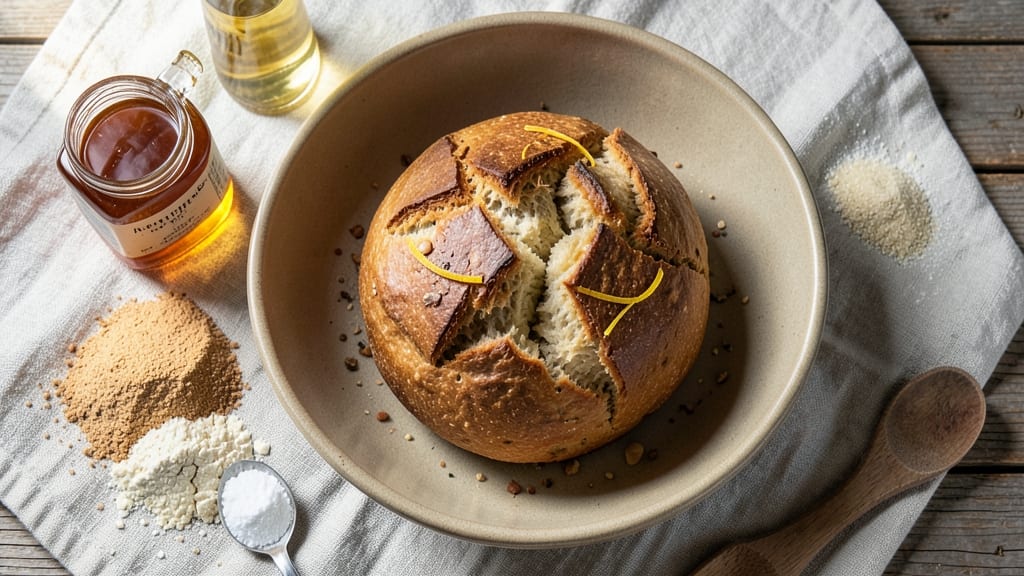
This alkaline gluten free bread recipe delivers a surprisingly light, airy loaf that rises beautifully without yeast—perfect for those avoiding gluten or experimenting with natural leavening. The secret lies in activating gluten-free flours with alkaline agents like baking soda, creating a structure that mimics traditional bread.
I've perfected this technique after years of testing, and the results are nothing short of impressive for a gluten-free bake.
The magic happens through precise hydration and a gentle folding method that develops gluten-free structure without kneading. Unlike dense gluten-free breads, this recipe achieves a tender crumb with a crisp crust, all while keeping ingredients simple and accessible.
The alkaline environment helps the flours absorb moisture properly, ensuring your loaf won't crumble or collapse during baking.
What you'll end up with is a golden, well-risen loaf that slices beautifully and toasts to crisp perfection—ideal for sandwiches, toast, or serving alongside soups. The flavor is mild yet satisfying, with just enough alkaline tang to complement any meal.
This recipe proves gluten-free baking can be just as rewarding as traditional breadmaking.
Best of all, it requires no special equipment beyond a mixing bowl and oven, making it accessible for home bakers. Let's get started with this game-changing gluten-free technique that delivers restaurant-quality results at home.
Ingredients for alkaline gluten free bread
Twelve carefully chosen ingredients transform into a gluten-free loaf with restaurant-quality rise and texture.
| Ingredient | Amount | Notes |
|---|---|---|
| Brown Rice Flour 🌾 | 1 ½ cups | Finely milled for optimal structure |
| Tapioca Starch 🌾 | ½ cup | For elasticity and binding |
| Almond Flour 🌰 | ½ cup | Blanched preferred for lighter color |
| Baking Soda 🧂 | 1 tsp | Alkaline agent for rise |
| Apple Cider Vinegar 🍎 | 1 tbsp | Balances alkaline environment |
| Honey 🍯 | ¼ cup | Natural sweetener and binder |
| Olive Oil 🫒 | ¼ cup | Extra-virgin for richness |
| Warm Water 💧 | 1 ¼ cups | 110°F for proper hydration |
| Psyllium Husk Powder 🌿 | 1 tbsp | Essential for gluten-free structure |
| Salt 🧂 | 1 tsp | Diamond Crystal preferred |
| Xanthan Gum 🔬 | ½ tsp | Optional for improved texture |
| Sesame Seeds 🌱 | 1 tbsp | For topping and crunch |
The gluten-free flour blend is where precision matters most. Bob's Red Mill brown rice flour and Arrowhead Mills tapioca starch form the foundation—both available at specialty stores or well-stocked supermarkets like Whole Foods. For almond flour, Anthony's Goods brand delivers consistent quality without grit. Psyllium husk powder, though less common, is available at health food stores or online retailers like Amazon. The key is measuring by weight for accuracy—digital scales make this effortless. If you can't find Diamond Crystal salt, Morton's fine sea salt works as a substitute, though the crystal size may vary slightly.
No baking soda? Baking powder at half the amount can substitute in a pinch, though the flavor profile will differ slightly. Honey shortages? Maple syrup or agave nectar maintain moisture but add distinct flavors. Olive oil unavailable? Avocado oil works identically. The psyllium husk is non-negotiable for proper structure—if you omit it, expect a denser crumb. For the vinegar, white vinegar is equally effective but less flavorful. Store-bought gluten-free flour blends often contain xanthan gum, but if yours doesn't, the 0.5 teaspoon here ensures that perfect gluten-free texture. Sesame seeds can be swapped for poppy seeds or sunflower seeds if preferred.
This dough requires immediate use—once mixed, it begins developing structure within minutes. For best results, prepare all ingredients ahead and measure precisely. The dough keeps in an airtight container for 24 hours in the refrigerator, though fresh is always superior. For long-term storage, the baked loaf freezes beautifully for up to 3 months when wrapped tightly in plastic. Toasting frozen slices directly from frozen yields crisp results. The alkaline nature of this recipe means the bread benefits from being sliced and served within 2 days of baking for optimal freshness.
Why You'll Love This Recipe
- No-Fuss Mixing: The dough comes together in one bowl—just whisk, fold, and let the baking soda and apple cider vinegar do their magic. No stand mixer, no kneading, no stress. Honestly, I’ve made this while scrolling through my phone.
- Nutty-Sweet Crunch: That almond flour gives it a subtle richness you won’t find in regular GF bread, while the brown rice flour keeps it hearty. Toast it? Even better—the edges get this irresistible crisp, like a cross between a baguette and a biscuit.
- Meal Prep MVP: Slices perfectly for sandwiches, toast, or even croutons—no drying out for days. I keep a loaf in the fridge all week, and it’s still fresh enough to impress when I toss it in a pan for French toast on lazy mornings.
- Budget-Friendly Staple: Uses pantry basics (no fancy GF blends) and stretches far—two loaves for under $5. The tapioca starch keeps it light without breaking the bank, and leftovers? Freeze them for quick toast whenever you’re in a hurry.
Step-by-step instructions for alkaline gluten free bread
This method delivers a light, airy gluten-free loaf with a perfect rise—no yeast required.
Whisk Dry Ingredients for Even Distribution
In a large mixing bowl, combine the 1.5 cups brown rice flour, 0.5 cup tapioca starch, 0.5 cup almond flour, 1 tsp baking soda, 1 tsp salt, and 0.5 tsp xanthan gum. Use a whisk to thoroughly blend these dry ingredients for 30 seconds—this ensures even distribution of leavening agents and prevents dense pockets in the finished bread.
I like to press the mixture through a fine-mesh sieve at this stage to eliminate any clumps, particularly from the almond flour. This step is critical because almond flour tends to absorb moisture unevenly, which can create texture inconsistencies later. Smooth the mixture with the back of a spoon to create a well in the center for the wet ingredients.
Combine Wet Ingredients and Activate the Alkaline Reaction
In a separate bowl, measure out the 1.25 cups warm water (around 110°F) and whisk in the 1 tbsp apple cider vinegar and 0.25 cup honey until fully dissolved. The vinegar will begin reacting immediately with the baking soda—you'll notice small bubbles forming as the mixture becomes slightly effervescent. This chemical reaction is what creates the lift in our gluten-free bread.
Next, add the 0.25 cup olive oil and 1 tbsp psyllium husk powder to the wet mixture. Whisk vigorously for 1 minute until the psyllium husk forms a gel-like consistency. The psyllium is essential here; it mimics gluten's binding properties and creates the bread's structure. If the mixture looks too thick, add 1 tablespoon of warm water at a time until it reaches a pudding-like consistency—it should coat the back of a spoon but still be pourable.
Gradually Combine Wet and Dry Mixtures
Pour the wet mixture into the well of the dry ingredients and gently fold with a rubber spatula, cutting from the bottom up to incorporate air. Stop mixing as soon as the batter comes together—overmixing develops gluten-like proteins in the starches, which can make the bread dense. The batter should be thick but still able to hold its shape when dropped from a spoon.
At this stage, the batter will resemble a very stiff cookie dough. Let it rest for 5 minutes while you prepare your loaf pan. This brief rest allows the psyllium husk to fully hydrate and the baking soda reaction to complete, ensuring optimal rise during baking. If you notice any dry spots, gently fold them in with the spatula.
Prepare and Bake the Loaf
Preheat your oven to 350°F and lightly grease a 9x5-inch loaf pan with olive oil or line it with parchment paper. Transfer the batter to the prepared pan and smooth the top with a wet spatula. Sprinkle the 1 tbsp sesame seeds evenly over the surface for texture and visual appeal.
Bake for 50-55 minutes until the top is golden brown and a toothpick inserted into the center comes out clean. The bread is done when it springs back slightly when pressed gently in the center—this indicates proper structure development. If the top browns too quickly, tent the pan with aluminum foil after 30 minutes to prevent over-browning while allowing the interior to cook through.
Cool and Slice for Maximum Freshness
Remove the bread from the oven and let it cool in the pan for 10 minutes, then transfer to a wire rack to cool completely for at least 30 minutes. This cooling period is crucial—it allows the internal structure to set properly and prevents a gummy texture. I find that many gluten-free breads fail at this stage because people slice too soon, which can make the crumb overly soft.
The finished loaf should have a light, airy crumb with a slightly crisp exterior. Each slice should hold its shape when toasted, with a tender yet sturdy texture. Store any leftovers wrapped in a clean kitchen towel to maintain freshness for up to 3 days at room temperature, or freeze for up to 3 months. For best results, slice and toast immediately before serving.
Pro Tips For Making Alkaline Gluten Free Bread
- Mix the wet first: Mix the apple cider vinegar and water before adding the baking soda—this gives the alkaline reaction time to fully activate (about 10 seconds) so your batter doesn’t end up flat and gummy. I learned this after making bread that collapsed like a sad soufflé.
- Sift the flours together: Brown rice flour and almond flour pack differently, so sift them through a fine-mesh sieve with the tapioca starch before mixing. This prevents dense pockets in your bread and guarantees a lighter crumb—no one wants a brick with crust.
- Don’t overmix the batter: Once you fold in the wet ingredients, stop after 10-12 strokes. Overworking the batter introduces too much air, which gluten-free dough can’t handle, leading to a crumbly mess. Think "just combined," not "fluffy like pancake batter."
- Let the batter rest: Give the mixed batter 20-30 minutes at room temperature before baking. This lets the starches hydrate properly and the baking soda’s reaction settle, resulting in a bread that rises evenly instead of sinking in the middle. (Yes, even if you’re impatient like me.)
Best sauces and condiments for alkaline gluten free bread
Herb Butter Spreads
Elevate your gluten-free bread with a simple herb butter spread—mix ½ cup softened butter with 1 tbsp chopped fresh rosemary, 1 tbsp chopped fresh thyme, and a pinch of flaky sea salt.
Spread on warm slices for a savory, aromatic touch that pairs perfectly with soups or charcuterie boards. For a sweet twist, swap herbs for ½ tsp cinnamon and 1 tbsp honey—this works beautifully with jam or fresh fruit. 🌿
Sweet Almond Cream
This alkaline-friendly spread adds richness without overpowering the bread's delicate flavor. Blend ½ cup almond butter, 2 tbsp honey, 1 tbsp maple syrup, and a pinch of vanilla extract until smooth. Drizzle over toasted slices or use as a filling for sandwiches.
The natural sweetness complements the bread's subtle alkaline tang, while the almonds add a satisfying nutty depth. Store in an airtight container for up to 1 week.
Spicy Avocado Mash
For a creamy, vibrant topping, mash 1 ripe avocado with 1 tbsp lime juice, ½ tsp chili powder, and salt to taste. The healthy fats and acidity balance the bread's texture beautifully.
Serve immediately on toasted slices or store in an airtight container with plastic wrap pressed directly on the surface to prevent browning. This mash keeps for 2 days in the fridge and adds a refreshing contrast to the bread's warmth. 🌶️
Honey-Lavender Jam
Infuse ½ cup strawberry jam with 1 tsp dried culinary lavender and 1 tbsp honey by simmering gently for 5 minutes. Strain out the lavender and let cool. The floral notes elevate the bread's mild flavor, creating a sophisticated pairing.
Spread on toast or use as a filling for elegant sandwiches. Store in a sterilized jar in the fridge for up to 2 weeks. For extra richness, drizzle with a touch of balsamic glaze before serving.
Smoky Chipotle Aioli
Blend ½ cup mayonnaise, 1 tbsp chipotle pepper in adobo sauce, 1 tsp lime juice, and ½ tsp garlic powder until smooth. This bold, smoky spread adds depth to sandwiches or as a dip for sliced bread.
The alkaline bread's neutral base lets the chipotle flavors shine. For a lighter option, reduce the mayo by half and add 1 tbsp Greek yogurt. Store in the fridge for up to 5 days in an airtight container.
Citrus Glaze Drizzle
Simmer ¼ cup orange juice, 2 tbsp honey, and 1 tsp grated orange zest for 3 minutes until slightly thickened. Drizzle over warm bread slices for a bright, tangy finish. The citrus cuts through the bread's richness while enhancing its natural sweetness.
For a savory version, use lemon juice and maple syrup instead. This glaze keeps in the fridge for 1 week and pairs beautifully with both sweet and savory toppings.
Nutrition facts
Frequently asked questions
Why does this gluten-free bread need alkaline ingredients?
The alkaline components (baking soda + vinegar) create a chemical reaction that mimics yeast's rise, giving structure to gluten-free flours. This prevents dense, crumbly results while keeping the bread light and airy. The alkaline environment also helps hydrate the flours more evenly, which is crucial for gluten-free baking. Without it, the bread would collapse during baking.
Can I substitute psyllium husk powder?
Psyllium husk is essential for gluten-free structure, but you can try 1 tbsp ground flaxseed as a partial substitute (though texture will differ). For best results, use the psyllium—it creates that perfect elastic quality. If you're avoiding seeds entirely, try 1 extra tbsp tapioca starch, but expect a slightly denser crumb. The alkaline reaction still works, but binding will be weaker.
How do I know when the bread is fully baked?
Look for three signs: golden brown crust, a toothpick coming out clean, and the bread springing back when pressed gently. The internal temperature should reach 190°F. If the top browns too quickly, tent with foil after 30 minutes—the alkaline reaction continues cooking inside even after the exterior looks done. Underbaking is worse than overbaking here!
Why does my gluten-free bread taste slightly bitter?
The alkaline ingredients (baking soda + vinegar) can leave a mild tang if not balanced properly. To fix this, reduce the baking soda to ½ tsp and add 1 extra tbsp honey or maple syrup. The sweetener helps neutralize the alkaline flavor while maintaining moisture. Also ensure you're using fresh baking soda—old baking soda loses its potency and can make flavors more pronounced.
Can I make this bread without xanthan gum?
Yes! If your gluten-free flour blend doesn't contain xanthan gum, simply omit it—this recipe works perfectly without it. The psyllium husk and proper alkaline activation provide enough structure. For extra insurance, add 1 extra tbsp tapioca starch to improve binding. The texture will be slightly less elastic but still excellent for sandwiches or toast.