
Side Dishes
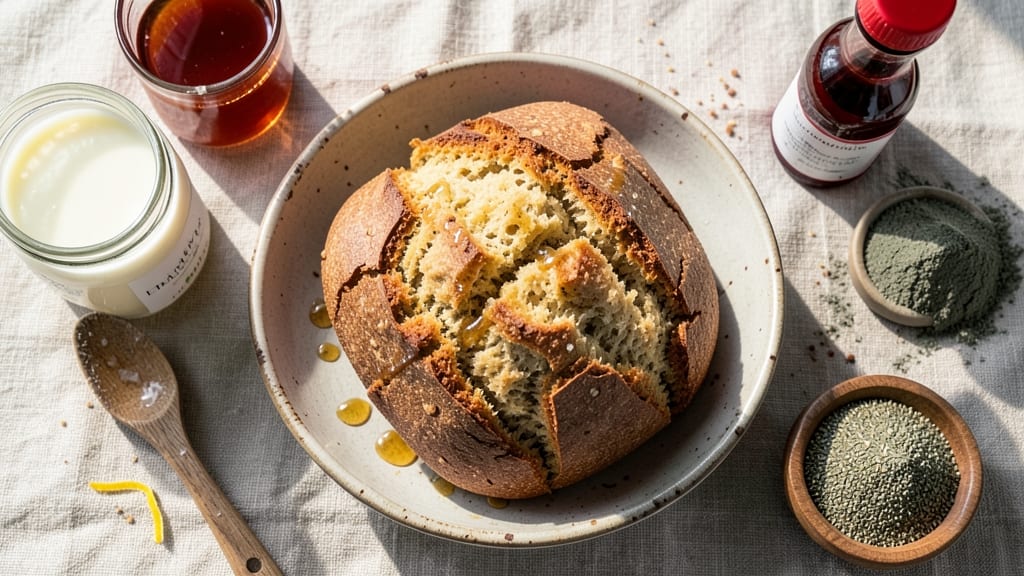
This almond flour soda bread delivers the perfect balance of nutty richness and airy texture—ideal for gluten-free diets or anyone craving a lighter loaf. The secret lies in the almond flour base, which creates a crunchy crust while keeping the crumb tender and fluffy.
Unlike traditional soda bread, this version stays moist longer and packs a satisfying crunch with every bite.
The recipe is foolproof for beginners, requiring just a handful of ingredients: almond flour, baking soda, plant-based milk, and a touch of sweetener. No kneading or fancy techniques—just mix, shape, and bake.
The baking soda activates during baking, creating that signature rise without gluten, while the almond flour adds a subtle sweetness and nutty depth that pairs beautifully with soups, stews, or butter.
What makes this bread truly special is its versatility. Serve it warm with jam, toasted with avocado, or even as a base for sandwiches—it holds up perfectly. The texture is light yet sturdy, with a golden crust that cracks open just enough to reveal the soft interior.
Best of all, it’s naturally low-carb, grain-free, and vegan-friendly, making it a standout for dietary restrictions without sacrificing flavor.
Baking time is just 30 minutes, and the dough comes together in under 10 minutes, so you’ll have a fresh loaf on the table without the fuss. Whether you’re gluten-sensitive, plant-based, or simply love a great bread, this recipe delivers restaurant-quality results at home. Let’s get started!
Ingredients for almond flour soda bread
Just eleven ingredients transform into restaurant-quality almond flour soda bread with perfect crunch and airy crumb.
| Ingredient | Amount | Notes |
|---|---|---|
| Almond Flour 🌰 | 2 ½ cups | Finely ground, unsweetened preferred |
| Baking Soda 🍞 | 1 tsp | Pure, aluminum-free preferred |
| Unsweetened Almond Milk 🥛 | 1 cup | Room temperature for best activation |
| Coconut Oil 🥥 | ½ cup | Melted, not solid, for even mixing |
| Maple Syrup 🍁 | ¼ cup | Grade B for richer flavor profile |
| Ground Flaxseed 🌾 | 1 tbsp | Acts as egg substitute binder |
| Apple Cider Vinegar 🍎 | 1 tsp | Activates baking soda for rise |
| Sea Salt 🧂 | ½ tsp | Fine grain preferred |
| Vanilla Extract 🌸 | ½ tsp | Pure, alcohol-free preferred |
| Ground Cinnamon 🌿 | ¼ tsp | Enhances sweetness naturally |
| Sesame Seeds 🌱 | 2 tbsp | Toasted for enhanced crunch |
The almond flour is the foundation—Bob's Red Mill or Anthony's Goods brands deliver the finest grind for optimal texture. Freshness matters: check for a vibrant color and nutty aroma, as stale flour yields dense bread. For the milk, unsweetened almond milk works best, but any plant-based milk will suffice. The coconut oil should be melted but not hot when mixed, ensuring even distribution without activating the baking soda prematurely. Maple syrup adds subtle sweetness while contributing to moisture retention, with Grade B offering deeper flavor notes. Store almond flour in an airtight container in a cool, dark place to preserve its nutty essence for up to 3 months.
No almond flour? Hazelnut flour works as a 1:1 substitute, though texture will differ slightly. Substituting coconut oil? Avocado oil maintains neutral flavor, while melted vegan butter adds richness. Running low on maple syrup? Agave nectar or date syrup provide similar moisture without altering flavor significantly. The flaxseed binder can be replaced with chia seeds at the same ratio. For the vinegar, lemon juice works in a pinch, though apple cider vinegar's mild tang enhances the bread's complexity. Sesame seeds can be omitted or swapped for poppy seeds or sunflower seeds if unavailable, though they contribute a delightful crunch to the crust.
This dough requires no resting time, so prepare all ingredients ahead for seamless mixing. The bread keeps well at room temperature for 2 days wrapped in a clean kitchen towel, or 5 days refrigerated in an airtight container. For longer storage, slice and freeze individual portions for up to 3 months. Reheat slices in a toaster or oven for maximum crunch. The bread's texture improves slightly the next day as the almond flour hydrates fully, making it ideal for overnight preparation. Store sesame seeds separately to maintain their crispness.
Why You'll Love This Recipe
- No-Measurement Math: This recipe’s magic is in its simplicity—just 5 ingredients, no sifting, no kneading. I swear, the only math you’ll do is eyeballing the almond milk until it looks like thin pancake batter.
- Sweet Without Sugar: That maple syrup isn’t just for flavor—it’s what makes this bread ridiculously good. The coconut oil keeps it tender, while the baking soda gives it that classic soda bread rise, but with a nutty depth you won’t find in regular loaves.
- Breakfast to Snack: Honestly, I make a batch on Sundays and it disappears by Wednesday. Toast it for breakfast with butter, slice it for lunch with cheese, or pack it for school lunches—it’s the one bread that does it all.
- Zero-Waste Loaf: Between us, this bread lasts forever if you store it right. The almond flour keeps it from getting stale fast, and the leftovers? Perfect for croutons, breadcrumbs, or even a quick bread pudding when you’re feeling fancy.
Step-by-step instructions for almond flour soda bread
A perfectly balanced texture requires precise technique—here's how to achieve that nutty crust and airy crumb.
Activate the Leavening Agents
In a medium bowl, whisk together the 1 cup unsweetened almond milk and 1 tsp apple cider vinegar until fully combined. This reaction creates carbonation that mimics yeast in traditional soda bread. Let the mixture sit for 5 minutes while you prepare the remaining ingredients—you'll notice it develop a slightly fizzy texture.
In a separate small bowl, combine the 1 tbsp ground flaxseed with 3 tbsp water (not included in your ingredients) and let it thicken for 5 minutes. This flax "egg" will bind the batter just like traditional eggs would. The mixture should become gelatinous—this indicates proper activation for optimal texture.
Mix Wet and Dry Ingredients
In a large mixing bowl, combine the 2.5 cups almond flour, 1 tsp baking soda, 0.5 tsp sea salt, 0.5 tsp vanilla extract, and 0.25 tsp ground cinnamon. Whisk gently to distribute the dry ingredients evenly—this prevents pockets of undissolved baking soda that could create bitter flavors.
Add the 0.5 cup melted coconut oil and 0.25 cup maple syrup to the dry mixture. Stir until just combined, being careful not to overmix. The batter should be thick but pourable—similar to pancake batter consistency. This texture ensures proper rise while maintaining that signature crumb structure.
Combine and Prepare for Baking
Gradually pour the activated almond milk mixture and flax egg into the dry ingredients while stirring gently with a spatula. The batter will thicken noticeably as the flax egg binds with the almond flour. Fold in the 2 tbsp sesame seeds, reserving 1 tbsp for the top sprinkle—this creates both interior texture and exterior crunch.
Transfer the batter to a 9-inch round baking pan lined with parchment paper. The batter should fill the pan about halfway—this ensures proper rise without overflow. Sprinkle the reserved 1 tbsp sesame seeds evenly over the top. For that signature soda bread crust, make a shallow cross cut through the center using a sharp knife.
Bake to Golden Perfection
Preheat your oven to 350°F with a rack positioned in the middle position. Place the prepared baking pan in the center of the oven and bake for 35-40 minutes, until the top is deep golden brown and the internal temperature reaches 205°F when measured with an instant-read thermometer.
Here's the critical checkpoint: the bread should sound hollow when tapped on the bottom. If it browns too quickly, loosely tent with aluminum foil after 25 minutes to prevent over-browning while maintaining even cooking. The edges should pull away from the pan slightly, indicating proper doneness.
Cool and Serve
Remove the bread from the oven and transfer it to a wire cooling rack. Let it cool for 10 minutes before attempting to slice—this prevents crumbling. The interior should remain moist but firm, with a slightly crisp exterior that gives way to a tender crumb.
For best results, serve the bread warm or at room temperature. The nutty flavor of the almond flour pairs beautifully with butter or as a base for avocado toast. Store any leftovers in an airtight container at room temperature for up to 3 days, or freeze for longer storage.
Pro Tips For Making Almond Flour Soda Bread
- MEASURE ALMOND FLOUR BY WEIGHT: Almond flour packs differently than regular flour—don’t eyeball it. Use a kitchen scale for 1:1 accuracy, or spoon it into cups without packing (yes, even if it looks like you’re wasting space). I learned this the hard way when my first batch turned out dense as a brick.
- LET THE BATTER REST 10 MINUTES: Skip the urge to pop it in the oven right away. Let the almond milk soak into the flour for 10 minutes—this prevents a dry, crumbly crumb. I used to rush this, and the bread would crumble like stale crackers.
- USE ROOM-TEMP COCONUT OIL: Cold coconut oil won’t melt properly in the batter, leaving you with weird lumps. Warm it slightly (just until liquid, not hot) so it mixes smoothly. Sounds picky, but it makes a real difference in texture.
- CHECK DONENESS WITH A TOOTHPICK: Almond flour bread doesn’t brown like wheat bread—it can look done but still be gummy inside. Insert a toothpick; it should come out clean or with one moist crumb. Overbaking turns it dry, and nobody wants that.
Health benefits of these flavors
Gluten-Free Nutrition
This almond flour soda bread is a gluten-free powerhouse, making it perfect for those with celiac disease or gluten sensitivity. Almond flour provides 4 grams of protein per ¼ cup, significantly more than traditional wheat flour, while containing fewer carbs—just 6 grams net carbs per serving.
The absence of gluten also means better blood sugar control, making it ideal for low-carb or diabetic diets. 🌱
Heart-Healthy Fats
The coconut oil and almond flour in this recipe deliver monounsaturated fats, which support heart health by reducing LDL cholesterol. A single slice contains about 6 grams of heart-healthy fats, similar to a serving of avocado.
The sesame seeds add extra omega-3s and magnesium, further boosting cardiovascular benefits. These fats also enhance satiety, helping you stay full longer.
Rich in Vitamin E
Almond flour is one of the best plant-based sources of vitamin E, with ¼ cup providing 100% of your daily needs. This fat-soluble vitamin acts as a powerful antioxidant, protecting cells from oxidative damage and supporting skin health.
The maple syrup adds trace amounts of manganese, which aids in bone formation and metabolism. Together, these nutrients make this bread a nutrient-dense choice.
Digestive Benefits
The ground flaxseed in this recipe acts as a natural prebiotic, promoting gut health by feeding beneficial gut bacteria. Flaxseeds also contain lignans, plant compounds with anti-inflammatory properties.
The apple cider vinegar aids digestion by stimulating stomach acid production, while the almond flour is easier to digest than wheat flour for many people. This combination makes the bread gentle on the stomach. 💪
Low-Carb Flexibility
With only 6 grams of net carbs per serving, this bread fits seamlessly into keto or low-carb diets while still satisfying cravings for bread. The almond flour provides fiber (3 grams per serving), helping stabilize blood sugar levels.
Unlike refined flour breads, this version won’t spike glucose levels, making it a smart choice for anyone monitoring carb intake. The cinnamon also helps regulate blood sugar naturally.
Allergen-Friendly
This recipe is naturally free of top allergens like gluten, dairy, and eggs, making it safe for those with multiple food sensitivities. The almond flour is nut-based, so those with nut allergies should avoid it—but for others, it’s a fantastic alternative to wheat or grain-based breads.
The sesame seeds are the only potential allergen, so you can easily omit them if needed. This versatility makes it a go-to for allergy-conscious households. ✨
Nutrition facts
Frequently asked questions
Why does my almond flour soda bread turn out crumbly?
Overmixing the batter or using too much almond flour can create a crumbly texture. The key is to mix just until combined—no more than 15-20 strokes—and ensure your almond flour is finely ground. Also, the flax egg needs 5 minutes to thicken properly before mixing. If the dough feels dry, add 1 tbsp more almond milk at a time until it reaches pancake batter consistency.
Can I make this bread without sesame seeds?
Sesame seeds add crunch but aren't essential. Swap them for poppy seeds, sunflower seeds, or even chopped walnuts if you prefer. For a seed-free version, simply omit them—the bread will still have a lovely texture, just without the extra crunch. The recipe's structure relies on the almond flour and flax binder, not the seeds.
How do I store leftovers to keep them fresh?
Wrap the bread in a clean kitchen towel and store at room temperature for up to 2 days—this prevents drying. For longer storage, slice and freeze portions in an airtight container for up to 3 months. To revive, toast slices in a toaster or warm in a 300°F oven for 5-7 minutes until crispy again.
What's the best way to reheat almond flour soda bread?
The best method depends on your desired texture. For a crispy crust, toast slices in a toaster for 2-3 minutes until golden. For a softer interior, wrap slices in foil and warm in a 300°F oven for 5-7 minutes. Avoid microwaving—it makes the bread rubbery. The bread reheats best when slightly stale, so store it uncovered for 1 hour before reheating.
Can I substitute coconut oil with another fat?
Yes! For neutral flavor, use avocado oil or melted vegan butter (1:1 ratio). Olive oil works but may impart a stronger taste. Avoid butter substitutes with water content, as they can make the bread dense. Always use melted fat (not solid) to prevent activating the baking soda prematurely. The fat helps create that signature tender crumb.