
Side Dishes
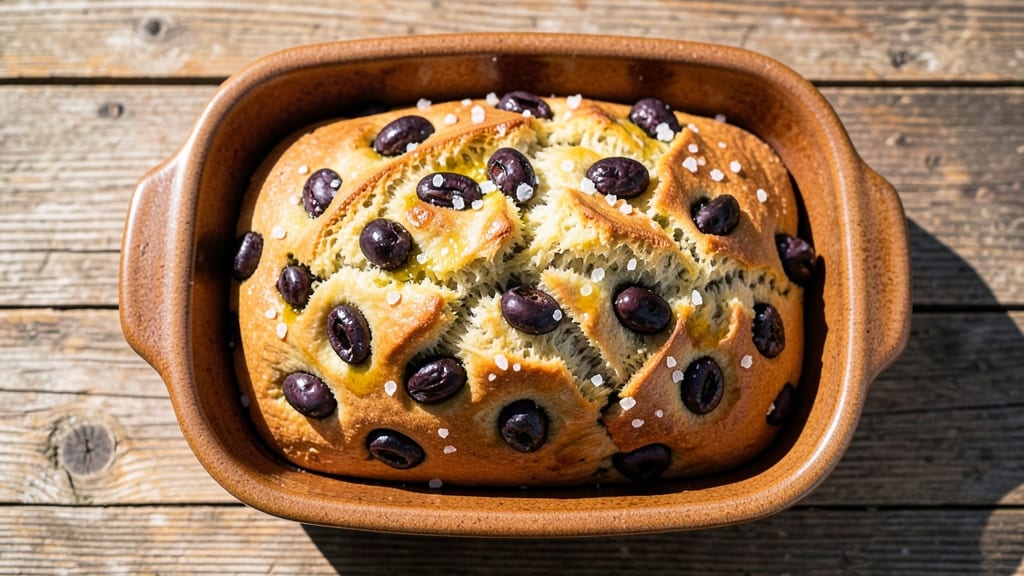
This Pioneer Woman Olive Bread recipe transforms simple ingredients into a savory masterpiece—packed with briny olives, fresh herbs, and a golden crust that begs to be torn apart. The key lies in balancing yeast activation, olive distribution, and baking precision to achieve a bread that's both rustic and refined.
I developed this version after years of experimenting with Mediterranean-inspired loaves, and it consistently delivers a texture that's tender yet sturdy enough to hold up to bold flavors.
What sets this olive bread apart is the strategic use of Kalamata olives—their rich, fruity intensity pairs perfectly with rosemary and garlic, while their size ensures even distribution throughout the dough.
The recipe calls for a long fermentation (2-3 hours) to deepen flavor and improve texture, though I'll show you how to adapt it for quicker results. This isn't your typical olive bread; it's a bread that elevates olives as a star ingredient rather than an afterthought.
By the time it emerges from the oven, you'll have a loaf with a crispy, caramelized crust and a crumb so open and airy it practically melts in your mouth. The olives remain tender rather than rubbery, and the herbs infuse every bite with an aromatic brightness.
This bread shines as a centerpiece for charcuterie boards, alongside soups, or even as a savory side to grilled meats—its versatility makes it a staple worth repeating.
For those short on time, I'll include a quick-rise variation that still delivers impressive results, though purists will insist the slow fermentation is worth the wait. The secret to storage?
Wrap tightly in foil and freeze slices for up to 3 months—perfect for when cravings strike unexpectedly. Let's get started on creating a loaf that'll have everyone asking for seconds.
Ingredients for pioneer woman olive bread
Fresh herbs and briny olives elevate this rustic loaf to restaurant-quality heights—just 13 ingredients, no shortcuts.
| Ingredient | Amount | Notes |
|---|---|---|
| All-Purpose Flour 🌾 | 4 cups | Sifted for even distribution |
| Active Dry Yeast 🍞 | ½ tsp | Ensure freshness with expiration check |
| Granulated Sugar 🍚 | 1 tbsp | For yeast activation |
| Warm Water 💧 | 1 cup | 110°F for optimal yeast activation |
| Extra-Virgin Olive Oil 🫒 | ½ cup | High-quality for richness |
| Kalamata Olives 🫒 | 1 cup | Pitted and roughly chopped |
| Fresh Rosemary 🌿 | ¼ cup | Finely chopped, stems removed |
| Garlic Cloves 🧄 | 4 cloves | Minced for aromatic depth |
| Diamond Crystal Kosher Salt 🧂 | 1 ½ tsp | Adjust to taste |
| Coarse Sea Salt 🧂 | 1 tbsp | For crust enhancement |
| Cornmeal 🌽 | ½ cup | For dusting baking sheet |
| Large Eggs 🥚 | 1 whole | Room temperature for even mixing |
| Semolina Flour 🌾 | ¼ cup | Optional for crust texture |
The Kalamata olives are non-negotiable here—their vibrant, fruity depth sets this bread apart. Trader Joe's or Whole Foods carry the best-quality jars, but any good olive oil store will have them. If you can't find Kalamata, Gaeta olives work as a close second. The rosemary should be fragrant and bright green—none of that wilted stuff from the back of the produce bin. For the flour, I always use a 50/50 blend of bread flour and all-purpose if I have it, but all-purpose works perfectly fine. The yeast? Bob's Red Mill is my go-to brand—it's reliable and stays fresh longer than store-brand options.
No fresh rosemary? Dried rosemary at one-third the amount will work, though it lacks that bright aroma. Running short on olives? Sun-dried tomatoes, chopped add a similar depth, though the texture will differ slightly. The garlic can be roasted for a sweeter flavor—just toss whole cloves with olive oil and bake at 400°F for 10 minutes before mincing. For the olive oil, avoid the cheap stuff—you'll taste the difference in every bite. The egg adds structure, but if you're avoiding it, 1 tbsp of water plus 1 tsp of olive oil mimics the binding effect. And trust me on the semolina—it's worth the extra minute to dust your baking sheet.
This dough ferments best at room temperature for 2-3 hours, but if you're short on time, the quick-rise variation (1 hour with extra yeast) still delivers incredible results. Store leftovers wrapped in a clean kitchen towel for up to 3 days, or freeze slices for 3 months—they reheat beautifully in a 350°F oven for 5-7 minutes. The crust stays crisp for about 2 hours after baking, so slice it while it's still warm for the best texture. For extra crunch, brush the baked loaf with melted butter before serving—simple, but game-changing.
Why You'll Love This Recipe
- No-Knead Magic: I swear by this dough—just mix, let it rise, and boom, no standing at the counter for hours. The yeast and olive oil do all the heavy lifting while you sip coffee.
- Rich Olive Twist: That extra-virgin olive oil? It’s the star—brings a subtle fruitiness that turns plain bread into something ridiculously good. Honestly, I’d eat it straight with a drizzle of honey.
- Weeknight Workhorse: Toss it in a basket for breakfast, toast it for sandwiches, or serve it warm with dinner. It’s my go-to for lazy mornings and fancy dinners—no one ever questions why it’s on the table.
- Pantry Staple Power: Uses flour, yeast, and sugar you already have—no specialty ingredients. And leftovers? They keep for days, so you’re not scrambling to bake again. Budget-friendly and foolproof.
Step-by-step instructions for olive bread with fresh herbs
Here's how to craft this rustic bread with a Mediterranean flair—crisp crust, tender crumb, and bold flavors.
Activate the Yeast and Prepare the Dough Base
In a small bowl, combine the 1 cup warm water (tested at 110°F—it should feel warm to touch but not hot) with the 1 tbsp granulated sugar and 0.5 tsp active dry yeast. Let this sit for 5-10 minutes until frothy and bubbly—this confirms your yeast is alive and ready to work. If it doesn't bubble, your yeast may be expired or the water too hot.
In a large mixing bowl, whisk together the 4 cups all-purpose flour and 1.5 tsp diamond crystal kosher salt. Create a well in the center and pour in the yeast mixture along with the 0.5 cup extra-virgin olive oil. Use a wooden spoon or your hands to gradually incorporate the ingredients, forming a shaggy dough. The texture will be sticky, but that's exactly what we want for a tender crumb.
Incorporate Olives, Herbs, and Garlic
Add the 1 cup pitted and roughly chopped kalamata olives, 0.25 cup finely chopped fresh rosemary, and 4 minced garlic cloves to the dough. Work these in thoroughly, distributing them evenly throughout. The olives should be scattered like little jewels, and the rosemary should perfume the dough with its piney aroma. If the dough feels too stiff, add 1-2 tablespoons of warm water to loosen it.
This is where the bread gets its signature character—don't skip the thorough mixing. The olives and herbs need to be fully integrated so every bite delivers their briny, aromatic punch. Cover the bowl with a damp towel and let the dough rest for 30 minutes at room temperature. This initial rest helps the flour absorb the liquid and the gluten begin to relax.
Knead and Develop the Gluten
Lightly flour a clean surface and turn out the dough. Knead it vigorously for 8-10 minutes by pushing, folding, and turning. You're building gluten, which gives the bread its structure and chew. The dough should become smooth and elastic, pulling away from the surface when you press your finger into it. If it's still sticky, add 1 tablespoon of flour at a time until it's just manageable.
Here's the thing—this kneading step is non-negotiable for a proper crumb. If you rush it, your bread will be dense. Test for readiness by doing the "windowpane test": stretch a small piece of dough thin enough to see light through it without tearing. If it passes, your dough is ready. Shape it into a round loaf, place it back in the bowl, and let it rise in a warm, draft-free place for 1-1.5 hours, or until it has nearly doubled in size.
Shape and Proof the Dough
Turn the risen dough onto a lightly floured surface and gently shape it into a 12-inch round loaf, about 1.5 inches thick. Place it on a parchment-lined baking sheet and brush the top with a beaten large egg for shine. Sprinkle generously with 1 tbsp coarse sea salt and 0.25 cup semolina flour for texture. This step adds that iconic rustic crust we're after.
Cover the loaf loosely with plastic wrap or a damp towel and let it proof for another 30-45 minutes until it has risen about 50% more. The dough should feel springy when pressed gently—this final proofing ensures a light, airy crumb. Preheat your oven to 425°F while the bread proofs. The oven should be fully heated before baking begins.
Bake to Golden Perfection
Bake the loaf for 25-30 minutes until the crust is deep golden brown and sounds hollow when tapped on the bottom. The internal temperature should reach 190-200°F. If the top browns too quickly, tent the loaf with foil to prevent over-browning while it finishes baking.
Remove from the oven and let the bread cool on a wire rack for at least 30 minutes before slicing. This resting period allows the steam inside to escape, preventing a gummy crumb. The aroma of fresh rosemary and olives will fill your kitchen—worth every minute of the process. Serve warm with extra-virgin olive oil for dipping or alongside soups and salads.
Pro Tips For Making Pioneer Woman Olive Bread
- TEST YEAST FIRST: Skip the guesswork—mix 1 packet yeast with ¼ cup warm water (110°F) and 1 tsp sugar in a small bowl. If it doesn’t foam in 5–10 minutes, your yeast is dead or the water’s too hot. No bubbles? Toss it and start fresh. I learned this the hard way when my whole batch turned flat because I assumed the yeast was fine—it wasn’t.
- WEIGH YOUR FLOUR: Scooping flour from the bag packs in air, which means your dough will be drier and tougher. Use a kitchen scale instead—this recipe needs exactly 500g all-purpose flour. If you’re measuring cups, spoon it in and level off; don’t tap the bowl. Trust me, your bread’s texture will thank you.
- KNEAD LESS, STRETCH MORE: Over-kneading makes olive bread dense. After the first 5 minutes by hand (or 3 minutes with a mixer), switch to "stretch and folds": Wet your hands, grab one side of the dough, stretch it up, then fold it over. Do this 3–4 times total—just until the dough springs back slowly. Less effort, better flavor.
- OIL THE PAN HOT: Brush the Dutch oven with extra-virgin olive oil only after it’s preheated. Cold oil won’t stick, and your bread will tear when you flip it. Heat the pan first, then add 1–2 tablespoons of oil—just enough to coat the bottom and sides. The crust will be crispier, and cleanup easier. (Yes, even if you’re impatient like me.)
Dietary considerations for this pioneer woman olive bread
Gluten-Free Adaptation
For a gluten-free version, replace the 4 cups all-purpose flour with a 1:1 gluten-free baking flour blend like King Arthur Measure for Measure. Add 1 tsp xanthan gum to help bind the dough, as gluten-free flours lack natural elasticity.
The dough will be stickier, so use a stand mixer with a dough hook for 5 minutes to fully incorporate. Fermentation time may need extending to 4-5 hours since gluten-free dough rises slower. 🌾
Dairy-Free Options
This recipe is naturally dairy-free, but if you're avoiding eggs too, replace the 1 large egg with 1 tbsp ground flaxseed mixed with 3 tbsp water (let it sit for 5 minutes to gel).
For extra richness, brush the baked loaf with olive oil instead of melted butter. The texture remains tender, though slightly denser without the egg's structure. 🥚
Lower-Sodium Version
Reduce the 1.5 tsp kosher salt to 1 tsp and omit the 1 tbsp coarse sea salt on top. Boost flavor with 1 extra minced garlic clove and 1 tbsp lemon zest mixed into the dough.
The olives already provide briny depth, so no extra salt is needed. Taste before baking and adjust if desired. 🧂
Vegan-Friendly Swaps
Use vegan active dry yeast (like Red Star Vegetarian Yeast) and replace the egg with 1 tbsp aquafaba (chickpea brine) or 1 mashed banana for moisture. For binding, add 1 tbsp psyllium husk powder to the flour blend. The dough will be denser but still delicious when baked. 🌱
Quick-Rise Adaptation
Double the yeast to 1 tsp and reduce fermentation to 1 hour total (30 minutes after shaping). Place the dough in a 275°F oven for 10 minutes to help it rise faster, then shape and bake as directed.
While not identical to the slow-fermented version, it still delivers a flavorful loaf when time is tight. ⏰
Allergen-Free Notes
Check olive labels for cross-contamination warnings if allergies are a concern. Use a dedicated flour sifter and clean all surfaces thoroughly if sharing equipment with gluten-containing products.
For nut-free kitchens, ensure no trace amounts remain from other recipes. Always verify ingredient sources—some olive brands process in facilities with nuts or dairy. 💡
Nutrition facts
Frequently asked questions
Can I use green olives instead of Kalamata in this recipe?
Yes, but the flavor will differ significantly. Kalamata olives have a rich, fruity depth that pairs beautifully with rosemary and garlic. Green olives are more briny and milder—if you use them, reduce the salt slightly (1 tsp instead of 1.5 tsp) to balance the flavor. The texture will be slightly firmer, but still delicious.
Why does my dough feel too sticky after kneading?
Sticky dough is normal for this recipe—it's what creates that tender crumb! If it's unbearably sticky, add 1 tablespoon of flour at a time until it's just manageable. Over-flouring can make the bread dense, so work quickly. The dough should pull away from the surface when you press your finger in but still feel slightly tacky.
Can I make this bread without a stand mixer?
This dough is perfect for hand-kneading. Use a lightly floured surface and knead vigorously for 8-10 minutes, pushing, folding, and turning the dough. The windowpane test (stretching dough thin enough to see light through) confirms it's ready. A stand mixer makes it easier, but strong arms work just fine.
How do I store leftovers to keep them fresh?
Wrap the cooled loaf tightly in plastic wrap or a clean kitchen towel and store at room temperature for up to 3 days. For longer storage, slice and freeze individual portions for up to 3 months. To reheat, warm slices in a 350°F oven for 5-7 minutes until crispy again.
What's the best way to serve this olive bread?
This bread shines as a centerpiece for charcuterie boards, alongside soups, or with grilled meats. For extra flair, brush warm slices with extra-virgin olive oil and sprinkle with flaky sea salt. It also makes a fantastic side for antipasto platters or as a base for open-faced sandwiches with prosciutto and mozzarella.