
Side Dishes
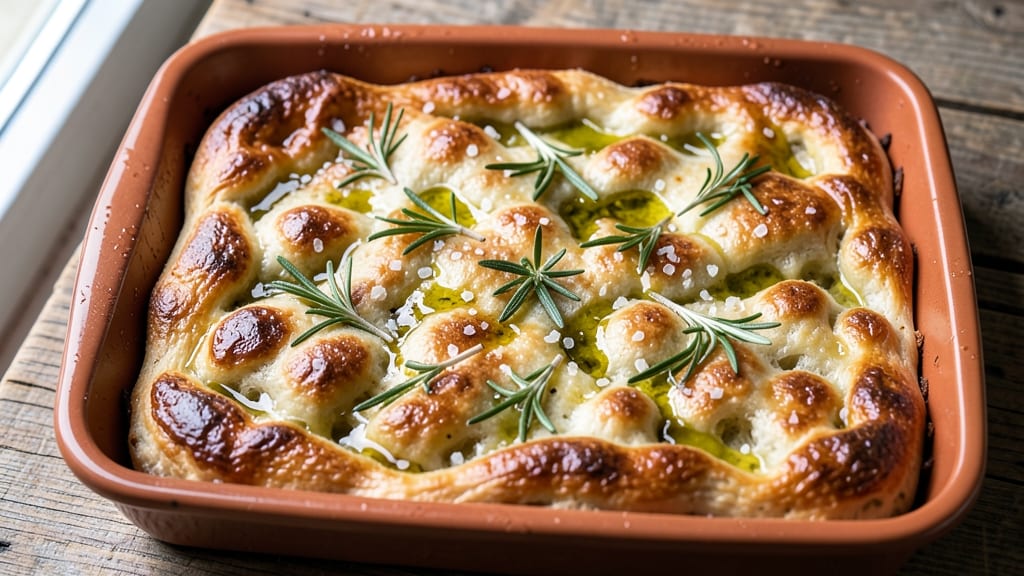
This King Arthur focaccia bread recipe delivers restaurant-quality results with an olive oil-pooled golden crust and airy, pillowy interior—exactly what makes focaccia irresistible. The secret lies in using King Arthur Flour’s high-protein blend, which creates that signature chewy texture while absorbing olive oil like a sponge.
I’ve baked this version countless times for dinner parties, and it never disappoints.
What sets this recipe apart is the two-stage rising process—first a quick bulk rise, then a long final proof in the fridge overnight. This method develops deep flavor and ensures the bread bakes up perfectly tall with those coveted dimples.
The dough is simple to mix, requiring just flour, water, yeast, and olive oil, but the technique transforms it into something extraordinary.
By the time it emerges from the oven, you’ll have a focaccia with a crispy, caramelized crust that shatters at the touch and a soft, open crumb inside. The aroma of fresh rosemary and garlic infusing the warm oil is enough to make anyone rush to the table.
This is the kind of bread that elevates any meal from ordinary to memorable.
Use it fresh for sandwiches, tear into warm pieces for dipping, or save slices for crostini the next day. The recipe scales easily—whether you’re feeding a crowd or just treating yourself to a loaf of homemade goodness. Let’s get started on creating your perfect focaccia.
Ingredients for king arthur focaccia bread
Four cups flour, one secret ingredient—King Arthur's high-protein blend—and a pool of golden olive oil.
| Ingredient | Amount | Notes |
|---|---|---|
| King Arthur Bread Flour 🌾 | 4 cups | High-protein blend for chewy texture |
| Extra-Virgin Olive Oil 🫒 | ¾ cup | High-quality, fruity variety |
| Warm Water 💧 | 1 ½ cups | 110°F for optimal yeast activation |
| Active Dry Yeast 🍞 | ¼ oz | 1 packet (2¼ tsp) |
| Salt 🧂 | 1 ½ tsp | Kosher or sea salt |
| Fresh Rosemary 🌿 | ¼ cup | Finely chopped, stems removed |
| Garlic Cloves 🧄 | 4 cloves | Minced for oil infusion |
| Flaky Sea Salt 🧂 | 2 tbsp | For final crust sprinkle |
| Coarse Ground Black Pepper 🌶️ | 1 tsp | Optional for finishing |
The flour is non-negotiable here. King Arthur Bread Flour has that extra protein for the signature chewy texture, but King Arthur White Whole Wheat works too if you want a nuttier profile. Olive oil quality matters—California Avocado or Corto brands deliver that fruity depth. For the yeast, Saf-Instant is my go-to since it doesn't need proofing, but regular active dry yeast works if you let it bloom first. The rosemary should be fresh (the dried stuff just can't compete), and Whole Foods or local markets usually have the best bunches. Store-bought often has woody stems—trim them carefully.
No extra-virgin olive oil? Light olive oil works in a pinch, but you'll miss that fruity aroma. Short on rosemary? Fresh thyme at double the amount gives a similar herbal note. The garlic can be pre-minced from a jar (though fresh tastes better), and if you're feeling fancy, add a pinch of red pepper flakes to the oil for heat. For the flaky sea salt, Maldon or Jacobsen brands are worth the splurge—they dissolve beautifully into the crust. If you can't find them, regular coarse kosher salt works too, just use a bit more since it's less uniform.
This dough is best made a day ahead. After the first rise, shape it into a pan and refrigerate overnight for that deep flavor development. The dough keeps 3 days in the fridge once shaped, or you can freeze it for up to 3 months—just let it thaw on the counter before baking. For the oil pool, use a 9x13-inch pan (or similar) and don't skimp—you want enough oil to create that signature pool. Leftovers? Toast them for crostini—they're even better the second time around.
Why You'll Love This Recipe
- No-Knead Magic: I swear by this recipe because it actually requires zero kneading—just mix the King Arthur Bread Flour with warm water, a pinch of yeast, and olive oil, then let it rise while you drink your coffee. The dough stretches effortlessly, and the texture turns out light and airy without a single elbow grease in sight.
- Olive Oil Luxury: That first drizzle of extra-virgin olive oil into the dough? It’s the secret weapon. The bread develops a golden crust with a tender crumb, and the flavor? Rich, buttery, and just salty enough to make your taste buds sing—no fancy ingredients, just pure, simple indulgence.
- Weeknight Workhorse: Between us, this focaccia is my go-to for everything: toast for breakfast, sandwiches for lunch, and charcuterie boards when friends drop by. It freezes like a dream too—just slice, wrap, and reheat for fresh bread anytime. (Yes, even on a Tuesday night.)
- Budget-Friendly Staple: A loaf costs less than takeout, feeds four, and lasts days. The King Arthur flour gives it that perfect chew, while the olive oil stretches thin when you brush it on—meaning more flavor for fewer dollars. Honestly, it’s the kind of recipe that makes me feel like I’m feeding my family gourmet without breaking the bank.
Step-by-step instructions for King Arthur focaccia bread
Here's the method for creating a perfectly crisp-edged, aromatic focaccia using only the ingredients you have.
Activate the Yeast with Olive Oil and Warm Water
In a large mixing bowl, combine the 1.5 cups warm water (tested at 110°F) with 0.75 cup extra-virgin olive oil and 1.5 teaspoons salt. Stir until the salt dissolves completely—this creates a flavorful liquid base for the yeast. Sprinkle the 0.25 oz active dry yeast over the surface and let it sit undisturbed for 5 minutes. You'll see it begin to foam and bubble, indicating it's active and ready to work.
This step is crucial because the yeast needs time to hydrate and activate before mixing with flour. If it doesn't foam within 5 minutes, your yeast may be expired—start fresh with a new packet. The olive oil here serves a dual purpose: it nourishes the yeast while adding richness to the final bread.
Develop the Dough with Rosemary and Garlic
Gradually add the 4 cups King Arthur bread flour to the yeast mixture while stirring with a wooden spoon. The dough will be shaggy at first, but keep mixing until it begins to come together. Once the flour is mostly incorporated, press the dough down with your hands to help it form a cohesive mass. Add the 0.25 cup finely chopped fresh rosemary and 4 minced garlic cloves, then knead the dough on a lightly floured surface for 5-7 minutes until smooth and elastic.
Here's where the texture begins to transform—you're building gluten strands that will give your focaccia its signature chewy yet airy crumb. If the dough feels too sticky, wet your hands slightly to help handle it without adding extra flour. The rosemary and garlic will infuse the dough with aromatic depth during this kneading process.
Shape and Rest for Optimal Texture
Transfer the dough to a lightly oiled 9x13-inch baking pan, stretching it gently to fit the dimensions. Use your fingers to create dimples across the surface—this will become the signature dimpled top of your focaccia. Cover the pan with a clean kitchen towel and let the dough rise at room temperature for 1-1.5 hours, or until it has visibly puffed and nearly doubled in size. The edges should pull away slightly from the pan's sides.
This resting period allows the gluten to relax and the yeast to continue fermenting, developing maximum flavor. I like to place the pan in a warm spot—near a slightly warmed oven with the light on works well. The dough should spring back slowly when pressed gently with a finger, indicating it's ready for the final steps.
Create the Signature Olive Oil Pool
Preheat your oven to 400°F. Remove the risen dough from the pan and generously drizzle the remaining extra-virgin olive oil (about 2-3 tablespoons) over the surface, creating a thin, even layer. Use your fingers to spread the oil into the dimples, creating a shimmering pool that will crisp beautifully in the oven. Sprinkle evenly with 2 tablespoons flaky sea salt and 1 teaspoon coarse ground black pepper, pressing lightly so they adhere.
The oil pooling technique is what makes this focaccia truly special—it creates that signature golden, crispy crust while keeping the interior tender. Don't be shy with the oil here; you want a visible sheen on the surface. The flaky sea salt will melt slightly during baking, creating pockets of concentrated saltiness that contrast perfectly with the soft interior.
Bake to Golden Perfection
Bake the focaccia in the preheated oven for 25-30 minutes until the crust is deep golden brown and the internal temperature reaches 190°F when measured with an instant-read thermometer. You'll know it's done when the crust sounds hollow when tapped with your knuckles and pulls away easily from the pan's edges.
For the final touch, I recommend broiling for 1-2 minutes at the end to intensify the browning on the crust. Keep a close eye during this step—broilers can work quickly and burn the edges. Let the focaccia cool in the pan for 10 minutes before transferring to a wire rack. This resting period allows the crust to set while keeping the interior moist and tender.
Pro Tips For Making King Arthur Focaccia Bread
- Measure Oil Precisely: King Arthur Bread Flour loves oil, but don’t eyeball it—use a kitchen scale for ⅓ cup (about 75g) of that golden extra-virgin olive oil. Too little and your dough stays dense; too much and it turns greasy. I learned this after making a batch that tasted like a deep-fryer instead of focaccia.
- Hydrate Yeast Properly: Warm the water to 105–110°F (not boiling) and let the yeast sit for 5–10 minutes until frothy before mixing. Cold water kills it; hot water cooks it. I once skipped this and ended up with a sad, flat loaf—now I double-check with my thermometer.
- Skip the Over-Kneading: This dough is sticky and forgiving, but don’t punch it down like pizza dough. Just 5–6 gentle stretches and folds (about 2 minutes total) are enough. Overworking it develops gluten too much, and your focaccia will turn out tough instead of tender.
- Preheat Pan with Oil: Brush the baking pan with olive oil before shaping the dough—it’s the non-negotiable step for that crispy bottom crust. I used to forget, and my focaccia would stick like glue. Now I oil it first, then shape the dough right in the pan for maximum flavor.
Storing and reheating this recipe
Room-Temp Revival
If your focaccia has sat at room temperature for up to 2 days, revive it by wrapping it tightly in a damp kitchen towel and placing it in a 350°F oven for 10-15 minutes.
The steam from the towel will soften the crust while reheating the interior. For extra crispiness, brush with 1 tablespoon olive oil before reheating. This method works best for slices meant for sandwiches or crostini. 🔥
Oven Refresh Method
For a whole loaf, preheat your oven to 375°F and place the focaccia on a baking sheet. Cover it loosely with aluminum foil and bake for 12-15 minutes until warmed through. Remove the foil for the final 2 minutes to crisp the crust.
I like to add a sprinkle of flaky sea salt just before serving—it restores that fresh-from-the-oven flavor. This technique preserves the bread's texture better than microwaving.
Freezer Storage Tips
Focaccia freezes beautifully for up to 3 months when stored in a ziplock freezer bag with all air removed. To reheat, thaw overnight in the fridge, then follow the oven refresh method above.
For quicker reheating, place frozen slices directly on a baking sheet and bake at 350°F for 8-10 minutes until heated through. The texture remains surprisingly fresh—almost as good as day one! ❄️
Microwave Shortcut
When you're in a hurry, wrap focaccia slices in a damp paper towel and microwave on 50% power for 20-30 seconds. The damp towel prevents drying while heating.
For best results, press the slices between two paper towels for 10 seconds after microwaving to restore some crispness. This method works best for quick breakfasts or last-minute appetizers.
Crust Crispiness Hack
To restore that signature focaccia crispness, place reheated slices under a broiler for 30-60 seconds just before serving. Keep a close eye—they can go from perfect to burnt in seconds.
For extra flavor, brush with a mix of olive oil and garlic powder before broiling. This technique works especially well for crostini or as a base for bruschetta toppings.
Day-After Flavor Boost
Revive stale focaccia by brushing with 1 tablespoon melted butter mixed with 1 teaspoon lemon juice and baking at 350°F for 8 minutes. The acidity in the lemon juice helps break down starches, making the bread taste fresher.
Add a sprinkle of fresh herbs (like parsley or thyme) for a restaurant-quality finish. This method transforms day-old bread into something that feels like it just came out of the oven. ✨
Nutrition facts
Frequently asked questions
Can I substitute King Arthur Bread Flour with all-purpose flour?
The texture will be different—King Arthur Bread Flour has higher protein for that signature chewy yet airy crumb. For a closer match, use a 50/50 blend of all-purpose and bread flour. The crust will be slightly less crisp, but the flavor remains excellent. The olive oil pooling technique still works beautifully!
Why does my focaccia turn out dense instead of light and airy?
Dense focaccia usually means the yeast didn't activate properly or the dough didn't rise enough. Always use 110°F water for yeast activation, and let the dough rise until it nearly doubles in size. For extra lift, try a second rise overnight in the fridge—this cold fermentation develops flavor and improves texture.
How do I make this focaccia without a 9x13-inch pan?
Use a 8x8-inch square pan or round 9-inch cake pan—just adjust the baking time by 5-10 minutes. For a rustic look, shape the dough into a freeform loaf on a baking sheet lined with parchment. The olive oil pooling technique still works, but expect slightly different dimensions. The texture remains excellent!
Can I add other toppings besides rosemary and garlic?
Try lemon zest + sun-dried tomatoes, fresh thyme + cherry tomatoes, or olives + feta. Add toppings after shaping but before the final rise. For cheesy focaccia, sprinkle shredded mozzarella in the dimples before baking. Just reduce the baking time by 2-3 minutes to prevent over-browning.
How do I store focaccia to keep it fresh longer?
Wrap cooled focaccia in a beeswax wrap or airtight container and store at room temperature for 2-3 days. For longer storage, freeze slices for up to 3 months. To revive, reheat in a 350°F oven for 8-10 minutes until crispy. The olive oil helps preserve freshness longer than regular bread.