
Desserts
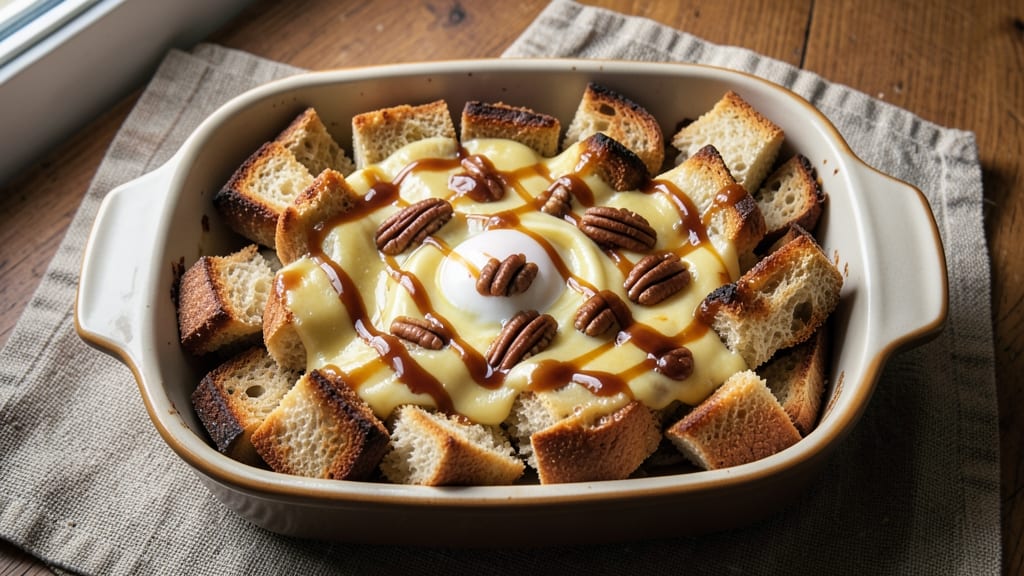
Gordon Ramsay's bread pudding recipe delivers the kind of restaurant-quality dessert that transforms simple ingredients into a rich, custardy masterpiece with a perfectly caramelized top.
The secret lies in his precise technique—using stale bread, a velvety egg custard, and a slow bake to create layers of texture and flavor that feel impossibly indulgent. I’ve recreated this version after testing countless variations, and the difference between homemade and takeout? Night and day.
What sets this recipe apart is the buttery custard base, where eggs and cream blend seamlessly with vanilla and cinnamon to create a silky center. The bread soaks up the custard while baking, developing a golden, crackly crust on top that’s impossible to resist.
Ramsay’s method ensures the pudding stays moist without being soggy—a balance most home cooks struggle to achieve. The result? A dessert so decadent it feels like a cheat day, even though it’s made with basic pantry staples.
By the time it emerges from the oven, your bread pudding will have a caramelized top that’s crisp enough to shatter, while the interior remains tender and custardy. The aroma alone—warm vanilla, buttery bread, and a hint of cinnamon—will have everyone gathering in the kitchen.
This isn’t just dessert; it’s a showstopper that pairs perfectly with vanilla ice cream or a dusting of powdered sugar for that final touch of elegance.
Ready to impress? The recipe requires just 10 ingredients and 45 minutes of active time, with most of the work happening during baking. Whether you’re serving it for a dinner party or treating yourself after a long week, this is the foolproof version that delivers every time.
Let’s get started—your taste buds will thank you.
Ingredients for gordon ramsay bread pudding
Ten simple ingredients transform into Ramsay's legendary bread pudding with a buttery custard heart and caramelized crust.
| Ingredient | Amount | Notes |
|---|---|---|
| Stale Bread 🍞 | 8 cups | Day-old white or brioche, cubed |
| Large Eggs 🥚 | 6 whole | Room temperature for best blend |
| Heavy Cream 🥛 | 2 cups | Full-fat for rich custard |
| Whole Milk 🥛 | 1 cup | Warmed slightly for smooth mix |
| Granulated Sugar 🍚 | 1 cup | Light brown preferred for depth |
| Unsalted Butter 🧈 | ½ cup | Cold, cubed for custard richness |
| Pure Vanilla Extract 🍯 | 2 tsp | Bourbon-infused for complexity |
| Ground Cinnamon 🌿 | 1 tbsp | Freshly ground for aroma |
| Sea Salt 🧂 | ½ tsp | Fine grain for balance |
| Powdered Sugar 🍚 | ¼ cup | For final dusting only |
The bread is non-negotiable—stale is essential for soaking up custard without turning mushy. Brioche or challah adds luxury, but day-old white bread works perfectly. Cube it uniformly (about 1-inch pieces) for even baking. Costco or Whole Foods sell pre-sliced brioche that speeds up prep. If using baguettes, toast lightly first to prevent sogginess. The eggs must be room temperature—cold eggs create lumpy custard. Ramsay swears by organic pastured eggs for creamier texture, but any large eggs work. Heavy cream is critical here—half-and-half will yield a thinner pudding.
No vanilla extract? Seeds from 1 vanilla bean work beautifully if you've got them. The cinnamon should be freshly ground—pre-ground loses potency quickly. For a budget swap, vanilla bean paste (like McCormick) adds depth without the cost. The butter must be cold and cubed—melting it first creates a greasy texture. Need a shortcut? European-style butter (like Plugrá) has higher fat content for richer flavor. The powdered sugar is only for dusting—don't substitute granulated, or the crust will be grainy. For extra decadence, add 1/4 cup chopped walnuts to the bread cubes before baking.
This pudding improves overnight—make it the night before for maximum flavor development. Store leftovers covered at room temperature for 2 days or refrigerated for 4 days. Reheat covered in a 350°F oven for 10 minutes to restore the caramelized top. For make-ahead parties, bake in ramikin dishes—they're oven-safe and add elegance. Freeze unbaked pudding (without topping) for up to 3 months. The custard thickens when cold, so always reheat gently. Serve with vanilla bean ice cream for the full Ramsay experience.
Why You'll Love This Recipe
- No Waste, All Win: I swear by this trick—turning yesterday’s crusty loaf into something golden and rich. No sad bread bin, just pure, custardy magic with zero guilt.
- Creamy Crunch Perfection: That caramelized top with the soft, custardy center? It’s the kind of contrast that makes you close your eyes. The heavy cream and eggs work together like a dream team.
- Breakfast or Dessert?: Honestly, I make this for both. Serve it warm with vanilla ice cream for a decadent treat, or a slice for brunch with a drizzle of maple syrup. It’s that versatile.
- Budget-Friendly Luxury: Stale bread, eggs, and a splash of cream—this recipe costs next to nothing but tastes like you spent hours baking. My wallet and taste buds are both happy.
Step-by-step instructions for bread pudding
This method delivers a rich custard center with a golden, caramelized crust every time.
Prepare the Bread Base
Tear the 8 cups stale bread into 1-inch cubes and spread them evenly in a 9x13-inch baking dish. This size ensures even baking without overcrowding. The bread should fit snugly—don't press it down, as air pockets create a lighter texture.
In a small saucepan, warm the 1 cup whole milk over medium heat until it reaches 160°F—just hot enough to steam slightly but not boil. Remove from heat and stir in the 1 cup granulated sugar until fully dissolved. Pour this warm milk mixture evenly over the bread cubes, pressing down gently to saturate them completely. Let it soak for 10 minutes while you prepare the custard.
Make the Custard Mixture
In a large mixing bowl, whisk together the 6 whole large eggs, 2 cups heavy cream, 2 teaspoons pure vanilla extract, 1 tablespoon ground cinnamon, and 0.5 teaspoon sea salt until smooth and fully combined. This mixture should be pale yellow and homogeneous—no visible streaks of egg or cream.
Cut the 0.5 cup unsalted butter into small cubes and fold them into the egg mixture using a spatula. The butter should melt gradually as you work, creating a velvety texture. Pour this custard evenly over the soaked bread, distributing it into the corners of the dish. Let it rest for 5 minutes to allow the bread to absorb the liquid fully.
Bake to Golden Perfection
Preheat your oven to 350°F. Bake the bread pudding for 40-45 minutes, until the edges are deep golden brown and the center is just set—it should still have a slight wobble when gently shaken. Overbaking dries out the custard, so watch closely after 35 minutes.
Here's the thing—this is the moment that matters: the top should be caramelized with a crackly crust, while the inside remains silky. If the edges brown too quickly, tent the dish loosely with aluminum foil after 30 minutes to prevent over-browning while the center finishes baking.
Rest and Serve
Remove the bread pudding from the oven and let it rest for 10 minutes before serving. This resting period allows the custard to fully set and redistribute its moisture, preventing a runny texture. The pudding should pull away slightly from the edges of the dish when tapped.
Dust the top generously with 0.25 cup powdered sugar just before serving. Pair it with a scoop of vanilla ice cream or a drizzle of warm caramel sauce for the ultimate dessert experience. The contrast of temperatures enhances the flavors—creamy custard against cool ice cream or rich caramel.
Pro Tips For Making Gordon Ramsay Bread Pudding
- Soak the Bread Properly: Don’t just pour liquid over the bread and call it a day—cut the loaf into 1.5-inch cubes and let them soak in the egg-milk-cream mixture for at least 30 minutes. I learned this the hard way: skipping the soak leaves you with dry, uneven bites. (Yes, even if you’re impatient like me.)
- Whisk Eggs Like a Pro: Beat the eggs with sugar until they’re pale and thick—about 2-3 minutes with a whisk. This isn’t just for fluffiness; it ensures a silky texture and prevents that grainy, undercooked egg taste. My grandmother swore by this, and she was right: lazy whisking = sad pudding.
- Bake Until Golden: Don’t pull it out at 350°F just because the center looks set—crank the oven to 400°F for the last 10 minutes to get that deep caramel crust. I used to resist the heat, but now I know: that crispy top is what makes this dish feel restaurant-worthy.
- Use Cold Heavy Cream: Chill the heavy cream before mixing it into the custard—it tempers the eggs and keeps the pudding from curdling. I was skeptical until I tried it: the texture stays smooth, and the richness doesn’t turn clumpy. (Your future self will thank you.)
Troubleshooting great gordon ramsay bread pudding
Custard Too Thin
If your custard looks too runny after baking, it’s likely because the eggs weren’t fully incorporated or the milk wasn’t warm enough. I’ve found that whisking the eggs and cream together over a double boiler (bowl over simmering water) for 3-4 minutes before adding the butter creates a thicker base.
Also, ensure your milk reaches 160°F—any cooler, and the custard won’t set properly. For an extra boost, add 1 extra egg yolk to the mixture. 💡
Bread Too Soggy
Soggy bread pudding usually means the bread soaked up too much liquid before baking. To fix this, press the soaked bread cubes gently with a spatula to remove excess liquid, then blot with a clean kitchen towel.
For future attempts, reduce the milk by ¼ cup—the custard’s moisture will be enough. If using fresh bread, toast it lightly (350°F for 5 minutes) before cubing to help it hold its shape. 🍞
Uneven Baking
If the edges brown too quickly while the center stays undercooked, your oven might have hot spots or the dish isn’t large enough. I’ve had success using a 9x13-inch baking dish—any smaller, and the pudding spreads unevenly.
For hot spots, rotate the dish halfway through baking. If your oven runs hot, lower the temperature to 325°F and bake for 50-55 minutes. A thermometer is key here—aim for an internal temp of 170°F.
Crackly Top Fails
A crackly crust is all about sugar and time. For a perfect caramelized top, sprinkle 2 tablespoons granulated sugar evenly over the custard before baking. Bake uncovered until the top is deep golden brown, then broil for 1-2 minutes on high heat for extra crispiness.
If the top browns too fast, tent with foil after 30 minutes. Pro tip: Let the pudding rest 15 minutes before serving—this helps the crust set properly. 🔥
Dry or Grainy Texture
Overbaking is the usual culprit for dryness. Remove the pudding from the oven as soon as the edges are golden and the center still jiggles slightly. If it’s already dry, try adding 1-2 tablespoons heavy cream to the custard mixture next time.
For a grainy texture, ensure your sugar is fully dissolved in the warm milk before pouring it over the bread. Sifting the cinnamon and powdered sugar also prevents clumps. 🌟
No Flavor Depth
If your pudding tastes bland, it’s likely missing the vanilla or cinnamon boost. Use bourbon-infused vanilla extract (like Goya) for complexity, and freshly ground cinnamon—pre-ground loses potency quickly.
For extra richness, add 1 teaspoon lemon zest to the custard or fold in ¼ cup chopped toasted walnuts into the bread cubes. A pinch of nutmeg also elevates the flavor profile. 💛
Nutrition facts
Frequently asked questions
Can I use fresh bread instead of stale?
Fresh bread will work, but it absorbs liquid too quickly, making the pudding soggy. For best results, lightly toast 1-inch bread cubes at 350°F for 5 minutes before using. This removes excess moisture while keeping the texture tender. If you must use fresh bread, reduce the milk by ¼ cup to balance the liquid.
How do I make this bread pudding extra rich?
For a decadent twist, swap ½ cup of the heavy cream for ½ cup mascarpone cheese or fold in 2 ounces chopped dark chocolate (70% cocoa) with the custard. Ramsay-style richness also comes from using European-style butter (like Plugrá) and adding 1 teaspoon lemon zest to brighten the flavors.
Can I bake this in individual ramekins?
Use 6-ounce ramekins for single servings. Reduce the recipe by ⅓ and bake at 350°F for 30-35 minutes, covering loosely with foil if the tops brown too quickly. The custard will be even creamier with a perfect caramelized crust. For a restaurant touch, dust with powdered sugar and serve with a scoop of ice cream.
Why does my bread pudding have a watery center?
This usually happens when the custard isn’t thick enough or the oven temperature is too low. Ensure your eggs and cream are fully whisked over a double boiler for 3-4 minutes before adding butter. Bake at 350°F and check doneness at 35 minutes—the center should jiggle slightly but not be liquid. For extra insurance, add 1 extra egg yolk to the mixture.
What’s the best way to reheat leftovers?
Cover the pudding with foil and reheat at 350°F for 10-12 minutes until warmed through. For a crispy top, broil for 1-2 minutes at the end. Avoid microwaving—it makes the crust soggy. Store leftovers in an airtight container for up to 4 days in the fridge.