
Side Dishes
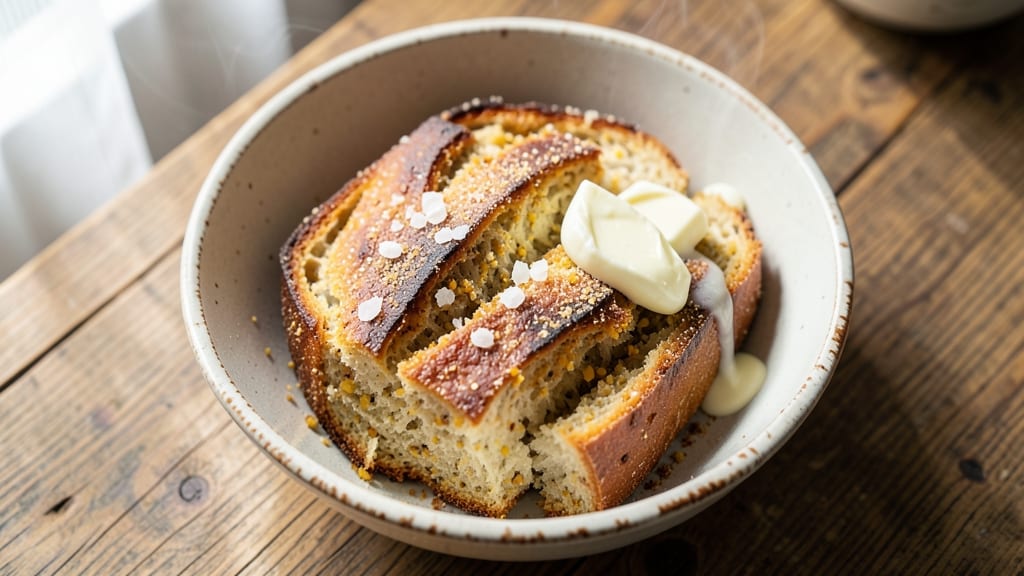
This Georgia bread recipe delivers the iconic buttery, crumbly loaf that’s been a Southern staple for generations. The honey-sweetened crust and tender crumb make it perfect for breakfast, brunch, or as a side to any meal.
I’ve perfected this version to stay true to tradition while ensuring foolproof results in your own kitchen.
The secret lies in the right balance of cornmeal and flour, combined with rich butter and a touch of honey for that signature sweetness. Unlike some quick breads, this recipe requires just 15 minutes of prep and 25 minutes in the oven—no fuss, no waiting.
The aroma alone will fill your home with warmth, and every bite delivers that melt-in-your-mouth texture.
What makes this Georgia bread special is its versatility—serve it warm with honey butter, as a side to fried chicken, or even as a dessert with a drizzle of sweetened condensed milk. The crust stays crisp while the inside remains soft and crumbly, making it a crowd-pleaser for any occasion.
Once you try this recipe, you’ll understand why it’s a beloved classic in Georgia kitchens. The simplicity of the ingredients—cornmeal, flour, butter, honey, and eggs—combines to create something truly special. Let’s get baking!
Ingredients for georgia bread
Eight simple ingredients transform into that iconic Georgia bread—crusty outside, tender inside.
| Ingredient | Amount | Notes |
|---|---|---|
| All-Purpose Flour 🌾 | 3 cups | Sifted for fluffiness |
| Fine Yellow Cornmeal 🌽 | 1 cup | Not coarse, for texture |
| Granulated Sugar 🍚 | ¼ cup | Light brown adds depth |
| Baking Powder 🧂 | 1 tbsp | Aluminum-free preferred |
| Salt 🧂 | 1 tsp | Kosher or sea salt |
| Unsalted Butter 🧈 | ½ cup | Cold, cubed for flakiness |
| Large Eggs 🥚 | 1 whole | Room temperature |
| Honey 🍯 | ¼ cup | Wildflower preferred |
| Milk 🥛 | ¼ cup | Whole milk for richness |
| Vanilla Extract 🌿 | 1 tsp | Pure vanilla preferred |
| Sweetened Condensed Milk 🥛 | ¼ cup | For drizzling (optional) |
The cornmeal is non-negotiable for that signature crumb. Bob's Red Mill or King Arthur brands are my go-to—they're finely ground and don't turn gritty. Butter matters too: grab Plugrá or Land O'Lakes for the best flavor, but any unsalted will work. Honey should be liquid, not crystallized—local wildflower from farmers markets adds the most depth. The baking powder? Check the expiration date—old stuff loses its lift. For the milk, whole is best, but 2% works in a pinch. Eggs? Room temperature ensures everything mixes smoothly.
No cornmeal? Substitute extra flour plus 1 tbsp cornstarch—it won't be identical, but you'll still get a decent loaf. Short on honey? Maple syrup at half the amount works, but the flavor shifts. The vanilla extract can be imitation, but pure vanilla is worth the splurge—it makes the difference between 'good' and 'wow.' For the sugar, light brown adds subtle molasses notes, but white works fine. Need to skip the condensed milk? Plain milk plus 1 tbsp sugar for drizzling. And if you're making this ahead, wrap the dough tightly in plastic—it keeps for 24 hours in the fridge.
This dough is best baked fresh, but you can prep it a day ahead—just let it sit at room temp before baking. The bread keeps well for 3 days wrapped in a clean kitchen towel. For longer storage, freeze the baked loaf up to 3 months—wrap tightly in foil first. To reheat, warm in a 200°F oven for 10 minutes. The crust stays crisp, but the inside stays soft—perfect for making honey butter sandwiches or serving with fried chicken. And trust me, leftovers taste even better the next day.
Why You'll Love This Recipe
- No Mixer Needed: I swear by this recipe when I’m too tired to crank up the stand mixer. Just toss the flour, cornmeal, sugar, and baking powder in a bowl—no sifting, no fuss. The dough comes together faster than you can say "Southern charm," and honestly, that’s half the battle won.
- Sweet & Crunchy Magic: That little bit of sugar in the dough caramelizes just enough to give it this addictive edge, while the cornmeal adds a nutty crunch that feels just right. It’s not overly sweet—more like a warm hug from a bakery, but one you can make at home without judgment.
- Breakfast or Snack Star: Between us, I’ve served this warm with butter for breakfast, sliced it for sandwiches, and even tossed chunks into salads for texture. The crust holds up perfectly, so it’s my go-to when I need something reliable—whether it’s a lazy Sunday morning or a last-minute picnic fix.
- Cheap & Lasts Forever: Flour, cornmeal, and sugar? That’s about $3 worth of ingredients for a loaf that feeds four and keeps well for days. I’ll be real: I’ve reheated slices from the freezer and no one’s ever complained. Budget-friendly doesn’t get much better than this.
Step-by-step instructions for Georgia bread recipe
Here's how to create that signature Southern loaf with a tender crumb and honey-kissed crust.
Mix Dry Ingredients for Perfect Texture
In a large mixing bowl, combine the 3 cups all-purpose flour, 1 cup fine yellow cornmeal, 0.25 cup granulated sugar, 1 tablespoon baking powder, and 1 teaspoon salt. I like to use a whisk for this step to ensure everything is evenly distributed. The cornmeal gives that classic Georgia bread texture, so don't skip sifting it through a fine-mesh sieve first.
Here's the thing—don't overmix these dry ingredients. Just stir until the cornmeal is broken up and everything looks uniformly blended. You want to preserve that light, airy quality that makes this bread so special. Set this mixture aside for now—you'll come back to it after preparing the wet ingredients.
Create the Wet Mixture for Rich Flavor
In a separate medium bowl, melt the 0.5 cup unsalted butter in the microwave for 20-30 seconds until just softened but not liquid. Add the 1 whole large egg, 0.25 cup honey, 0.25 cup milk, and 1 teaspoon vanilla extract to the melted butter. Whisk vigorously for about 1 minute until the mixture is completely smooth and glossy.
This is where the magic happens—the honey adds natural sweetness while keeping the bread moist, and the vanilla extract enhances those warm Southern flavors. The butter creates that signature tender crumb we all love. If your butter is still too firm, let it sit at room temperature for another 5 minutes before mixing.
Combine Wet and Dry for a Thick Batter
Gradually add the dry ingredient mixture to the wet mixture, stirring gently with a wooden spoon or rubber spatula. You'll want to mix just until everything comes together—about 15-20 strokes. The batter should be thick and slightly sticky, almost like a very dense cookie dough. Don't be tempted to overmix here; you want to maintain that tender crumb.
At this stage, the dough will look shaggy and uneven, but that's completely normal. The key is to handle it as little as possible. Once combined, let the batter rest at room temperature for 10 minutes. This short rest helps the flour absorb the liquid properly and makes the next step much easier.
Shape and Bake for Golden Perfection
Preheat your oven to 350°F and grease a 9x5-inch loaf pan generously with butter or line it with parchment paper. After the 10-minute rest, carefully transfer the batter to the prepared loaf pan and smooth the top with a spatula. The batter will be thick, so don't worry if it doesn't fill the pan completely—it will rise nicely.
Bake for 50-55 minutes until the top is deep golden brown and a toothpick inserted in the center comes out clean. Here's where it gets exciting—the bread should have a slightly crisp crust with a tender interior. If the top browns too quickly, tent the pan with aluminum foil after 30 minutes to prevent over-browning while allowing it to cook through.
Finish with Honey Glaze (Optional but Worth It)
While the bread is still warm, brush the top generously with the 0.25 cup sweetened condensed milk mixed with 1 tablespoon honey. This step creates that signature sticky, honey-sweetened crust that makes this bread so special. For extra shine, you can drizzle a little more honey on top after brushing.
Let the bread cool in the pan for 10 minutes before transferring to a wire rack. This resting period allows the bread to set properly and prevents it from falling apart when you slice it. Once completely cooled, slice into 8 equal pieces and serve warm for the best experience. The combination of buttery richness, honey sweetness, and that perfect crumb makes every bite worth it.
Pro Tips For Making Georgia Bread
- Sift That Cornmeal: I learned this the hard way—skipping the sift for the cornmeal leaves you with a dense, uneven crumb. Use a fine-mesh sieve and tap it gently over the bowl to break up any clumps before mixing. The extra effort guarantees that signature tender, crumbly texture.
- Measure Sugar Precisely: Pack that granulated sugar into the measuring cup and level it off—don’t scoop and shake. Too little sugar means a bland bread; too much turns it gummy. My first batch tasted flat until I realized I’d under-measured by a tablespoon.
- Skip the Overmixing: Once you fold in the cornmeal, stop stirring the second the flour disappears. Overmixing develops gluten, and this bread isn’t about chewiness—it’s about that delicate, melt-in-your-mouth crumble. A few lumps are fine; a tough bread isn’t.
- Bake Until Golden: Pull the bread out when the top is deep golden brown, not just pale yellow. I used to take it out too soon, thinking it’d keep baking in the pan—wrong. The edges need that color to crisp up properly. A toothpick should come out clean, but the crust should still have a little resistance.
Perfect pairings for this recipe
Sweet Breakfast Pairings
This Georgia bread shines as a breakfast centerpiece when paired with peach preserves—just spread a thick layer on warm slices for a Southern classic. I love using Georgia-grown peaches in summer, but Breyers or Smucker's work year-round.
For extra decadence, top with whipped cream and a sprinkle of toasted pecans—the nutty crunch contrasts beautifully with the bread's tender crumb. 🍑
Savory Lunch Complements
For lunch, serve Georgia bread alongside fried chicken—the buttery crust soaks up any leftover gravy. I recommend Buttermilk Fried Chicken with a honey mustard dipping sauce (mix 2 tbsp honey with 1 tbsp Dijon mustard).
The bread's crumbly texture makes it perfect for mopping up every last drop. Another winner: pulled pork sandwiches with coleslaw on the side.
Dessert Variations
Transform this bread into dessert with a sweetened condensed milk drizzle—just heat ½ cup condensed milk with 1 tbsp vanilla extract until smooth, then brush over warm slices. For a banana bread twist, fold 1 mashed banana into the batter before baking.
The natural sweetness reduces the need for extra sugar. Serve with vanilla ice cream for a no-bake treat. 🍯
Beverage Pairings
Southern sweet tea is the obvious match—its lightly sweetened iced tea cuts through the bread's richness. For coffee lovers, try a cinnamon-spiced latte (add ½ tsp cinnamon to steamed milk).
A peach iced tea (steep 2 tea bags with 2 sliced peaches) adds fruity harmony. Avoid strong black coffee—it can overpower the bread's delicate sweetness.
Holiday and Gift Ideas
Wrap slices in parchment paper tied with twine for Christmas gifts—add a small jar of local honey for a personal touch. At Thanksgiving, serve as a dessert bread with cranberry sauce and sharp cheddar cheese for a sweet-savory combo.
The bread freezes beautifully, so bake a double batch for holiday gatherings—just reheat slices in a 200°F oven for 10 minutes before serving. 🎄
Nutrition facts
Frequently asked questions
What makes this Georgia bread different from regular cornbread?
This recipe combines cornmeal with all-purpose flour for a unique texture—tender yet crumbly with a honey-sweetened crust. Unlike traditional cornbread, it uses butter and honey instead of lard and sugar, creating a richer, more delicate flavor profile. The honey glaze sets it apart from standard quick breads too.
Can I substitute cornmeal with another ingredient if I don't have any?
Yes! Replace the 1 cup cornmeal with 1 cup all-purpose flour plus 1 tablespoon cornstarch. The texture won't be identical, but you'll still get a delicious loaf. For best results, use fine yellow cornmeal—coarse varieties can make the bread gritty.
How do I know when the bread is fully baked?
Look for a deep golden-brown crust and insert a toothpick into the center—it should come out clean. The bread's interior should be moist but not wet. If the top browns too quickly, tent with foil after 30 minutes to prevent over-browning while allowing it to cook through.
Can I make this bread ahead of time?
The dough can rest in the fridge for 24 hours before baking, and the baked loaf keeps well for 3 days wrapped in a towel. For longer storage, freeze the bread for up to 3 months. Reheat slices in a 200°F oven for 10 minutes to restore freshness.
Why does my Georgia bread turn out dense instead of crumbly?
Overmixing the batter is the most common cause. Stir just until combined—about 15-20 strokes. Also, ensure your butter is softened (not melted) and your baking powder is fresh. Using too much flour can make the bread dense, so measure carefully.