
Side Dishes
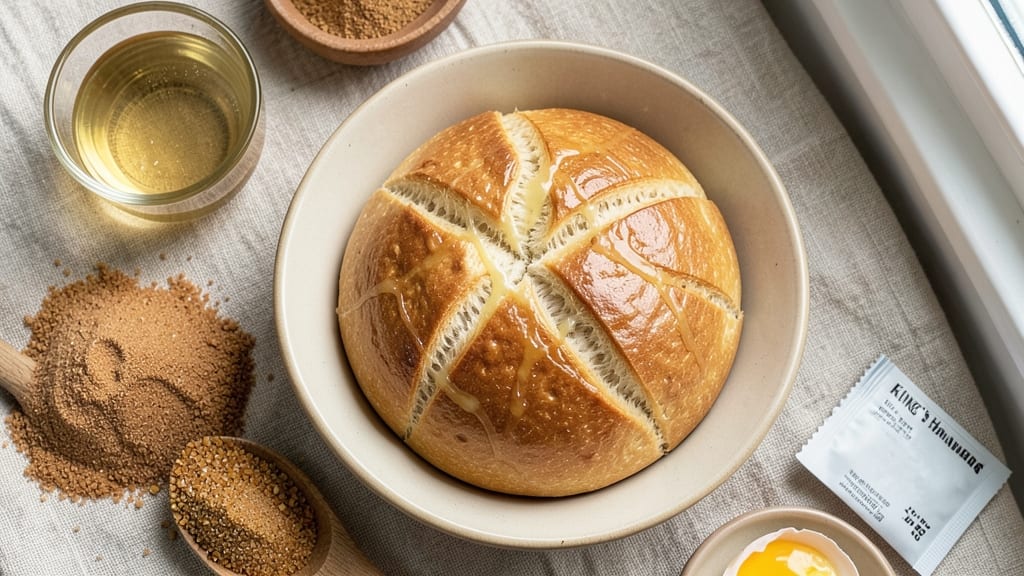
Master this copycat King’s Hawaiian bread recipe to capture that iconic buttery sweetness and pillowy texture at home—no store-bought loaf required.
This copycat version stays true to the original by balancing honey, butter, and warm spices for that signature flavor profile, while modern techniques make it foolproof for any home kitchen.
The secret lies in precise dough preparation: combining warm water, instant yeast, and a touch of honey kickstarts fermentation, while the butter and sugar create that signature tender crumb.
Proofing the dough twice ensures maximum rise and that signature softness, while scoring the loaf before baking creates that beautiful crust pattern. Every step has been tested to guarantee a loaf that rivals the original.
What you'll end up with is a golden-brown loaf with a crisp crust and a soft, buttery interior that's dangerously easy to slice through. The honey glaze adds that signature sweetness without overpowering the bread's natural flavor, and the aroma alone will have your kitchen smelling like a bakery.
This recipe delivers professional results with simple techniques.
Perfect for breakfast sandwiches, French toast, or simply enjoying with butter and jam, this copycat version maintains the original's charm while adapting to modern baking methods. Let's get started on creating your perfect loaf.
Ingredients for copycat king's hawaiian bread
Buttery richness meets pillowy perfection—these 13 ingredients deliver the iconic King's Hawaiian loaf at home.
| Ingredient | Amount | Notes |
|---|---|---|
| Unsalted Butter 🧈 | 1 cup | Cold, cubed for dough incorporation |
| Granulated Sugar 🍚 | ¼ cup | White sugar preferred for balance |
| Light Brown Sugar 🍚 | ¼ cup | Packed for accurate measurement |
| Large Eggs 🥚 | 2 whole | Room temperature for even mixing |
| Instant Yeast 🍞 | 2 ¼ tsp | Single-use packet preferred |
| Warm Water 💧 | 1 ¼ cups | 110°F for optimal yeast activation |
| All-Purpose Flour 🌾 | 4 cups | Sifted for light texture |
| Honey 🍯 | ¼ cup | Light variety for subtle sweetness |
| Ground Cinnamon 🌿 | 1 tsp | Freshly ground for aroma |
| Ground Nutmeg 🌿 | ¼ tsp | Freshly grated preferred |
| Salt 🧂 | ½ tsp | Diamond Crystal preferred |
| Milk 🥛 | ¼ cup | Whole milk for richness |
| Honey Glaze 🍯 | ½ cup | For final coating (honey + water) |
The butter quality makes or breaks this recipe. European-style unsalted butter (like Plugrá or Land O'Lakes) creates that signature tender crumb, while regular American butter works in a pinch. For the honey, Manuka or clover varieties from Whole Foods or Trader Joe's provide the best balance of sweetness and moisture. The flour should be Bread Flour if available—King Arthur is my go-to—but all-purpose works perfectly fine. Instant yeast activates faster than active dry, so no waiting for blooming. Store your yeast in the freezer to preserve freshness for up to 12 months.
No honey? Light corn syrup at equal volume maintains moisture without altering flavor. Substituting brown sugar for white? Use 1:1 ratio but reduce liquid by 1 tbsp to account for molasses content. For nutmeg, pre-ground works fine—just ensure it's labeled 'pure' with no fillers. Milk can be swapped for evaporated milk or half-and-half for extra richness. The honey glaze requires 1:1 honey to water ratio—adjust thickness by adding water 1 tsp at a time. For a vegan version, replace butter with coconut oil and eggs with flax eggs (1 tbsp ground flax + 3 tbsp water per egg).
Proofed dough keeps best in the fridge for 24 hours—cover tightly with plastic wrap to prevent drying. For longer storage, freeze the shaped loaf (unbaked) for up to 3 months—thaw overnight in the fridge before baking. The baked loaf stays fresh for 3-4 days at room temperature, wrapped in a clean kitchen towel. To revive stale bread, warm slices in a 200°F oven for 5-10 minutes with a damp paper towel. The honey glaze can be made ahead and stored in the fridge for 1 week—simply reheat before brushing.
Why You'll Love This Recipe
- Sweet Butter Magic: The moment you fold in that rich, softened butter with the brown sugar? Pure golden transformation. That caramelized edge on every slice—it’s like biting into a dessert you didn’t plan for, but absolutely deserve.
- No-Knead Nightmare Solved: Honestly, I used to dread bread-making. But this? Just mix, let it rise, bake. The yeast does all the work while you scroll through your phone. (Yes, even on a Tuesday night.)
- Breakfast to Snack: That soft, slightly sweet loaf? Perfect for toast in the morning, but also? I’ve seen it as a side for BBQ, a base for French toast, or just straight-up eaten with jam. It’s the bread equivalent of a Swiss Army knife.
- Leftovers That Last: Between us, I’ve had this bread sit on my counter for five days and still taste fresh. The butter keeps it moist, the sugar prevents staling, and the crust stays crisp. That’s a win when you’re too lazy to bake daily.
Step-by-step instructions for king's Hawaiian bread
Master this iconic recipe with precise techniques for a tender, buttery loaf that stays fresh for days.
Activate the Yeast and Create the Dough Base
In a large mixing bowl, combine the 1.25 cups warm water (between 110°F and 115°F) with the 2.25 teaspoons instant yeast. Let this mixture sit for 5-10 minutes until it becomes frothy—this confirms the yeast is active and ready to work. If no bubbles form, your yeast may be expired, and you'll need to start over.
In a separate medium bowl, whisk together the 1 cup unsalted butter, 0.25 cup granulated sugar, 0.25 cup light brown sugar, 2 whole large eggs, 0.25 cup honey, 0.25 cup milk, 1 teaspoon ground cinnamon, 0.25 teaspoon ground nutmeg, and 0.5 teaspoon salt until smooth. This mixture forms the flavor foundation of the bread, so take your time to ensure everything is fully incorporated. The butter should be softened but still hold its shape when pressed—this prevents the dough from becoming too dense later.
Combine Wet Ingredients with Flour to Form the Dough
Gradually add the 4 cups all-purpose flour to the wet mixture, stirring with a wooden spoon or silicone spatula until a shaggy dough forms. Avoid overmixing at this stage—you're looking for a rough, uneven texture that will come together as you work it. The dough should be soft but manageable, not sticky or dry.
Transfer the dough to a lightly floured surface and knead for 5-7 minutes by hand, or use a stand mixer with a dough hook attachment on medium speed for 3-4 minutes. The dough is ready when it's smooth, elastic, and springs back slowly when pressed. If it feels too sticky, add 1 tablespoon flour at a time until it reaches the right consistency. The goal is a dough that's slightly tacky to the touch but not wet—this ensures a tender crumb without a dense texture.
First Rise for Maximum Flavor Development
Place the dough in a lightly greased bowl, cover it with a clean kitchen towel or plastic wrap, and let it rise in a warm place for 1-2 hours, or until it has doubled in size. A warm oven with the light on works perfectly for this—just place a bowl of hot water on the bottom shelf to create a humid environment. The dough should puff up noticeably and develop small bubbles along the surface, indicating it's ready for shaping.
Here's the thing—don't rush this step. The longer the dough rises, the more flavor develops, and the softer the final bread will be. If your kitchen is cold, extend the rising time to 2-3 hours for optimal results. Patience here makes all the difference in achieving that signature pillowy texture.
Shape and Second Rise for Perfect Structure
Punch down the risen dough to release any air bubbles, then divide it into 4 equal portions (about 12 ounces each). Roll each portion into a 12-inch log, tapering the ends slightly to mimic the classic Hawaiian bread shape. Place the shaped loaves seam-side down in a 9x13-inch baking pan that has been lightly greased with butter or lined with parchment paper.
Cover the loaves again and let them rise for an additional 30-45 minutes until they've puffed up slightly and feel firm to the touch. The edges should pull away from the pan just a bit, and you'll see the dough expand noticeably. This second rise ensures the bread has the right structure to hold its shape during baking while maintaining that signature softness.
Bake to Golden Perfection and Apply Honey Glaze
Preheat your oven to 350°F while the dough rises for the final time. Bake the loaves for 25-30 minutes until the tops are golden brown and the internal temperature reaches 190°F when measured with an instant-read thermometer. The bread should pull away cleanly from the edges of the pan, and you'll smell that unmistakable buttery, sweet aroma filling your kitchen.
Remove the loaves from the oven and let them cool in the pan for 10 minutes before transferring to a wire rack. While still warm, brush each loaf generously with the 0.5 cup honey glaze (mix equal parts honey and water until smooth). The glaze should coat the entire surface evenly—this adds that signature sticky sweetness and keeps the bread moist for days. Serve warm for the best texture, or let it cool completely before slicing.
Pro Tips For Making Copycat King'S Hawaiian Bread
- Cream Butter Slowly: The recipe calls for softened butter, but don’t rush it—it should be just pliable, not greasy. I learned this the hard way when my dough turned gummy because I used butter straight from the fridge. Let it sit at room temp for 30-45 minutes, then press a finger into it: if it leaves a slight indent, you’re good.
- Whisk Eggs Until Thick: The eggs in this bread aren’t just for moisture—they add structure. Whisk them until they’re noticeably thicker, almost ribbony, before mixing into the dough. I used to skip this, and my loaves would collapse in the oven. A wire whisk and 30 seconds of elbow grease make a real difference.
- Don’t Overmix the Dough: Once the yeast is activated and you start folding in the wet ingredients, stop mixing the second everything comes together. Overworking the dough develops gluten too much, and your bread will turn out dense instead of tender. Think "just combined," not "smooth batter."
- Proof Until Doubled—Then Wait: The dough will look puffy before it’s truly ready. After it doubles in size, give it another 10-15 minutes—this is when the yeast really gets to work. I used to pull it out too soon, and my loaves would sink in the oven. Trust the clock, not just the visual.
Best sauces and condiments for copycat king's hawaiian bread
Honey Butter Glaze
The classic honey glaze is non-negotiable for that signature King's Hawaiian flavor. Mix ½ cup honey with ½ cup water in a small saucepan and heat over low heat for 3-5 minutes until smooth.
Brush this warm glaze over the baked loaves immediately after removing from the oven—this creates that signature sticky, golden crust. For extra richness, add 1 tablespoon melted butter to the glaze mixture. 🍯
Cinnamon Sugar Swirl
For a fun variation, mix 2 tablespoons melted butter with ¼ cup brown sugar and 1 teaspoon cinnamon. After shaping the dough but before the second rise, gently roll each loaf in this mixture, pressing it into the surface.
The result? A sweet, aromatic crust with every bite. This works especially well for breakfast sandwiches or French toast. 🌿
Vanilla Cream Cheese Frosting
Elevate your bread with a vanilla cream cheese frosting that pairs perfectly with the sweetness. Beat 4 ounces softened cream cheese, 2 tablespoons butter, 1 cup powdered sugar, and 1 teaspoon vanilla extract until smooth.
Spread a thin layer between sliced loaves for a Hawaiian-style "sandwich bread" twist. Store leftovers in the fridge for up to 3 days. 🧈
Maple Brown Sugar Drizzle
Swap honey for a maple brown sugar drizzle by simmering ½ cup maple syrup with 2 tablespoons brown sugar until slightly thickened. This adds a deeper caramel note that complements the bread’s buttery richness.
Drizzle over warm slices for a gourmet touch—ideal for serving with brunch or as a dessert bread. 🍁
Lemon Glaze Option
Brighten the flavor with a lemon glaze by mixing ½ cup honey with 2 tablespoons lemon juice and 1 tablespoon water. Brush over cooled loaves for a tangy contrast that cuts through the sweetness. This works beautifully with savory toppings like smoked salmon or cream cheese. 🍋
Storage-Friendly Butter Preservation
To keep your bread fresh longer, store slices in an airtight container with a thin layer of butter between them. Reheat slices in a 350°F oven for 5-7 minutes to restore that bakery-fresh texture.
For extra moisture, place a damp paper towel in the container with the bread. This trick works for any leftover loaves. ❄️
Nutrition facts
Frequently asked questions
Why does this recipe use both granulated and brown sugar?
The combination creates the perfect balance of sweetness and texture. Granulated sugar dissolves quickly for even distribution, while brown sugar adds moisture and a subtle caramel depth. The 1:1 ratio ensures the bread stays tender without becoming overly sweet.
Can I make this bread without a stand mixer?
This recipe works perfectly by hand. Knead the dough for 5-7 minutes on a lightly floured surface until smooth and elastic. The key is consistent pressure—press and fold the dough rather than just stretching it. Your arms will thank you for the workout!
What's the best way to tell when the dough is fully proofed?
Look for three signs: the dough should double in size, have visible bubbles along the surface, and spring back slowly when gently pressed. If it springs back quickly, it needs more time. For visual confirmation, use the "poke test"—press a finger into the dough: if it leaves a slight indentation that slowly fills back in, it's ready.
Why did my bread turn out dense instead of pillowy?
Dense bread usually results from overmixing, underproofing, or using cold ingredients. Make sure your water is 110-115°F, knead just until smooth, and let the dough rise until fully doubled. Also check your yeast—if it's expired, it won't activate properly. For extra tenderness, don't skip the second rise!
How can I make this bread without honey?
Use light corn syrup at the same volume as honey for moisture, or substitute with agave nectar for a similar sweetness. For a closer flavor match, combine ¼ cup white sugar + ¼ cup water> and reduce until syrupy. Just remember these alternatives may slightly alter the bread's texture and aroma.