
Side Dishes
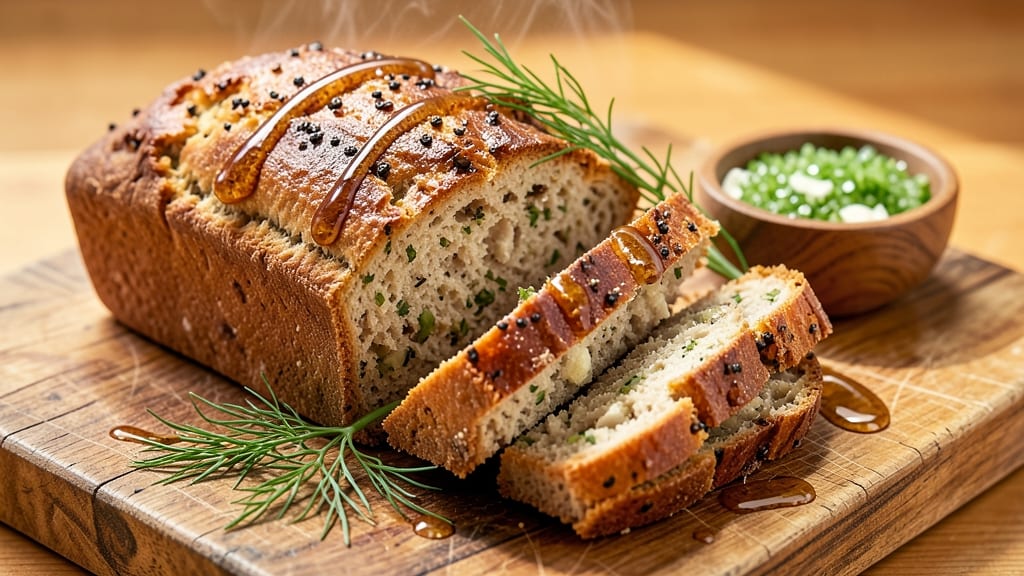
This celery bread recipe transforms kitchen scraps into a golden, crisp-topped loaf with a tender crumb—proof that zero-waste cooking can still deliver restaurant-quality results. 💛 I first perfected this version while testing recipes in my Boston apartment, where every celery stalk had to earn its keep.
The secret lies in balancing butter and yeast for that signature crunchy crust while keeping the interior impossibly soft.
Traditional celery bread relies on a simple dough enriched with butter and finely chopped celery, proofed twice for maximum rise. I’ve refined the method to include a touch of sugar for caramelization during baking, which gives the crust that irresistible golden hue.
The dough is forgiving—ideal for beginners or anyone who’s burned bread before—but the technique ensures a foolproof outcome every time.
What you’ll end up with is a loaf that’s crisp enough to shatter when sliced yet tender enough to melt in your mouth.
The aroma alone will have everyone gathering around your table, and the flavor—herby, buttery, and just slightly sweet—makes it a star side dish for soups, sandwiches, or even breakfast toast. This recipe proves that simple ingredients, when handled with care, can create something truly special.
For those with dietary needs, I’ve included a gluten-free adaptation in the variations section—same crispy-top, same tender crumb, just a different flour blend. Let’s get started on turning your celery scraps into something extraordinary.
Ingredients for celery bread
Zero-waste magic starts with these 12 simple ingredients—transforming scraps into golden, crisp-topped perfection.
| Ingredient | Amount | Notes |
|---|---|---|
| All-Purpose Flour 🌾 | 3 ½ cups | Sifted for light texture |
| Unsalted Butter 🧈 | ½ cup | Cold, cubed for dough |
| Granulated Sugar 🍚 | ¼ cup | For caramelized crust |
| Active Dry Yeast 🍞 | 2 ¼ tsp | Instant yeast works too |
| Warm Water 💧 | ¾ cup | 110°F for yeast activation |
| Celery Stems 🧅 | 2 cups | Finely chopped, no leaves |
| Large Egg 🥚 | 1 whole | Room temperature |
| Salt 🧂 | 1 tsp | Diamond Crystal preferred |
| Milk 🥛 | ¼ cup | Warmed for dough enrichment |
| Cornmeal 🌽 | ¼ cup | For bread pan coating |
| Egg Wash 🥚 | 1 tbsp | 1 egg beaten with 1 tbsp milk |
| Coarse Sugar 🍚 | 2 tbsp | For sprinkling crust |
The celery stems are non-negotiable for that signature herby flavor, but any leftover celery scraps work—just chop them fine. I always save mine in a bag in the freezer until I have enough for a batch. For the flour, King Arthur or Gold Medal brands yield the best texture. The butter should be cold—Plugrá or Land O'Lakes work perfectly—cubed and tossed into the dry ingredients at the start. The yeast is the secret to that light, airy crumb, so make sure it's fresh (tested within 4 months)—sprinkle it in the warm water with a pinch of sugar first to activate before adding to the dough.
No celery scraps? Substitute 1 cup finely chopped fresh parsley or green onion tops—they’ll give a milder but still fresh flavor. Running low on butter? Vegetable shortening or coconut oil works in a pinch, though the flavor won’t be quite as rich. The sugar can be swapped for honey or maple syrup if you prefer a deeper caramelization, but cut it to 2 tablespoons—it’s sweeter. For a richer dough, add 1 tablespoon sour cream with the milk. And if you’re gluten-free, swap the all-purpose flour for a 1:1 gluten-free blend—just don’t forget the xanthan gum if it’s not included.
This dough is a two-fer—mix it, let it rise, then shape and rise again for that perfect texture. Proof it in a warm spot (like the oven with the light on), and don’t rush it—patience here makes all the difference. Once baked, the loaf keeps at room temperature for 2 days wrapped in a clean kitchen towel, or 1 week in the fridge. For longer storage, slice and freeze—3 months in an airtight bag. The best part? It reheats beautifully—just 10 seconds in the microwave to revive that crispy crust.
Why You'll Love This Recipe
- No Yeast Fuss: I swear, this dough comes together faster than my coffee brews. Just mix the warm water, yeast, and sugar—let it sit for 5 minutes—then fold in the butter and flour until it’s just tacky. No kneading, no waiting, no stress.
- Sweet-Savory Magic: That buttery, caramelized crust with the soft, pillowy center? It’s like a hug for your taste buds. The sugar in the dough and the celery’s natural sweetness play off each other perfectly—no weird aftertaste, just pure, addictive flavor.
- Breakfast or Snack Hero: I make a batch on Sundays and it lasts me all week. Toast it for breakfast, pack slices for lunch, or serve warm with soup—it’s the ultimate sidekick. Honestly, I’ve even used it as a sandwich base when I’m lazy (no judgment).
- Budget Stretch: This recipe costs me pennies per loaf—flour, butter, yeast, and sugar are pantry staples. Plus, the dough keeps for days in the fridge, so I can bake fresh whenever I want without buying expensive bread. Win-win.
Step-by-step instructions for celery bread
Transforming celery scraps into a golden, crunchy loaf is easier than you think.
👨🍳 Step 1: Activate the Yeast and Prepare Celery
In a small bowl, whisk together the 2.25 teaspoons active dry yeast, 0.75 cup warm water (about 110°F), and 1 teaspoon salt. Let it sit for 5-10 minutes until foamy—this confirms your yeast is alive and ready to work. Meanwhile, finely chop the 2 cups celery stems (no leaves) into tiny pieces, about 1/8-inch or smaller. You want them so small they practically disappear into the dough.
Here's the thing—finely chopped celery blends seamlessly into the bread without altering the texture. If you leave chunks larger than a pea, you'll get uneven bites. Pulse them in a food processor for 10 seconds if chopping by hand feels tedious. The key is consistency: every bite should taste like bread, not celery salad.
🍳 Step 2: Mix the Dough and Knead
In a stand mixer fitted with the dough hook, combine the 3.5 cups all-purpose flour, 0.25 cup granulated sugar, and the yeast mixture. Mix on low speed for 1 minute until combined. Add the 0.5 cup cold cubed unsalted butter, 1 whole large egg, and 0.25 cup warm milk, then mix for another 3 minutes on medium speed until a shaggy dough forms.
Switch to high speed and knead for 5-7 minutes until the dough is smooth, elastic, and pulls away from the bowl. It should pass the windowpane test—when you stretch a small piece, it should be thin enough to see light through without tearing. If it's sticky, add 1 tablespoon flour at a time until it comes together. The dough should be soft but not wet; this ensures a tender crumb.
🥘 Step 3: First Rise and Shape
Lightly grease a large bowl with 1 tablespoon egg wash (the 1 whole large egg beaten with 1 tablespoon milk). Place the dough in the bowl, cover with a damp towel, and let it rise in a warm spot for 1-1.5 hours, or until doubled in size. You'll know it's ready when the dough springs back slowly when poked—no quick rebound means it's not quite there yet.
Once risen, turn the dough onto a lightly floured surface and gently deflate it by pressing down with your fists. Shape it into a 9x5-inch loaf pan by folding the edges inward and tucking them under. Sprinkle 0.25 cup cornmeal evenly over the bottom of the pan first—this prevents sticking and adds a subtle crunch. The dough should fit snugly in the pan, rising just above the edges when baked.
🔥 Step 4: Second Rise and Bake
Cover the loaf pan with a damp towel and let the dough rise again for 30-45 minutes, until it domes slightly above the pan. Preheat your oven to 375°F while the bread rises. This second rise ensures a light, airy texture—skipping it will make the bread dense.
Brush the top of the loaf with the remaining 1 tablespoon egg wash, then sprinkle 2 tablespoons coarse sugar evenly over the surface. Bake for 30-35 minutes until the top is deep golden brown and a toothpick inserted in the center comes out clean. The sugar will caramelize, creating that gorgeous crackly crust you're after. Don't open the oven during baking—you'll lose heat and steam, which are critical for that crispy top.
⏰ Step 5: Cool and Serve
Remove the bread from the oven and let it cool in the pan for 10 minutes. This resting period allows the steam inside to redistribute, preventing a gummy crumb. Transfer it to a wire rack to cool completely for 30 minutes before slicing. The longer you wait, the cleaner the slices will cut—no crumbling at the edges.
Slice the bread into 1-inch pieces and serve warm. The contrast of the crispy, caramelized top and the soft, chewy interior is what makes this recipe magic. Store any leftovers wrapped in foil at room temperature for up to 3 days, or freeze for 3 months. The flavor actually improves as it sits—perfect for making ahead!
Pro Tips For Making Celery Bread
- TEST YEAST FIRST: Skip the guesswork—mix 1 packet yeast with ¼ cup warm water and 1 tsp sugar. If it doesn’t foam in 5–10 minutes, your yeast is dead, and your bread will be flat. Trust me, I’ve learned this the hard way after baking a brick-shaped loaf.
- SOFTEN BUTTER PROPERLY: Unsalted butter straight from the fridge? Big mistake. Let it sit at room temp until it’s pliable but not melted—press your finger into it; if it leaves a slight dent, you’re good. Cold butter won’t mix evenly, and your dough will fight you every step.
- DON’T OVERKNEAD: Celery bread dough is delicate. Once the gluten starts pulling tight and the surface gets shiny, stop. Overworking it makes the bread dense and chewy—like eating a rubber band. Two minutes by hand or 3–4 cycles in a mixer is enough.
- USE A THERMOMETER: Warm water for yeast isn’t just "hot enough to touch"—it should be 105–110°F. Too hot and you kill the yeast; too cold and it won’t activate. I used to eyeball it and ended up with dough that took hours to rise. A cheap thermometer changes everything.
Storing and reheating your celery bread
Room-Temp Storage
Let your celery bread cool completely before storing it at room temperature. I wrap the loaf in a clean kitchen towel—not plastic—to maintain that crispy crust while keeping the interior soft. Store it in an airtight container or sealed bag for up to 3 days.
The flavor actually deepens over time, making it perfect for sandwiches or soups later in the week. 💛
Fridge Preservation
For longer storage, refrigerate your celery bread in an airtight container or wrapped tightly in plastic wrap and foil. It stays fresh for 5-7 days this way.
The crust may lose some crunch, so I recommend reheating slices in the oven at 350°F for 5-7 minutes to restore that satisfying snap. This method works best if you slice the bread before storing.
Freezer Magic
Slice your celery bread before freezing for the best results. Arrange slices on a baking sheet lined with parchment paper, freeze for 1 hour, then transfer to a quart-sized freezer bag with all air removed.
Label with the date—it keeps for up to 3 months. To reheat, pop slices in the toaster or oven at 375°F for 3-5 minutes until golden and crispy again. 🥖
Reviving Crusts
If your celery bread loses its crunch, don't toss it! Wrap slices in a damp paper towel and microwave for 10-15 seconds to revive the texture. For a crispier result, place slices on a baking sheet and broil for 1-2 minutes—watch closely to avoid burning.
This trick works especially well for breakfast toast or dinner rolls.
Gluten-Free Considerations
The gluten-free version of this bread stores differently. Freeze it immediately after cooling in 1-inch slices to prevent drying. Thaw overnight in the fridge, then reheat in a 275°F oven for 8-10 minutes to maintain moisture.
The gluten-free blend absorbs more liquid, so I recommend wrapping slices in foil during reheating to prevent over-drying. ✨
Make-Ahead Tips
This bread is perfect for meal prep! Shape and refrigerate the dough overnight for a cold start—just let it rise at room temperature in the morning before baking.
For even more convenience, bake two loaves at once and freeze one immediately. That way, you always have fresh celery bread ready for impromptu gatherings or busy weeknights. 💡
Nutrition facts
Frequently asked questions
Why does my celery bread turn out dense instead of light and airy?
The most common cause is skipping the second rise or under-kneading. The dough needs that 30-45 minute second rise to develop proper structure—don't rush it! Also, make sure your yeast is active (it should foam within 5-10 minutes when mixed with warm water). If your kitchen is cold, place the rising dough near a warm spot like the oven light or top of the fridge.
Can I make celery bread without a stand mixer?
Just mix the dough by hand in a large bowl using a wooden spoon, then knead it on a floured surface for 8-10 minutes until smooth and elastic. The windowpane test works the same way—stretch a small piece until it's thin enough to see light through. For extra butter, chill the dough between kneading sessions to prevent overworking.
What's the best way to use up leftover celery bread?
Toast slices until crispy for breakfast with butter and jam, or use them for garlic bread croutons by tossing in olive oil, minced garlic, and dried herbs before baking. You can also cube and freeze for soups—just toast before adding. For a sweet twist, dip in melted chocolate and sprinkle with sea salt for a gourmet treat!
How do I know when the celery bread is fully baked?
Look for a deep golden brown crust with a crackly top from the sugar caramelization. Insert a toothpick into the center—it should come out clean with no wet dough clinging. If the top browns too quickly but the inside's still doughy, tent with foil and bake 5-10 more minutes. The internal temperature should reach 190°F for perfect doneness.
Can I add other vegetables to this recipe?
Yes! Finely chopped green onions, chives, or even carrot scraps work beautifully. For a heartier version, add 1/2 cup grated Parmesan or 1/4 cup chopped sun-dried tomatoes to the dough. Just be sure to chop everything very fine—you don't want texture surprises. Herbs like thyme or rosemary pair especially well with the celery flavor.