
Main Courses
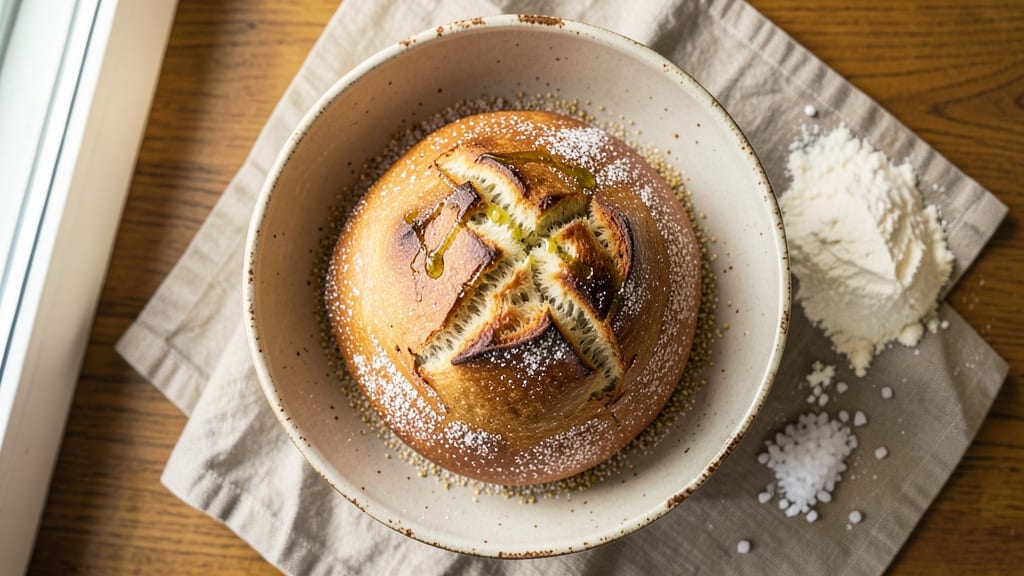
Baking a Bob’s Red Mill French bread recipe turns your kitchen into a bakery—no kneading required. This no-knead method delivers a crispy crust and airy interior using simple techniques and quality flour.
I perfected this recipe after years of experimenting with French bread, and it consistently yields restaurant-quality results at home.
The secret lies in the flour—Bob's Red Mill's high protein content creates structure while maintaining tenderness. A slow fermentation in the refrigerator develops deep flavor and improves texture, while shaping the dough gently ensures those signature air pockets. This method requires minimal effort but delivers professional results every time.
By the time you pull this bread from the oven, you'll have golden-brown crust with shatteringly crisp edges and a soft, airy interior. The aroma alone will have everyone gathering around the table.
Perfect for serving with soups, dips, or as a side dish, this bread is versatile enough for any meal.
With just a few ingredients and patience, you'll achieve bakery-style French bread that's crispy on the outside and tender on the inside. Let's get started on creating your perfect loaf.
Ingredients for bob's red mill french bread
The right flour and simple techniques create bakery-style French bread at home.
| Ingredient | Amount | Notes |
|---|---|---|
| Bob's Red Mill High-Protein Bread Flour 🌾 | 5 cups | Unbleached for best texture |
| Instant Yeast 🍞 | ¼ tsp | Active dry works too |
| Diamond Crystal Kosher Salt 🧂 | 2 tsp | Fine grain preferred |
| Extra-Virgin Olive Oil 🫒 | ½ cup | High quality, fruity |
| Warm Water 💧 | 1 ½ cups | 105-110°F ideal |
| Semolina Flour 🌾 | ¼ cup | For dusting and scoring |
| Cornmeal 🌽 | ¼ cup | For baking surface |
| Coarse Sea Salt 🧂 | 1 tbsp | For sprinkling crust |
| Ice Water ❄️ | ½ cup | For dough handling |
Bob's Red Mill's high-protein flour is non-negotiable here—it's what gives that signature crisp crust and airy crumb. I buy mine in 5-pound bags from King Arthur Flour when I'm baking in bulk, but the 2-pound bag at Whole Foods works perfectly for home bakers. Look for the unbleached version; it's got just the right protein content (around 13%) without overpowering the dough. The instant yeast? Freshness matters—buy it within 3 months of the date on the package. Store it in the freezer for maximum potency. For the olive oil, avoid the cheap stuff—you want something fruity and peppery that'll add depth to the crust.
No instant yeast? Active dry works fine—just let it proof longer. Running low on semolina? Fine cornmeal or all-purpose flour in a pinch. The warm water temp is critical—too hot and you kill the yeast, too cold and it won't activate. I use my microwave to heat water to 105°F (just pop in a cup of water for 30 seconds, then check). For the coarse salt on the crust, Maldon or Diamond Crystal are my go-tos—they dissolve slowly and create those beautiful salt crystals. Pro tip: mix your dry ingredients (flour, yeast, salt) in a bowl first to avoid lumps when adding the wet ingredients.
This dough is forgiving but has a short window—use it within 2 hours of mixing. Shape it gently to avoid deflating those air pockets. For storage, wrap cooled loaves in a clean kitchen towel and keep at room temp for 2 days. Freeze for up to 3 months—thaw overnight wrapped in the towel, then reheat at 350°F for 5 minutes to restore crispness. The crust reheats beautifully, so don't toss those leftovers. I always bake two loaves—one for the table, one for toasting later.
Why You'll Love This Recipe
- Five-Ingredient Magic: The moment I realized this recipe only needs flour, yeast, salt, olive oil, and water—no fancy add-ins—was a game-changer. No hunting for specialty ingredients, no cluttering my pantry with extras. Just these five staples, and you’ve got a loaf that tastes like a Parisian bakery.
- Crispy-Creamy Crunch: That Bob’s Red Mill high-protein flour gives it a structure that’s chef’s kiss—golden crust so shatteringly crisp it snaps like a twig, but the inside stays soft and pillowy for days. Honestly, the first time I bit into it still warm, I nearly dropped my coffee.
- Weeknight & Weekend Star: Toss a batch in the freezer for lazy mornings or pull it fresh for company—it’s the same effort either way. I’ve served it toasted with jam for breakfast, torn over salads for lunch, and even as a sandwich base for dinner. (Yes, even on a Tuesday night.)
- Budget-Friendly Loaf: A single bag of Bob’s Red Mill flour makes three loaves, and the rest of the ingredients? You’re probably already using them. I’ve fed a family of four for under $5, and the leftovers? They last longer than my willpower to resist them.
Step-by-step instructions for bob's Red Mill French bread
Here's how to craft restaurant-quality crust with zero kneading fuss—just patience and precision.
Combine Dough Ingredients for Perfect Texture
In a large mixing bowl, whisk together the 5 cups Bob's Red Mill High-Protein Bread Flour and 2 tsp Diamond Crystal Kosher Salt. The high-protein content gives this dough exceptional structure, so don't skip this step. Create a well in the center and add the 0.25 tsp Instant Yeast directly to the flour—this prevents overactivation before mixing.
In a separate bowl, combine the 0.5 cup Extra-Virgin Olive Oil with the 1.5 cups Warm Water (about 105-110°F). The oil should be fully emulsified with the water before adding to the dry ingredients. Pour this wet mixture into the flour well and stir with a wooden spoon until a shaggy dough forms. Here's the thing—don't overmix yet. The dough will come together as you work it.
Develop Gluten Without Kneading for Light Crumb
Switch to your hands and work the dough for 5-7 minutes until it becomes smooth and elastic. You're not kneading in the traditional sense—just gently folding and pressing to develop gluten. The dough should feel slightly tacky but not sticky. If it's too wet, add 1 tablespoon of the 5 cups Bob's Red Mill High-Protein Bread Flour at a time until it pulls away cleanly from the bowl.
Once the dough is smooth, cover it tightly with plastic wrap and let it rest at room temperature for 1 hour. This initial rest allows the gluten to relax and the yeast to begin activating. Don't skip this step—it's what gives French bread its signature open crumb structure. After resting, the dough should be noticeably puffier and easier to handle.
Shape and Proof for Maximum Rise
Lightly dust your work surface with 0.25 cup Semolina Flour and turn out the rested dough. Gently shape it into a 16-inch log by folding and rolling from one end to the other. The semolina prevents sticking and gives that classic crust texture. Tuck the ends under and place the loaf seam-side down in a lightly greased bowl.
Cover the bowl with a damp towel and let the dough proof at room temperature for 1-2 hours, or until it has nearly doubled in size. Here's where the magic happens—the yeast ferments slowly, creating complex flavors and that airy crumb. When the dough springs back slowly when poked (about ½ inch indentation remains), it's ready for the final rise. This is the moment that matters: overproofing leads to dense bread, while underproofing means poor oven spring.
Prepare for Baking with Proper Technique
Preheat your oven to 425°F with a baking stone or inverted baking sheet on the lower rack. While it heats, score the loaf ¼-inch deep down the center using a sharp razor blade or serrated knife. This prevents over-expansion during baking and creates that iconic French bread crust. Dust a baking sheet with 0.25 cup Cornmeal for the final transfer—it adds texture and prevents sticking.
Turn the proofed loaf onto the cornmeal-dusted sheet, score side up. Immediately sprinkle generously with 1 tbsp Coarse Sea Salt—this enhances flavor and creates those beautiful salt crystals on the crust. Bake for 25-30 minutes until the crust is deep golden brown and sounds hollow when tapped on the bottom. The internal temperature should reach 190-195°F at the center.
Create Steam for Ultimate Crust Development
For the final touch, pour 0.5 cup Ice Water into a small metal bowl and place it in the oven on the lower rack 2 minutes before removing the bread. The steam blast creates that signature crisp crust. Remove the bread from the oven and immediately brush the crust with any remaining Extra-Virgin Olive Oil from your mixing bowl. This keeps it moist while enhancing flavor.
Let the bread cool on a wire rack for 10 minutes before slicing. The crust should be crisp enough to shatter slightly, with a hollow sound when tapped, while the crumb remains tender and open. Serve warm with your favorite butter or olive oil—this is where the magic of French bread truly shines.
Pro Tips For Making Bob'S Red Mill French Bread
- Measure Salt Precisely: Diamond Crystal kosher salt clumps like a drama queen—tap it into the bowl before weighing. I learned this the hard way when my dough turned out bland because I scooped it straight from the shaker. Use a scale for 2% of flour weight (about 10g for this recipe), or level your teaspoon carefully.
- Proof Yeast in Warm Water: Skip the "eyeball it" approach—mix instant yeast with warm water (110°F) and let it foam for 5 minutes before adding flour. Cold water? Your dough will nap instead of rise. If it’s not bubbling after 5 minutes, your yeast is dead—start over.
- Knead Until Windowpane: The dough should pass the windowpane test: stretch a piece between your fingers—if it’s translucent and thin (like a pane of glass), you’re golden. I used to stop when it looked "done," but underkneaded dough means dense bread. Aim for 8–10 minutes total, even if it feels like overkill.
- Oil the Dutch Oven: Coat the Dutch oven and lid with olive oil before baking—yes, even if the recipe says otherwise. The oil prevents sticking and gives that crispy bottom crust we all crave. Use a folded paper towel dipped in oil for easy application, and don’t forget the corners.
Creative variations of this bob's red mill french bread
Herb-Infused Twist
Add 1 tbsp fresh rosemary or thyme leaves to the dough during the initial mix for an aromatic twist. The herbs infuse the crust with subtle earthy notes while keeping the signature crisp texture.
I like using Penzeys Spices dried herbs if fresh aren't available—they're potent enough to add flavor without overpowering. For extra depth, mix ½ tsp garlic powder with the salt before adding to the dough. 🌿
Garlic Olive Oil Drizzle
After baking, brush the warm crust with a mix of 2 tbsp melted butter and 1 tbsp garlic-infused olive oil. This creates a golden sheen while adding savory depth.
For a richer version, infuse the oil by heating ½ cup olive oil with 3 minced garlic cloves for 5 minutes on low heat, then strain. The residual garlic flavor lingers beautifully in the crust. 🧄
Whole Grain Version
Replace 1 cup of the Bob's Red Mill High-Protein Bread Flour with 1 cup whole wheat flour for a nutty, heartier loaf. The whole grains add fiber and a subtle sweetness that pairs well with the crisp crust.
I recommend King Arthur Whole Wheat Flour for best results—it has a lighter texture than many store brands. Reduce the water by 1 tbsp since whole wheat absorbs more moisture. 🌾
Cheesy Pull-Apart Loaf
For a fun appetizer version, shape the dough into a 9x13-inch pan and sprinkle ½ cup shredded Gruyère or Parmesan cheese over the top before baking. The cheese melts into the crust, creating pull-apart strands perfect for dipping.
I like using Miyoko's Vegetarian Parmesan for a dairy-free option that still delivers great flavor. Add ½ tsp garlic powder to the dough for extra savory punch. 🧀
Sweet Brioche Variation
Transform this into a sweet loaf by adding 2 tbsp sugar and 1 egg yolk to the dough. Replace the coarse salt with 1 tbsp brown sugar for sprinkling on top. The egg yolk adds richness while the sugar caramelizes beautifully on the crust.
This version works perfectly as a French toast bread the next day—just slice and soak in a cinnamon-vanilla custard. 🍯
Savory Seed Topping
Before baking, sprinkle the loaf with a mix of 1 tbsp sesame seeds and 1 tbsp poppy seeds for a nutty crunch. Toast the seeds in a dry pan for 2 minutes until fragrant before sprinkling.
This adds visual appeal and texture contrast to the crisp crust. For a Mediterranean twist, swap the seeds for 1 tbsp chopped kalamata olives and ½ tsp dried oregano. 🌰
Nutrition facts
Frequently asked questions
Can I substitute Bob's Red Mill flour with regular all-purpose flour?
The high protein content in Bob's Red Mill's bread flour is key for that signature crisp crust and airy interior. While you can use all-purpose flour, your bread may have a denser crumb and less crisp exterior. For best results, use a bread flour with at least 12-13% protein content. If you must substitute, increase the flour by 1-2 tablespoons to compensate for the lower protein.
Why did my dough collapse after shaping?
Dough collapse usually happens from overproofing or underdeveloped gluten. Make sure your dough has proofed just until it springs back slowly when poked (about ½ inch indentation). Also, handle the dough gently during shaping—avoid stretching it too much. If the dough feels too slack, let it rest 10-15 minutes covered before shaping again.
How do I get an extra crispy crust like bakery bread?
For that signature bakery crust, focus on three key steps: steam (pour ice water in the oven 2 minutes before baking), high heat (preheat oven to 425°F with a baking stone), and proper scoring (cut ¼-inch deep before baking). Brushing the crust with olive oil immediately after baking also helps lock in crispness. Let it cool completely before storing.
Can I make this bread without a stand mixer?
This recipe is designed for hand mixing. Simply use a large bowl and wooden spoon to combine ingredients, then switch to your hands for the 5-7 minute gluten development. The no-knead method means you won't need a mixer's power—just patience and gentle folding. A dough scraper helps when turning the dough out onto floured surfaces.
How long will this bread stay fresh?
At room temperature, wrap cooled loaves in a clean kitchen towel and store for 2-3 days. For longer storage, freeze wrapped loaves for up to 3 months. To revive, thaw overnight at room temperature, then reheat at 350°F for 5 minutes to restore crispness. The crust reheats beautifully, making it perfect for leftovers.