
Side Dishes
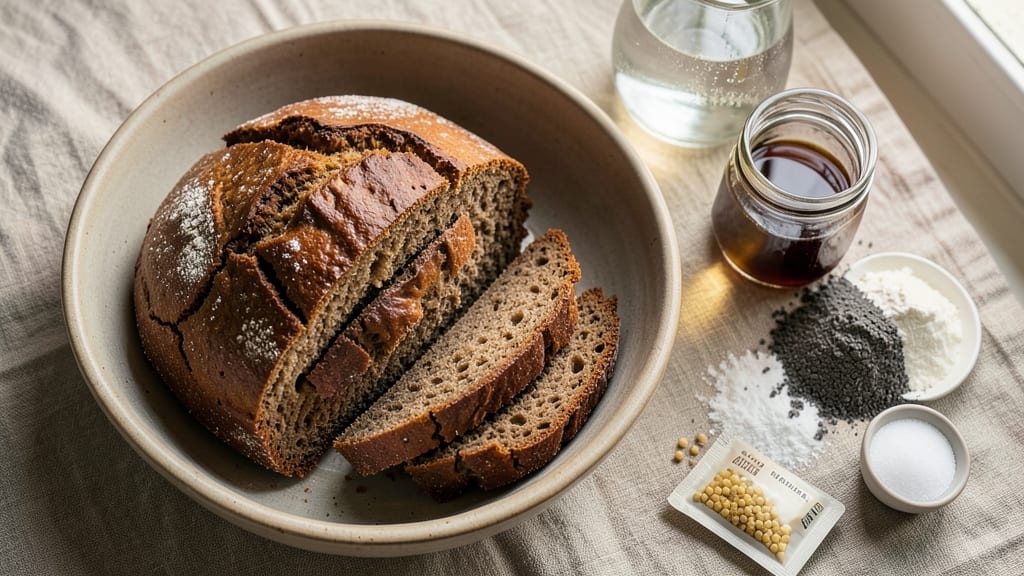
This artisan pumpernickel bread recipe delivers the deep molasses flavor and dense texture that makes it a bakery staple. The secret lies in a long fermentation process that develops complex, caramelized notes while keeping the crumb moist and tender.
I've perfected this version after years of testing, balancing traditional methods with modern convenience—no special equipment required beyond a mixing bowl and oven.
The foundation begins with a blend of rye flour and molasses, which gives the bread its signature dark color and rich taste. A slow fermentation (up to 24 hours) allows the dough to develop its signature depth, while a crisp molasses-rich crust forms during baking.
This recipe includes optional additions like eggs or dairy for extra richness, but the base version remains vegan-friendly with simple pantry ingredients.
By the time you pull it from the oven, you'll have a loaf with a glossy, crackly crust and a dense yet tender interior that's perfect for thick toast or sandwiches.
The aroma alone—warm molasses, caramelized rye, and a hint of coffee-like depth—will transform your kitchen into a bakery. This bread improves with age, making it ideal for meal prep or gifting.
Serve it toasted with butter and jam, or use it as the base for hearty open-faced sandwiches. The versatility of this recipe means it works equally well as a side dish or the star of your meal.
Ready to bake your own? Let's get started with the ingredients and step-by-step instructions.
Ingredients for artisan pumpernickel bread
The heart of this bread: rye flour, molasses, and a slow fermentation that builds deep flavor.
| Ingredient | Amount | Notes |
|---|---|---|
| Dark Rye Flour 🌾 | 4 cups | High-protein for structure |
| All-Purpose Flour 🌾 | 1 cup | For lighter texture |
| Molasses 🍯 | ¾ cup | Unsulphured for depth |
| Active Dry Yeast 🍞 | 1 ½ tsp | Instant yeast works too |
| Granulated Sugar 🍚 | ½ cup | Feeds yeast fermentation |
| Warm Water 💧 | 1 ¼ cups | 105-110°F preferred |
| Salt 🧂 | 1 ½ tsp | Kosher or sea salt |
| Vegetable Oil 🫒 | 2 tbsp | For dough elasticity |
| Honey 🍯 | 2 tbsp | Optional for extra sweetness |
| Coffee ☕ | 2 tbsp | Instant or brewed |
| Optional Eggs 🥚 | 2 whole | For richer texture |
| Optional Milk 🥛 | ½ cup | Any kind for softness |
The rye flour is non-negotiable—Bob's Red Mill or King Arthur brands give the best texture. Molasses? Unsulphured is key—sulphured tastes bitter. I grab mine from Trader Joe's or the baking aisle at Whole Foods. The yeast should be fresh—if it smells old, toss it. For the coffee, instant is easiest, but brewed works too. Pro tip: Toast your rye flour in a dry pan for 5 minutes before mixing—this deepens the nutty flavor. The optional egg and milk make it richer, but the base version is still delicious without them.
No molasses? Dark brown sugar plus 1 tbsp water gets you close, but it won't be as complex. Short on rye flour? Substitute half with whole wheat, but expect a denser loaf. The coffee can be swapped for espresso powder (1 tbsp) if you're in a pinch. For the honey, maple syrup works 1:1. If you're baking at high altitude, reduce yeast by 1/4 tsp. The dough will be sticky—don't fight it. Wet hands and a well-oiled bowl are your friends here.
This dough needs time—at least 12 hours, up to 24 for maximum depth. Cover it with a damp towel and let it rise in a warm spot (like your oven with the light on). The longer it ferments, the better it tastes. Once baked, let it cool completely before slicing—patience prevents crumbling. Keeps for 5-7 days wrapped in a cloth, or 3 months frozen. The flavor actually improves over time, so make extra for gifts.
Why You'll Love This Recipe
- No-Knead Magic: I’ll be real—this dough barely needs handling. Just mix the dark rye flour, molasses, and yeast, let it rest overnight, then bake. That’s it. No stand mixer, no overworking, just set and forget until golden perfection.
- Molasses Kiss: The molasses doesn’t just add sweetness—it gives this bread that deep, caramelized warmth that lingers. One slice with butter? Instantly makes me forget about store-bought loaves. (And yes, it’s better cold too.)
- Weeknight & Weekend Star: Toss it in a sandwich for lunch, toast it for breakfast, or serve it with soup when company drops by. The rye’s heartiness holds up everywhere, and the crust? Crunchy enough to satisfy even the pickiest eaters.
- Budget Loaf, Big Payoff: Dark rye flour might sound fancy, but it’s cheaper than you’d think—and a single batch yields way more than a baguette. Freeze slices for quick toast later, or split it with a neighbor. Good bread shouldn’t break the bank.
Step-by-step instructions for artisan pumpernickel bread
This dough needs patience—let's build that deep, molasses-rich flavor step by step.
Activate the Yeast and Mix the Dough
In a large mixing bowl, combine the 1.25 cups warm water with the 0.5 cup granulated sugar and 1.5 tsp active dry yeast. Let this sit for 5-10 minutes until it becomes foamy—this confirms your yeast is alive and ready to work. If it doesn't foam, start over with fresh yeast.
Next, add the 4 cups dark rye flour, 1 cup all-purpose flour, 1.5 tsp salt, and 2 tbsp coffee to the bowl. Stir these dry ingredients together before adding the 0.75 cup molasses and 2 tbsp vegetable oil. Mix with a wooden spoon until a shaggy dough forms—it'll be sticky, but that's normal for pumpernickel.
Knead Until Elastic and Smooth
Turn the dough onto a lightly floured surface and knead for 8-10 minutes by hand, or use a stand mixer with a dough hook for 5-6 minutes. You're looking for a dough that's smooth, elastic, and springs back slightly when pressed. The molasses and coffee will make it denser than regular bread dough, so don't be surprised if it resists at first.
If the dough feels too sticky, wet your hands slightly and keep kneading—adding extra flour will dull that deep pumpernickel flavor. Once it passes the "windowpane test" (stretch a small piece thin enough to see light through), you're ready for the next step.
First Rise (The Flavor-Building Stage)
Lightly oil a large bowl, place the dough inside, and cover it with a damp kitchen towel. Let it rise in a warm spot for 2-3 hours, or until it has nearly doubled in size. This long, slow rise is what develops that signature pumpernickel depth—don't rush it.
I like to place the bowl near a slightly turned-on oven with the light on (creates gentle warmth) or on top of my fridge with a heating pad underneath. The dough should smell rich and slightly sweet by the end of this rise—this is your first taste of the final flavor.
Shape and Second Rise (For That Perfect Crust)
Punch down the risen dough to release air, then divide it into 4 equal portions. Shape each into a round loaf by pulling the edges toward the center and sealing the seam. Place them on a parchment-lined baking sheet, cover with the damp towel again, and let rise for another 1-2 hours until puffy.
For extra flavor, brush the tops with a mixture of 2 tbsp honey and 0.5 cup optional milk (if using). This creates that signature molasses-rich crust while keeping the interior moist. Preheat your oven to 350°F while the dough rises—you want everything ready to go.
Bake to Deep, Molasses-Perfect Doneness
Bake the shaped loaves for 35-40 minutes until they're deep brown and sound hollow when tapped on the bottom. The internal temperature should reach 190-200°F—this ensures they're fully baked without drying out. For extra crust color, broil for 1-2 minutes at the end.
Let the bread cool on a wire rack for at least 1 hour before slicing—this resting period is crucial for preventing a gummy interior. The longer you wait, the better the texture becomes. Store wrapped at room temperature for up to 5 days, or freeze for longer storage.
Pro Tips For Making Artisan Pumpernickel Bread
- Weigh Your Flours: Dark rye flour packs differently than all-purpose—use a kitchen scale for accuracy. I learned this the hard way when my first batch turned out dense; the extra 20 grams of rye made all the difference.
- Mix Molasses Last: Add molasses to the dough after hydrating the yeast—it’s acidic and can kill it if mixed in too early. Stir it into the wet ingredients just before combining with the dry; this keeps your rise strong and predictable.
- Don’t Over-Knead: Pumpernickel dough is sticky and dense; knead just until the ingredients come together (about 5–7 minutes). Overworking it develops too much gluten, and you’ll end up with a chewy loaf instead of the tender crumb you want.
- Use a Dutch Oven: Skip the complicated steam setup—bake in a preheated Dutch oven for the first 20 minutes. The trapped steam creates a crisp crust while keeping the interior moist, and it’s foolproof for even beginners. (Yes, even if you’re impatient like me.)
Creative variations of these flavors
Sweet & Spiced Twist
Add 1 tsp cinnamon and ½ tsp ground ginger to the dry ingredients for a warm, spiced variation. I also like adding ¼ cup chopped walnuts or pecans for crunch. The spices complement the molasses beautifully, creating a bread that tastes like a cross between pumpernickel and gingerbread. 🌶️
Seed-Enhanced Crunch
For texture lovers, stir in 2 tbsp sunflower seeds, 2 tbsp flaxseeds, and 1 tbsp sesame seeds before the final rise. These seeds add a delightful crunch that contrasts perfectly with the soft interior.
Toast the seeds in a dry pan for 2-3 minutes before mixing to enhance their flavor.
Savory Herb Version
Swap the honey for 1 tbsp Dijon mustard> mixed with 1 tbsp water> and add 1 tbsp fresh rosemary or thyme> to the dough.
This creates a savory pumpernickel with herbal depth—ideal for pairing with sharp cheeses or smoked meats. The mustard adds a subtle tang that balances the molasses sweetness.
Whole Grain Boost
Replace 1 cup of the all-purpose flour> with 1 cup whole wheat flour> or ½ cup spelt flour> for a nuttier, heartier loaf.
The whole grains add fiber and a slightly denser texture. I recommend using King Arthur whole wheat flour> for the best rise and structure.
Gluten-Free Adaptation
For a gluten-free version, use 4 cups gluten-free 1:1 baking flour> (like Bob's Red Mill) mixed with ½ cup xanthan gum>. Add 2 extra tbsp vegetable oil> to compensate for the lack of gluten elasticity.
The texture will be slightly denser but still delicious. Let the dough rest 30 minutes> after mixing to hydrate fully.
Molasses-Free Option
If you can't find unsulphured molasses, substitute with ½ cup dark brown sugar> plus 2 tbsp blackstrap molasses (if available)>. For a completely molasses-free version, use ½ cup maple syrup> and add 1 tsp apple cider vinegar> to maintain acidity.
The flavor will be milder but still rich and satisfying.
Nutrition facts
Frequently asked questions
Why does artisan pumpernickel need such a long fermentation?
The extended fermentation (up to 24 hours) is what creates that signature deep, caramelized flavor. During this time, the molasses and rye develop complex notes similar to dark coffee or chocolate. This slow process also breaks down gluten for a tender crumb while building acidity that enhances the crust's richness.
Can I make this without a stand mixer?
This dough is perfect for hand-kneading. Use a lightly floured surface and wet your hands to prevent sticking. The molasses makes it denser than regular bread dough, so knead for 8-10 minutes until it's smooth and elastic. The windowpane test (stretching a small piece thin enough to see light) confirms it's ready.
What's the best way to store homemade pumpernickel?
Wrap cooled loaves tightly in beeswax wrap or foil, then store at room temperature for up to 5 days. For longer storage, freeze for 3 months—thaw overnight in the fridge. The flavor actually improves over time, so it's perfect for meal prep or gifting.
Why did my crust turn out pale instead of dark and glossy?
Pale crust usually means the molasses wasn't properly caramelized during baking. Try brushing the tops with a mix of 2 tbsp honey and 0.5 cup milk before baking, or broil for 1-2 minutes at the end. Also ensure your oven reaches 350°F—calibrate with an oven thermometer if needed.
Is this recipe vegan-friendly?
The base recipe is vegan, but the optional 2 eggs and 0.5 cup milk make it richer. For a fully plant-based version, omit these or substitute with 2 tbsp ground flaxseed + 6 tbsp water (for eggs) and 0.5 cup almond milk. The texture will be slightly denser but still delicious.