
Side Dishes
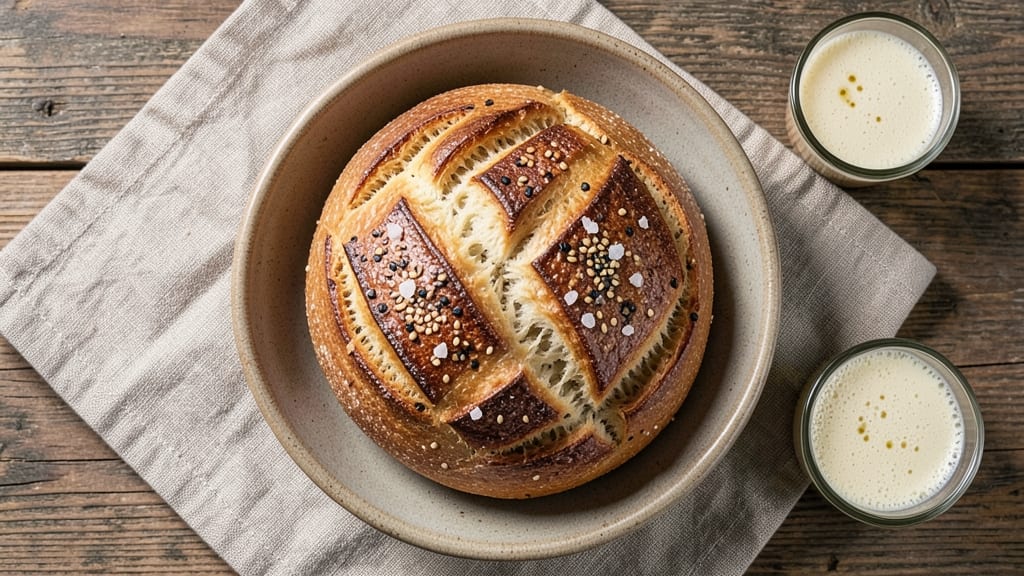
This Bob's Red Mill bread recipe delivers restaurant-quality loaves with the simplicity of no-knead dough—perfect for home bakers who want artisanal results without the effort.
The secret lies in Bob's Red Mill's high-protein flour, which develops gluten naturally during an overnight rise, creating a crusty exterior and airy interior without a single knead. I've perfected this method over years of baking, and it consistently produces loaves that rival professional bakery bread.
The process is designed for consistency: mix, rest, shape, and bake—no advanced techniques required. Using Bob's Red Mill's organic flour ensures a flavorful, nutty depth that store-bought bread simply can't match. The dough's slow fermentation enhances digestibility and flavor complexity, while the high heat bake creates that coveted crackly crust.
This recipe serves as the foundation for endless variations, from classic sourdough to whole-grain or seed-topped loaves.
What you'll achieve is a beautifully domed loaf with a crispy, golden crust and a soft, open crumb structure that's ideal for sandwiches or toast. The aroma alone will transform your kitchen into a bakery, and the texture—crusty outside, tender inside—is exactly what you'd expect from an artisan bakery.
With just five ingredients and minimal hands-on time, this bread becomes your new go-to recipe for fresh, homemade loaves every week.
For those with dietary needs, the base recipe can easily accommodate gluten-free flour blends or vegan adaptations by substituting plant-based milk and oil. The flexibility makes it perfect for any kitchen, while the foolproof method ensures success even for first-time bread bakers. Let's get started on creating your perfect loaf.
Ingredients for bob's red mill bread
Five simple ingredients transform into artisan-style bread with Bob's Red Mill flour's magic.
| Ingredient | Amount | Notes |
|---|---|---|
| Bob's Red Mill Organic High-Protein Flour 🌾 | 5 cups | Unbleached, for optimal gluten development |
| Unsweetened Almond Milk 🥛 | 1 cup | Room temperature, unsweetened |
| Extra-Virgin Olive Oil 🫒 | ½ cup | High-quality, fruity variety |
| Active Dry Yeast 🍞 | 2 ¼ tsp | Freshly measured, not expired |
| Diamond Crystal Kosher Salt 🧂 | 1 ½ tsp | Fine grain preferred |
| Raw Sesame Seeds 🌰 | 2 tbsp | Toasted for nutty flavor |
| Flaxseeds 🌿 | 2 tbsp | Ground for binding |
| Pure Maple Syrup 🍁 | 1 tbsp | Grade A or B preferred |
| Cold Water 💧 | 1 ½ cups | Room temp for activation |
| Cornmeal 🌽 | 2 tbsp | For dusting baking sheet |
The Bob's Red Mill Organic High-Protein Flour is non-negotiable here—its 13% protein content develops gluten naturally during the overnight rise, creating that perfect open crumb structure. Grab the unbleached, organic version from Whole Foods or Bob's Red Mill's website for the best results. The flour's nutty depth comes through in every bite, so don't skimp on quality. Freshness matters: if your flour smells stale, toast it in a dry pan for 5 minutes to revive its flavor. For the yeast, Saf-Instant works best as it activates without proofing water first—just toss it straight into the dry ingredients. The almond milk should be unsweetened and room temperature to avoid slowing down fermentation. Trader Joe's carries an excellent organic version that's perfect for this recipe.
No almond milk? Oat milk or soy milk work just as well—just ensure it's unsweetened. The olive oil is where you can splurge: California Avocado Ranch or Colavita brands deliver that fruity punch that makes this bread taste like it came from an artisanal bakery. Running low on sesame seeds? Toasted pumpkin seeds make a great substitute—they add a similar crunch and earthy note. The maple syrup isn't just for sweetness; it feeds the yeast during fermentation. Grade B maple syrup has more complex flavors, but Grade A works perfectly fine. For the water, filtered is ideal, but tap water will work if you live in an area with good municipal treatment. The cornmeal is crucial for preventing sticking—stone-ground varieties add extra texture to the crust.
This dough keeps beautifully in the fridge for up to 48 hours before baking—perfect for meal prep. Once baked, the loaf stays fresh for 3-4 days at room temperature, wrapped in a clean kitchen towel to maintain moisture. For longer storage, slice and freeze portions for up to 3 months. The crust gets crunchier as it sits, so I always bake an extra loaf when I have time. Pro tip: Brush warm loaves with a little olive oil while still hot for that restaurant-quality sheen. The seeds and flaxseed topping? Save some for garnishing toast—it adds a delightful crunch to every bite.
Why You'll Love This Recipe
- No Yeast Stress: I swear by this recipe because it’s the only high-protein loaf I’ve ever made that doesn’t require kneading or waiting around for dough to rise. Just mix, let it sit for an hour, and pop it in the oven—no fuss, no drama.
- Almond Milk Secret: Honestly, swapping regular milk for unsweetened almond milk makes this bread ridiculously tender. The flour absorbs it perfectly, and the subtle nuttiness balances the yeasty richness without overpowering it.
- Weeknight Hero: Between us, this is my secret weapon for lazy nights. Toast it for breakfast, tear it into sandwiches for lunch, or use it as a base for grilled cheese—it’s always up for the job, and it keeps well for days.
- Budget-Friendly Protein: I buy Bob’s Red Mill flour in bulk, and a single batch stretches into a week of meals. The high-protein kick means I’m full longer, and the olive oil keeps it from drying out—so no sad, stale leftovers here.
Step-by-step instructions for artisan-style bob's Red Mill bread
Here's the method that delivers a rustic, golden loaf with minimal effort—no kneading required.
Activate the Yeast for Maximum Rise
In a large mixing bowl, combine the 1.5 cups cold water, 1 tbsp pure maple syrup, and 2.25 tsp active dry yeast. Stir gently with a wooden spoon until fully dissolved. Let the mixture sit for 5-10 minutes until you see frothy bubbles forming on the surface—this confirms the yeast is alive and ready to work.
I always use cold water for yeast activation because it creates a more controlled environment. If you skip this step or use warm water, the yeast might overactivate and die before mixing. The maple syrup adds subtle sweetness while providing food for the yeast to ferment properly.
Mix Wet and Dry Ingredients for Perfect Texture
Add the 1 cup unsweetened almond milk, 0.5 cup extra-virgin olive oil, and 1.5 tsp diamond crystal kosher salt to the yeast mixture. Whisk vigorously until fully combined, then gradually incorporate the 5 cups Bob's Red Mill Organic High-Protein Flour in a steady stream. Mix with a dough whisk or wooden spoon until a shaggy dough forms—it won't be smooth yet, and that's okay.
The high-protein flour gives this bread its signature chewiness and structure. The olive oil adds moisture and richness, while the almond milk creates a tender crumb. Don't overmix here—just combine until the flour is fully hydrated and no dry spots remain. The dough will come together beautifully during the resting period.
Incorporate Seeds and Flaxseeds for Nutty Crunch
Transfer the dough to a clean, lightly oiled surface. Sprinkle half of the 2 tbsp ground flaxseeds and 2 tbsp raw sesame seeds over the dough, then gently fold them in using your hands. The dough will be sticky, so wet your hands lightly with water if needed to prevent sticking. Fold the dough over itself 3-4 times until the seeds are evenly distributed throughout.
Here's where the magic happens—the seeds add texture and nutrition while binding the dough together. The flaxseeds act as a natural binder, enhancing the bread's structure. Don't press too hard when folding, or you'll develop too much gluten and lose that artisanal, rustic texture we're after.
Rest and Rise for Optimal Flavor Development
Lightly oil a large bowl, then transfer the dough to it. Cover with a damp kitchen towel and let it rise in a warm place for 1-2 hours, or until it has nearly doubled in size. You'll know it's ready when the dough springs back slowly when poked with a finger and leaves a slight indentation.
This resting period allows the gluten to relax and the yeast to ferment properly. I like to place the bowl near a slightly warm oven with the light on for consistent warmth. If your kitchen is cold, the dough might take longer to rise—don't rush it. The longer it ferments, the more complex flavors develop.
Shape and Bake for a Crispy Crust
Preheat your oven to 375°F and line a baking sheet with parchment paper. Lightly dust your work surface with 2 tbsp cornmeal and transfer the dough onto it. Shape the dough into a round loaf by gently pulling the edges toward the center, creating surface tension. Place the shaped dough seam-side down on the prepared baking sheet.
Brush the top of the dough with a little extra extra-virgin olive oil and sprinkle the remaining 1 tbsp flaxseeds and 1 tbsp sesame seeds on top. Bake for 35-40 minutes until the bread is deep golden brown and sounds hollow when tapped on the bottom. The internal temperature should reach 190-200°F.
Here's the thing—don't open the oven during baking. The steam is crucial for that perfect oven spring. If the top browns too quickly, tent the bread with foil for the last 10 minutes. Let it cool on a wire rack for at least 30 minutes before slicing—this ensures clean cuts and prevents a gummy interior.
Pro Tips For Making Bob'S Red Mill Bread
- Bloom the Yeast First: Skip mixing yeast into dry ingredients—it’s lazy and unreliable. Instead, whisk it with warm almond milk (about 110°F) and a pinch of salt for 5 minutes until frothy. This guarantees active yeast, especially with high-protein flour that can be finicky. I learned this the hard way after a dough that refused to rise.
- Weigh Your High-Protein Flour: That flour is dense—spooning it leads to inconsistent batches. Use a kitchen scale for precise measurements (1 cup = ~120g). High-protein flour absorbs moisture differently, and cutting corners here means a denser, less airy loaf. Yes, even if you’re impatient like me.
- Don’t Over-Knead (or Under-Knead): This dough needs just enough gluten development—about 8–10 minutes by hand or 5–6 minutes in a stand mixer. Overwork it, and the texture turns tough; skip it, and the loaf collapses. Feel for a smooth, slightly tacky dough that springs back when poked.
- Steam the First 15 Minutes: Place a metal bowl of boiling water in your oven before baking, then remove it when you put the bread in. The steam creates a crisp crust without drying out the crumb—critical with almond milk’s moisture content. I was skeptical until I tried it; now it’s non-negotiable.
Essential equipment for perfect results
Mixing Essentials
Start with a large mixing bowl—I recommend a stainless steel bowl with high sides (like the OXO Good Grips brand) to contain the sticky dough. A wooden dough whisk or heavy-duty silicone spatula makes mixing easier, especially when combining the high-protein flour.
For measuring, a digital kitchen scale ensures precision with the flour—5 cups is 600g of Bob's Red Mill flour. 🌾
Yeast Activation
Your yeast needs a thermometer to monitor water temperature—ideal range is 75-80°F. A small glass jar with a lid works perfectly for activating yeast. For proofing, I use a clear glass measuring cup so I can easily spot the bubbles.
A timer (even your phone) helps track the 5-10 minute activation window precisely. 🕒
Dough Handling Tools
Wet your hands with water or olive oil when handling the sticky dough—this prevents sticking. A lightly oiled silicone mat (like Kitchy) makes shaping easier than parchment paper.
For the cornmeal dusting, a fine-mesh sieve ensures even coverage. A parchment-lined baking sheet (I use Starfrit) prevents sticking and makes cleanup effortless. 🧤
Baking Setup
Your oven needs a thermometer (like Thermoworks Oven Thermometer) to confirm 375°F accuracy—many ovens run hot. A wire cooling rack (I prefer OXO's with feet) keeps the bread from sitting in steam.
For seed topping, a small bowl and fine-mesh strainer help distribute seeds evenly. A digital meat thermometer ensures 190-200°F internal temp for perfect doneness. 🌡️
Optional Upgrades
For a steam injection (great for crust), place a small metal bowl on the oven rack while preheating—add ½ cup hot water when loading the bread. A bread lame (like La Cloche) creates professional-looking slashes.
For gluten-free versions, a stand mixer with dough hook (like KitchenAid) handles thicker batters better than hand-mixing. 🔪
Nutrition facts
Frequently asked questions
Can I substitute Bob's Red Mill flour with another brand?
While you can use other high-protein flours like King Arthur or Caputo, Bob's Red Mill's organic version delivers the best texture and flavor for this recipe. Its 13% protein content creates ideal gluten development during the overnight rise. If substituting, choose an unbleached, organic flour with similar protein levels to maintain the artisanal crumb structure.
Why does my dough rise slowly in cold weather?
Cold temperatures slow yeast activity, extending the rise time. Place your dough near a warm oven with the light on (about 80°F) for consistent warmth. If your kitchen stays below 68°F, extend the rise to 2-3 hours or use a proofing box. Never skip the rise—it's crucial for flavor development and proper texture.
How do I make this bread gluten-free?
Replace the Bob's Red Mill flour with a 1:1 gluten-free flour blend (like Bob's Red Mill GF 1-to-1) and reduce the liquid by 2 tablespoons to account for moisture differences. Use a stand mixer with a dough hook for better texture. Expect a denser crumb—gluten-free bread benefits from longer baking times (45-50 minutes) and higher oven temps (390°F) for crispiness.
Can I add herbs or garlic to this recipe?
Mix in 1-2 teaspoons dried herbs (rosemary, thyme) or 1 clove minced garlic with the wet ingredients. For stronger flavors, infuse the olive oil with herbs before adding. Keep additions to 10% of the recipe to avoid overpowering the bread's natural taste. Fresh herbs work best but require adjusting liquid amounts.
Why did my bread turn out dense instead of airy?
Overmixing develops too much gluten, making the crumb tight. Also check: yeast may be expired (test first), dough didn't rise enough (should double), or oven temp was too low (aim for 375°F). For next time, mix just until combined and ensure proper proofing time. A dense loaf often means the gluten network needs more relaxation time.