
Side Dishes
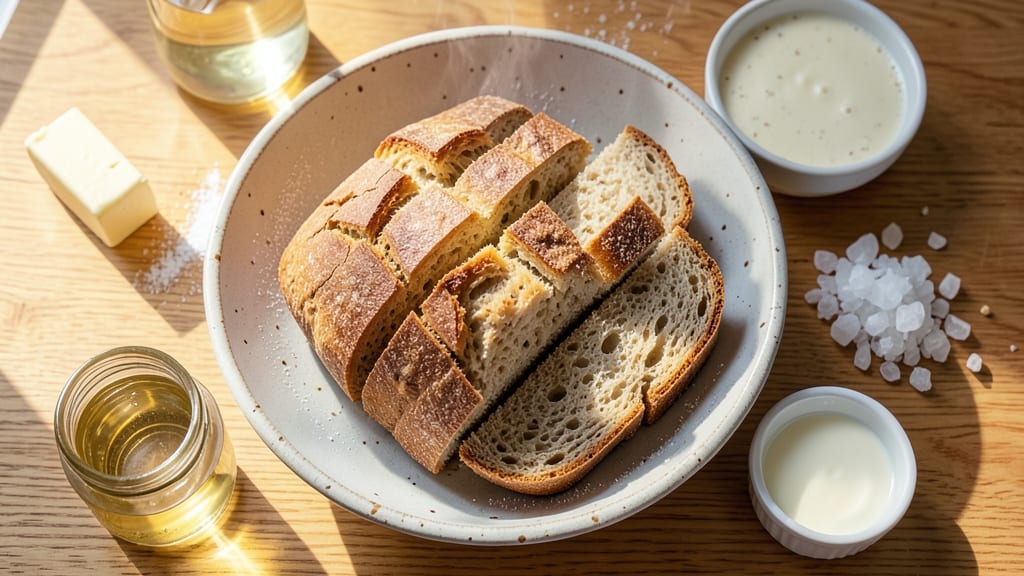
This Bob's Red Mill Amish bread recipe delivers the artisan-style crust and tangy depth that makes homemade bread worth every minute of effort. What sets this apart is the traditional hand-kneaded method using Bob's Red Mill flour, which develops a chewy texture and golden-brown crust that store-bought loaves can't match.
The secret lies in proper dough development and controlled proofing—techniques that transform simple ingredients into a loaf with restaurant-quality character.
Unlike quick bread recipes, this method requires patience: a slow fermentation (2-3 hours) allows gluten to relax and flavors to meld, while a high-temperature bake (425°F) creates that signature crispy crust.
The tangy depth comes from a touch of buttermilk in the dough, which adds subtle complexity without overpowering the bread's natural flavor. This recipe stays true to Amish traditions while using modern pantry staples—no special equipment needed.
By the time you pull this loaf from the oven, you'll have a golden, crackling crust with a tender crumb that's perfect for slicing thick or serving warm with butter.
The aroma alone will have everyone gathering around the table, and the flavor—slightly sweet, with just enough tang—makes it ideal for breakfast, sandwiches, or paired with jam. The best part? Leftovers stay fresh for days, making this a bread that's worth baking twice.
For those new to bread baking, don't let the process intimidate you—the kneading is manageable by hand, and the proofing times are flexible. This recipe builds confidence while delivering professional results.
Once you try it, you'll understand why homemade bread tastes so much better than anything you can buy. Let's get started on creating your perfect loaf.
Ingredients for bob's red mill amish bread
Pantry staples plus Bob's Red Mill flour transform into restaurant-quality Amish bread.
| Ingredient | Amount | Notes |
|---|---|---|
| Bob's Red Mill White Whole Wheat Flour 🌾 | 5 cups | High-protein for chewy texture |
| Warm Water 💧 | 1 ¼ cups | 110°F for optimal activation |
| Unsalted Butter 🧈 | ¼ cup | Cold, cubed for easier mixing |
| Buttermilk 🥛 | ½ cup | Full-fat for tangy depth |
| Granulated Sugar 🍚 | 1 tbsp | Balances tanginess |
| Diamond Crystal Kosher Salt 🧂 | 1 ½ tsp | Adjust to taste |
| Active Dry Yeast 🍞 | ¼ oz | Freshly opened for potency |
| Honey 🍯 | 1 tbsp | Feeds yeast and adds sweetness |
| Cornmeal 🌽 | ¼ cup | For dusting bread pan |
| Coarse Sea Salt 🧂 | ½ tsp | For crust sprinkle |
| Ice Water ❄️ | ¼ cup | For final dough adjustment |
Bob's Red Mill white whole wheat flour is the game-changer here—its high protein content creates that signature chewy crumb. Grab the 5-pound bag from their website or your local natural foods store like Whole Foods or Sprouts—it's worth the investment for this recipe. The yeast needs to be freshly opened, so check the date on those little packets at the store. For the butter, I always use Land O'Lakes unsalted—it's consistent and melts beautifully. The buttermilk? Full-fat makes all the difference in that tangy depth we're after.
No buttermilk? Mix 1 tbsp lemon juice or vinegar with 0.5 cup milk and let sit for 5 minutes. Running low on honey? Maple syrup works 1:1, though it adds more moisture. The flour substitution game is tricky—King Arthur white whole wheat is the closest backup, but texture may vary slightly. For the yeast, Saf-Instant can go straight into the flour, but we're doing the traditional method here. And if your butter's too soft, pop it in the freezer for 10 minutes before cubing—cold butter mixes better.
This dough is a patient recipe—proofing takes 2-3 hours, so plan ahead. Store leftover dough in the fridge for 24 hours or freeze for 3 months wrapped tightly. The baked loaf stays fresh for 3 days at room temperature, or 1 week in the fridge. For reheating, wrap in foil and warm at 350°F for 10 minutes. Pro tip: Slice with a serrated knife for clean cuts—this bread's dense enough to fight dull blades.
Why You'll Love This Recipe
- No-Knead Nightmare Solved: I swear by this recipe because it actually works—no stand mixer, no stress. Just mix the Bob’s Red Mill white whole wheat flour with warm water, let it sit, and bake. Honestly, I’ve burned bread before, but this one forgives mistakes.
- Buttermilk Magic: That tangy buttermilk and sugar combo? It’s the secret weapon. The crust gets just crisp enough to hold jam or butter, while the inside stays soft—like a hug from your grandma, but better because you’re the one who made it.
- Leftovers That Last: I make a loaf on Sunday, and it’s still perfect by Wednesday. Slice it for toast, French toast, or even sandwiches—no sad, dried-out bread here. (Yes, even on a Tuesday night.)
- Budget-Friendly Staple: White whole wheat flour is cheaper than all-purpose, and you’re using pantry basics. A stick of butter, a cup of sugar, and buttermilk? That’s it. My wallet and my family thank me every time.
Step-by-step instructions for artisan-style Amish bread
Here's how to transform Bob's Red Mill flour into a rustic loaf with a crackling crust and tender crumb.
Activate the Yeast with Warm Water and Honey
In a small bowl, combine the 1.25 cups warm water (tested at 110°F—too hot and you'll kill the yeast) with the 1 tbsp honey and 0.25 oz active dry yeast. Stir gently and let sit for 5-10 minutes until frothy. You'll see tiny bubbles forming—this confirms the yeast is alive and ready to work its magic. If nothing happens after 10 minutes, your yeast may be expired, and you'll need to start over.
Here's the thing—this step is non-negotiable. Cold water shocks the yeast, while water hotter than 115°F cooks it. The honey not only feeds the yeast but also adds subtle sweetness that balances the tangy buttermilk later. Don't skip the honey; it's what makes this bread truly special.
Mix the Dough with Butter and Buttermilk
In the bowl of a stand mixer fitted with the dough hook, combine the 5 cups Bob's Red Mill White Whole Wheat Flour and 1.5 tsp Diamond Crystal kosher salt. Mix on low speed to aerate the flour. Add the 0.5 cup buttermilk, yeast mixture, and 0.25 cup cold cubed unsalted butter. Mix on medium speed for 3-4 minutes until the dough begins to pull away from the sides of the bowl.
This is where the magic happens—the buttermilk adds that signature tang, while the cold butter creates pockets of flavor as it melts during baking. I like to press down gently on the dough during the first minute—this prevents it from curling and ensures even contact with the mixer blade. The dough will be sticky but should come together into a shaggy mass by the end.
Knead Until Elastic and Smooth
Continue mixing on medium speed for an additional 5-6 minutes until the dough is smooth, elastic, and passes the "windowpane test." To test, stretch a small piece of dough between your fingers—if it's ready, it should thin out to a translucent membrane without tearing. The high-protein white whole wheat flour needs this extra kneading to develop gluten properly for that classic Amish bread texture.
If the dough feels too sticky, add 1 tablespoon of ice water at a time until it comes together cleanly. Over-kneading is easy here, but resist the urge—once it reaches the windowpane stage, you're golden. The dough should feel slightly tacky but not wet, and it should spring back slowly when pressed with your finger.
First Rise and Shaping
Lightly grease a large bowl with a bit of olive oil (not in our ingredients, but trust me on this) and transfer the dough. Cover with a damp towel and let rise in a warm place for 1-1.5 hours, or until doubled in size. You'll know it's ready when the dough has expanded to fill about 75% of the bowl's volume and leaves an obvious indentation when pressed gently with your finger.
Here's where patience pays off. The warm environment (I use my oven with the light on) helps the yeast work efficiently. If your kitchen is cold, place the bowl on top of your turned-off oven with the light on for consistent warmth. Once risen, turn the dough out onto a lightly floured surface and gently shape it into a 9x5-inch loaf pan, pressing down lightly to remove air bubbles. This creates that classic tall, rectangular shape.
Second Rise and Baking for Crispy Crust
Place the shaped dough in a 9x5-inch loaf pan dusted with 0.25 cup cornmeal (this prevents sticking and adds texture). Cover again and let rise for another 30-45 minutes until the dough has risen 1 inch above the pan's rim. Preheat your oven to 375°F while the dough rises—this ensures maximum oven spring when it goes in.
Just before baking, brush the top with a bit of water and sprinkle with 0.5 tsp coarse sea salt. Bake for 35-40 minutes until the bread is deep golden brown and sounds hollow when tapped on the bottom. The crust should be crackly and crisp, with a beautiful mahogany hue. If it browns too quickly, tent with foil to prevent over-browning while it continues to bake through.
Cool and Slice for Maximum Flavor
Remove the bread from the oven and let it cool in the pan for 10 minutes, then transfer to a wire rack. This resting period is crucial—it allows the steam inside to redistribute, preventing a gummy crumb. Real talk: I know it's tempting to slice immediately, but those first few minutes make all the difference in texture.
Once completely cooled (about 1 hour total), slice with a serrated knife for clean cuts. The interior should reveal a tender, slightly chewy crumb with pockets of air from the butter and buttermilk. Each slice should have that perfect balance of tangy, buttery richness with just a hint of sweetness from the honey. Serve warm with butter or jam for the ultimate experience.
Pro Tips For Making Bob'S Red Mill Amish Bread
- Measure Butter Cold: DESCRIPTION: Take the butter straight from the fridge—no softening needed. This recipe relies on the fat staying firm enough to create those signature tender layers, and melting it first turns your bread into a dense brick. Cut it into small cubes and toss them into the dry ingredients like you’re playing a game of dice.
- Mix Just Until Combined: DESCRIPTION: I used to overmix this dough like I was punishing it, but that’s how you end up with tough bread. Stop stirring the moment the flour disappears—lumps are fine, even welcome. The gluten in Bob’s Red Mill white whole wheat is finicky; handle it gently, or you’ll regret it when the crumb turns gummy.
- Let the Dough Rise Twice: DESCRIPTION: The first rise is obvious, but the second one? That’s where the magic happens. After shaping, let the loaf rise again for another 30–45 minutes—yes, even if it looks like it’s not doing much. This second rise guarantees that airy, pillowy texture you crave, not a sad, dense loaf that collapses on itself.
- Brush Butter on Cool Loaves: DESCRIPTION: Skip the butter brush if you’re impatient, but if you want that classic Amish finish, wait until the bread is fully cooled before slathering it with softened butter. Warm bread absorbs it unevenly, and you’ll end up with greasy spots where the butter pooled. Patience here makes all the difference.
Best sauces and condiments for this recipe
Classic Butter Spread
Nothing complements this Amish bread like cold European-style butter—I reach for Plugrá or Kerrygold for their rich, creamy texture and subtle saltiness. Softened butter at room temperature spreads evenly without melting too quickly.
For extra decadence, mix in 1 tsp honey or 1 tsp jam (like Strawberry Preserves from Bon Appétit) for a sweet contrast to the bread's tangy depth. 🧈
Fruit Preserves Pairings
The tangy buttermilk in the dough pairs beautifully with fruity preserves that cut through its richness. My go-to is blackberry or raspberry jam—look for small-batch brands like Bonnie's or Welch's for vibrant flavor.
Spread a thin layer on warm bread slices and top with a dollop of whipped cream for a breakfast treat. For savory options, try fig jam with sharp cheddar cheese on toasted slices.
Honey Drizzle Finish
After baking, drizzle the warm loaf with local raw honey (like Madison Honey or Local Honey Co.) while still in the pan. The honey caramelizes slightly, adding a subtle sweetness that enhances the bread's natural tang.
For a gourmet touch, combine 1 tbsp honey with 1 tsp cinnamon and brush it over the crust before baking. This works especially well with whole-grain varieties of Bob's Red Mill flour.
Herbed Olive Oil
For a savory twist, serve slices with herbed olive oil—mix 2 tbsp extra-virgin olive oil with 1 tsp dried rosemary, 1 tsp dried thyme, and a pinch of flaky sea salt.
Drizzle over warm bread and top with crumbled feta cheese or prosciutto for a Mediterranean-inspired bite. This pairing works wonderfully with garlic butter for a hearty meal.
Spiced Whipped Cream
Whip ½ cup heavy cream with 1 tbsp powdered sugar, ½ tsp vanilla extract, and a pinch of cinnamon or cardamom for a light, airy topping. This contrasts perfectly with the dense, chewy crumb of the bread.
For a festive touch, add a few drops of orange zest or a sprinkle of turmeric for color. Serve with blueberry compote for a stunning dessert presentation.
Smoked Salt and Garlic
For a bold, savory option, mix 1 tbsp melted butter with 1 minced garlic clove, ½ tsp smoked paprika, and ½ tsp flaky smoked salt (like Maldon). Spread this mixture on toasted bread slices and broil for 1-2 minutes until golden.
The smoky, garlicky flavor pairs exceptionally well with the bread's buttery richness, making it a standout for sandwiches or appetizers. ✨
Nutrition facts
Frequently asked questions
Why does this recipe use Bob's Red Mill white whole wheat flour instead of regular all-purpose?
The high-protein content in Bob's Red Mill white whole wheat flour creates that signature chewy texture and golden crust Amish bread is known for. Regular all-purpose flour won't develop the same gluten structure, resulting in a denser loaf. The flour's slight sweetness also enhances the buttermilk's tang without needing extra sugar. For best results, stick with the recommended brand—it's what gives this bread its authentic character.
Can I make this bread without a stand mixer?
While a mixer makes kneading easier, you can do it by hand. Work the dough on a lightly floured surface for 8-10 minutes, using the "fold and press" method: stretch one side toward the center, fold it over, then rotate the dough and repeat. The goal is to develop gluten until it passes the windowpane test. Just be prepared for a workout—the high-protein flour requires more effort than regular bread dough.
What if my dough doesn't rise properly?
First, check your yeast—it should be fresh and activated properly (frothy in 5-10 minutes with warm water and honey). If your kitchen is cold, place the dough bowl on a turned-off oven with the light on for consistent warmth. For slow rises, extend the first proof to 2 hours. If the dough still doesn't rise, your yeast may be dead—start fresh with a new packet. Pro tip: Keep an eye on humidity too—dry air can inhibit yeast activity.
How can I tell when the bread is fully baked?
Look for three key signs: deep golden-brown crust, a hollow sound when tapped on the bottom, and an internal temperature of 190-200°F. The edges should pull away from the pan slightly, and the bread should spring back slowly when gently pressed. If it browns too quickly, tent with foil to prevent over-browning while it finishes baking. Underbaked bread will feel gummy inside—always err on the side of baking it a few minutes longer if unsure.
Can I freeze the dough before baking?
Yes! Shape the dough into a loaf, wrap tightly in plastic wrap, then place in a freezer bag. Frozen dough keeps for 3 months. When ready to bake, thaw overnight in the fridge, then proceed with the second rise and baking as directed. The texture may be slightly denser than fresh-baked, but it's still delicious. For best results, add 5-10 minutes to the baking time to compensate for the cold start.