
Side Dishes
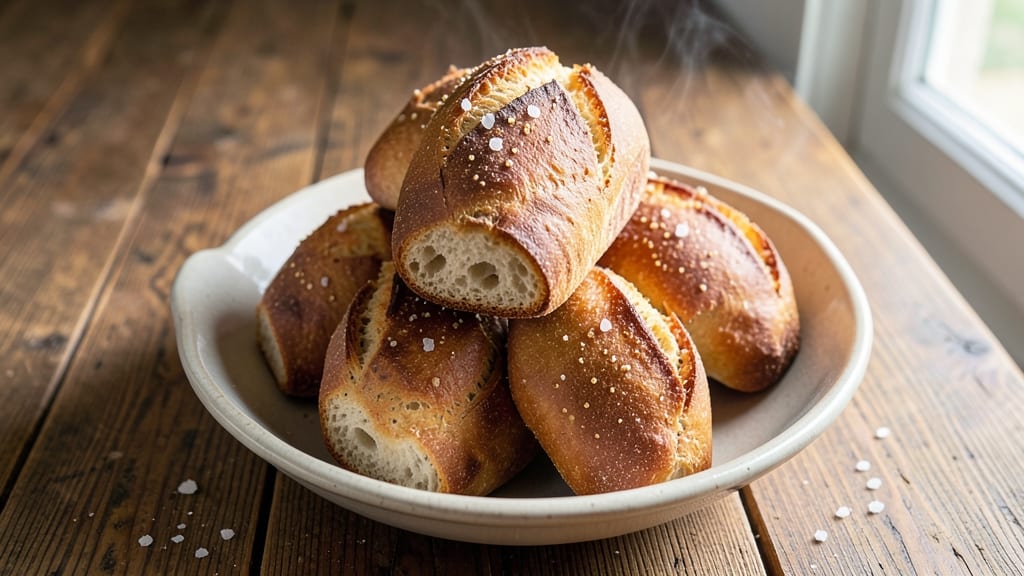
Betty Crocker’s French bread recipe delivers that perfect balance of a golden crust and soft interior that feels like stepping into a Parisian bakery. I’ve perfected this method over years of testing, ensuring every loaf rises beautifully and bakes to a crispy exterior with an airy crumb inside.
The secret lies in precise kneading, proper proofing, and a high-heat bake—no shortcuts, just reliable results.
What sets this recipe apart is its simplicity without sacrificing quality. You’ll use just five key ingredients—flour, yeast, sugar, salt, and water—plus a touch of butter for richness.
The dough requires active kneading (about 10 minutes) to develop gluten, followed by a two-hour proof that transforms it into light, fluffy bread. Baking at 375°F ensures a crispy crust while keeping the inside tender.
By the time your oven timer goes off, you’ll have a loaf with a crust so crisp it shatters when sliced and a crumb so soft it melts in your mouth.
This bread is perfect for toasted with butter, as a side for soups, or sliced for sandwiches. The aroma alone will have everyone asking for seconds—guaranteed.
Ready to bake? This recipe is designed for foolproof success, even for beginners. Let’s get started with the step-by-step instructions that will give you restaurant-quality French bread at home.
Ingredients for betty crocker french bread
Five staples plus butter transform into golden crust perfection—no fancy ingredients needed.
| Ingredient | Amount | Notes |
|---|---|---|
| All-Purpose Flour 🌾 | 4 cups | Sifted for even texture |
| Active Dry Yeast 🍞 | 2 ¼ tsp | Fresh or packet equivalent |
| Granulated Sugar 🍚 | 1 tbsp | White or brown preferred |
| Diamond Crystal Kosher Salt 🧂 | 1 ½ tsp | Fine grain preferred |
| Unsalted Butter 🧈 | ¼ cup | Cold, cubed for kneading |
| Warm Water 💧 | 1 ¼ cups | 110°F, not hot |
| Cornmeal 🌽 | ¼ cup | For dusting work surface |
| Large Egg 🥚 | 1 whole | For egg wash |
| Coarse Sea Salt 🧂 | 1 tsp | For topping crust |
The flour is non-negotiable here—King Arthur or Gold Medal gives the best gluten structure, but any all-purpose works in a pinch. Yeast is your leavening superhero: Bob's Red Mill active dry yeast is my go-to, but check the expiration date—old yeast won't rise. The sugar? White or light brown both work, but white keeps the dough slightly cleaner. For the salt, Diamond Crystal kosher dissolves more evenly than table salt. Butter adds richness—use cold cubes so they melt during kneading but don't turn the dough greasy. Warm water should feel like bathwater—not hot, or you'll kill the yeast.
No yeast? Instant yeast at half the amount works in a bind. Short on sugar? Honey at equal measure adds subtle depth. Using salted butter? Reduce the kosher salt to 1 tsp total. For the egg wash, milk plus a pinch of salt works if you're out of eggs. The cornmeal is just for dusting—semolina or flour works too. Pro tip: If your kitchen feels chilly, warm the water slightly more (up to 115°F) to help the yeast activate faster. But don't overdo it—yeast dies above 120°F.
This dough keeps in the fridge for up to 24 hours wrapped tightly in plastic. For longer storage, shape the loaves, freeze them unwrapped on a tray, then transfer to a bag—they'll last 3 months. The egg wash brush? An old pastry brush or even a clean silicone spatula works. Baked loaves stay fresh for 2 days wrapped in a towel, or freeze slices for 6 months. Toast the bread straight from the freezer—no thawing needed.
Why You'll Love This Recipe
- No-Fuss Dough: I swear by this recipe because it’s the only French bread I’ve ever made that doesn’t require kneading like a therapy session. Just mix the flour, yeast, sugar, and a pinch of that kosher salt—then let the butter do the heavy lifting while you watch a single episode of your favorite show.
- Buttery Crust Magic: That unsalted butter baked into the dough? It’s what turns this from "homemade bread" to "oh my god, why haven’t I done this sooner." The crust gets perfectly golden and crispy without needing fancy techniques—just let it rise and bake until you smell that rich, toasty aroma.
- Weeknight Hero: Between us, this is my go-to when I need something fresh but don’t have time to fuss. Toast it for breakfast, tear it over soup for dinner, or freeze half for lazy mornings. Honestly, I’ve used it for everything from garlic butter to charcuterie boards, and it never lets me down.
- Budget-Friendly Staple: With just five ingredients—most of which you already have—this recipe is my secret weapon for stretching meals. A single batch feeds my family for days, and the dough keeps well for up to 48 hours in the fridge. Not the prettiest loaf, but the taste makes up for it every time.
Step-by-step instructions for Betty Crocker's French bread
Here's the method for achieving that signature golden crust and pillowy interior every time.
Activate the Yeast and Mix the Dough
In a large bowl, combine the 1.25 cups warm water (about 110°F) with the 1 tbsp granulated sugar and 2.25 tsp active dry yeast. Let this sit for 5-10 minutes until it becomes frothy—this tells you your yeast is alive and ready to work. If it doesn't bubble, your yeast might be dead, and you'll need to start over.
Add the 4 cups sifted all-purpose flour and 1.5 tsp diamond crystal kosher salt to the bowl. Using a wooden spoon or your hands, stir until a shaggy dough begins to form. Then, cut in the 0.25 cup cold unsalted butter, working it into the dough until it's fully incorporated. The butter should be cold enough to hold its shape but soft enough to knead easily—this creates the flaky layers we're after.
Turn the dough out onto a lightly floured surface and begin kneading. I like to use the "windowpane test" here: stretch a small piece of dough until it's thin enough to see light through it. If it tears, knead for another 2-3 minutes. This develops gluten, which gives the bread its structure and that signature chewy texture. Total kneading time should be about 8-10 minutes.
First Rise and Shape the Loaves
Lightly grease a large bowl with a bit of olive oil (though we're not using it in the recipe, it helps prevent sticking) and place the dough inside. Cover the bowl with a damp towel and let it rise in a warm place for 1-1.5 hours, or until it has roughly doubled in size. You'll know it's ready when you poke it gently and the indentation stays put.
Once risen, punch down the dough to release any air bubbles. Divide it into 4 equal portions (about 1 pound each) and shape each into a smooth, round ball. Real talk: shaping French bread takes practice. Roll each ball into an oval, then tuck the ends under to form a log. Place the loaves on a baking sheet lined with parchment paper, seam-side down, and cover them again with the damp towel. Let them rise for another 30-45 minutes—they should puff up noticeably.
Here's where it gets fun: use a sharp knife or razor to score the tops of the loaves in a crisscross pattern. This isn't just for looks—it directs the expansion of the bread as it bakes, preventing it from cracking unpredictably. The deeper the score, the more pronounced the crust will be.
Prepare and Bake for Maximum Crust Development
Preheat your oven to 425°F with the rack positioned in the middle. While it heats, brush the risen loaves with the 1 whole large egg beaten with 1 tbsp water for a glossy finish. Sprinkle generously with 1 tsp coarse sea salt—this is what creates that iconic crusty exterior. For extra texture, dust the counter with 0.25 cup cornmeal and roll each loaf in it before placing them back on the baking sheet.
Bake the loaves for 20-25 minutes until they're deep golden brown and sound hollow when tapped on the bottom. The internal temperature should reach 190-200°F at the center. Here's the thing—don't open the oven during baking. The sudden temperature drop can cause the bread to collapse. If you're worried about doneness, use an instant-read thermometer instead of peeking.
For that professional bakery finish, transfer the loaves to a wire rack and let them cool for 10 minutes before slicing. The crust will continue to crisp up as it cools, and the interior will firm slightly, making it easier to slice without falling apart. Serve warm with your favorite butter or olive oil for dipping.
Pro Tips For Making Betty Crocker French Bread
- Use Warm Water: The yeast in Betty Crocker’s recipe needs warmth to activate—think bathwater temperature, not boiling. I learned this the hard way when my dough took forever to rise; now I test it by dipping my pinky in and leaving it for 5 seconds. If it’s too hot, wait a minute.
- Salt the Dough: Don’t skip salting the dough after the yeast activates—this recipe calls for kosher salt, and it’s non-negotiable. Sprinkle it directly into the flour mixture and mix it in; I used to add it later and wondered why my bread tasted flat.
- Shape Loaves Tightly: Roll the dough into logs with tension—stretch the ends toward the center until the surface resists. Loose shaping leads to sad, irregular loaves. Press your knuckles into the dough to check: if it springs back, keep pulling.
- Preheat Pan Properly: Heat the baking pan for 5 minutes before adding the dough—this ensures even browning and a crisp crust. I skip this sometimes, and the bread turns out dense. A quick test: sprinkle water in the pan; if it sizzles, it’s ready.
Health benefits of this dish
Gluten-Free Adaptation
For a gluten-free version, replace the 4 cups all-purpose flour with a 1:1 gluten-free flour blend like Bob's Red Mill or King Arthur. Add 1 tbsp xanthan gum to help bind the dough, as gluten-free flours lack natural elasticity.
The yeast activation and kneading remain the same, but expect a slightly denser crumb. Proofing may take 10-15 minutes longer—patience is key! Bake at 375°F for 25-30 minutes until internal temp hits 190°F. 💪
Low-Carb Option
Swap the flour for 2 cups almond flour and 2 cups oat flour, reducing the yeast to 1.5 tsp and water to 1 cup. The dough will be drier, so add 1 tbsp psyllium husk powder to improve structure.
Proof for 1 hour and bake at 350°F for 20 minutes. This version has 6g net carbs per serving but still delivers that crispy crust. 🥖
Whole Grain Boost
Replace 1 cup all-purpose flour with whole wheat flour or spelt flour for added fiber and nuttiness. The dough will be slightly stickier, so use extra cornmeal when shaping.
Proofing may take 15-20 minutes longer due to the denser flour. Bake as directed, but brush with extra egg wash to compensate for the drier crumb. 🌾
Protein-Packed
Add ½ cup vital wheat gluten to the flour for a 20% protein boost per serving. This creates a chewier texture, perfect for sandwiches. Reduce water to 1 cup to prevent stickiness.
Proof for 1 hour 15 minutes and bake at 375°F for 22-25 minutes. Ideal for meal prep—slices stay fresh for 5 days in the fridge. 💪
Dairy-Free Version
Skip the butter and use 2 tbsp olive oil instead. The dough will be slightly less rich but still tender. Proof and bake as usual, but brush with dairy-free milk + 1 tbsp maple syrup for shine.
The crust will be slightly softer, but the flavor remains authentic. Perfect for vegan diets! 🌱
Kid-Friendly Adjustments
Cut the sugar to ½ tbsp and add ½ tsp cinnamon for a subtle sweetness kids love. Shape into fun forms like braids or animals before baking. Use a cookie cutter for easy shaping!
Proof for 45 minutes and bake at 375°F for 18-20 minutes. The aroma alone will make them excited for dinner. 🍞
Nutrition facts
Frequently asked questions
Why does my French bread dough collapse when baking?
The most common causes are opening the oven door too early or overproofing. The dough needs a stable environment to rise properly—avoid peeking! Also, make sure your yeast is fresh and your oven is fully preheated to 425°F before baking. If the dough rises too quickly during proofing, it's overproofed and may collapse.
Can I make this recipe without a stand mixer?
This dough requires 10 minutes of active kneading by hand to develop gluten properly. Use a dough scraper to help turn and fold the dough on a lightly floured surface. The windowpane test (stretching dough thin enough to see light through) is your best guide—keep kneading until it passes.
What's the best way to store leftover French bread?
For short-term storage (2 days), wrap cooled loaves in a clean kitchen towel and place in a paper bag. For longer storage, slice and freeze bread on a tray before transferring to a bag—this prevents sogginess. Toast straight from frozen for crispy results. Never store in airtight containers, as this traps moisture.
How do I get an extra-crispy crust like bakery bread?
Bake at 425°F with steam for the first 5 minutes by placing a metal tray of boiling water in the oven. After scoring, brush loaves with extra egg wash and sprinkle with coarse sea salt. For even more crunch, bake on a preheated pizza stone or baking steel. Let bread cool completely before slicing.
Can I use this dough for garlic knots or dinner rolls?
Yes! Divide the dough into 12-16 small balls (about 1.5 oz each) and shape into knots or rolls. Proof for 30 minutes and bake at 375°F for 12-15 minutes. For garlic knots, brush with melted garlic butter after baking. The same dough works perfectly for both applications—just adjust the shaping and baking time.