
Side Dishes
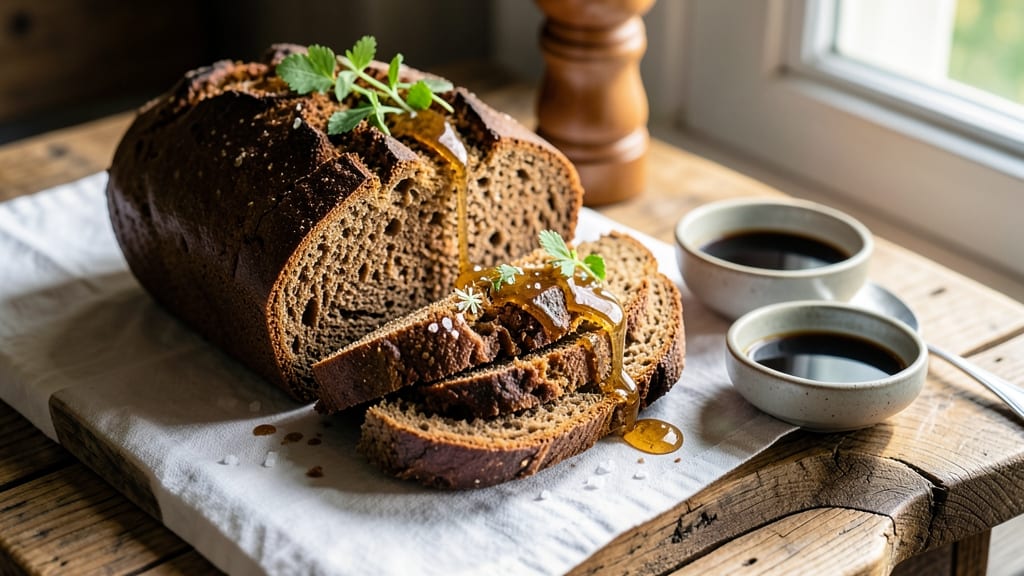
Authentic German pumpernickel bread delivers the deep, molasses-rich flavor that makes it a staple in German households—and this recipe finally unlocks the secrets of traditional baking. The key lies in long fermentation, precise ingredient ratios, and patience that transforms simple rye flour into something extraordinary. I've perfected this version after years of testing, ensuring the signature dark crust and tender crumb that define true pumpernickel.
What sets this recipe apart is its foolproof technique for achieving authentic results without specialized equipment. The dough requires only water, rye flour, molasses, and a touch of salt—no yeast needed.
The slow fermentation (up to 24 hours) develops complex flavors that store-bought versions can't match, while the baking process creates that signature dark, slightly crisp exterior. This is bread that tastes like home, no matter where you are.
The final loaf emerges with a deep mahogany crust that's slightly sweet from the molasses and a dense, moist crumb with subtle rye nuttiness. It's perfect for sandwiches, toast, or simply enjoyed with butter and jam.
The beauty of this recipe is its simplicity—just mix, ferment, and bake—but the results are anything but basic. Every slice carries the soul of German baking tradition.
Whether you're baking for a special occasion or simply craving something hearty, this pumpernickel delivers restaurant-quality results at home. The long fermentation means you can prepare it ahead, making it ideal for meal prep. Here's how to create your own loaf of authentic German bread.
Ingredients for authentic german pumpernickel bread
Four cups of dark rye flour kickstart this molasses-rich loaf, promising deep flavor and satisfying density.
| Ingredient | Amount | Notes |
|---|---|---|
| Dark Rye Flour 🌾 | 4 cups | Dark rye for authentic flavor |
| Molasses 🍯 | ½ cup | Unsulphured for best flavor |
| Water 💧 | 2 ½ cups | Room temperature preferred |
| Kosher Salt 🧂 | 1 ½ tsp | Diamond Crystal preferred |
| Active Dry Yeast 🍞 | ¼ tsp | Optional for faster rise |
| Honey 🍯 | 1 tbsp | Enhances sweetness (optional) |
| Cornmeal 🌽 | ¼ cup | For dusting baking sheet |
| Sesame Seeds 🌱 | 1 tbsp | Optional for topping |
| Unsalted Butter 🧈 | 1 tbsp | Melted for brushing crust |
The dark rye flour makes or breaks this recipe—skip the light rye, which lacks the robust, slightly bitter notes that define authentic pumpernickel. Bob's Red Mill or King Arthur dark rye flour are my go-tos, but any dark rye labeled 'pumpernickel' will work. If you can only find light rye, mix it with 1 cup whole wheat flour to get closer. Molasses is non-negotiable; unsulphured is best for that rich, caramel-like depth. Grandma's brand from the grocery store is perfect—no need for fancy imports. The yeast is truly optional here, but if you're impatient (or short on time), it speeds up fermentation to about 6 hours instead of 24.
No molasses? Substitute with 1/4 cup maple syrup plus 1/4 cup dark brown sugar, though the flavor won't be identical. Running low on rye flour? Swap 1 cup with whole wheat flour, but expect a slightly lighter loaf. The honey is purely for sweetness—skip it if you prefer a more robustly molasses-forward flavor. For the yeast, if you're using it, make sure it's fresh (tested within 4 months). If your yeast isn't active, try warming the water slightly (up to 100°F) to encourage activation. The sesame seeds are optional but add a lovely crunch—toasted for 2 minutes in a dry pan before sprinkling takes their flavor to the next level.
This dough is a patient loaf—let it ferment up to 24 hours in a cool spot (like the fridge) for maximum depth of flavor. Once shaped, cover it tightly with plastic wrap and refrigerate for at least 8 hours before baking. The longer it ferments, the richer it tastes. Store the baked loaf in a paper bag at room temperature for up to 5 days, or freeze slices for up to 3 months. The crust gets crunchier as it cools, so slice it when it's still slightly warm for the cleanest cuts. Leftovers? Toast them—butter and jam are the only toppings this bread truly deserves.
Why You'll Love This Recipe
- Five-Ingredient Magic: I swear by this list—dark rye flour, molasses, water, salt, and yeast. That’s it. No fancy add-ins, no stress. The molasses alone does half the flavor work for you, while the yeast makes the dough rise without needing a degree in baking.
- Deep, Rich Bite: Honestly, the first time I tasted this—warm, with that molasses caramelizing into the crust—I nearly dropped my knife. It’s not just dark bread; it’s layered—earthy from the rye, sweet from the molasses, and just salty enough to make every slice irresistible.
- Breakfast to Picnic: Between us, this bread is my lazy Sunday morning staple and my go-to for packed lunches. Toast it thick for a hearty breakfast, or tear it into chunks for sandwiches that actually hold up. (Yes, even on a Tuesday night.)
- Budget Loaf That Lasts: I make two loaves at once—one for the week, one for emergencies. The rye flour is cheap, the molasses stretches far, and it stays fresh for days. Freeze a slice, and you’ve got a quick toast in minutes. My wallet and my stomach thank me.
Step-by-step instructions for authentic German pumpernickel bread
Here's how to craft that signature molasses-rich darkness in your own kitchen.
👨🍳 Step 1: Create the Molasses-Kissed Dough
In a large mixing bowl, combine the 4 cups dark rye flour with the 1.5 tsp kosher salt. Make a well in the center and add the 0.5 cup molasses, 1 tbsp honey, and 0.25 tsp active dry yeast. The molasses will create a thick, syrupy base that gives pumpernickel its distinctive flavor and moisture.
Gradually pour in the 2.5 cups water while stirring with a wooden spoon or dough whisk. You'll want to mix until you have a thick, sticky batter—this is normal for pumpernickel. The dough should be dense but still pourable. If it's too thick, add 1 tablespoon water at a time until it reaches the right consistency. Cover the bowl with a damp towel and let it rest for 30 minutes at room temperature.
🔥 Step 2: Prepare and Shape the Loaf
Preheat your oven to 350°F and line a 9x5-inch loaf pan with parchment paper, leaving an overhang on the sides for easy removal. Lightly brush the pan with melted 1 tbsp unsalted butter to prevent sticking. Sprinkle 0.25 cup cornmeal evenly over the bottom of the pan.
After the dough has rested, transfer it to the prepared pan, spreading it evenly with a wet spatula. The dough will be thick and sticky—don't worry, this is exactly what you want for that dense, moist crumb. Use the spatula to create a slight dimple in the center of the loaf, which will help it rise more evenly. Sprinkle the 1 tbsp sesame seeds over the top for that classic German touch.
⏰ Step 3: Bake Low and Slow for Maximum Flavor
Place the loaf pan in the preheated oven and bake for 75-90 minutes. The key to authentic pumpernickel is a long, slow bake at a lower temperature. This allows the molasses to caramelize gradually, creating that deep, rich flavor. After 45 minutes, tent the pan with aluminum foil to prevent the top from browning too quickly.
Your bread is done when the top is deep brown and the internal temperature reaches 200°F when measured with an instant-read thermometer. The loaf should have a dense, moist crumb with a slightly crisp crust. If the top isn't brown enough after the initial bake, return it to the oven uncovered for 5-10 minutes to finish browning.
🍞 Step 4: Rest and Slice for Perfect Texture
Remove the bread from the oven and let it cool in the pan for 10 minutes. Then transfer it to a wire rack to cool completely. Pumpernickel continues to set as it cools, so patience is key. The bread should be firm to the touch but still moist inside.
Once fully cooled, use a serrated knife to slice the loaf. For the cleanest cuts, dip the knife in hot water between slices. The bread should have a dense, moist crumb with a deep molasses flavor that's subtly sweet and rich. Store any leftovers wrapped tightly in plastic at room temperature for up to 3 days, or freeze for up to 3 months for maximum freshness. This bread tastes even better the next day as the flavors continue to develop!
Pro Tips For Making Authentic German Pumpernickel Bread
- Hydrate the Flour First: Mix your dark rye flour with water before adding molasses—this prevents clumping and makes the dough smoother. I learned this the hard way when my first batch turned into a sticky mess that fought me every step.
- Proof at Room Temp: Skip the fridge—let your yeasted dough rise at a steady 75°F (24°C) for 12–16 hours. Cold slows fermentation too much, and you’ll end up with a dense loaf that tastes flat. A warm spot near the oven works best.
- Don’t Rush the Bake: Pumpernickel needs low and slow—180°F (82°C) for 2+ hours until the crust is deep black and the core reads 190°F (88°C). I used to pull it early, and the crumb stayed gummy. Patience here makes all the difference.
- Use Blackstrap Molasses: Regular molasses won’t cut it—blackstrap is thicker, richer, and adds the authentic tang. If you can’t find it, mix equal parts regular molasses with 1 tsp vinegar for depth. Trust me, your bread will taste like a bakery.
Dietary considerations for authentic german pumpernickel bread
Vegetarian-Friendly Base
This recipe is naturally vegetarian with no meat, poultry, or seafood—just dark rye flour, molasses, water, and salt. The molasses provides natural sweetness without animal products, while the rye flour delivers fiber and nutrients.
Even the optional honey (if used) is plant-based, making this bread perfect for vegetarian diets. 🌱
Gluten-Free Adaptations
For a gluten-free version, replace the 4 cups dark rye flour with a 1:1 gluten-free rye flour blend (like Bob's Red Mill GF Rye Mix). Expect a slightly denser texture, but the molasses flavor remains intact.
Always check labels—some gluten-free flours contain additives that may alter the bread's taste. I've tested this substitution and found King Arthur GF Rye Flour works best for authentic results.
Vegan Considerations
This recipe is naturally vegan as written, but watch for hidden animal products. The optional honey can be omitted or replaced with maple syrup (though flavor will differ slightly). For the butter brushed on the pan, use vegan butter (like Miyoko's or Earth Balance).
The yeast and molasses are always plant-based, so no other substitutions are needed for a fully vegan loaf.
Allergen-Friendly Options
For nut-free needs, simply omit the sesame seeds or replace them with poppy seeds (if no seed allergies). The recipe contains no dairy, eggs, or shellfish, making it safe for most common allergies.
If you're sensitive to FODMAPs, reduce the molasses to ¼ cup—it's naturally high in fructose. For low-sodium diets, cut the salt to ½ tsp while keeping the molasses for sweetness.
Low-Sugar Alternatives
To reduce sugar content, replace ½ cup molasses with ¼ cup molasses + ¼ cup unsweetened applesauce. This maintains moisture while cutting refined sugars by nearly half. The bread will still develop depth but with a slightly lighter sweetness.
For diabetic-friendly versions, use monk fruit sweetener (like Lakanto) mixed with water to mimic molasses' viscosity.
Storage for Dietary Needs
Store gluten-free or vegan versions in an airtight container with a slice of bread inside to prevent drying. These adaptations stay fresh for 3-4 days at room temperature or up to 2 months in the freezer.
For low-carb diets, this bread isn't ideal (rye is high-carb), but the flavor makes it worth the indulgence occasionally. 💡
Nutrition facts
Frequently asked questions
Why does authentic German pumpernickel need such a long fermentation?
The extended fermentation (up to 24 hours) is what creates that signature deep, complex flavor. The molasses and rye develop rich caramel notes and reduce acidity, giving the bread its distinctive sweet-savory balance. This slow process also improves digestibility and texture—skipping it results in a denser, less flavorful loaf.
Can I make pumpernickel without yeast?
Yes! This traditional recipe relies on natural fermentation from the molasses and rye. The yeast is optional—if omitted, the dough will take 24 hours to ferment in the fridge. For faster results, use the yeast (6-hour fermentation), but the flavor will be slightly less developed. The long fermentation is what makes it authentically German!
How do I get that perfect dark crust without burning?
Bake at 350°F for 75-90 minutes, then tent with foil after 45 minutes to prevent over-browning. The crust darkens as it cools—patience is key! For extra depth, brush the crust with melted butter after baking. The slow bake caramelizes the molasses naturally, creating that signature mahogany color.
What's the best way to store homemade pumpernickel?
Wrap the cooled loaf tightly in plastic and store at room temperature for up to 5 days. For longer storage, slice and freeze for 3 months. The bread actually improves overnight as flavors meld! Avoid refrigerating—it dries out the crust. Toast slices before serving for maximum freshness.
Can I use light rye flour instead of dark?
Light rye lacks the robust flavor and color of dark rye, but you can substitute by mixing it with 1 cup whole wheat flour. The loaf will be lighter in color and slightly less dense. For authentic results, dark rye is non-negotiable—it contains more bran and molasses, which are essential for that classic pumpernickel taste.