
Desserts
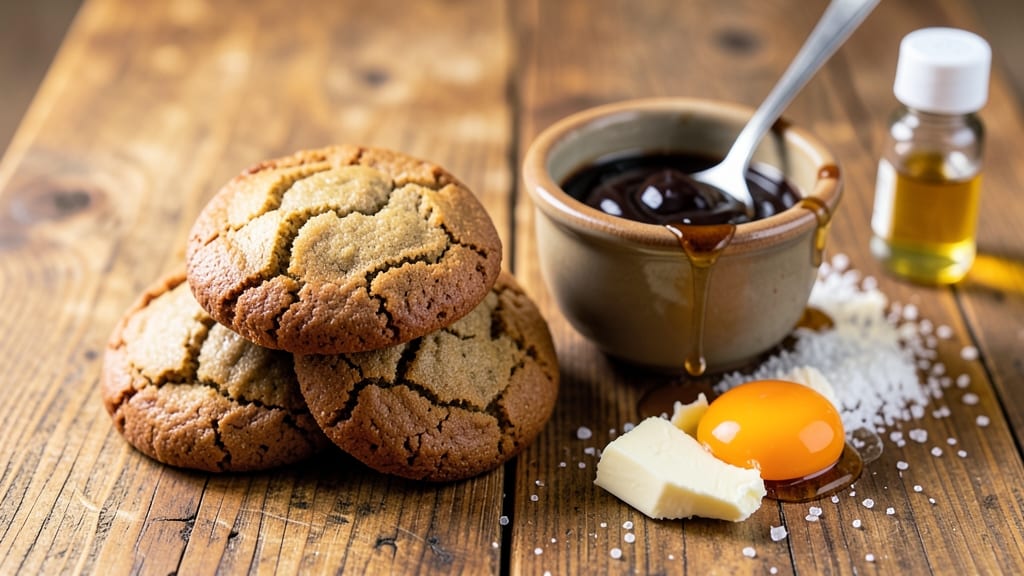
This authentic German gingerbread cookie recipe brings the warm, spiced flavors of Nuremberg's Lebkuchen tradition straight to your kitchen. 🌟 The secret lies in molasses, honey, and a carefully balanced blend of cinnamon, cloves, and cardamom—spices that create a deep, aromatic crunch with every bite.
Unlike commercial versions, this recipe stays true to its roots, delivering a texture that's crisp yet tender, with a subtle vanilla kiss that elevates the classic German taste.
The dough is surprisingly simple to prepare, requiring just 15 minutes of active time before baking. German bakers traditionally use honey alongside molasses for a natural sweetness that caramelizes beautifully, while a touch of orange zest adds brightness to the warm spice profile.
The cookies develop their signature crunchy exterior and soft center when baked low and slow, ensuring they hold up perfectly for gifting or holiday sharing.
What sets these apart is the authentic molasses base, which gives them that signature chewy texture and rich, almost medicinal sweetness. The spice blend—cinnamon, cloves, nutmeg, and cardamom—creates layers of warmth that linger with each bite.
Unlike softer American gingerbread, these cookies maintain their structure while still offering a satisfying crunch, making them ideal for festive occasions or as a comforting treat year-round.
For an extra touch of tradition, you can decorate them with icing glaze or crushed nuts, though the cookies are delicious as-is. This recipe yields about 3 dozen cookies, perfect for sharing or stashing in airtight containers.
The aroma alone will transport you to a German market stall, where these spiced delights have been a holiday staple for centuries.
Ingredients for authentic german gingerbread cookie
Authentic Lebkuchen magic starts with these 15 simple yet essential ingredients.
| Ingredient | Amount | Notes |
|---|---|---|
| Unsalted Butter 🧈 | 1 cup | Cold, cubed for cutting |
| Dark Molasses 🍯 | 1 cup | Unsulphured preferred |
| Honey 🍯 | ½ cup | Wildflower or clover |
| Granulated Sugar 🍚 | 1 cup | White or light brown |
| Large Eggs 🥚 | 2 whole | Room temperature |
| Pure Vanilla Extract 🌿 | 2 tsp | Bottled vanilla preferred |
| Ground Cinnamon 🌶️ | 2 tsp | Freshly ground ideal |
| Ground Cloves 🌿 | 1 ½ tsp | Whole cloves ground |
| Ground Nutmeg 🌶️ | ½ tsp | Freshly grated best |
| Ground Cardamom 🌿 | 1 tsp | True cardamom pods |
| Orange Zest 🍊 | 1 tbsp | Freshly grated |
| All-Purpose Flour 🌾 | 3 ½ cups | Sifted, plus extra |
| Baking Soda 🧂 | 1 tsp | Aluminum-free preferred |
| Diamond Crystal Kosher Salt 🧂 | ½ tsp | Fine grain preferred |
| Crushed Hazelnuts 🌰 | ½ cup | Toasted for garnish |
Molasses is the heart of these cookies—look for unsulphured at specialty stores or the baking aisle. Whole Foods or Penzeys carry the best quality, but even your grocery store's organic section works. The honey should be raw or wildflower for depth, and Trader Joe's often has great options. For spices, whole cloves and cardamom pods make all the difference—grind them fresh in a coffee grinder. The orange zest needs to be fresh; bottled zest loses its punch. If you're feeling fancy, German markets sometimes carry pre-ground Lebkuchen spice blends that save time.
No molasses? Dark brown sugar plus 1 tbsp blackstrap molasses gets you close, though texture will differ slightly. Subbing honey for maple syrup works, but reduce other liquids by 1 tbsp. For spices, store-bought gingerbread spice mixes often lack cardamom—add ½ tsp extra if using one. The butter must be cold; if it melts, chill the dough for 30 minutes before baking. Want extra crunch? Toast the hazelnuts in a dry pan until golden before crushing. The baking soda is critical—don't skip it, even if your recipe seems to have enough leavening from other sources.
Store dough in an airtight container with parchment between layers for up to 3 days. Baked cookies keep in a tin lined with parchment for 2 weeks at room temperature, or freeze for 3 months. For gifting, package in cellophane bags with a sprig of rosemary tied around the top. The aroma alone will have recipients thinking of Christmas markets. Pro tip: Re-crisp stale cookies by warming at 300°F for 5 minutes with a slice of apple on top—the steam brings back the moisture.
Why You'll Love This Recipe
- No-Fuss Mixing: I swear by this dough—just cream butter, fold in molasses, and stir. No electric mixer, no overworking the batter. That rich molasses-sugar balance does all the work while you sip tea.
- Spiced Warmth: The honey and molasses team up to create a deep, caramelized sweetness that lingers. Crisp edges give way to a chewy center—like a hug from a bakery, but with less guilt.
- Holiday or Snack: These cookies freeze like champs, so I bake a batch in November and pull them out all winter. Or, honestly? I eat them straight from the jar with coffee on a Tuesday.
- Budget Magic: A single jar of molasses stretches for dozens of cookies, and butter and honey last forever. My kids think they’re fancy, but my wallet stays happy—those dark molasses cookies cost pennies each.
Step-by-step instructions for authentic German gingerbread cookies
Here's how to make these rich, spiced cookies with that perfect molasses crunch.
👨🍳 Step 1: Cream Butter, Molasses, and Honey
In a stand mixer fitted with the paddle attachment, beat the 1 cup unsalted butter (cold and cubed) on medium speed for 2-3 minutes until light and fluffy. This step is crucial—it incorporates air that will create those signature crackly tops.
Reduce speed to low and gradually add the 1 cup dark molasses and 0.5 cup honey, mixing until fully combined. The mixture will look thick and almost like a paste at this stage. I like to scrape down the sides of the bowl with a silicone spatula to ensure everything gets evenly incorporated. This prevents pockets of unmixed molasses that could make your cookies taste uneven.
👨🍳 Step 2: Add Sugar, Eggs, and Vanilla
Increase the mixer speed to medium and gradually add the 1 cup granulated sugar. Mix for another 2-3 minutes until the mixture lightens in color and becomes smooth. You're looking for that ribbon stage where the batter holds its shape when the paddle is lifted.
Add the 2 whole large eggs one at a time, mixing well after each addition. Then stir in the 2 teaspoons pure vanilla extract. The batter should now be thick but still pourable. If it looks too stiff, don't worry—it will come together when we add the dry ingredients. Here's the thing—room temperature eggs mix in more smoothly and prevent lumps, so if yours aren't room temp, give them a quick warm in the bowl under hot running water for about 5 minutes.
👨🍳 Step 3: Combine Spices and Orange Zest
In a separate bowl, whisk together the 3.5 cups all-purpose flour, 1 teaspoon baking soda, and 0.5 teaspoon diamond crystal kosher salt. This is your dry mix—make sure it's sifted to prevent dense cookies. Add the spices: 2 teaspoons ground cinnamon, 1.5 teaspoons ground cloves, 0.5 teaspoon ground nutmeg, and 1 teaspoon ground cardamom.
Now add the 1 tablespoon orange zest to the dry ingredients. The zest adds that bright, citrusy note that cuts through the richness of the molasses. Gently fold this spice mixture into the wet ingredients using a silicone spatula, mixing just until combined. Overmixing develops gluten, which makes cookies tough instead of tender. You should still see some flour streaks—this is perfect.
🥘 Step 4: Chill the Dough for Better Texture
Cover the dough with plastic wrap and refrigerate for at least 2 hours (overnight is even better). Chilling is non-negotiable here—it firms up the butter so the cookies hold their shape better when baking. It also allows the flour to fully hydrate and the flavors to meld together. I know it seems like a long wait, but trust me, the texture difference is worth it.
While the dough chills, preheat your oven to 350°F and line two baking sheets with parchment paper. The dough will be quite stiff when you take it out of the fridge, but don't worry—it will soften as it sits at room temperature for 10-15 minutes before baking. This resting period is crucial for preventing cracks in your cookies.
🔥 Step 5: Bake to Perfect Golden Brown
Scoop the chilled dough into 1.5-tablespoon portions (about 1.5 ounces each) and roll them into balls. Place them 2 inches apart on the prepared baking sheets. Flatten each ball slightly with your palm—just enough to create a ¼-inch thick cookie. This ensures even baking and that signature crackly top.
Bake for 12-14 minutes until the edges are deep golden brown and the centers look just slightly underdone. They'll continue cooking on the hot pan after you remove them from the oven. Watch them carefully—they burn quickly once they reach that perfect color. When you press gently on one, it should spring back slightly but still feel soft in the center.
⏰ Step 6: Cool and Garnish for Authentic Flavor
Remove the cookies from the oven and let them cool on the baking sheets for 5 minutes before transferring to a wire rack. While still warm, sprinkle each cookie with a pinch of the 0.5 cup crushed hazelnuts. The warmth helps the nuts adhere better, creating that crunchy contrast we love in German gingerbread.
Let the cookies cool completely before storing in an airtight container. They'll keep at room temperature for up to 2 weeks, though I promise they won't last that long. The spices deepen in flavor as they cool, so the best ones are the ones you eat fresh from the pan—still warm and crackly on top with that perfect molasses crunch.
Pro Tips For Making Authentic German Gingerbread Cookie
- Chill the Dough First: I learned this the hard way—rolling out warm gingerbread dough is a disaster. Pop the dough between two sheets of parchment in the fridge for at least 30 minutes. This makes cutting cleaner shapes and prevents the cookies from spreading into sad, blobby messes. (Yes, even if you're impatient like me.)
- Use Cold Butter, Not Soft: Authentic German gingerbread needs that signature crackly crust, and cold butter is non-negotiable. Cut the unsalted butter into small cubes, toss them in the dry ingredients, and pulse just until pea-sized clumps form. Skip the food processor if you want flaky layers—your hands work better here.
- Measure Molasses Precisely: Dark molasses is thick, and eyeballing it ruins the balance. Use a kitchen scale for accuracy: 100g of molasses equals roughly 6 tablespoons, but don’t guess. Too much, and your cookies taste bitter; too little, and they lose that deep, spiced warmth. (I once burned a batch because I thought "a handful" was enough—spoiler: it wasn’t.)
- Bake in Two Stages: Start with a hot oven (375°F/190°C) for 4–5 minutes to set the edges, then drop to 325°F (160°C) for the remaining 8–10 minutes. This two-step method guarantees a crisp exterior and a soft, chewy center—no more cookies that turn into hockey pucks. (Your future self will thank you.)
Essential equipment for great authentic german gingerbread cookie
Stand Mixer Essentials
A stand mixer with paddle attachment is your best friend for this recipe—it creates the light, airy texture that gives these cookies their signature crackly tops. I use my KitchenAid Artisan Series because the strong motor handles the dense molasses mixture without overheating.
For budget-friendly options, the Cuisinart SmartMix Pro works perfectly too. The paddle attachment ensures even mixing of the molasses and honey, which can be tricky with hand mixers. 🌟
Precision Measuring Tools
German baking relies on precise measurements, especially for molasses and honey. Use a digital kitchen scale for the dry ingredients like flour and sugar—this ensures consistent results every time. For liquids, a liquid measuring cup with clear markings is essential.
I keep a OXO Good Grips set in my kitchen because the non-slip design prevents spills when pouring sticky molasses. A microplane for fresh orange zest is also a game-changer—it yields more zest than a box grater and keeps the flavor vibrant. ⚡
Baking Sheets and Parchment
Invest in two heavy-duty baking sheets—preferably half-sheet pans (13x18 inches) for even heat distribution. I use Nordic Ware Natural Aluminum because they conduct heat well and are easy to clean.
Line them with parchment paper to prevent sticking, but don’t skip the 2-inch spacing between cookies—this ensures they bake evenly without spreading. Pro tip: Use silicone baking mats if you prefer not to use parchment, but avoid non-stick sheets—they can cause uneven browning. 🔥
Spice Grinders and Storage
Freshly ground spices make all the difference in authentic German gingerbread. A small coffee grinder (like the Baratza Encore ESP) is perfect for grinding whole cloves and cardamom pods just before baking.
Store your spices in airtight containers away from light and heat—Mason jars with tight-sealing lids work great. For long-term storage, freeze whole spices in small zip-top bags to preserve their potency. The difference between store-bought ground spices and freshly ground ones is night and day. ✨
Dough Scraper and Rolling Pin
A silicone dough scraper (like the OXO Good Grips) helps transfer stiff dough onto baking sheets without tearing. For shaping, a lightweight rolling pin (I use marble for its smooth surface) ensures even thickness.
If you don’t have a rolling pin, a glass bottle works in a pinch—just roll the dough between your palms to flatten it slightly. The key is to keep the cookies ¼-inch thick for that perfect crunchy exterior and soft center. 💫
Cooling Rack and Storage Containers
After baking, transfer cookies to a wire cooling rack to prevent soggy bottoms. I love the Amazon Basics rack because it’s sturdy and fits in tight spaces. For storage, use airtight containers like Pyrex glass jars or Cambro food pans to keep cookies fresh for up to 2 weeks.
If gifting, package them in cellophane bags tied with twine—add a sprig of rosemary for an extra festive touch. The aroma alone will make them irresistible! 🌰
Nutrition facts
Frequently asked questions
Why do these cookies need to chill before baking?
Chilling the dough for at least 2 hours (or overnight) is essential for authentic texture. The cold butter firms up, preventing cookies from spreading too much and creating that signature crackly top. It also lets the flour fully hydrate and flavors meld together for deeper spice notes. Skipping this step often results in flat, dense cookies that lack the proper crunch.
Can I substitute molasses with something else?
For a close substitute, mix 1 cup dark brown sugar with 1 tablespoon blackstrap molasses. However, this won't replicate the authentic molasses flavor and chewy texture. If you're avoiding molasses, consider using maple syrup (reduce other liquids by 1 tablespoon) or date syrup—both work but alter the traditional taste. The molasses is what gives these cookies their signature depth.
How do I store these cookies to keep them fresh?
Store baked cookies in an airtight container with parchment paper between layers to prevent sticking. They'll stay fresh at room temperature for up to 2 weeks. For longer storage, freeze them for 3 months—just thaw at room temperature before serving. The key to preserving texture is keeping them away from moisture. Pro tip: Add a slice of apple to the container to help maintain crispness.
What's the difference between Lebkuchen and Printen?
Both are German gingerbread traditions, but they differ in texture and preparation. Lebkuchen (like this recipe) are typically softer with a chewy center, often decorated with icing. Printen are harder, spiced cookies made with honey and nuts, baked at lower temperatures for a longer time. This recipe leans toward authentic Nuremberg-style Lebkuchen, which balances crunch and softness perfectly.
Can I make these cookies gluten-free?
Yes, but with adjustments. Replace the 3.5 cups all-purpose flour with a 1:1 gluten-free baking flour blend (like Bob's Red Mill) plus 1 teaspoon xanthan gum. Add 2 tablespoons extra liquid (milk or water) to compensate for dryness. Expect slightly denser cookies—the gluten gives traditional versions their signature texture. Test with a small batch first.