
Side Dishes
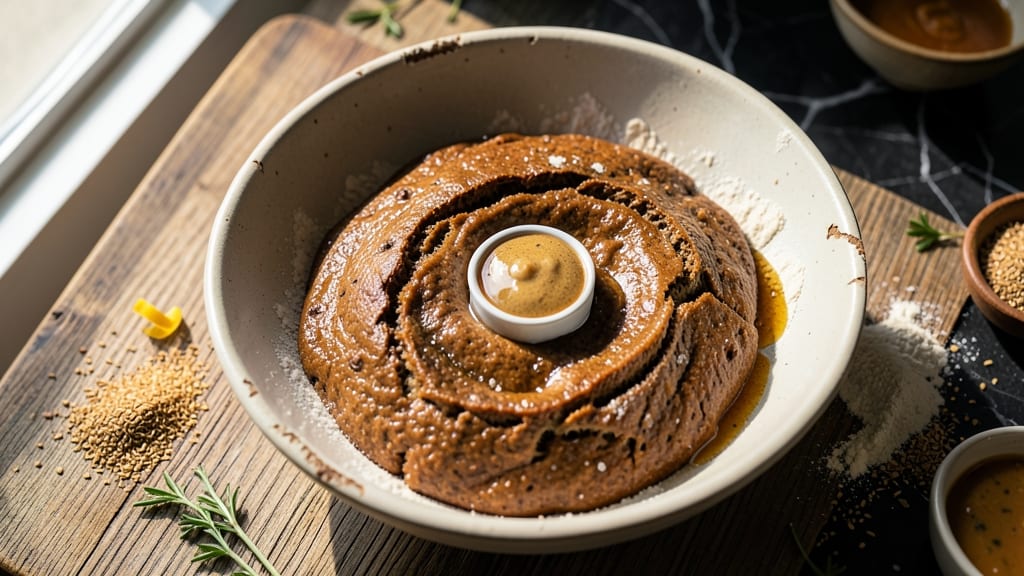
This artisan sourdough rye bread recipe delivers the perfect balance of crusty shatter and fermented depth—a loaf so flavorful it transforms any meal. The secret lies in a long fermentation that develops complex, tangy notes while the rye flour creates a dense yet airy crumb.
I've perfected this method over years of baking, ensuring every slice delivers that satisfying contrast between crispy crust and tender interior.
The process starts with a robust sourdough starter (or use a pre-fermented one for convenience), then builds flavor through a biga method—a partial pre-ferment that enhances gluten development and texture.
Bulk fermentation lasts 8-12 hours, allowing flavors to mature deeply, while proofing ensures that oven-spring you crave. The scoring technique alone determines whether your crust achieves that coveted shatter.
What you'll end up with is a loaf that smells like a European bakery—nutty, slightly sweet, with a deep caramel aroma—and a texture that's both hearty and light.
The rye adds earthy complexity, while the sourdough tang cuts through richness. This isn't just bread; it's a centerpiece that commands attention at every table.
Whether you're a seasoned baker or trying sourdough for the first time, this recipe breaks down each step clearly—from starter maintenance to final proofing. The result? A loaf so impressive, even skeptics will ask for seconds. Let's get started on creating your masterpiece.
Ingredients for artisan sourdough rye bread
Fourteen ingredients, one masterpiece loaf with that perfect crusty shatter and fermented depth you crave.
| Ingredient | Amount | Notes |
|---|---|---|
| Active Sourdough Starter 🍞 | ½ cup | 100% hydration, fed and bubbly |
| Rye Flour 🌾 | 2 ½ cups | Dark rye for authentic flavor |
| All-Purpose Flour 🌾 | 1 ½ cups | For structure and lift |
| Water 💧 | 1 ½ cups | Room temperature, filtered preferred |
| Salt 🧂 | 1 ½ tsp | Fine sea salt, Diamond Crystal preferred |
| Honey 🍯 | 1 tbsp | For fermentation boost |
| Olive Oil 🫒 | 1 tbsp | Extra-virgin for richness |
| Instant Yeast 🍞 | ¼ tsp | Optional for extra lift |
| Cornmeal 🌽 | ¼ cup | For dusting loaf pan |
| Ice Water ❄️ | ½ cup | For final shaping |
The sourdough starter is non-negotiable here—it's what gives your bread that tangy complexity and signature rise. If you're new to sourdough, King Arthur or Bob's Red Mill starters are foolproof starters to buy, but I always recommend building your own over a week for that authentic flavor. Look for a starter that's bubbly and domed when you use it; if it's flat, feed it with equal parts flour and water and wait another 4-6 hours. The rye flour? Bob's Red Mill dark rye is my go-to—it's got that deep, earthy flavor that sets artisan rye apart from the lighter varieties. Store-bought rye blends often lack the same depth, so if you're on a budget, mix your own with some whole wheat for extra richness.
No honey? Maple syrup or agave work in a pinch, though honey's enzymes help fermentation along. Running short on olive oil? Avocado oil or melted coconut oil are great swaps, but stick to neutral oils—flavored ones can overpower. The instant yeast is optional, but if you're in a hurry (or live at high altitude), it ensures a reliable rise. For the flour, if you can't find dark rye, mix 1 cup whole wheat with 1.5 cups all-purpose—it won't be identical, but it'll still taste amazing. And if you're gluten-sensitive? This recipe isn't for you—rye and sourdough rely on gluten for that perfect structure.
Your starter and dough will both need 8-12 hours of fridge time for that deep fermentation, so plan ahead. Once baked, let the loaf cool completely on a wire rack—at least 2 hours—or the crust will turn soggy. Store wrapped in a clean kitchen towel for up to 5 days at room temperature, or freeze slices for up to 3 months. The crust gets crunchier as it sits, so slice it fresh if you're serving it right away. Pro tip: Toast the slices for 30 seconds on each side to bring back that bakery-fresh crunch.
Why You'll Love This Recipe
- Four-Hour Magic: I swear, this bread proves you don’t need fancy tools—just time and patience. The starter does all the work while you’re out, and that rye flour’s earthy depth develops beautifully overnight. (Yes, even when I forget to set the timer.)
- Tangy Earthy Crunch: That first bite? The crisp rye crust gives way to a chewy interior with a hint of sourdough funk—like a campfire loaf with sophistication. The salt cuts through perfectly, making every slice feel intentional.
- Weeknight Workhorse: Toss a slice in a pan for toast, use it to soak up borscht, or pack it for lunches—this bread handles everything. My kids grab it straight from the bag, and honestly? That’s the real win.
- Budget-Friendly Staple: Rye flour’s cheap, the starter lasts forever, and one loaf stretches across breakfasts, sandwiches, and midnight cravings. I’ve baked this for years, and the pantry never complains. (Neither do I.)
Step-by-step instructions for artisan sourdough rye bread
This rye bread delivers deep fermentation flavor and a shatteringly crisp crust—here's how to nail it every time.
Mix the Sourdough Rye Dough
In a large mixing bowl, combine the 0.5 cup active sourdough starter, 2.5 cups rye flour, 1.5 cups all-purpose flour, 1.5 cups room temperature water, 1.5 tsp salt, and 1 tbsp honey. Use a wooden spoon or dough whisk to mix until no dry spots remain—this should take about 2-3 minutes. The dough will be sticky but manageable.
I like to add the 1 tbsp olive oil and 0.25 tsp instant yeast at this stage, mixing them in thoroughly. The olive oil adds richness while the yeast gives a subtle lift. Let the dough rest at room temperature for 30 minutes covered with a damp towel. This initial rest helps the gluten relax and the flavors meld.
Bulk Ferment for Maximum Flavor
After the initial rest, perform a series of stretch-and-folds every 30 minutes for 2 hours. To do this, wet your hands, grab one side of the dough, stretch it upward, and fold it over itself. Rotate the bowl and repeat on all sides. This builds strength and develops gluten for that perfect oven spring.
After the final stretch-and-fold, let the dough bulk ferment at room temperature (75-78°F) for 4-6 hours, or until it has nearly doubled in volume and looks puffy with bubbles throughout. For a more intense rye flavor, you can extend this to 8 hours—just watch for overproofing (when the dough collapses or smells overly sour).
Shape and Final Proof
Lightly flour your work surface and gently turn out the dough. Shape it into a tight log by folding the ends toward the center and rolling it toward you. Place the shaped dough, seam-side down, in a greased 9x5-inch loaf pan that's been lined with parchment paper.
Cover the pan loosely with plastic wrap and refrigerate for 12-16 hours (overnight works perfectly). This cold proof slows fermentation, intensifies flavors, and gives you that professional bakery texture. Just before baking, remove the dough from the fridge and let it sit at room temperature for 1 hour to relax slightly.
Bake with Steam for Crispy Crust
Preheat your oven to 425°F with a baking stone or inverted baking sheet inside. Place the 0.25 cup cornmeal in the bottom of the pan to catch any dough that might stick. When the oven is fully preheated, carefully transfer the dough (still in the pan) to the oven.
Bake for 50-55 minutes until the crust is deep golden brown and sounds hollow when tapped. For extra steam and crispiness, I like to spray the oven walls with water right after loading the dough. The bread is done when its internal temperature reaches 205-210°F at the center.
Cool and Slice for Perfect Texture
Remove the bread from the pan and let it cool on a wire rack for at least 1 hour before slicing. This resting period allows the crumb to set properly and prevents a gummy texture. The crust should be shatteringly crisp while the interior remains tender with a subtle tang from the rye fermentation.
Slice the bread carefully with a serrated knife for clean cuts. Serve warm with butter or preserve it in a bread box for up to 5 days. The longer it sits, the more complex the rye flavor becomes—worth every minute of the process.
Pro Tips For Making Artisan Sourdough Rye Bread
- Autolyse First: I learned this the hard way—skipping the 30-minute rest with just rye flour and water before adding starter and salt makes the dough tough. Let the rye hydrate fully, then fold in your sourdough starter and salt like you’re tucking in a blanket.
- Use Cold Water: Rye flour loves cold water—it handles hydration better and prevents gummy dough. Mix your water at 60°F (15°C) or cooler, then let the dough come up to room temp naturally during bulk fermentation. Your future self will thank you for avoiding the sticky mess.
- Don’t Over-Knead: Rye dough is fragile, especially with sourdough. After autolyse, just 10-12 stretch-and-folds during bulk fermentation (not full kneading) builds structure without overworking it. Overdo it, and you’ll end up with a dense brick instead of an airy crumb.
- Score Deeply Before Baking: Rye bread’s dense crust needs a sharp blade and a confident hand. Score your loaf at least ½-inch deep—deeper if you’re using a Dutch oven—right before baking. Shallow cuts won’t let the bread expand properly, and that’s when you get sad, flat loaves.
Wine and beer pairings for this artisan sourdough rye bread
German Beer Pairings
This dense, tangy rye bread pairs beautifully with German lagers that cut through its richness. A crisp Helles like Weihenstephaner Original (4.8% ABV) balances the rye's earthiness with its light malt sweetness.
For a bolder match, try a Dunkel like Ayinger Altbairisch Dunkel (5.2% ABV)—its caramel notes complement the bread's deep fermentation flavors. 🍺
If you prefer a stronger pairing, a Doppelbock like Paulaner Salvator (7.2% ABV) provides enough body to stand up to the bread's crusty texture. The beer's malty depth enhances the rye's nutty undertones, creating a satisfying contrast. Serve both at room temperature for the best experience.
Scandinavian Aquavit
For a traditional pairing, reach for Scandinavian aquavit—a caraway-infused spirit that bridges the gap between bread and beer. Olsens Aquavit (40% ABV) adds a herbal, slightly spicy note that cleanses your palate between bites.
Its anise and fennel flavors mirror the rye's earthy complexity while adding a refreshing contrast. 🌟
Use aquavit sparingly—just a splash in hot tea or a few drops over the bread—rather than drinking it straight. The spirit's bold aromatics elevate the bread's natural flavors without overpowering them. Perfect for a cozy Scandinavian-inspired meal.
Belgian Witbier
A Belgian witbier like Stella Artois Wit (5.2% ABV) offers a citrusy, peppery contrast to the bread's tangy depth. The beer's coriander and orange peel notes brighten the rye's earthiness, making each bite feel fresh and invigorating. The slight effervescence also helps cut through the bread's density. ✨
For a stronger version, try Hoegaarden (5.2% ABV) with its signature cloudy appearance and crisp finish. The beer's floral and spicy characteristics create a harmonious balance with the bread's fermented richness. Serve chilled to enhance the beer's refreshing qualities.
Wine Pairings
If you prefer wine, a German Spätlese Riesling like Dr. Loosen Blue Slate (8.5% ABV) pairs exceptionally well. The wine's honeyed sweetness and bright acidity complement the bread's crusty texture while its mineral notes echo the rye's earthy profile. 🍷
For a red wine option, a Pinot Noir from Germany's Baden region (12-13% ABV) works beautifully. Its red fruit flavors and subtle earthiness harmonize with the rye's depth, creating a balanced and elegant pairing. Serve the wine slightly cooler than room temperature to preserve its freshness.
Nutrition facts
Frequently asked questions
How do I know when my sourdough starter is ready for rye bread?
Your starter should be bubbly, domed, and smell slightly tangy (like yogurt or vinegar). It should also double in size within 4-6 hours after feeding. If it's flat or smells overly sour, feed it with equal parts flour and water and wait another 4-6 hours before using. For this recipe, use 0.5 cup of active starter at peak activity.
Can I make this bread without a sourdough starter?
Yes! Replace the 0.5 cup starter with 0.25 tsp instant yeast and 0.5 cup warm water, but the flavor won't be as complex. For a closer approximation, use a pre-fermented rye poolish (mix 1 cup rye flour + 1 cup water + 0.25 tsp yeast, ferment 8-12 hours at room temp) instead of the starter. The fermentation time will be shorter, but you'll still get that rye depth.
Why is my rye bread dense instead of light and airy?
Density usually comes from underproofing or too much rye flour. Try these fixes: extend bulk fermentation by 2-4 hours (up to 12 hours total), reduce rye flour by 0.5 cup and add more all-purpose, or increase the 1 tbsp honey to 2 tbsp for better fermentation. Also, ensure your starter is active and your kitchen is 75-78°F—cooler temps slow fermentation.
How can I make the crust extra crispy?
For a shatteringly crisp crust, focus on these steps:
- Use a baking stone or inverted baking sheet,
- Bake at 425°F with steam (spray oven walls with water when loading the dough),
- Score the dough deeply and confidently before baking, and
- Let the bread cool completely on a wire rack—at least 2 hours. For extra crunch, brush the crust with melted butter after baking.
Can I substitute whole wheat flour for the rye?
Not directly—rye's unique flavor and moisture content make it irreplaceable for this recipe. However, you can use 1 cup whole wheat + 1.5 cups all-purpose as a partial substitute, but expect a denser, less flavorful loaf. For a lighter texture, replace 0.5 cup rye with 0.5 cup pumpernickel flour (it's a rye blend with added molasses for sweetness). The crust won't be as crispy, but the flavor will still be rich.