
Side Dishes
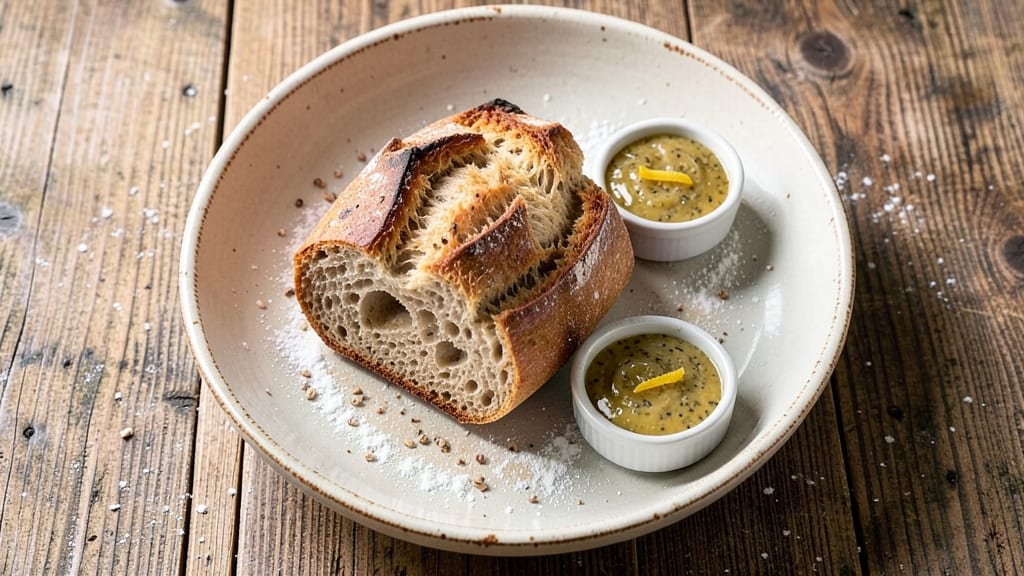
This artisan sourdough discard bread transforms what many discard as waste into a golden-crusted, tangy, open-crusted loaf with a crispy exterior and airy interior.
The key lies in balancing the wild yeast activity from your starter discard with precise hydration and fermentation times—no fancy equipment required, just patience and attention to detail.
What sets this recipe apart is its ability to develop deep, complex flavors while maintaining a light, airy crumb. The discard adds natural tanginess that store-bought yeast simply can't replicate, and the long fermentation (overnight in the fridge) enhances both flavor and texture.
Even beginners can achieve professional results with these clear steps.
The final product delivers restaurant-quality bread at home—crusty enough to satisfy crust lovers but tender enough to soak up soups or spread with butter. Each loaf has that coveted open crumb structure and a subtle tang that makes every bite memorable.
Perfect for daily sandwiches, toast, or gifting to fellow bread enthusiasts, this recipe turns something often overlooked into a showstopping centerpiece. Let's get started on creating your own artisan loaf from discard.
Ingredients for artisan sourdough discard bread
Transform discard into restaurant-quality bread with these precise ingredients and fermentation techniques.
| Ingredient | Amount | Notes |
|---|---|---|
| Active Sourdough Starter Discard 🍞 | 1 cup | 100% hydration, bubbly and active |
| All-Purpose Flour 🌾 | 3 ½ cups | Unbleached, protein content 10-12% |
| Whole Wheat Flour 🌾 | ½ cup | For added texture and nutrition |
| Granulated Sugar 🍚 | ½ tsp | Feeds yeast for initial fermentation |
| Unsalted Vegan Butter 🧈 | ¼ cup | Cold, cubed for scoring |
| Water 💧 | 1 ¼ cups | Filtered or dechlorinated preferred |
| Vegan Salt 🧂 | 1 ½ tsp | Diamond Crystal preferred |
| Flaxseed Meal 🌱 | 1 tbsp | Mixed with 3 tbsp water for egg wash |
| Cornmeal 🌽 | ¼ cup | For dusting baking surface |
| Vegan Olive Oil 🫒 | 1 tbsp | Extra-virgin for scoring brush |
| Vegan Instant Yeast 🍞 | ¼ tsp | Optional for backup fermentation |
The sourdough discard is the heart of this recipe—look for a starter that's bubbly and active with a tangy aroma. Most starters work, but 100% hydration (equal parts flour and water) yields the best results. For flours, King Arthur or Caputo brands deliver consistent performance, though any high-protein all-purpose will suffice. The whole wheat flour adds subtle depth without overpowering the delicate crumb structure. Store-bought flours work fine, but freshly milled have superior flavor. If your discard isn't active enough, add 0.25 tsp vegan instant yeast to ensure proper rise.
No vegan butter? Coconut oil or refined olive oil works in a pinch, though texture differs slightly. The flaxseed egg wash mimics egg's binding properties perfectly—mix thoroughly to avoid clumping. For scoring, olive oil is ideal, but water works in emergencies. Short on whole wheat? Substitute with white whole wheat flour for a lighter texture. The sugar is minimal here—just enough to feed the yeast during initial fermentation. No need for fancy equipment: a digital scale ensures precision, but measuring cups work if you're measuring by weight later.
This dough ferments best in the fridge—cover tightly for up to 72 hours for deeper flavor development. The scored loaves keep well at room temperature for 2-3 days when wrapped in a clean kitchen towel. For longer storage, freeze wrapped loaves for up to 3 months—thaw at room temperature before toasting. The open crumb structure makes this bread perfect for sandwiches, toast, or crostini—the tangy flavor pairs beautifully with vegan butter, jam, or avocado. Portion dough into two loaves for optimal baking performance.
Why You'll Love This Recipe
- No Waste, All Flavor: I keep a sourdough starter on hand anyway—this turns what I’d normally toss into something better than store-bought. The whole wheat flour adds a nutty depth, while the discard’s tang cuts through the richness of the vegan butter like a perfect balance.
- Weeknight Wonder: Five ingredients, zero fuss. Mix the discard with flour and sugar, let it rest while you make dinner, then shape and bake—no kneading, no waiting hours. Honestly, I’ve made this twice in the same week because it’s that reliable.
- Crusty Yet Crumbly: That crispy, caramelized crust? It’s all from a hot oven and a little patience. Inside, it’s tender with just enough chew, thanks to the whole wheat’s bite. Slather it with jam or eat it plain—either way, it’s the kind of bread that disappears fast.
- Budget Baking Boost: A loaf costs me pennies compared to artisan bread, and it feeds my family for days. The sugar keeps it soft longer, so I’m not scrambling to use it up. Plus, the starter’s already there—no extra trips to the store.
Step-by-step instructions for artisan sourdough discard bread
Transform your starter discard into a rustic, flavorful loaf with this precise method.
Prepare the Flaxseed Egg Wash and Autolyse
In a small bowl, combine the 1 tablespoon flaxseed meal with 3 tablespoons water and let it sit for 5 minutes until it thickens into a gel-like consistency. This will serve as our vegan egg wash. In a large mixing bowl, whisk together the 1 cup active sourdough starter discard, 3.5 cups all-purpose flour, and 0.5 cup whole wheat flour with the 1.25 cups water until just combined. Avoid overmixing at this stage—you're creating an autolyse to fully hydrate the flour and develop gluten gradually.
The dough will look shaggy and sticky, but that's exactly what we want. Let it rest for 30 minutes covered with a damp towel. This resting period allows the flour to absorb the water completely and begins the gluten development process. You'll notice the dough becomes slightly smoother and more cohesive during this time.
Develop the Dough with Salt and Yeast
After the 30-minute rest, add the 0.5 teaspoon granulated sugar, 1.5 teaspoons vegan salt, and 0.25 teaspoon vegan instant yeast to the dough. Using a dough scraper, gently fold these ingredients into the dough until fully incorporated. Now perform a series of stretch-and-folds every 30 minutes for 2 hours total. For each stretch-and-fold, wet your hands slightly, grab one side of the dough, stretch it upward, and fold it over itself. Rotate the bowl and repeat this process on all sides.
This technique strengthens the gluten structure without overworking the dough. You'll know you're doing it correctly when the dough becomes smoother and more elastic with each set. The goal is to create a well-developed gluten network that will trap gas during fermentation, giving your bread its signature open crumb structure.
Bulk Fermentation and First Rest
After the final stretch-and-fold, let the dough rest at room temperature for 1 hour. During this time, the dough should increase in volume by about 50-75%. Cover the bowl loosely with plastic wrap to prevent a skin from forming. The dough should feel slightly puffy and have small bubbles visible on the surface when ready for shaping.
To test if the dough is ready, perform the "poke test": gently press your finger into the dough. If it springs back slowly (takes about 1-2 seconds to return to its original shape), it's ready for shaping. If it springs back immediately, let it rest longer. If it doesn't spring back at all, it needs more development time.
Shape and Final Proof
Lightly dust a clean work surface with 0.25 cup cornmeal and turn out the dough. Gently shape it into a round boule by pulling the edges toward the center and tucking them underneath. Rotate the dough as you work to ensure even tension. Place the shaped boule seam-side up on a parchment-lined baking sheet and cover loosely with plastic wrap. Let it proof at room temperature for 1-2 hours or until it has nearly doubled in size.
During this final proof, the dough should feel light and airy when pressed gently. The surface should have visible bubbles and the dough should have risen significantly. This is when the sourdough discard truly shines—its tangy flavor develops fully during this stage, creating that distinctive depth of character in your bread.
Score and Bake to Perfection
Preheat your oven to 425°F with a Dutch oven inside for 45 minutes. Remove the Dutch oven and carefully transfer the proofed boule to it. Using a sharp razor or lame, score the top of the dough with a ½-inch deep crosshatch pattern. Brush the top generously with the 1 tablespoon vegan olive oil mixed with any remaining flaxseed gel.
Bake covered for 20 minutes, then remove the lid and bake for an additional 20-25 minutes until the bread reaches an internal temperature of 205-210°F and the crust is deep golden brown. The bread should sound hollow when tapped on the bottom. If the crust browns too quickly, tent loosely with foil to prevent over-browning while ensuring proper internal doneness.
Pro Tips For Making Artisan Sourdough Discard Bread
- STRETCH THE AUTOLYSIS: Mix your discard, all-purpose flour, and whole wheat flour first—just water and flour, no salt or sugar—then let it sit for 30 minutes. I used to skip this, but it develops gluten better, especially with the whole wheat’s grittiness. (Yes, even if you’re impatient like me.)
- WEIGH THE WHOLE WHEAT: Use a kitchen scale for the whole wheat flour—not volume measurements. Whole wheat packs differently, and eyeballing it throws off hydration. I learned this the hard way when my first batch turned out dense. A 1% difference in ratio makes a real difference.
- DON’T OVER-KNEAD: Stop mixing once the dough passes the "windowpane test" but before it gets too tight. Overworking it with whole wheat turns the crumb gummy. I was skeptical until I tried it—now I rest it 10 minutes after mixing to relax the gluten.
- SALT THE WATER: Dissolve the salt directly in the water before mixing it with the discard. I used to add it later, and the flavor distribution was uneven. (Your future self will thank you.) For this recipe, even a pinch in the water makes a noticeable difference.
Regional styles of these flavors
French Rustic Boule
This classic French approach focuses on a high-hydration dough with a long, cold fermentation for maximum flavor development. Use 50% whole wheat flour instead of 14% to mimic traditional French pain de campagne.
Shape into a tight boule with smooth tension—French bakers often use a banneton (proofing basket) for structure. Bake in a preheated Dutch oven at 450°F for 30 minutes covered, then 20 minutes uncovered for a crispy crust. The result?
A deeply tangy crumb with an open, airy texture perfect for charcuterie boards. 🥖
Italian Focaccia Twist
Transform your discard into a vegan focaccia by increasing hydration to 80% (add 1.5 cups extra water) and shaping into a flat rectangle on a baking sheet. Dimple the surface with your fingers, then top with olive oil (2 tbsp), sea salt flakes, and fresh rosemary.
Bake at 425°F for 25 minutes until golden. The Italian version delivers a softer, oil-rich crumb with a crispy bottom—ideal for dipping in balsamic or using as a pizza base. 🌿
German Sauerteig Brot
For a denser, heartier loaf, replace 1 cup all-purpose flour with 1 cup rye flour and reduce water to 1 cup. Shape into an oval loaf and bake in a preheated loaf pan at 375°F for 50-60 minutes.
The German Sauerteig Brot (sourdough bread) style emphasizes chewy texture and earthy flavor—perfect for sandwiches or toast. Brush the crust with vegan butter after baking for extra richness. 🍞
American Open-Faced Sandwich Bread
Create a soft, open-faced loaf by shaping the dough into a rectangular pan (8x4 inches) and baking at 350°F for 35 minutes. This style is lower hydration (65%) and includes 1 tbsp honey (or maple syrup) for a sweeter crumb.
Slice thickly for grilled cheese or Reubens—the tangy discard balances rich toppings beautifully. Store wrapped at room temp for 3-4 days or freeze for up to 3 months. 🥪
Scandinavian Cardamom Sourdough
Add 1 tsp ground cardamom to the dough for a warm, aromatic twist inspired by Scandinavian baking. Shape into a round boule and bake as directed, but reduce oven temp to 425°F for 25 minutes covered, then 15 minutes uncovered.
The cardamom infuses the discard with citrusy, floral notes, making it ideal for breakfast toast or cinnamon rolls. Pair with vegan cream cheese for a Nordic-inspired spread. 🌸
Nutrition facts
Frequently asked questions
What makes sourdough discard bread different from regular sourdough?
The discard adds natural tanginess and depth that commercial yeast can't replicate. The long fermentation (especially overnight in the fridge) enhances flavor while creating that signature open crumb structure. Regular sourdough often uses active starter, while discard bread maximizes flavor from what would otherwise be waste.
Can I use this recipe if my sourdough starter isn't bubbly?
Yes, but add 0.25 tsp vegan instant yeast to ensure proper rise. Look for a starter that's at least 50% active (bubbly in 1-2 hours after feeding). If yours is sluggish, feed it 1:1:1 (flour:water:starter) 12 hours before using for better activity.
How do I know when the dough is properly proofed?
Perform the poke test: gently press your finger into the dough. If it springs back slowly (1-2 seconds), it's ready. Overproofed dough won't spring back at all, while underproofed dough springs back immediately. The dough should also feel light and airy with visible bubbles.
Why does my crust turn out too dark?
Most likely your oven runs hot. Try tenting with foil after 20 minutes covered or reduce temp to 400°F. For even browning, rotate the Dutch oven halfway through baking. The internal temp should reach 205-210°F before the crust gets too dark.
Can I make this bread without a Dutch oven?
Use a heavy oven-safe pot with a lid, or bake on a baking sheet with a metal bowl inverted over it. For best results, preheat the baking sheet in the oven for 20 minutes** before adding the dough. Expect slightly less crust development but still excellent flavor.