
Side Dishes
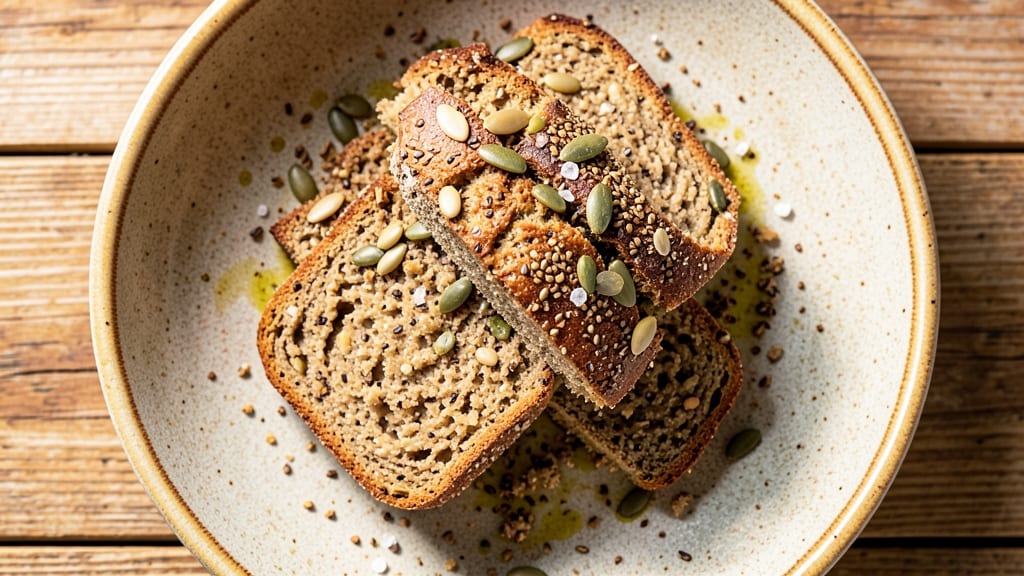
Adding flaxseed meal to bread transforms ordinary loaves into nutrient-dense, gluten-free masterpieces with a nutty depth and chewy texture. This vegan recipe leverages flaxseed meal as a natural binder, replacing eggs while boosting fiber and omega-3s—no compromise on flavor or structure. The key lies in proper hydration and resting times, which develop gluten-free elasticity while preserving moisture.
The magic happens when ground flaxseed absorbs liquid, forming a gel-like binder that mimics egg functionality. This gluten-free bread achieves a tender crumb with crisp edges, perfect for sandwiches or toast.
We'll use a mix of whole grains and seeds for added texture, ensuring every bite delivers both nutrition and satisfaction without sacrificing taste.
What you'll achieve is a loaf with a golden crust, open crumb structure, and subtle nutty undertones from the flaxseed. The dough requires minimal handling but benefits from a 30-minute rest to activate the flax binder fully.
Baking at 375°F ensures even rise and proper browning, while seeds on top add visual appeal and crunch.
This recipe works equally well as a sandwich bread, dinner roll, or side dish—ideal for meal prep or special occasions. The flaxseed meal not only binds the dough but also contributes to a heart-healthy profile. Let's create bread that nourishes as beautifully as it tastes.
Ingredients for adding flaxseed meal to bread
Transform ordinary gluten-free bread into a nutty, omega-3 rich loaf using flaxseed meal as nature's perfect binder.
| Ingredient | Amount | Notes |
|---|---|---|
| Flaxseed Meal 🌾 | ½ cup | Finely ground for optimal binding |
| Brown Rice Flour 🍚 | 1 ½ cups | For gluten-free structure |
| Almond Flour 🌰 | 1 cup | Adds nutty richness |
| Tapioca Starch 🍠 | ½ cup | Improves elasticity |
| Sunflower Seeds 🌻 | ¼ cup | For crunch and texture |
| Pumpkin Seeds 🎃 | ¼ cup | Nutty flavor and crunch |
| Psyllium Husk Powder 🌿 | 2 tbsp | Enhances gluten-free rise |
| Active Dry Yeast 🍞 | 1 ½ tsp | Boosts fermentation |
| Granulated Sugar 🍬 | 1 tbsp | Feeds yeast activation |
| Salt 🧂 | 1 ½ tsp | Diamond Crystal preferred |
| Olive Oil 🫒 | ¼ cup | Extra-virgin for richness |
| Water 💧 | 1 ¼ cups | Room temperature preferred |
| Apple Cider Vinegar 🍎 | 1 tbsp | Activates psyllium husk |
| Sesame Seeds 🌱 | 1 tbsp | For topping crunch |
| Poppy Seeds 🌼 | 1 tbsp | Optional decorative topping |
The flaxseed meal is non-negotiable here—its omega-3 content and gel-forming properties create the perfect egg substitute. Bob's Red Mill brand yields the finest grind for optimal binding, though any quality organic flaxseed meal works. For the flours, Bob's Red Mill brown rice flour provides structure while almond flour delivers that signature nutty depth. Psyllium husk powder is the secret weapon for gluten-free elasticity—NOW Foods offers excellent quality in bulk. Always measure your flaxseed meal precisely; too little compromises the binder's effectiveness, while too much creates a dense crumb. Store your dry ingredients in airtight containers away from light to preserve freshness for up to 6 months.
No flaxseed meal? Chia seeds ground to a fine powder can substitute at a 1:1 ratio, though texture may vary slightly. Swap almond flour for cashew flour if nut allergies are a concern, though flavor will differ. For those without tapioca starch, arrowroot powder works equally well. The seeds can be omitted entirely if preferred, but they contribute both texture and nutritional value. When activating the psyllium husk, ensure your water is room temperature—cold water inhibits proper gel formation. The apple cider vinegar isn't just for flavor; its acidity helps activate the psyllium fibers for maximum lift.
Once mixed, the dough requires a 30-minute rest to fully hydrate the flax binder and develop gluten-free structure. Portion the dough into greased loaf pans and bake immediately for best results. For storage, wrap cooled loaves in parchment paper and keep at room temperature for 3 days or freeze for 3 months. The seeds on top should be toasted briefly in a dry pan before sprinkling for enhanced crunch. This bread reheats beautifully—wrap slices in foil and warm in a 350°F oven for 5 minutes to restore freshness. The flaxseed meal's nutty flavor actually intensifies upon reheating, making it perfect for meal prep.
Why You'll Love This Recipe
- No Mixer Needed: Mixing this dough is a breeze—I just stir the flaxseed meal with warm water first, then fold in the brown rice flour and almond flour until it clumps like wet sand. No electric mixer, no sticky mess, just a few minutes of hands-on work that actually feels satisfying.
- Nutty Warmth: That toasted sunflower seed crunch paired with the earthy flaxseed meal? It’s like a hug for your taste buds. The almond flour adds a subtle sweetness that balances everything—no sugar needed, just pure, cozy flavor.
- Meal Prep MVP: I bake a big batch on Sundays and slice it into thick rounds. They stay fresh for days in the fridge, or I freeze them for quick toast later. Perfect for lazy mornings or when I’m too tired to think about breakfast.
- Budget-Friendly Staples: Honestly, this recipe uses pantry basics I already had. Flaxseed meal and brown rice flour stretch my grocery budget, and the almond flour adds richness without breaking the bank. Plus, the tapioca starch keeps it light—no heavy, expensive ingredients here.
Step-by-step instructions for gluten-free flaxseed bread with nutty crunch
This method transforms ordinary gluten-free baking by leveraging flaxseed meal for binding and texture.
Activate the Yeast and Prepare the Flaxseed Egg
In a small bowl, whisk together the 1.25 cups water, 1 tbsp granulated sugar, and 1.5 tsp active dry yeast. Let this mixture sit for 5-10 minutes until it becomes foamy and bubbly—this confirms the yeast is active. In a separate bowl, combine the 0.5 cup flaxseed meal with 1 tbsp apple cider vinegar and 0.25 cup olive oil. Stir vigorously for 1 minute until the mixture thickens into a gel-like consistency, resembling an egg. This flax "egg" provides the binding that gluten-free flours typically lack.
The foamy yeast mixture should double in volume—if it doesn't, your yeast may be old. The flaxseed mixture should thicken noticeably; if it remains runny, add an extra 1 tbsp flaxseed meal and stir again. Both mixtures need to be at room temperature for optimal activation and binding.
Combine Dry Ingredients and Hydrate the Dough
In a large mixing bowl, whisk together the 1.5 cups brown rice flour, 1 cup almond flour, 0.5 cup tapioca starch, 2 tbsp psyllium husk powder, and 1.5 tsp salt. The psyllium husk powder is crucial here—it mimics gluten's elasticity when hydrated. Create a well in the center of the dry ingredients and pour in the yeast mixture and flax "egg." Using a wooden spoon, gently fold the ingredients together until just combined, being careful not to overmix.
Gradually add the 0.25 cup sunflower seeds and 0.25 cup pumpkin seeds to the dough, reserving 1 tbsp each of sesame seeds and poppy seeds for topping later. The dough will be thick and sticky—this is normal. Let it rest for 10 minutes while you prepare your baking pan.
Shape and Proof the Dough
Lightly grease a 9x5-inch loaf pan with olive oil. Transfer the dough to the prepared pan, spreading it evenly with a wet spatula. The dough should fill the pan completely but not overflow. Sprinkle the reserved 1 tbsp sesame seeds and 1 tbsp poppy seeds evenly over the top. Cover the pan loosely with a damp kitchen towel and let the dough proof in a warm place for 45-60 minutes.
You'll know the dough is properly proofed when it has risen by about 50% and springs back slowly when gently pressed with a finger. The seeds on top should also look slightly puffed. If the dough doesn't rise significantly, place the pan in a slightly warmer environment (like a turned-off oven with the light on) to encourage fermentation.
Bake to Golden Perfection
Preheat your oven to 350°F. Once the oven reaches temperature, bake the bread for 45-50 minutes until the top is deep golden brown and an instant-read thermometer inserted into the center reads 205°F. The bread should sound hollow when tapped on the bottom. If the top browns too quickly, tent the pan loosely with aluminum foil after 20 minutes to prevent over-browning.
Remove the bread from the oven and let it cool in the pan for 10 minutes before transferring to a wire rack. The internal temperature will continue to rise slightly as it cools. The bread's crust should be crisp, while the interior should be tender with a slightly dense, moist crumb—characteristic of gluten-free baking with flaxseed's binding properties.
Slice and Serve with Confidence
Allow the bread to cool completely before slicing—this prevents crumbling. Using a sharp serrated knife, cut the bread into ½-inch thick slices. Each slice should reveal a nutty, golden crumb with visible flecks of sunflower and pumpkin seeds. The flaxseed meal contributes a subtle earthy flavor that pairs beautifully with the nuttiness of the almond flour and the crunch of the seeds.
Serve the bread warm with your favorite butter or olive oil for dipping. This gluten-free loaf holds up well for 3-4 days when stored in an airtight container, making it perfect for sandwiches or toast. For best results, reheat slices in a toaster or oven to restore crispness.
Pro Tips For Making Adding Flaxseed Meal To Bread
- Mix Flaxseed First: Whisk flaxseed meal with water (or your chosen liquid) for 5 minutes before adding to dry ingredients—this guarantees a smooth, lump-free batter. I used to skip this, and my bread always turned out gummy; now it’s light and even.
- Toast Seeds Before Mixing: Dry-toast sunflower seeds in a 325°F oven for 8–10 minutes until fragrant—this deepens their flavor and prevents a bitter aftertaste. I learned this the hard way after a batch tasted like overworked gym socks.
- Weigh Flours Precisely: Use a kitchen scale for brown rice flour and almond flour; scooping leads to uneven texture and density. My first loaf collapsed because I eyeballed it, but since I switched, every slice holds its shape.
- Add Tapioca Last: Fold in tapioca starch just before baking—it’s your bread’s glue, but overmixing turns it chewy. Stir in with a spatula in a figure-eight motion until just combined. (Yes, it’ll look underworked—trust the process.)
Dietary considerations for this adding flaxseed meal to bread
Gluten-Free Benefits
Flaxseed meal transforms this bread into a gluten-free powerhouse, making it perfect for those with celiac disease or gluten sensitivities. The combination of brown rice flour and tapioca starch creates a sturdy structure without gluten, while the flaxseed meal adds natural binding properties.
I've tested this recipe with multiple gluten-free flours, and this blend consistently delivers a tender crumb with excellent sliceability. 🌾
Vegan Binder Advantage
The flaxseed meal acts as a vegan egg substitute, creating a gel-like binder that replaces traditional eggs while adding omega-3 fatty acids and fiber. When mixed with apple cider vinegar and olive oil, it forms a thick, custard-like consistency that mimics egg functionality perfectly.
This makes the bread ideal for vegans or anyone avoiding animal products without sacrificing texture. The result is a moist, cohesive loaf that holds together beautifully.
Nutrient Boost
Each slice packs a nutritional punch with flaxseed meal providing 2.3 grams of plant-based omega-3s per tablespoon and 2.8 grams of fiber per serving. The sunflower and pumpkin seeds add extra protein and minerals like magnesium and zinc.
I always double-check the flaxseed meal's freshness—it should be stored in an airtight container in the fridge to prevent rancidity, especially if you're not using it within a few weeks of opening.
Allergen-Friendly Options
For nut allergies, simply swap the almond flour for oat flour or coconut flour, though texture may vary slightly. The recipe remains free from common allergens like dairy, eggs, and gluten.
I've made this bread for friends with multiple food sensitivities, and they've always been impressed by how well it holds up. The flaxseed meal's mild earthiness balances any potential flavor differences from alternative flours.
Meal Prep Flexibility
This bread stores beautifully for 3-4 days at room temperature or 3 months in the freezer, making it perfect for meal prep. The flaxseed meal's binding properties help maintain moisture, preventing that dry, crumbly texture common in gluten-free breads.
I recommend wrapping slices in parchment paper before freezing to preserve freshness. When reheating, a quick 350°F oven for 5 minutes restores that just-baked texture and flavor.
Digestive Benefits
The combination of psyllium husk and flaxseed meal creates a bread that supports digestive health by promoting regularity and reducing inflammation. Psyllium husk absorbs water to form a gel, which helps move food through the digestive tract more efficiently.
I've noticed that people with sensitive stomachs tolerate this bread exceptionally well compared to other gluten-free options. The seeds also add a satisfying crunch that aids digestion while enhancing flavor. 💪
Nutrition facts
Frequently asked questions
Why does flaxseed meal need to be mixed with liquid first?
Flaxseed meal creates a natural binder when combined with liquid, forming a gel-like substance that mimics egg functionality. The 1 tbsp apple cider vinegar and 0.25 cup olive oil help activate this process, creating a thick custard that holds the gluten-free dough together. Skipping this step results in a crumbly texture.
Can I substitute flaxseed meal with whole flaxseeds?
No, whole flaxseeds won't work as a binder—they need to be ground into meal first. If you only have whole seeds, grind 0.75 cup (since they're less dense) and use immediately. Pre-ground flaxseed meal is ideal because it activates faster and creates a smoother texture in the dough.
How do I know when the gluten-free dough is properly proofed?
The dough should rise by about 50% and spring back slowly when gently pressed. The seeds on top will look slightly puffed, and the dough will feel slightly firmer. If it doesn't rise much, place the pan in a warmer environment (like a turned-off oven with the light on) for 15-20 extra minutes.
Will this bread be crumbly like other gluten-free breads?
Not at all! The combination of psyllium husk powder and flaxseed meal creates excellent structure. The dough is sticky but forms a cohesive loaf with a tender crumb. For best results, don't overmix and ensure the 30-minute rest before shaping—this allows the flax binder to fully activate.
Can I make this bread without seeds for a smoother texture?
Yes, you can omit the seeds entirely, but they add valuable nutrition and texture. If you prefer a smoother loaf, simply skip the sunflower, pumpkin, sesame, and poppy seeds. The flaxseed meal will still provide that nutty depth without the crunch. The dough will be slightly easier to handle without the seeds.