
Side Dishes
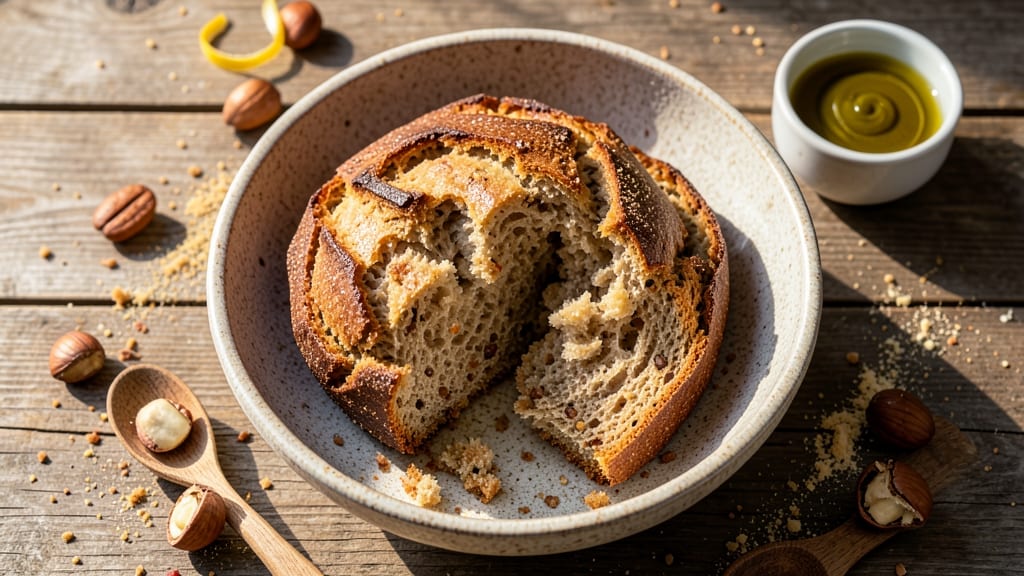
This acorn flour bread recipe delivers a unique earthy crust paired with a light, airy crumb that sets it apart from traditional loaves. The nutty depth of acorn flour transforms ordinary bread into something extraordinary—perfect for those seeking both flavor and texture innovation.
What makes this recipe special is its balance: the flour's natural sweetness and nuttiness complement the bread's open crumb structure, creating a loaf that's both satisfying and visually striking.
Baking this bread requires precision in hydration and proofing to achieve the ideal texture. Acorn flour absorbs moisture differently than wheat flour, so we'll adjust the liquid ratios and kneading time to ensure a tender yet sturdy crumb.
The key lies in patience during proofing—allowing the dough to rise slowly develops that signature airy quality while preserving the flour's distinctive earthy notes.
What you'll end up with is a loaf that boasts a crisp, golden crust with subtle acorn undertones and a crumb so light it practically melts in your mouth. The aroma alone will draw everyone to the table, and each slice offers a satisfying contrast of textures—crispy exterior, soft interior.
This bread pairs beautifully with soups, stews, or simply toasted with butter for a rustic breakfast.
For those without access to acorn flour, we'll include substitution options that maintain the bread's character while keeping the process straightforward. The recipe also scales easily, making it ideal for both small batches and larger gatherings. Ready to bake bread that's as impressive as it is delicious?
Ingredients for acorn flour bread
Nine simple ingredients transform into a loaf with nutty depth and airy crumb perfection.
| Ingredient | Amount | Notes |
|---|---|---|
| Acorn Flour 🌾 | 3 cups | High-quality, finely ground |
| All-Purpose Flour 🌾 | 1 cup | For structure and rise |
| Active Dry Yeast 🍞 | 1 ½ tsp | Or 1 packet instant yeast |
| Granulated Sugar 🍚 | ½ tsp | Feeds the yeast |
| Non-Dairy Milk 🥛 | 1 ¼ cups | Unsweetened almond or oat |
| Olive Oil 🫒 | ½ cup | Extra-virgin preferred |
| Apple Cider Vinegar 🍏 | 1 tbsp | Enhances flavor and rise |
| Salt 🧂 | 1 ½ tsp | Kosher or sea salt |
| Ground Flaxseed 🌱 | 1 tbsp | Mixed with 3 tbsp water for egg replacement |
| Water 💧 | ½ cup | Warm, for yeast activation |
| Maple Syrup 🍁 | 2 tbsp | Adds subtle sweetness |
Acorn flour is the star here, so buy the finest quality you can find—the nutty flavor shines when it's freshly ground. Local health food stores or specialty online retailers like Bob's Red Mill carry the best. If you can't find it, walnut flour works in a pinch, though the flavor will be slightly different. The yeast needs warmth, so make sure your water is 105-110°F—too hot and it kills the yeast, too cold and it won't activate. I always test mine by dropping a bit in the water—it should foam within 5 minutes.
No acorn flour? Substitute with a mix of 2 cups whole wheat flour and 1 cup all-purpose for a similar earthy note, though texture won't be identical. Running low on flaxseed? Chia seeds work too—just double the amount. The apple cider vinegar is key for that tangy depth, but lemon juice in a pinch works if you're in a bind. For extra richness, swap half the non-dairy milk for coconut milk. And if you're worried about the dough being too sticky, add 1 tbsp more all-purpose flour—acorn flour absorbs moisture like crazy.
This dough is a beast—it needs time. Let it rise for at least 1.5 hours (or up to 2 hours) for that perfect airy crumb. Shape the loaf into a round boule for a rustic look, or use a loaf pan for classic slices. Store leftovers wrapped in a clean kitchen towel at room temperature for 2-3 days, or freeze slices for up to 3 months. The crust gets crisper as it cools, so resist the urge to slice it warm—wait at least 30 minutes.
Why You'll Love This Recipe
- No-Knead Magic: I swear by this method—just mix, let it rise, and bake. The acorn flour gives it a nutty depth without the fuss of kneading or shaping.
- Earthy Yet Familiar: That first bite? Warm, slightly sweet from the sugar, with a toasty crunch from the acorn flour—like a cozy hug in bread form. The non-dairy milk keeps it rich without dairy.
- Weeknight & Picnic Star: Slice it for toast in the morning, pack it for lunch, or serve it at a potluck—it holds up everywhere. Freezes beautifully too, so I always bake an extra loaf.
- Budget-Friendly Staple: Acorn flour might sound fancy, but a little goes a long way. This recipe stretches further than you’d think, and the yeast does all the work for you. Win-win.
Step-by-step instructions for acorn flour bread
This earthy, rustic bread delivers a perfect balance of crisp crust and tender crumb—let's make it together.
Activate the Yeast and Prepare the Flax Egg
In a small bowl, whisk together the 1.5 teaspoons active dry yeast, 0.5 teaspoon granulated sugar, and 0.5 cup warm water (about 110°F). Let it sit for 5-10 minutes until frothy—this tells you the yeast is alive and ready to work. If it doesn't bubble, your yeast might be dead, and you'll need to start over.
While that foams, mix the 1 tablespoon ground flaxseed with 3 tablespoons water in another small bowl. Stir well and let it sit for 5 minutes until it thickens into a gel-like consistency. This flax "egg" replaces traditional eggs while adding structure and moisture to the bread.
Combine Wet Ingredients for the Dough
In a large mixing bowl, combine the 1.25 cups non-dairy milk, 0.5 cup olive oil, 1 tablespoon apple cider vinegar, 2 tablespoons maple syrup, and the activated yeast mixture. Stir gently to blend, then add the flax egg. The mixture should look slightly thick but pourable.
In a separate bowl, whisk together the 3 cups acorn flour and 1 cup all-purpose flour. Gradually sprinkle this flour mixture into the wet ingredients while stirring with a wooden spoon. The dough will be shaggy at first—don't worry, it'll come together. Once combined, add the 1.5 teaspoons salt and mix until fully incorporated.
Knead and Develop the Gluten
Transfer the dough to a lightly floured surface and knead for 8-10 minutes until smooth and elastic. You'll know it's ready when it springs back slowly when poked. The acorn flour makes this dough slightly stickier than traditional bread dough, so wet your hands occasionally to prevent sticking.
Here's the thing—acorn flour absorbs moisture differently, so the dough might feel slightly dry at first. If it cracks or tears while kneading, just press it together gently. The key is to develop enough gluten for structure while keeping the earthy flavor intact.
First Rise and Shape the Loaf
Lightly oil a large mixing bowl, place the dough inside, and cover with a damp kitchen towel. Let it rise in a warm place for 1-1.5 hours, or until doubled in size. The dough should feel light and airy when pressed gently with a finger—this is your signal it's ready for shaping.
Punch down the dough to release air, then shape it into a round loaf. For a rustic look, place it seam-side up on a parchment-lined baking sheet. Cover again and let it rise for another 30-45 minutes. The second rise should be less dramatic but still noticeable—think puffy, not collapsed.
Bake to Golden Perfection
Preheat your oven to 375°F with a Dutch oven inside for 30 minutes. This creates steam that gives the bread its signature crisp crust. Carefully transfer the dough (still on parchment) into the hot Dutch oven, cover, and bake for 30 minutes.
Remove the lid and bake for another 15-20 minutes until the crust is deep golden brown and sounds hollow when tapped on the bottom. The internal temperature should reach 190-200°F. Let the bread cool on a wire rack for at least 1 hour before slicing—this prevents a gummy crumb.
Pro Tips For Making Acorn Flour Bread
- Sift the Acorn Flour: Acorn flour is dense—don’t just dump it in. Sift it with the all-purpose flour to break up clumps and distribute it evenly. I learned this the hard way when my first batch turned out rock-hard in spots because the acorn flour settled unevenly.
- Proof at Room Temp: Skip the warm oven or microwave for proofing—just let the yeasted dough rise in a draft-free spot at 70°F (21°C) for 1–1.5 hours. I used to rush it with heat, but the bread always tasted flat or dense afterward. Patience here guarantees a light crumb.
- Hydrate the Acorn Flour: Mix the acorn flour with the non-dairy milk before adding it to the wet ingredients. This prevents a gritty texture and helps the flour absorb moisture properly. (Yes, it looks like you’re making a weird paste—trust me, it works.)
- Steam the First 10 Minutes: Place a metal bowl of boiling water in your oven, then bake the bread as usual. The steam keeps the crust from drying out too fast, which is especially critical with acorn flour’s tendency to absorb moisture unevenly. No weird setup—just a bowl and a lid on the rack.
Essential equipment for acorn flour bread
Dutch Oven
A Dutch oven is the MVP for baking this acorn flour bread—its heavy cast iron retains heat beautifully and creates that signature steam for a crisp crust. I recommend a Lodge 5-quart for its even heat distribution and durability.
If you don’t own one, a heavy oven-safe pot with a lid (like Le Creuset) works too. Preheat it alongside your oven for 30 minutes to ensure it’s scorching hot when you add the dough. 🔥
Stand Mixer
Acorn flour dough is dense and sticky, so a stand mixer saves your arms from hours of kneading. I use my KitchenAid Artisan Series with the dough hook attachment for 8-10 minutes on medium speed.
If you’re mixing by hand, go slow—acorn flour absorbs moisture fast, and rushing can make the dough tough. For smaller batches, a hand mixer works, but expect to add 1 extra minute of kneading time. ⚡
Digital Thermometer
Precision matters with acorn flour bread, and a digital thermometer (like the Thermoworks Thermapen) is your best friend. Use it to check the internal temperature of your dough (should reach 190-200°F when done) and the water temperature for yeast activation (aim for 105-110°F).
I also use mine to monitor the oven’s heat—acorn flour burns easily, so keep temps steady at 375°F. 🌡️
Baking Stone
For a crispier crust without a Dutch oven, use a baking stone (like the Ooni Cast Iron Pizza Stone). Place it on the middle rack while preheating, then transfer your shaped dough directly onto it.
The stone mimics a wood-fired oven, giving you that rustic, blistered crust. If you don’t have one, a cast-iron skillet works in a pinch—just preheat it in the oven for 20 minutes before baking. 💫
Proofing Basket
A proofing basket (or banneton) elevates your bread to bakery-level perfection. The woven texture gives the dough beautiful patterns while supporting its shape during the final rise. I love the Nordic Ware 9-inch for its sturdy construction.
If you’re shaping a round loaf, dust the basket with acorn flour (or all-purpose) to prevent sticking. For a quick fix, use a bowl lined with a floured kitchen towel—it’s not as pretty but gets the job done. ✨
Nutrition facts
Frequently asked questions
Why does acorn flour bread taste different from regular bread?
Acorn flour brings a naturally sweet, nutty depth that traditional wheat flour lacks. The earthy undertones come from the acorns' tannins, creating a complex flavor profile similar to sourdough but with a toasty, almost chestnut-like richness. The bread also has a denser crumb because acorn flour lacks gluten, so we blend it with all-purpose flour for structure.
Can I make this bread without acorn flour?
Yes! For a similar earthy flavor, substitute with 2 cups whole wheat flour + 1 cup all-purpose flour. If you want a lighter loaf, use 1.5 cups walnut flour + 1.5 cups all-purpose flour. Just note the texture will differ—acorn flour's moisture absorption makes this recipe uniquely tender. The flax egg substitution also helps mimic the bread's chewy quality.
How do I know when the dough is fully proofed?
Press your finger gently into the dough—if it springs back slowly (leaving a slight indentation) and the dough feels light and airy, it's ready. For acorn flour bread, the rise should take 1-1.5 hours for the first proof and 30-45 minutes for the second. If your kitchen is cold (65°F or below), extend proofing time by 30 minutes
Why did my bread turn out dense instead of airy?
This usually happens from one of three issues: underproofing, over-kneading, or incorrect flour ratios. Acorn flour absorbs moisture quickly, so if the dough felt dry during mixing, add 1-2 tablespoons warm water before kneading. Also ensure your yeast was active (it should foam within 5-10 minutes when mixed with warm water). For extra lift, try adding 1/4 teaspoon baking soda to the dough.
How should I store acorn flour bread to keep it fresh?
Wrap cooled slices in a clean kitchen towel and store in an airtight container at room temperature for 2-3 days. For longer storage, freeze slices (up to 3 months) on a parchment-lined tray first, then transfer to a bag. To revive, toast frozen slices in a 350°F oven for 5-7 minutes—they'll taste almost as fresh as day one!