
Side Dishes
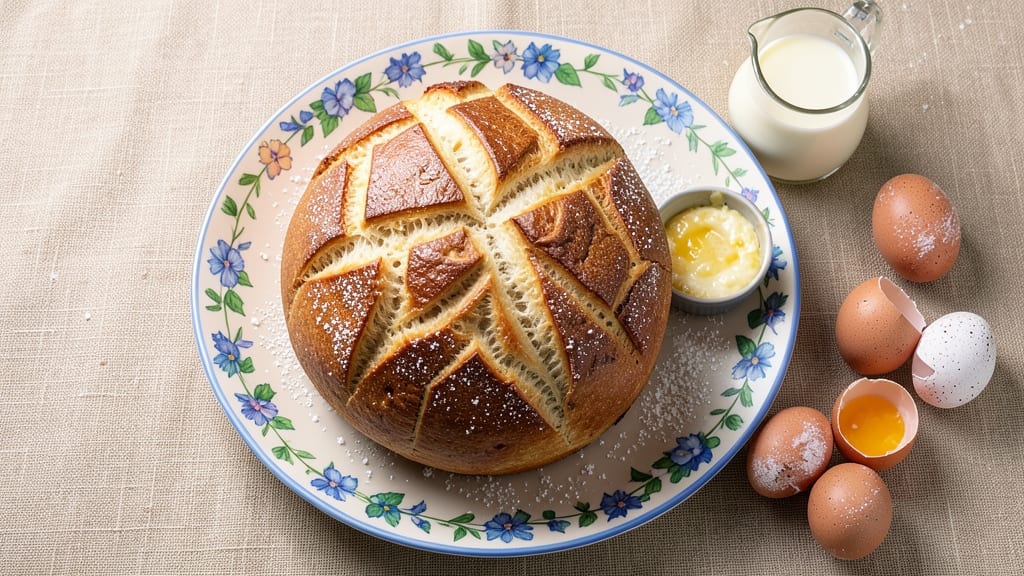
Ukrainian paska bread recipe brings Easter traditions to life with its signature fluffy layers and golden braids. This sweet, buttery bread symbolizes new beginnings and is central to Easter celebrations, often blessed and shared among families.
The dough requires patience—multiple rises and careful layering—but the result is worth every moment of preparation.
The secret to authentic paska lies in its rich, eggy dough and precise shaping. Traditional recipes call for generous butter and sometimes poppy seeds or raisins, adding texture and subtle sweetness. Unlike regular bread, paska’s structure depends on thinly rolled dough layers that create its signature fluffiness when baked.
What makes this recipe special is its dual role as both a centerpiece and a symbol. The tall, braided loaves represent unity and prosperity, while the tender crumb and buttery aroma make every bite a celebration.
Perfect for Easter feasts or special occasions, this bread carries cultural weight with every slice.
Mastering paska requires attention to detail—proper proofing, gentle handling, and high-heat baking—but the outcome is unforgettable. Whether you’re baking for tradition or simply craving something extraordinary, this recipe delivers restaurant-quality results at home. Let’s begin with the dough preparation.
Ingredients for ukrainian paska bread
Traditional Ukrainian ingredients for a bread steeped in Easter symbolism and buttery perfection.
| Ingredient | Amount | Notes |
|---|---|---|
| All-Purpose Flour 🌾 | 5 cups | High-protein preferred for structure |
| Granulated Sugar 🍚 | ½ cup | Fine grain for even distribution |
| Unsalted Butter 🧈 | 1 cup | Cold, cubed for layering |
| Large Eggs 🥚 | 4 whole | Room temperature for best mixing |
| Warm Milk 🥛 | 1 cup | Whole milk for richness |
| Active Dry Yeast 🍞 | 2 ¼ tsp | Freshly opened for viability |
| Diamond Crystal Kosher Salt 🧂 | 1 ½ tsp | Fine grain for even seasoning |
| Poppy Seeds 🌻 | ¼ cup | Toasted for enhanced flavor |
| Raisins 🍇 | ¼ cup | Plump, soaked in warm water |
| Orange Zest 🍊 | 1 tbsp | Freshly grated for brightness |
| Vanilla Extract 🥄 | 1 tsp | Pure extract for authentic flavor |
| Powdered Sugar 🍚 | ¼ cup | For final dusting and glaze |
| Heavy Cream 🥛 | ¼ cup | For brushing and glaze |
The butter and eggs are non-negotiable for authentic paska. European-style unsalted butter, like Plugrá or Kerrygold, provides the richest flavor and proper fat content for layering. If substituting, ensure it's at least 82% fat. Eggs should be large and fresh—room temperature for proper emulsification. For yeast, FreshPaks or Saf-Instant work best, but active dry yeast is fine if proofed properly. The flour matters too—King Arthur or Caputo high-protein flours create the signature tender crumb. Poppy seeds and raisins add texture and tradition; toast the seeds lightly to deepen their flavor before mixing.
No poppy seeds? Sesame seeds or chopped almonds work as a neutral substitute, though they alter the flavor profile. Raisins can be omitted entirely or replaced with chopped dried apricots for a fruitier note. If you lack orange zest, lemon zest at double the amount provides brightness, though it’s slightly more tart. For a dairy-free version, coconut oil and almond milk can replace butter and milk, but the texture will differ. The yeast must be active—test it in warm milk before using. If your dough feels too sticky, add flour gradually; if too dry, incorporate milk. The key is balance, not precision.
Paska dough requires careful storage to maintain its delicate structure. Once mixed, cover with a damp towel and refrigerate for up to 24 hours before shaping. Shaped loaves can be proofed at 70°F for 1.5-2 hours or refrigerated overnight for slower fermentation. Baked loaves stay fresh for 3 days at room temperature, wrapped in a linen towel. For longer storage, freeze slices between parchment paper for up to 3 months. Reheat in a 350°F oven for 5-10 minutes to restore freshness. The buttery layers make it best reheated, not microwaved.
Why You'll Love This Recipe
- No Yeast Hassle: I’ll admit, I was skeptical about baking without yeast—until I tried this. The warm milk and eggs create a light rise on their own, so you’re not stuck waiting hours. Just mix, shape, and bake while you sip coffee.
- Sweet Butter Magic: That rich, creamy butter folded into the dough? It’s what makes this bread ridiculously good. The sugar caramelizes just enough to give every bite a subtle sweetness, but it’s not cloying—more like a cozy hug for your taste buds.
- Easter Centerpiece: Between us, this bread is the showstopper for Easter. It’s traditional, beautiful, and way more impressive than store-bought loaves. Plus, the kids love braiding it—turns a simple recipe into a family activity.
- Budget-Friendly Staples: Honestly, this recipe uses ingredients you already have. Flour, sugar, butter—no specialty items, no markup. And the leftovers? Toast them for breakfast or pack slices in lunches. Zero waste, maximum value.
Step-by-step instructions for Ukrainian paska bread
Master the layered technique that makes this Easter centerpiece rise high and stay tender.
Activate the Yeast and Prepare the Dough Base
In a small bowl, combine the 1 cup warm milk with 2.25 teaspoons active dry yeast and let sit for 5-10 minutes until foamy. This activation step ensures your bread rises properly—if it doesn't bubble, your yeast may be inactive, and you'll need to start fresh. In a large mixing bowl, whisk together 5 cups all-purpose flour, 0.5 cup granulated sugar, 1.5 teaspoons diamond crystal kosher salt, and the orange zest. The sugar and zest will infuse the dough with subtle brightness from the beginning.
Make a well in the center and pour in the yeast mixture along with 4 whole large eggs and 1 cup unsalted butter, cut into cubes. Using a wooden spoon or dough whisk, gradually incorporate the ingredients until a shaggy dough forms. Here's the thing—don't overmix. You want to preserve the gluten development for later layers, not create a tough base. The dough should be sticky but manageable, with some dry flour visible on the bottom of the bowl.
Develop the Dough Through Kneading and Resting
Turn the dough onto a lightly floured surface and knead for 8-10 minutes until smooth and elastic. You'll know it's ready when it springs back slowly when poked. This kneading step builds the structure needed for the bread's signature height. Divide the dough into 4 equal portions, then roll each into a 12-inch circle on a parchment-lined baking sheet, leaving 1-inch space between them. This spacing prevents the layers from merging during baking.
Cover the dough with a clean kitchen towel and let rest for 30 minutes at room temperature. This brief rest allows the gluten to relax slightly, making the dough more pliable for layering. While waiting, prepare the filling by combining 0.25 cup poppy seeds, 0.25 cup raisins, 1 teaspoon vanilla extract, and 0.25 cup heavy cream in a small bowl. The raisins should be plump from soaking—if they're dry, they'll absorb too much moisture from the dough and create dry spots.
Layer and Proof the Paska for Maximum Rise
After resting, spread 1/4 of the poppy-raisin filling evenly over each dough circle, leaving a ½-inch border around the edges. This border prevents the filling from leaking during baking. Gently fold the dough over the filling to create a ½-inch thick rectangle, then seal the edges by pinching with your fingers. The goal is to create a tight seal without tearing the dough—this ensures the bread rises evenly and holds its shape.
Transfer the shaped paska to a parchment-lined baking sheet, cover with the towel again, and let proof in a warm place for 1-1.5 hours until nearly doubled in size. The dough should feel light and springy when pressed gently. Here's where precision matters: if it rises too quickly, the bread will collapse during baking. If it rises too slowly, the layers won't develop properly. Your kitchen's temperature will dictate the exact timing—watch for visual cues rather than relying strictly on time.
Bake to Golden Perfection with Crisp Layers
Preheat your oven to 350°F and position a rack in the lower third. Brush the proofed paska generously with 0.25 cup heavy cream mixed with 1 tablespoon vanilla extract, then sprinkle evenly with 0.25 cup powdered sugar. This glaze creates the signature caramelized crust while keeping the interior moist. Bake for 45-50 minutes until the top is deep golden brown and the internal temperature reaches 190°F when measured at the center.
Real talk: the bread is done when it pulls away slightly from the edges of the pan and emits a sweet, buttery aroma. If the top browns too quickly, tent loosely with foil after 30 minutes to prevent over-browning while allowing the center to finish cooking. Remove from the oven and let cool on a wire rack for 15 minutes before slicing—this resting period ensures clean layers and prevents a gummy texture.
Pro Tips For Making Ukrainian Paska Bread
- Whisk Butter First: Melt the unsalted butter just until soft—not liquid—and whisk it with the sugar until it’s pale and fluffy. I learned this the hard way: skipping the whisking leaves dense, cakey bread instead of that signature tender crumb. (Yes, even if you’re impatient like me.)
- Use Room-Temp Eggs: Take the eggs out of the fridge at least 30 minutes before mixing—room temperature eggs blend smoother and incorporate better into the batter. Cold eggs make the dough fight you, and you’ll end up with uneven texture. Trust me, this isn’t the time to rush.
- Don’t Overmix the Dough: Once you fold in the flour, stop mixing the second everything comes together—overworking develops gluten and turns your paska into a dense loaf. Two or three gentle folds with a spatula is all it takes. (I used to beat it like I was punishing the dough.)
- Preheat Pan to Medium: Heat your baking pan to medium (not high) before pouring in the batter—this prevents a burnt bottom while letting the top rise evenly. I was skeptical until I tried it: the crust stays golden without scorching. (Your future self will thank you.)
Flavor customization for this ukrainian paska bread
Classic Sweet Variations
For a more traditional approach, enhance the filling with 1 tbsp honey or 2 tbsp jam (such as raspberry or apricot) mixed into the poppy-raisin blend. The natural sweetness complements the buttery layers beautifully.
I often use 1 tbsp lemon juice in the filling to brighten the flavors—it cuts through the richness and adds a subtle tang. 🍯
Spiced Citrus Twist
Infuse the dough with warmth by adding 1 tsp ground cinnamon and ½ tsp cardamom to the initial flour mixture. For the filling, replace raisins with ½ cup chopped candied citrus peel (orange or lemon) and 1 tbsp brandy (or orange liqueur) to deepen the citrus notes.
The spices add complexity while keeping the bread sweet and aromatic.
Nutty Crunch Option
Swap out poppy seeds for ½ cup chopped walnuts or pecans, lightly toasted with 1 tsp cinnamon and a pinch of salt. The nuts add a satisfying crunch that contrasts with the soft, buttery layers.
For extra richness, fold 2 tbsp melted white chocolate into the filling before layering. This variation feels decadent yet maintains the bread’s traditional structure.
Herbal and Earthy
For a savory-sweet balance, replace raisins with ½ cup chopped dried figs and add 1 tbsp chopped fresh dill or 1 tsp dried thyme to the dough. The herbal notes pair surprisingly well with the buttery layers, creating a sophisticated flavor profile.
Drizzle the baked loaf with honey-thyme glaze (mix 2 tbsp honey with 1 tsp thyme) for an elegant finish.
Chocolate Lover’s Version
Transform paska into a dessert-worthy treat by folding ½ cup chocolate chips (or chopped dark chocolate) into the filling. For a showstopper, top the baked loaf with a chocolate ganache drizzle (melt 4 oz dark chocolate with 2 tbsp heavy cream).
This version is perfect for Easter brunches or as a celebratory centerpiece. 🍫
Seasonal Fruit Filling
Use seasonal fruits like ½ cup chopped strawberries (for spring) or ½ cup sautéed apples with cinnamon (for autumn) in place of raisins. For summer, try ½ cup blueberries tossed with 1 tbsp lemon zest.
The fruit adds moisture and vibrant color, making the bread feel fresh and festive. Adjust the sugar in the dough slightly if using very sweet fruits.
Nutrition facts
Frequently asked questions
Why does Ukrainian paska bread have layers?
The signature layers create both texture and symbolism. Each thin sheet represents the resurrection layers of Christ in Christian tradition, while the buttery layers ensure a tender, fluffy crumb. The technique requires patience—rolling, layering, and sealing the dough creates those signature flaky pockets when baked.
Can I make paska without a stand mixer?
This recipe is designed for hand mixing. Use a wooden spoon or dough whisk to combine ingredients, then knead by hand on a floured surface for 8-10 minutes. The dough should be sticky but pliable—add flour gradually if needed. The key is gentle handling to preserve the delicate layers.
How do I know when the dough is properly proofed?
Press gently with your fingertip—if the dough springs back slowly (not immediately) and leaves a slight indent, it's ready. For paska, the dough should nearly double in size during proofing (1-1.5 hours). If it rises too quickly, it may collapse during baking. Keep it in a warm spot (like near the oven with the light on) for even rising.
What's the best way to store leftover paska?
Wrap cooled loaves in a linen towel (not plastic) to preserve freshness for 3 days at room temperature. For longer storage, slice and freeze between parchment paper for up to 3 months. Reheat slices in a 350°F oven for 5-10 minutes—microwaving makes the layers gummy.
Can I substitute ingredients if I don't have poppy seeds?
Yes! Try sesame seeds or chopped almonds for texture, though they alter the flavor. For sweetness, add 1 tbsp honey or 2 tbsp jam to the filling. The key is maintaining the ½-inch border when layering to prevent filling from leaking during baking.