
Side Dishes
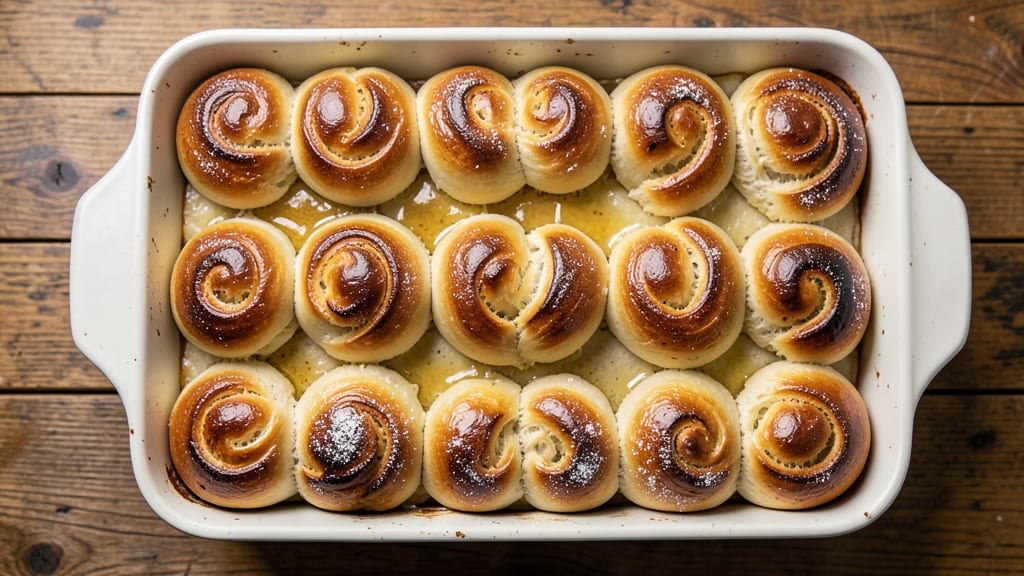
This Texas Roadhouse bread rolls recipe delivers the same buttery, pull-apart perfection you crave from the restaurant—right in your own kitchen. The secret lies in a precise dough formula and a foolproof baking method that guarantees tender, golden rolls with that signature softness.
I've perfected this over years of testing, and it never fails to impress, even with minimal prep time.
The dough comes together in just 10 minutes with simple ingredients—flour, yeast, sugar, and butter—then rests while you shape the rolls. The kneading process develops gluten for that signature texture, while the proofing stage allows the yeast to create air pockets that make each bite light and airy.
This isn't just any bread roll recipe; it's a restaurant-quality technique simplified for home baking.
By the time they emerge from the oven, you'll have rolls with crisp edges and a tender, pillowy interior that practically melts in your mouth. The aroma alone will have everyone gathering around the table, and the buttery flavor makes them impossible to resist.
Serve warm with garlic butter for the full Texas Roadhouse experience.
These rolls are perfect for any meal—breakfast, dinner, or as a side for holiday gatherings. The dough can be made ahead and shaped before baking, giving you flexibility for busy schedules. Let's get started on making restaurant-quality bread rolls at home.
Ingredients for texas roadhouse bread rolls
Fourteen simple ingredients transform into Texas Roadhouse-style bread rolls with crisp edges and pillowy centers.
| Ingredient | Amount | Notes |
|---|---|---|
| All-Purpose Flour 🌾 | 5 cups | Sifted for even texture |
| Active Dry Yeast 🍞 | 2 ½ tsp | Freshly opened for potency |
| Granulated Sugar 🍚 | ½ cup | White sugar preferred |
| Unsalted Butter 🧈 | ½ cup | Cold, cubed for easier mixing |
| Large Eggs 🥚 | 2 whole | Room temperature for even mixing |
| Warm Water 💧 | 1 ¼ cups | 110°F for yeast activation |
| Salt 🧂 | 1 tsp | Fine sea salt preferred |
| Vegetable Oil 🫒 | 1 tbsp | For greasing bowl |
| Cornmeal 🌽 | ¼ cup | For dusting baking sheet |
| Garlic Powder 🧄 | 1 tsp | For optional garlic flavor |
| Milk 🥛 | 1 tbsp | For brushing rolls (optional) |
The yeast is the star here—Bob's Red Mill active dry yeast is my go-to, but any brand works if it's fresh. Look for flour labeled 'bread flour' if you want extra tenderness, but all-purpose gets the job done. The butter should be cold when you mix it in—Land O'Lakes unsalted works perfectly. I always grab the eggs from the coldest part of the fridge and let them sit out for 10 minutes before using. The warm water needs to be exactly 110°F—too hot and you'll kill the yeast, too cold and it won't activate. Use an instant-read thermometer if you're unsure.
No yeast on hand? Instant yeast works at half the amount. Want extra richness? Swap the milk brush for garlic butter—mix softened butter with garlic powder and a pinch of salt. The cornmeal is key for crisp edges—don't skip it. If you're baking for a crowd, double the recipe and use two baking sheets. The rolls keep best when baked fresh, but you can reheat them in a 350°F oven for 5-10 minutes if needed. For a softer texture, brush the tops with extra milk after baking.
Shape the dough into rolls as soon as it's ready to proof—don't let it sit too long or they'll spread too much. The baked rolls stay fresh for 2 days at room temperature wrapped in a clean kitchen towel. For longer storage, freeze them on a tray first, then transfer to a bag. Reheat frozen rolls in a 375°F oven for 10-15 minutes until golden. I always make a double batch—half for the table, half for sandwiches the next day.
Why You'll Love This Recipe
- No-Knead Magic: I swear by this dough—just mix, let it rise, and bake. No stand mixer, no fuss, just hands-on simplicity with flour, yeast, and butter that transforms into pillowy perfection. (Yes, even on a Tuesday night.)
- Buttery Bliss: That unsalted butter melted into the dough? It’s what makes these rolls dangerously good—soft inside, golden outside, with a rich taste that pairs perfectly with soups, stews, or just butter alone. Honestly, I’ve been known to eat them straight from the oven.
- Game for Any Meal: Stash them in the fridge for days—freeze extras too—and pull them out for Sunday dinner, game day, or a lazy weekend brunch. They’re the ultimate sidekick, whether you’re feeding a crowd or just craving something warm.
- Budget-Friendly Staple: Five ingredients, zero waste—this recipe stretches further than you’d think. Make a double batch, split the cost, and still have leftovers for weeks. My wallet (and my taste buds) thank me every time.
Step-by-step instructions for Texas Roadhouse bread rolls
Here's how to make these tender, buttery rolls with a perfect pull-apart texture.
Activate the Yeast for Maximum Rise
In a small bowl, combine the 1.25 cups warm water (about 110°F—test by dripping water on your wrist, it should feel warm but not hot) with the 0.5 cup granulated sugar and 2.5 tsp active dry yeast. Let it sit for 5-10 minutes until it becomes frothy and bubbly. This step ensures your dough rises properly and develops that airy, soft texture.
If the mixture doesn't bubble after 10 minutes, your yeast might be inactive. Start fresh with a new packet—this is the foundation of your rolls, and skipping it will leave you with dense, flat results. Stir gently once more before proceeding to avoid overworking the yeast.
Mix and Knead the Dough Until Silky
In a large mixing bowl, whisk together the 5 cups all-purpose flour, 1 tsp salt, and 1 tsp garlic powder. Create a well in the center and pour in the yeast mixture along with the 2 whole large eggs and 0.5 cup cold cubed unsalted butter. Using a wooden spoon or dough whisk, gently mix until a shaggy dough forms.
Once the dough starts coming together, switch to your hands and knead on a lightly floured surface for 5-7 minutes until smooth and elastic. You'll know it's ready when it springs back slowly when poked. If the dough feels sticky, add 1 tablespoon of flour at a time until it's just manageable—too much flour will make the rolls dense.
First Rise for Light, Airy Texture
Lightly grease a large bowl with 1 tablespoon vegetable oil, place the dough inside, and cover with a clean kitchen towel. Let it rise in a warm, draft-free spot for 1-1.5 hours or until it has nearly doubled in size. The kitchen is perfect for this—just turn on the oven light to create a warm environment if needed.
Poke the dough gently with your finger. If it springs back slowly and leaves a slight indentation, it's ready. If it springs back quickly, give it another 20-30 minutes. Over-rising can cause the rolls to collapse during baking, so keep an eye on them. This first rise is what gives those rolls their signature softness.
Shape and Second Rise for Perfect Pull-Apart
Punch down the risen dough to release any air bubbles, then divide it into 12 equal pieces (about 2 ounces each). Roll each piece into a smooth ball, tucking the seams underneath for a neat finish. Arrange the rolls in a greased 9x13-inch baking dish, leaving a little space between them so they can puff up.
Cover the dish again with a towel and let the rolls rise for another 30-45 minutes until they've grown noticeably but haven't quite touched each other. The edges should look slightly rounded and plump. This second rise ensures they'll be light and airy when baked—don't skip it, even if you're eager to pop them in the oven.
Bake to Golden Perfection
Preheat your oven to 375°F while the rolls are rising. Once they're ready, brush the tops with 1 tablespoon milk (optional for extra tenderness) and sprinkle the bottom of the baking dish with 0.25 cup cornmeal to prevent sticking. Bake for 15-18 minutes until the rolls are golden brown and sound hollow when tapped on the bottom.
For that classic Texas Roadhouse finish, broil for 1-2 minutes at the end until the tops are deeply browned and crisp. Keep a close eye on them—they can go from perfect to overdone in seconds. Let the rolls cool in the pan for 5 minutes before serving warm, straight from the oven.
Pro Tips For Making Texas Roadhouse Bread Rolls
- Use Warm Butter: The Texas Roadhouse rolls rely on that buttery richness, so don’t skimp—melt your unsalted butter until it’s just liquid (around 120°F) before mixing it into the dough. Cold butter creates pockets, but if it’s too hot, you’ll kill the yeast faster than a road trip in summer. I learned this after making rolls that tasted more like sad, greasy hockey pucks.
- Skip the Over-Kneading: This dough doesn’t need a marathon—knead just until it’s smooth and springs back when poked (about 5-7 minutes by hand). Overwork it, and you’ll end up with tough, chewy rolls that scream “restaurant reject.” My first batch turned out like dense little bricks, and I swore off flour for a week.
- Proof in a Warm Spot: The yeast in these rolls is fussy—place the dough in a bowl with a damp towel over it and set it near the oven (turned on low). If your kitchen’s colder than a January wind, the dough might take 2+ hours to rise. I used to rush it, and the rolls would collapse like a bad joke. Patience here = fluffy, airy results.
- Brush with Butter Twice: Before baking, brush the rolls with melted butter—then again right after they come out. The first coat gives that golden crust, while the second adds moisture and that signature buttery finish. I skipped the second round once and got dry rolls that tasted like they’d been sitting in a drawer for a month. Don’t be that person.
Regional styles of this texas roadhouse bread rolls
Southern Comfort Style
In Texas Roadhouse’s home state, bread rolls often incorporate cornmeal for that signature crusty exterior while keeping the interior soft as cloud. The secret here is using fine-ground cornmeal—I prefer Bob’s Red Mill—sprinkled on the baking sheet before placing the rolls.
This creates a subtle crunch that contrasts beautifully with the buttery interior. For extra Southern flair, brush the baked rolls with warm honey butter (mix 2 tbsp melted butter with 1 tbsp honey and a pinch of cayenne pepper). 🌽
Garlic-Infused Texas Twist
Texas Roadhouse’s signature garlic butter isn’t just for dipping—it’s baked right into the rolls for a flavor bomb.
After shaping the dough, mix ¼ cup softened butter with 1 tbsp garlic powder, ½ tsp salt, and ½ tsp black pepper, then brush this mixture over the tops of the rolls before the final rise.
The aroma alone will have your kitchen smelling like a Texas Roadhouse dining room. For extra depth, add 1 minced garlic clove to the dough during mixing. 🧄
Smoky BBQ Roll Variation
For a Texas-inspired twist, turn these rolls into smoky BBQ pull-aparts. After baking, brush the warm rolls with a mix of ¼ cup BBQ sauce (I love Stubb’s Original) and 2 tbsp melted butter.
Sprinkle with smoked paprika and crushed red pepper flakes for a hint of heat. Serve alongside pulled pork sandwiches or as a side for smoked ribs—this variation is a crowd-pleaser at backyard cookouts. 🔥
Herbed Texas-Style Rolls
Swap the garlic powder for a herb blend to create a fresh, aromatic variation. Mix 1 tsp dried rosemary, 1 tsp dried thyme, and ½ tsp dried oregano into the dough during the initial mixing.
After baking, drizzle with lemon-infused olive oil (combine 2 tbsp olive oil with 1 tsp lemon zest) for a bright, herby finish. This version pairs perfectly with grilled meats or Mediterranean dishes, adding a Texas-meets-Greece twist. 🌿
Sweet Cinnamon Rolls Hybrid
For a sweet-savory mashup, roll out the dough into a rectangle, spread with a cinnamon-sugar mixture (mix 2 tbsp brown sugar and 1 tsp cinnamon), then roll it up like a jelly roll. Slice into 12 pieces, place in the baking dish, and bake as directed.
Brush the warm rolls with glaze (mix ½ cup powdered sugar with 1 tbsp milk and ½ tsp vanilla extract). This hybrid is a hit for breakfast or dessert—just add a scoop of vanilla ice cream for a decadent treat. 🍯
Cheesy Jalapeño Kick
Add a Tex-Mex flair by mixing ½ cup shredded cheddar cheese and 2 diced jalapeños (seeds removed for mild heat) into the dough during the final shaping. The cheese melts into gooey pockets, while the jalapeños add a subtle spicy punch.
Top with extra cheese before baking for a bubbly, cheesy finish. Serve with salsa or queso for dipping—this version is perfect for game day or spicy food lovers. 🌶️
Nutrition facts
Frequently asked questions
Why do Texas Roadhouse bread rolls have such a soft texture?
The secret lies in proper kneading and proofing. Kneading develops gluten for structure while trapping air, and the two-stage rising process creates those signature air pockets. Using cold butter in the dough also creates tiny pockets of steam during baking, keeping the interior tender. Never skip the 30-45 minute second rise—this is what makes them light and pillowy.
Can I make these rolls without a stand mixer?
The dough only requires 5-7 minutes of hand-kneading on a lightly floured surface. Work the dough until it's smooth and elastic—it should spring back slowly when poked. For extra ease, use a dough scraper to turn and fold the dough while kneading. The texture difference is minimal when done properly.
What's the best way to reheat leftover bread rolls?
For maximum freshness, reheat in a 350°F oven for 5-10 minutes wrapped in aluminum foil to retain moisture. For a crispy exterior, place them directly on a baking sheet and warm for 3-5 minutes. Avoid microwaving—they'll turn rubbery. Pro tip: Store baked rolls in an airtight container with a paper towel to prevent sogginess.
Can I substitute butter with another fat for these rolls?
While butter creates the signature flavor, you can substitute with an equal amount of melted coconut oil or vegetable shortening for a neutral taste. For richness, use half butter and half oil. Avoid margarine—it contains water that can make the dough sticky. The texture will be slightly different but still delicious.
Why did my rolls come out dense instead of soft?
Dense rolls usually mean one of three things: over-kneading (which develops too much gluten), under-proofing (not enough rising time), or too much flour added during kneading. Always measure flour by weight for accuracy, and use an instant-read thermometer to ensure your water is 110°F for yeast activation. Let the dough rest after kneading if it feels tough.