
Side Dishes
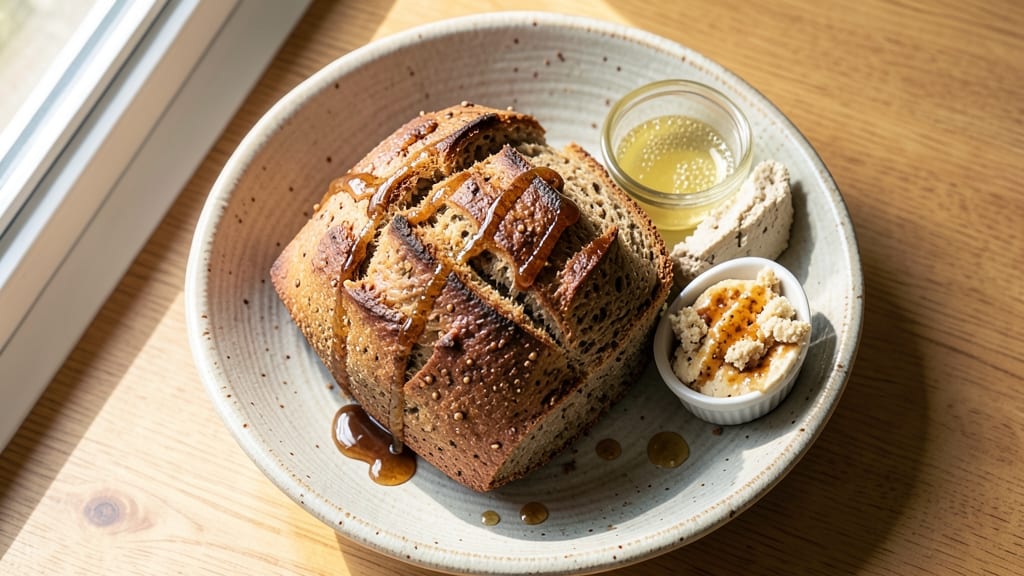
This teff bread recipe delivers a nutrient-packed loaf with an earthy, slightly tangy flavor that stands out from traditional wheat breads. I developed this version after discovering how teff flour—naturally gluten-free and packed with protein and iron—could transform baking without sacrificing texture.
The result is a dense yet tender loaf with a subtle nutty depth that pairs beautifully with soups, stews, or as a base for sandwiches.
The key to success lies in precise hydration and fermentation control. Teff flour absorbs moisture differently than wheat, so I use a slightly higher water ratio while keeping the dough firm enough to shape.
A short fermentation (1-2 hours) enhances flavor without overproofing, ensuring a crispy crust and moist interior. This method preserves all the nutritional benefits while delivering restaurant-quality results at home.
What makes this recipe special is its versatility—add seeds like flax or sunflower for extra crunch, or mix in fresh herbs for a savory twist. The bread freezes beautifully for up to 3 months, making it perfect for meal prep.
Whether you're gluten-sensitive, plant-based, or simply looking for a nutrient boost, this teff bread delivers on both flavor and nutrition.
Ready in just 90 minutes from start to finish, this recipe proves healthy baking doesn't require compromise. The earthy aroma as it bakes will fill your kitchen with warmth, while the final loaf stays fresh for 5 days when stored properly.
Let's get started—your taste buds and nutrition goals will thank you.
Ingredients for teff bread
Nine simple ingredients transform into a nutrient-packed teff loaf with earthy depth and satisfying texture.
| Ingredient | Amount | Notes |
|---|---|---|
| Teff Flour 🌾 | 3 cups | Brown or ivory variety preferred |
| Extra-Firm Tofu 🥛 | 1 cup | Crumbled for protein boost |
| Water 💧 | 1 ½ cups | Room temperature preferred |
| Active Dry Yeast 🍄 | 1 tsp | Freshly opened packet |
| Maple Syrup 🍯 | 2 tbsp | Pure, grade B preferred |
| Apple Cider Vinegar 🍏 | 1 tbsp | For tangy flavor |
| Olive Oil 🫒 | 2 tbsp | Extra-virgin for richness |
| Sea Salt 🧂 | 1 ½ tsp | Fine grain preferred |
| Flaxseeds 🌰 | ¼ cup | Ground for extra crunch |
| Sunflower Seeds 🌻 | ¼ cup | Toasted for nutty flavor |
| Fresh Rosemary 🌿 | 1 tbsp | Chopped, optional savory twist |
| Ground Flaxseed 🌰 | 1 tbsp | As egg replacer |
| Sesame Seeds 🌻 | 1 tbsp | For sprinkling on top |
Teff flour is the heart of this recipe, so buy the best quality you can find. Bob's Red Mill or Amazon Fresh carry excellent options—look for brown or ivory teff, not white. The flour's natural density means you'll need slightly more water than wheat flour doughs, but don't overdo it or the bread will be gummy. For the tofu, extra-firm is non-negotiable—it crumbles best and adds that protein punch. I usually grab mine from the Trader Joe's bulk section, but any store's organic tofu works. Fresh yeast is key here—if your packet's past its expiration, toss it and start fresh.
No flaxseeds? Chia seeds work too—just use the same amount. Running low on rosemary? Fresh thyme or even dried oregano at half the amount will give you that herbal note. The maple syrup can be swapped for agave nectar, but I like the caramel undertones it adds. For the seeds, toasting them first (dry pan, 2-3 minutes) brings out their flavor dramatically. Want more crunch? Add hemp seeds or walnuts—just reduce the flax/sunflower mix by a tablespoon. The apple cider vinegar might seem odd, but trust me, it balances the earthiness beautifully.
This dough is sticky but handles better than you'd think. Wet your hands when shaping to prevent sticking. The bread keeps best in a paper bag at room temperature for 3 days—it stays fresher than plastic. For longer storage, freeze slices wrapped in parchment—they toast up like fresh. The seeds on top? Toast them separately before sprinkling so they don't get soggy. I make a double batch every Sunday—one loaf for the week, one frozen for lazy mornings. The aroma alone makes this worth the effort.
Why You'll Love This Recipe
- No Yeast Fuss: I mix the dough in one bowl—no kneading, no waiting for it to rise. The tofu keeps it light without the effort, and honestly? My hands stay clean while the yeast does all the work.
- Maple-Toasted Crunch: That caramelized maple syrup crust? It’s the star. The teff flour adds a nutty depth, but the sweetness hits first—like a warm hug for your toast. (Yes, even on a Tuesday night.)
- Meal-Prep MVP: Slices perfectly for sandwiches, wraps, or charcuterie boards. I bake a batch on Sundays, and it lasts all week—no sad, stale bread here. The tofu keeps it moist longer than most loaves.
- Budget-Friendly Magic: Teff flour might sound fancy, but it’s cheaper than buying pre-made bread. A block of tofu stretches further than you’d think, and the yeast? A nickel’s worth of magic. Tastes like a splurge, costs like a steal.
Step-by-step instructions for teff bread recipe
Here's how to make a hearty, nutrient-packed loaf that stays fresh for days.
Mix the Wet Ingredients and Activate the Yeast
In a small bowl, combine the 1.5 cups water, 2 tbsp maple syrup, and 1 tbsp apple cider vinegar. Stir until the maple syrup dissolves completely. This sweet-tart mixture will help activate the yeast and create a tender crumb.
In a separate small bowl, sprinkle the 1 tsp active dry yeast over 1 tbsp of the warm water-syrup mixture (about ¼ cup). Let it sit for 5-7 minutes until it becomes frothy. You'll see tiny bubbles forming—this means your yeast is alive and ready to work. If it doesn't bubble, your yeast might be old or your water too warm. Start over with fresh yeast if this happens.
Combine Wet and Dry Ingredients to Form Dough
In a large mixing bowl, crumble the 1 cup extra-firm tofu using your hands or a fork. This will act as the egg substitute in your bread. Add the 3 cups teff flour, 1.5 tsp sea salt, 1 tbsp ground flaxseed, 0.25 cup ground flaxseeds, 0.25 cup sunflower seeds, and 1 tbsp chopped fresh rosemary to the bowl with the tofu.
Pour in the yeast mixture and 2 tbsp olive oil, then mix with a wooden spoon or your hands until a shaggy dough forms. The teff flour will make this dough stickier than traditional wheat flour dough, so don't be surprised if it feels more like a thick batter at first. Let the dough rest for 5 minutes—this helps the flour absorb the liquid fully.
Knead and Shape the Dough
After the resting period, wet your hands slightly with water and knead the dough on a clean surface for 5-7 minutes. You're not looking for a smooth, elastic dough like with wheat flour—teff dough will be denser and stickier. The goal is to develop some structure while keeping it moist. If it feels too dry, add 1 tsp water at a time until it's workable.
Once the dough is cohesive, shape it into a round loaf about 8 inches in diameter. Place it in a lightly oiled bowl, cover with a damp towel, and let it rise in a warm place for 1-2 hours, or until it has roughly doubled in size. You'll know it's ready when you poke it gently and the indentation stays put rather than springing back.
Bake the Teff Bread to Golden Perfection
Preheat your oven to 375°F. Line a baking sheet with parchment paper and lightly brush the surface with olive oil. Place your shaped loaf on the prepared sheet, then sprinkle the top evenly with 1 tbsp sesame seeds. This adds a beautiful crunch and visual appeal to your finished bread.
Bake for 40-45 minutes until the top is deep golden brown and the internal temperature reaches 205°F when measured with an instant-read thermometer. The bread will smell toasty and slightly nutty—this is your cue that it's done. If the top browns too quickly, tent the bread with aluminum foil after 20 minutes to prevent over-browning while the interior finishes cooking.
Cool and Enjoy Your Nutrient-Packed Loaf
Remove the bread from the oven and let it cool on a wire rack for at least 30 minutes before slicing. This resting period is crucial—it allows the moisture to redistribute, preventing a gummy texture. The bread will be dense and hearty, with a slightly chewy texture and nutty flavor from the teff and seeds.
Slice into 6 equal portions and serve warm with your favorite spreads or soups. Store any leftovers in an airtight container at room temperature for 2-3 days, or freeze for up to 3 months. This bread makes excellent toast, sandwiches, or even breadcrumbs for coating proteins.
Pro Tips For Making Teff Bread
- Crush the Tofu First: Teff flour is dense, and uncrushed tofu will make your dough gummy—no matter how much you knead. Press the tofu for 20 minutes, then pulse it in a food processor until it’s fine, like wet sand. (Yes, it’ll look weird, but your bread won’t turn into a brick.)
- Bloom the Yeast in Warm Water: Teff flour’s natural tang can kill yeast if it’s dry or cold. Mix the yeast with warm water (about 105°F—warm to the touch, not hot) and a pinch of maple syrup for 5 minutes before adding flour. If it’s foamy and bubbly, you’re good to go. If not, start over.
- Knead Until It’s Sticky, Not Dry: Teff dough fights back—it’ll feel dry at first, but resist the urge to add more water. Knead for 8-10 minutes by hand (or 5-6 in a stand mixer) until it pulls away from the bowl and sticks to your fingers like wet clay. That’s when the gluten starts behaving.
- Proof in a Warm Spot: Your kitchen’s drafty corner won’t cut it. Place the dough in a lightly oiled bowl, cover it with a damp towel, and set it near the oven with the light on (or a proofing box at 78°F). It’ll double in 1.5–2 hours—any faster, and the yeast will burn out; any slower, and it’ll taste flat.
Best sauces and condiments for this recipe
Herbal Spreads
This earthy teff bread pairs beautifully with herb-infused spreads that complement its nutty depth. Try a garlic-rosemary hummus—mash 1 cup chickpeas with 2 tbsp tahini, 1 tbsp lemon juice, 1 minced garlic clove, and 1 tbsp chopped fresh rosemary.
The rosemary echoes the bread’s herbal note while adding creaminess. For a tangy twist, whip up whipped feta with honey and thyme—mix ½ cup crumbled feta, 1 tbsp honey, 1 tsp olive oil, and 1 tsp chopped thyme.
The saltiness cuts through the bread’s richness. 🌿
Nutty Seed Butters
Teff’s earthy flavor harmonizes perfectly with nutty seed butters, especially when toasted seeds are already in the bread. Spread sunflower seed butter (like SunButter) for a protein-packed option—its mild sweetness balances the bread’s density.
For extra richness, blend ½ cup roasted pumpkin seeds, 2 tbsp tahini, and 1 tsp maple syrup—the toasted notes mirror the seeds in the bread. A drizzle of hot honey adds a smoky-sweet contrast. 🌰
Spicy Avocado Mash
Creamy spicy avocado mash elevates teff bread like nothing else. Mash 1 ripe avocado with 1 tbsp lime juice, 1 tbsp Greek yogurt, ½ tsp cumin, and a pinch of chili flakes for heat.
The avocado’s buttery texture softens the bread’s chew, while the lime brightens the earthy flavors. For extra depth, fold in 1 tbsp chopped cilantro—it adds a fresh, herbaceous finish. 🌶️
Fermented Tang
Fermented condiments add a bright, tangy contrast to teff bread’s richness. Try kimchi for a spicy, funky kick—its fermented heat cuts through the bread’s density. For a milder option, blend ½ cup sauerkraut juice with 1 tbsp Dijon mustard and a splash of apple cider vinegar.
The acidity cleanses the palate, making each bite feel fresh. A smear of whipped ricotta with lemon zest also works—its mild tang balances the bread’s earthiness. 🥬
Sweet and Savory Drizzles
Finish your teff bread with sweet and savory drizzles to enhance its natural flavors. Drizzle with infused olive oil—mix 2 tbsp extra-virgin olive oil with 1 tsp crushed red pepper flakes and a pinch of sea salt.
The oil’s richness pairs perfectly with the bread’s chew. For a sweet option, warm 1 tbsp tahini with 1 tsp maple syrup and a pinch of smoked paprika—the caramelized syrup adds a luxurious finish. 🍯
Nutrition facts
Frequently asked questions
Why does teff bread have a denser texture than regular bread?
Teff flour contains more protein and fiber than wheat flour, creating a denser crumb. The 1 cup crumbled tofu also adds moisture and structure differently than eggs. This makes the bread heartier but still delicious—perfect for sandwiches or dipping! The 1-2 hour fermentation helps develop flavor without making it too light.
Can I make this teff bread without yeast?
Yes! Replace the 1 tsp yeast with 1 tsp baking powder and 1 tbsp baking soda for a quick-bread version. The texture will be more cake-like rather than chewy, but still packed with nutrients. Bake at 375°F for 35-40 minutes instead. This works great for those avoiding yeast or needing faster results.
How do I store leftover teff bread to keep it fresh?
Wrap slices in parchment paper and store in an airtight container at room temperature for 2-3 days. For longer storage, freeze slices for up to 3 months. Toast frozen slices directly from the freezer—they'll crisp up beautifully! The seeds on top stay crunchy if you reheat them separately.
What's the best way to test if my teff bread is fully baked?
Use an instant-read thermometer—it should reach 205°F internally. If you don't have one, tap the bottom: it should sound hollow. The crust should also be deep golden brown. Overbaking can make teff bread dry, so pull it out when it's just barely done.
Can I substitute teff flour with other gluten-free flours?
While no perfect substitute exists, you can try a 1:1 blend of brown rice flour and tapioca starch for texture, but expect less earthy flavor. Teff's unique protein content and iron make it irreplaceable for maximum nutrition. If you must swap, reduce water by 1 tbsp—gluten-free flours absorb less moisture.