
Desserts
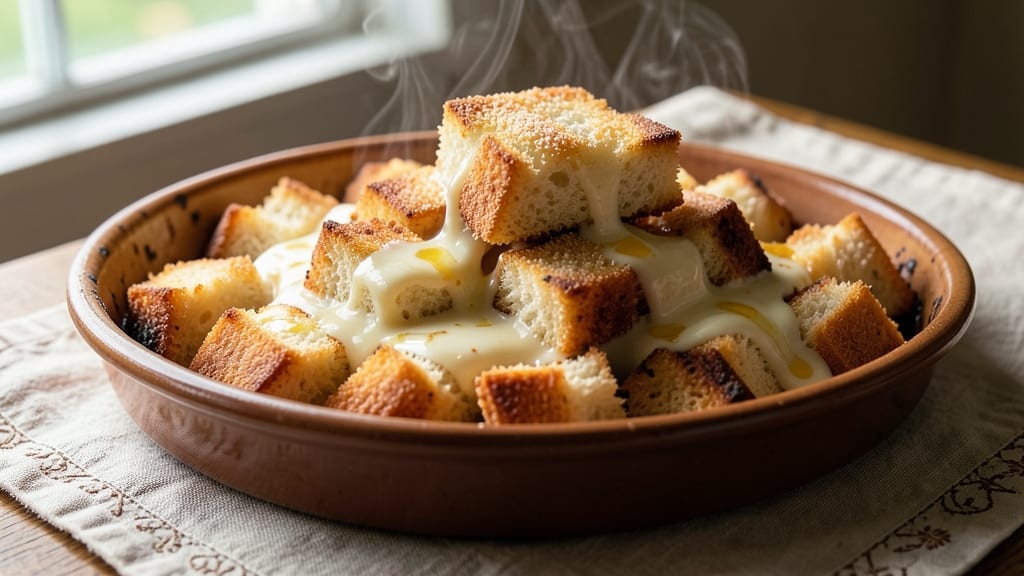
This old-fashioned Southern bread pudding recipe delivers the comforting, custardy layers and buttery crisp that make it a dessert classic—just like Grandma used to make. The secret lies in soaking stale bread in a rich vanilla custard, then baking until the edges are golden and the center is perfectly set.
I’ve perfected this technique over years of testing, ensuring every bite has that ideal balance of tender bread and velvety custard.
The magic happens in the custard base, where warm milk and eggs create a silky texture that soaks into the bread without making it soggy. A sprinkle of cinnamon and nutmeg adds warmth, while a buttery topping ensures that signature crisp.
This version stays true to tradition but includes a modern twist—optional bourbon or rum in the custard for depth. It’s the kind of dessert that feels like a hug, especially when served warm with vanilla ice cream.
What sets this recipe apart is the buttery crisp on top, achieved by baking until caramelized sugar forms a golden crust. The custard inside remains tender, with pockets of vanilla-infused richness that make every forkful irresistible.
It’s the dessert that brings people together, whether for a family dinner or a cozy night in. Ready to recreate this Southern staple in your own kitchen?
Perfect for using up stale bread, this recipe is foolproof and delivers restaurant-quality results with minimal effort. The custard soaks in just right, and the baking time ensures a golden finish without burning. Serve it warm or at room temperature—either way, it’s a guaranteed crowd-pleaser. Let’s get baking!
Ingredients for old fashioned southern bread pudding
Vanilla-soaked layers and buttery crisp—just like Grandma’s classic Southern bread pudding.
| Ingredient | Amount | Notes |
|---|---|---|
| Stale White Bread 🍞 | 6 cups | Cubed, crusts removed |
| Large Eggs 🥚 | 6 whole | Room temperature for best results |
| Whole Milk 🥛 | 3 cups | Warm, not hot |
| Granulated Sugar 🍚 | 1 ½ cups | White or light brown |
| Vanilla Extract 🌿 | 2 tbsp | Pure, high-quality |
| Unsalted Butter 🧈 | ¾ cup | Melted, full-fat preferred |
| Ground Cinnamon 🌶️ | 1 ½ tsp | Freshly ground for best flavor |
| Ground Nutmeg 🌶️ | ½ tsp | Freshly grated preferred |
| Salt 🧂 | ½ tsp | Fine sea salt preferred |
| Bourbon or Rum 🍷 | 2 tbsp | Optional, for depth |
| All-Purpose Flour 🌾 | ¼ cup | For buttery topping |
| Brown Sugar 🍚 | ¼ cup | Packed, for topping |
| Vanilla Ice Cream 🍦 | 1 ½ cups | For serving, optional |
The bread is the foundation, so don’t skimp on quality. Stale loaves from the bakery section work best—they absorb the custard perfectly without getting mushy. For extra richness, use a mix of white and wheat bread. Trader Joe’s and Whole Foods often carry excellent bakery breads, but any day-old loaf from home will do. The key is cubing it evenly—about 1-inch pieces—so it bakes uniformly. If you’ve got leftover rolls or biscuits, toss them in too; they’ll add texture and flavor.
No bourbon or rum? Skip it entirely—the vanilla and spices still shine. For the custard, warm the milk just until steaming (about 160°F)—hot milk can scramble the eggs. The sugar can be swapped for turbinado or coconut sugar for a different depth of flavor. Fresh nutmeg is a game-changer, but if you only have ground, toast it lightly in a dry pan first to wake up the flavor. The melted butter should be just warm, not hot, to avoid cooking the eggs prematurely. For a gluten-free version, use a dedicated GF bread and swap flour for almond flour in the topping.
This keeps beautifully for 4 days in the fridge, wrapped tightly in foil. Reheat at 350°F for 15 minutes—just until warmed through. For make-ahead magic, assemble the pudding the night before and refrigerate; it’ll develop even more flavor. The topping can be prepped ahead and stored separately. Serve with vanilla ice cream or whipped cream for the full Southern experience. Leftovers? It reheats even better the second time, so double the batch if you’re feeding a crowd.
Why You'll Love This Recipe
- No-Waste Magic: I swear by this trick—stale bread transforms into something golden and irresistible. No food waste, just pure comfort in one bowl.
- Caramelized Bliss: That crispy sugar crust on top? It’s the star. The milk-soaked bread gets tender while the edges turn into a sweet, buttery hug you won’t resist.
- Weeknight Hero: Make it for breakfast, dessert, or a late-night snack. Honestly, I’ve served it all—just reheat and enjoy. Zero fuss, maximum satisfaction.
- Budget-Friendly Luxury: A few eggs, milk, and sugar turn cheap bread into a showstopper. It’s my go-to for feeding a crowd without breaking the bank.
Step-by-step instructions for old fashioned Southern bread pudding
Here's the method that delivers that classic Southern texture—rich custard layers with a golden, buttery crisp.
Prepare the Bread and Custard Base
Tear the 6 cups stale white bread into 1-inch cubes, removing crusts as you go. Spread them evenly on a baking sheet and toast in a 350°F oven for 8-10 minutes until completely dry but not browned. This step prevents a soggy pudding—critical for that perfect texture.
While the bread toasts, whisk together the 6 whole large eggs, 3 cups warm whole milk, 1.5 cups granulated sugar, 2 tbsp vanilla extract, 1.5 tsp ground cinnamon, 0.5 tsp ground nutmeg, 0.5 tsp salt, and 2 tbsp bourbon or rum in a large bowl until fully combined. The mixture should be smooth with no visible streaks of flour or egg whites. Here's the thing—room temperature eggs blend better, so if yours are cold, let them sit out for 10 minutes before mixing.
Assemble the Pudding Layers
Transfer the toasted bread cubes to a 9x13-inch baking dish, spreading them evenly across the bottom. Pour half of the custard mixture over the bread, letting it soak in completely. This layered approach ensures every bite has that signature custard-to-bread ratio. Gently press down on the bread to help it absorb the liquid, but don't pack it tightly—you want air pockets for that light texture.
Add the remaining bread cubes on top of the soaked layer, then pour the rest of the custard evenly over them. The bread should be fully submerged but not swimming in liquid. If it looks dry in spots, use a spatula to redistribute the custard. Tap the baking dish gently on the counter to help any air bubbles rise to the surface—this prevents dense pockets in the finished pudding.
Bake Until Golden and Set
Place the baking dish in a 375°F oven and bake for 45-50 minutes. You'll know it's ready when the top is golden brown and the edges have pulled away slightly from the dish. The center should still have a slight wobble when shaken gently—it will continue setting as it cools. Here's where patience pays off: don't overbake, or the exterior will turn leathery while the inside stays undercooked.
About 10 minutes before the pudding finishes baking, prepare the topping by melting the 0.75 cup unsalted butter in a small saucepan over low heat. Remove it from heat and whisk in the 0.25 cup all-purpose flour and 0.25 cup packed brown sugar until smooth. The mixture should thicken slightly but remain spreadable. Pour this evenly over the hot pudding and return it to the oven for the final 5-7 minutes of baking.
Serve Warm with Vanilla Ice Cream
Let the bread pudding cool for 10 minutes before serving—this allows the custard to set properly without becoming gummy. The topping should be crisp and caramelized, with a few golden bubbles forming on the surface. If you prefer a softer topping, you can broil it for 1-2 minutes at the end, but watch closely to avoid burning.
Serve warm slices topped with 1.5 cups vanilla ice cream for the ultimate Southern dessert experience. The contrast of warm custard and cold ice cream is what makes this classic so special. The pudding should hold its shape when sliced but still be tender enough to melt slightly in your mouth. If it's too firm, it may have been overbaked—next time, pull it out when the center still has a slight jiggle.
Pro Tips For Making Old Fashioned Southern Bread Pudding
- Cube the Bread Small: I used to cut big chunks thinking they’d soak faster—wrong. Go for 1-inch cubes max, or they’ll stay dense in the center. Toss them in the milk mixture right away so they absorb evenly, not after sitting around like soggy sponges.
- Whisk Eggs Until Thick: Don’t just crack and stir. Whisk the eggs until they’re noticeably thicker—that’s how you get that silky custard texture. I learned this the hard way when my pudding came out grainy and watery.
- Skip the Overmixing: Once you fold in the soaked bread, stop stirring. Overmixing makes the pudding dense and heavy. Just give it a couple of gentle turns—it’s more about distributing than blending.
- Bake at 325°F, Not Hotter: High heat sets the outside too fast before the middle cooks. 325°F is the sweet spot—it gives you a golden crust without a raw center. I burned the top twice before I got it right.
Essential equipment for old fashioned southern bread pudding
Baking Dish Essentials
A 9x13-inch baking dish is non-negotiable for this recipe—it gives you the perfect surface area for even baking. I recommend a heavy-gauge stainless steel or dark ceramic dish (like Lodge or Corelle) because they distribute heat evenly and prevent hot spots.
If you only have a glass dish, make sure it's tempered to handle temperature changes without cracking. Avoid nonstick dishes—they don't conduct heat as well, leading to uneven baking.
For a smaller batch, a 9x9-inch dish works, but reduce the recipe by 25% to maintain the same custard-to-bread ratio. If you're feeding a crowd, consider a 10x15-inch jelly roll pan—just increase the custard by 30% to ensure full coverage.
Grease your dish lightly with butter or baking spray before adding the bread to prevent sticking, but don't overdo it or the topping may slide off during baking. 🧑🍳
Mixing Tools Matter
Use a whisk (not a fork) to combine the custard ingredients—it creates a smoother, lump-free mixture. I prefer a balloon whisk with silicone handles for easy grip, but any whisk will do.
For the topping, a small saucepan with sloped sides (like a Calphalon or All-Clad) makes melting butter and mixing flour easier. A spatula helps spread the topping evenly without tearing the bread pudding beneath.
A measuring cup set with leveling edges ensures accuracy—especially for the sugar and flour in the topping. I keep a small offset spatula handy for scraping every last bit of custard from the bowl into the baking dish.
For the bourbon or rum, a small measuring spoon or shot glass works perfectly—just be sure to use the optional alcohol sparingly to avoid overpowering the vanilla and spices. 🥄
Temperature Control Tools
An oven thermometer is worth its weight in gold—many home ovens run hot or cold, and bread pudding requires precise temperature control. I use an OXO Good Grips model because it's reliable and easy to read.
Place it in the oven while preheating to check the actual temperature—adjust your oven settings if needed to hit 375°F accurately. For the custard, a candy or instant-read thermometer ensures the milk reaches 160°F without boiling, which would scramble the eggs.
A kitchen timer is critical for monitoring baking time—set it for 45 minutes, then check the pudding at 5-minute intervals starting at 40 minutes. The edges should pull away from the dish, and the top should be golden brown.
If your oven runs hot, reduce the temperature to 350°F and bake for 50-55 minutes. For even better results, place a baking sheet with boiling water on the lower rack to create steam—this keeps the custard moist and prevents cracking. 🌡️
Optional Extras
If you love caramelized toppings, a small saucepan with a heatproof handle (like Le Creuset) makes melting butter and sugar for a drizzle easy. For a boozy twist, a mini whisk or fork helps fold in bourbon or rum without splashing.
A fine-mesh strainer comes in handy if you prefer a smooth custard—just strain the warm milk before mixing with eggs to remove any sediment.
For presentation, a sharp serrated knife (like a Dexter Russell) slices through the bread pudding cleanly, while a spoon or spatula helps serve warm slices. Keep a small bowl of powdered sugar nearby for dusting—it adds a sweet finish that pairs beautifully with vanilla ice cream.
If you're feeling fancy, a piping bag lets you decorate the top with whipped cream or a drizzle of caramel before serving. 💫
Nutrition facts
Frequently asked questions
Can I use fresh bread instead of stale?
The secret to perfect texture is using stale bread—it absorbs the custard without turning mushy. If you only have fresh bread, toast it first at 350°F for 10 minutes to dry it out. For extra insurance, leave it out overnight to stale naturally. Fresh bread will work in a pinch, but the result may be slightly denser.
How do I make it extra custardy?
For a richer custard, add 1 extra egg yolk to the mixture or replace ½ cup milk with heavy cream. Whisking the custard over double boiler for 5 minutes (before adding bread) also creates a silkier texture. Just be sure to bake at 350°F instead of 375°F to prevent overcooking.
Why did my bread pudding turn out gummy?
Overbaking or undercooked custard causes gumminess. Check doneness by looking for a golden top with slight pull from the pan, and a gentle jiggle in the center. If it's gummy, it likely baked too long. Next time, reduce baking time by 5 minutes and let it rest 15 minutes before serving. Also ensure your eggs and milk are room temperature.
Can I make this ahead of time?
This is one of the best make-ahead desserts! Assemble the pudding up to 24 hours ahead and refrigerate uncovered. The flavors deepen overnight. When ready to bake, add 5-10 extra minutes to the baking time. For best results, bring to room temperature before baking to prevent condensation.
What's the best way to reheat leftovers?
Reheat slices at 350°F for 10-12 minutes covered with foil, then uncover for the last 2 minutes to crisp the topping. For microwave reheating, use 30-second intervals on medium power, adding 1 tsp milk between each interval to restore moisture. Never microwave uncovered—it dries out the custard.