
Side Dishes
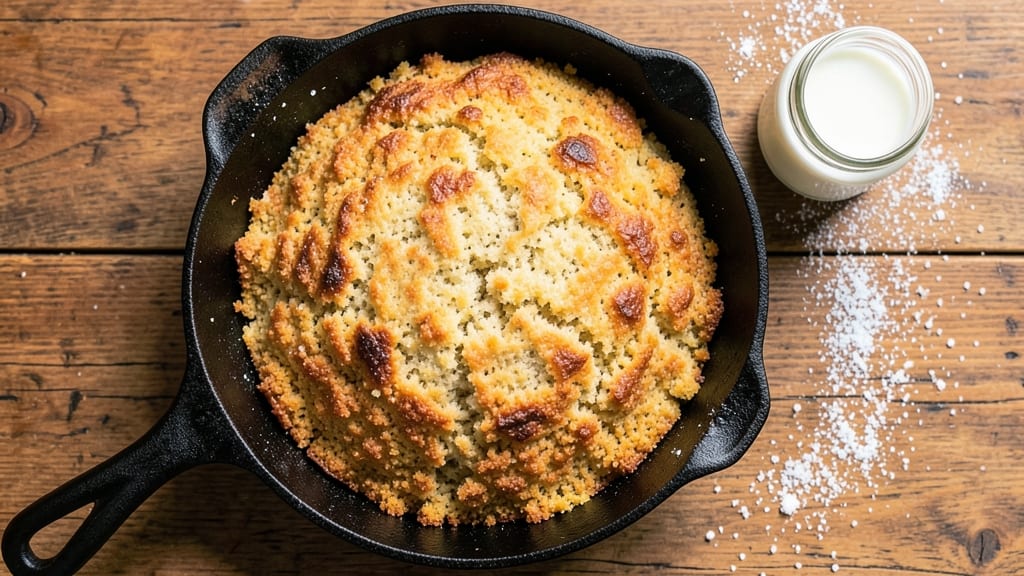
This old-fashioned corn bread recipe delivers the perfect harmony of crispy edges and a moist, crumbly interior that’s become a staple in Southern kitchens for generations. The secret lies in the right balance of cornmeal, buttermilk, and baking powder—ingredients that create that signature rustic texture we all love.
I’ve perfected this version over years of baking, ensuring every batch turns out tender yet sturdy enough to hold up to soups, chili, or honey butter.
The beauty of this recipe is its simplicity—just a handful of pantry staples and 15 minutes of active prep time. No fancy equipment needed, just a cast-iron skillet or baking dish to capture that golden crust while keeping the inside soft and inviting.
The buttermilk adds richness, while the cornmeal gives it that unmistakable gritty texture that makes it so satisfying.
What you’ll end up with is a loaf of corn bread that’s moist enough to soak up gravy or butter while still offering that satisfying crunch when you break into it. The aroma alone—warm, buttery, with a hint of sweetness—will have everyone at the table asking for seconds.
This is the kind of recipe that feels like home, and once you try it, you’ll never go back to store-bought.
Serve it warm with honey butter, alongside chili, or even as a breakfast side with scrambled eggs. The versatility is part of what makes it a classic. Let’s get started on making yours—it’s easier than you think!
Ingredients for old fashioned corn bread
Nine simple ingredients transform into golden, crumbly corn bread with that perfect buttery crunch.
| Ingredient | Amount | Notes |
|---|---|---|
| All-Purpose Flour 🌾 | 1 ½ cups | Sifted for light texture |
| Fine Yellow Cornmeal 🌽 | 1 ½ cups | Not coarse, for tender crumb |
| Granulated Sugar 🍯 | ¼ cup | Light brown adds subtle caramel notes |
| Baking Powder 🍞 | 2 tsp | Double-acting for rise |
| Salt 🧂 | ½ tsp | Kosher or sea salt |
| Buttermilk 🥛 | 1 ¼ cups | Full-fat for richness |
| Melted Unsalted Butter 🧈 | ½ cup | Cooled slightly before mixing |
| Large Eggs 🥚 | 1 whole | Room temperature preferred |
| Vanilla Extract 🌸 | 1 tsp | Pure vanilla for aroma |
The cornmeal is non-negotiable for that signature gritty texture—Bob's Red Mill or King Arthur brands are my go-tos, but any fine yellow cornmeal works. The buttermilk? Full-fat is key here—it adds richness that regular milk can't match. If you're short on time, substitute with 1 cup milk + 1 tbsp vinegar or lemon juice, but let it sit for 5 minutes first. The baking powder needs to be double-acting—check the label. Aluminum-free is best, but if that's all you've got, it'll still work. I always grab my baking powder from the bulk section at Whole Foods—it stays fresher longer.
No buttermilk? Plain yogurt thinned with milk works in a pinch, but it won't be identical. Short on cornmeal? Polenta or grits blended smooth can substitute at the same amount, though the texture will be slightly denser. The sugar can be swapped for honey or maple syrup—reduce other liquids slightly if you do. For extra richness, add 1 tbsp honey to the batter. The vanilla extract should be pure—imitation will leave you with artificial aftertaste. If you're feeling fancy, add a pinch of cinnamon for warmth, but keep it subtle. The eggs? Room temperature is ideal, but don't stress if they're straight from the fridge—they'll still work.
This batter keeps for 24 hours in the fridge, covered. For best results, bake it fresh, but you can prep the batter ahead and bake later. The leftovers? Slice and toast for a quick breakfast or snack—they reheat beautifully. Store in an airtight container for 3-4 days, or freeze slices wrapped in foil for up to 3 months. I always make a double batch—one for dinner, one for breakfast the next morning with honey butter. That first bite out of the oven? Worth every minute.
Why You'll Love This Recipe
- No Mixer Needed: I swear by this recipe because it’s just flour, cornmeal, sugar, and a whisk—no stand mixer or fancy tools. The cornmeal gives that signature gritty texture without requiring any special techniques, and honestly? It’s the kind of thing I can make while watching a movie.
- Sweet-Savory Balance: Between us, the sugar in this batter isn’t just for sweetness—it’s what makes the crust golden and the crumb tender. That little pinch of salt? It’s the secret to letting the corn flavor shine without being overpowering. First bite, and I’m hooked every time.
- Weeknight Hero: This is my go-to when I need something fast but still impressive. Serve it warm with chili, butter it up for breakfast, or even slice it for a picnic—it’s the kind of bread that works at any meal, no fuss.
- Budget-Friendly Staple: Five ingredients, all pantry basics, and it stretches further than you’d think. I make a big batch, freeze half, and pull it out whenever I need a cheap, filling side. My wallet and my freezer both thank me for it.
Step-by-step instructions for old fashioned corn bread
Here's how to achieve that perfect buttery crust with a tender, moist interior every time.
Prep Ingredients for Perfect Texture
Start by sifting together the 1.5 cups all-purpose flour and 1.5 cups fine yellow cornmeal in a large mixing bowl. I always sift these dry ingredients first—it prevents lumps and ensures a light, airy crumb. The cornmeal gives that classic corn bread flavor while keeping the texture tender rather than gritty.
In a separate bowl, whisk together the 1.25 cups buttermilk, 0.5 cup melted unsalted butter (cooled slightly), 1 whole large egg, and 1 teaspoon vanilla extract. The buttermilk adds moisture and that signature tang, while the melted butter contributes rich flavor and helps create that coveted crust. Let this mixture sit for 2 minutes while you prepare the dry ingredients—this gives the buttermilk time to properly hydrate the flour and cornmeal.
Combine Wet and Dry Ingredients Gently
Make a well in the center of your dry ingredients and pour in the wet mixture. Using a wooden spoon or rubber spatula, gently fold everything together just until combined—you should still see small flour streaks. Overmixing develops gluten, which makes corn bread tough instead of tender. I like to use a gentle folding motion to preserve the air pockets that create that light texture.
Next, stir in the 0.25 cup granulated sugar, 2 teaspoons baking powder, and 0.5 teaspoon salt. The sugar adds just enough sweetness to balance the corn flavor, while the baking powder ensures a good rise. Don't skip the salt—it enhances all the flavors. Mix just until everything is evenly distributed, then let the batter rest for 5 minutes at room temperature. This short rest allows the baking powder to fully activate and the flour to absorb the liquid, resulting in a more even bake.
Prepare the Pan for Optimal Browning
Preheat your oven to 425°F while the batter rests. Generously grease an 8-inch square baking pan or 9-inch cast-iron skillet with a bit of butter or oil—this prevents sticking and helps create that golden crust. I like to use a cast-iron skillet because it conducts heat evenly and creates a crispy bottom layer, but a square pan works just as well.
Pour the batter into your prepared pan and spread it evenly using a spatula. The batter should fill about ¾ of the pan's depth—don't overfill, or it might spill over during baking. For extra crispy edges, I sometimes drag the spatula along the sides of the pan to create a slight ridge. This technique helps trap steam during baking, which keeps the interior moist while creating a crispy crust.
Bake Until Golden and Springy
Bake the corn bread for 18-22 minutes until the top is deep golden brown and a toothpick inserted in the center comes out clean. The exact time depends on your oven—if it runs hot, start checking at the 18-minute mark. You want the edges to pull away slightly from the pan, indicating it's fully set.
Here's the key: as soon as it's done, remove it from the oven and let it cool in the pan for 5 minutes. This resting period allows the corn bread to set properly and prevents it from falling apart when you try to slice it. After cooling, transfer it to a wire rack to cool completely. The interior should be moist with just a hint of crumbly texture, while the exterior should have that perfect buttery crust.
Pro Tips For Making Old Fashioned Corn Bread
- MEASURE CORNMEAL FIRST: I learned this the hard way—dumping cornmeal last and ending up with a lumpy mess. Weigh or scoop it directly from the bag into your measuring cup, then level it off with a knife. Packing it down (even slightly) makes the texture dense instead of crumbly.
- SIFT DRY INGREDIENTS TOGETHER: Skip the separate bowls—combine flour, cornmeal, sugar, baking powder, and salt in one container, then sift them all at once. This guarantees even distribution of baking powder and prevents forgotten pockets of dry ingredients. (Yes, even if you’re impatient like me.)
- USE A CAST-IRON SKILLET: That 9-inch cast-iron pan isn’t just for show—it’s the non-negotiable for crispy edges and a golden crust. Preheat it for 5 minutes on medium-high before pouring the batter, and resist the urge to grease it too much. Just a light brush of butter or oil is enough.
- LET IT RISE 10 MINUTES: After mixing, give the batter a solid 10 minutes at room temperature. This lets the baking powder activate fully and the cornmeal absorb moisture, resulting in a taller loaf instead of a pancake. (Your future self will thank you.)
Wine and beer pairings for this recipe
Southern Comfort Pairings
Old-fashioned corn bread pairs beautifully with classic Southern dishes like chicken and dumplings or smothered pork chops. The slightly sweet, buttery crumb soaks up rich gravies perfectly.
I love serving it alongside fried chicken or mac and cheese—the contrast of crispy edges and creamy filling makes every bite unforgettable. 🍗
Sweet and Savory Balance
For a sweet twist, serve corn bread with honey butter or maple syrup—the caramelized sugar in the bread enhances the natural sweetness. I drizzle warm honey butter over slices and sprinkle with flaky sea salt for a restaurant-worthy finish.
A side of scrambled eggs or bacon turns this into a hearty breakfast or brunch staple.
Beer Pairing Secrets
A crisp American pale ale like Fat Tire or Blue Moon complements the corn bread’s buttery notes with its malty sweetness. For a lighter option, try a wheat beer such as Blue Moon—its citrusy aroma cuts through the richness. Avoid heavy stouts; they’ll overpower the delicate corn flavor. 🍺
Wine Pairings for Contrast
Surprisingly, a dry Riesling or Sauvignon Blanc works wonders—their bright acidity balances the bread’s richness. I reach for a chilled German Riesling when serving corn bread with grilled steak or smoked sausage. The wine’s crispness refreshes your palate between bites, making it a perfect match for a hearty meal.
Unexpected Twist: Bourbon
For a bold pairing, serve corn bread with a bourbon glaze—simmer ½ cup bourbon, 2 tbsp brown sugar, and 1 tbsp butter until thickened. Drizzle over warm slices for a Southern-inspired dessert or after-dinner treat. The smoky notes of bourbon elevate the corn bread’s natural sweetness. 🥃
Nutrition facts
Frequently asked questions
Why does old-fashioned corn bread need to rest before slicing?
Letting it cool in the pan for 5 minutes helps the crumb set properly. This prevents it from crumbling apart when you cut into it, giving you those clean slices with that perfect buttery crunch. The resting time also lets the cornmeal absorb any remaining moisture, keeping the interior tender.
Can I make this corn bread in a muffin tin instead of a pan?
Grease a muffin tin well and divide the batter evenly. Bake at 425°F for 15-18 minutes until golden. The result will be individual corn bread muffins with crispy tops—great for portion control or serving as appetizers. Just watch the edges to prevent overbrowning.
What's the difference between fine and coarse cornmeal?
Fine cornmeal gives a tender, smooth texture perfect for this recipe, while coarse cornmeal creates a gritty, rustic crumb. For this old-fashioned version, stick with fine yellow cornmeal—it's what gives that classic Southern tender-crisp balance. Coarse cornmeal works better for things like cornbread with larger, chunkier textures.
How do I fix dense or gummy corn bread?
Dense corn bread usually means overmixing developed gluten. For future batches, fold just until combined and avoid stirring too much. If it turns out gummy, it likely needs more baking—preheat your oven to 375°F and bake 5-10 extra minutes until the center is set. The toothpick test is your best friend!
Can I make this gluten-free?
Yes! Swap the all-purpose flour for a 1:1 gluten-free baking flour blend and use a gluten-free cornmeal substitute. You may need to add ½ tsp xanthan gum to help bind the crumb. Keep in mind the texture will be slightly different—more crumbly—but still delicious with the right balance of ingredients.