
Side Dishes
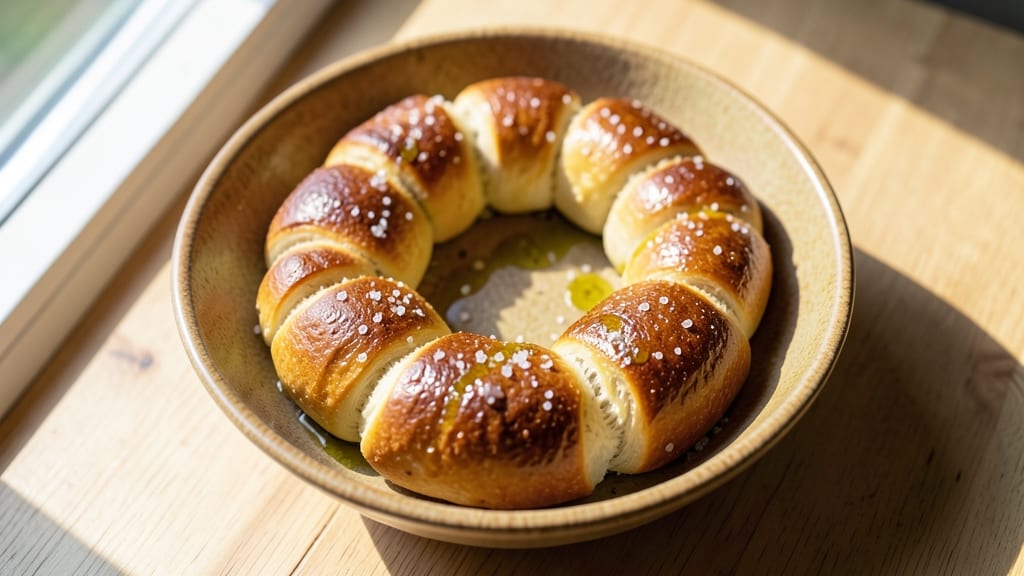
Creating authentic koulouri bread brings the flavors of Greek street markets straight to your kitchen, with its signature sesame-studded rings and warm, yeasty aroma. This traditional bread is more than just a snack—it’s a celebration of simplicity and texture, where crispy sesame seeds meet soft, pillowy dough.
I’ve perfected the dough formula to ensure a light yet sturdy texture, perfect for shaping into those iconic rings without falling apart during baking.
The magic lies in the balance of ingredients: a touch of sugar feeds the yeast for that perfect rise, while olive oil keeps the dough tender and flavorful. Shaping the dough into rings is where the real artistry comes in, but don’t worry—this method is foolproof, even for beginners.
Once baked to a golden brown, the sesame seeds toast beautifully, adding a nutty crunch that pairs perfectly with coffee, cheese, or even as a standalone snack.
What makes this recipe special is its versatility—enjoy it fresh from the oven or reheated for extra crispiness. The dough can be made ahead and refrigerated, so you’re always ready for a quick snack or a traditional Greek treat.
With just a few simple ingredients and a little patience, you’ll have a batch of koulouri that tastes like a trip to Athens.
For those who love customization, try adding a drizzle of honey or a sprinkle of dried herbs to the sesame coating for a unique twist. The possibilities are endless, but the foundation remains the same: a perfectly balanced dough, shaped and baked to golden perfection.
Let’s get started on your journey to making this iconic Greek bread at home.
Ingredients for koulouri bread
Greek street snack magic starts with these eight simple ingredients.
| Ingredient | Amount | Notes |
|---|---|---|
| All-Purpose Flour 🌾 | 3 ½ cups | Spooned and leveled for accuracy |
| Active Dry Yeast 🍞 | ¼ oz | Or 2.5g, ensure fresh |
| Granulated Sugar 🍚 | 1 tbsp | Feeds the yeast for rise |
| Extra-Virgin Olive Oil 🫒 | ½ cup | High quality for flavor |
| Warm Water 💧 | 1 cup | 110°F, not boiling |
| Salt 🧂 | 1 tsp | Kosher or sea salt |
| Sesame Seeds 🌰 | ½ cup | Toasted for extra flavor |
| Large Egg 🥚 | 1 whole | Room temperature preferred |
The yeast is non-negotiable—Bob’s Red Mill or Saf-Instant are my go-tos, but any active dry yeast works. If your kitchen’s cold, warm the water to 110°F (just warm to touch) so the yeast wakes up right away. The olive oil? Kalamata or any fruity variety adds that authentic Greek touch. For the flour, King Arthur or Gold Medal are reliable, but don’t stress if you’ve got something else—just make sure it’s all-purpose. Sesame seeds should be toasted lightly in a dry pan before using for maximum crunch.
No sesame seeds? Poppy seeds or crushed pistachios work in a pinch, though they’ll change the flavor profile. Short on olive oil? Melted butter gives a slightly different taste but keeps the dough tender. If your yeast is old or the water’s too hot, the dough won’t rise—test your yeast first by mixing a pinch with warm water and sugar; if it bubbles in 5 minutes, it’s good to go. For extra flavor, add a teaspoon of dried oregano to the dough or sprinkle it on top before baking.
This dough keeps beautifully—cover and refrigerate for up to 3 days or freeze for 3 months. Let it sit at room temp for 30 minutes before shaping if it’s cold. The baked rings stay fresh for 2 days at room temperature, but they’re best reheated in a 350°F oven for 5 minutes to restore that crispy crunch. I like to portion the dough into golf-ball-sized pieces ahead of time so shaping is a breeze.
Why You'll Love This Recipe
- Five-Ingredient Magic: I swear by this list—flour, yeast, sugar, olive oil, and water. That’s it. No fancy pantry trips, no last-minute ingredient hunts. The dough comes together faster than I can say "koulouri" while my kids argue over who gets the first bite.
- Crispy-Gold Perfection: That first crackle when you bite into the edges? Pure reward. The olive oil’s richness meets the sugar’s caramelized crunch—like a hug from Greece, but with way less jet lag. (Yes, even on a Tuesday night.)
- Breakfast, Snack, or Side: Still warm from the oven? Drizzle with honey and eat it for breakfast. Cool it down, and it’s the perfect crunchy side for soup or hummus. My college roommate used to steal my stash for late-night study snacks—no judgment.
- Budget-Friendly Staple: A single batch costs me pennies and stretches for days. Toss leftovers in the toaster for quick toast or break them into croutons. Honestly, I make this so often I’ve memorized the yeast-to-water ratio—turns out, I’m basically a bread scientist now.
Step-by-step instructions for koulouri bread recipe
Here's how to craft these iconic Greek sesame rings with crispy edges and fluffy centers.
Activate the Yeast for Maximum Rise
In a small bowl, combine the 1 cup warm water (around 110°F), 1 tablespoon granulated sugar, and 0.25 oz active dry yeast. Let it sit for 5-10 minutes until it becomes frothy and bubbly—this confirms your yeast is alive and ready to work. If it doesn't bubble, your yeast may be old, and you'll need to start over with fresh yeast.
This activation step is crucial because it kickstarts the fermentation process. You'll notice the mixture transform from a simple liquid to a lively, bubbling concoction. This lively yeast mixture will give your koulouri that perfect airy texture and light crunch.
Mix the Dough Until Smooth
In a large mixing bowl, combine the 3.5 cups all-purpose flour and 1 teaspoon salt. Make a well in the center and pour in the yeast mixture along with the 0.5 cup extra-virgin olive oil and 1 whole large egg. Using a wooden spoon or your hands, mix until a shaggy dough forms.
Once the dough starts coming together, turn it out onto a lightly floured surface and knead for 8-10 minutes until smooth and elastic. You'll know it's ready when it springs back slightly when gently pressed. This kneading develops the gluten, which gives the bread its characteristic chewiness and helps it hold its shape when formed into rings.
Let the Dough Rise Until Doubled
Place the dough back in the bowl, cover it with a clean kitchen towel, and let it rise in a warm spot for 1-2 hours or until it has doubled in size. The dough should feel light and airy when pressed gently with your finger. This rising time allows the yeast to ferment and create air pockets that will give your bread its signature texture.
I like to place my bowl in a slightly warm oven (with the light on) to help speed up the process. The key is patience here—don't rush this step. If you're in a hurry, you can let it rise for 30 minutes, then do a second rise after shaping, but the flavor and texture won't be as good.
Shape and Second Rise for Perfect Rings
Punch down the risen dough to release any air bubbles, then divide it into 4 equal pieces. Roll each piece into a rope about 12 inches long. To form the rings, loop each rope into a circle and press the ends together firmly to seal. Place the rings on a parchment-lined baking sheet, cover them with the towel, and let them rise again for 30-45 minutes until slightly puffy.
While they're rising, preheat your oven to 375°F. This second rise is important because it gives the bread its final airiness before baking. The rings should look slightly larger and more defined than when you shaped them. If they're not puffy enough, give them another 10-15 minutes of rising time.
Bake Until Golden and Crisp
Just before baking, press each ring gently into a 0.5 cup sesame seeds mixture on a plate. This ensures they're fully coated and will develop that beautiful sesame crust. Bake for 18-22 minutes until the bread is deep golden brown and sounds hollow when tapped on the bottom.
Here's the thing—don't overbake. You want the edges to be crispy but the centers still soft and pillowy. The bread should be hot to the touch when you remove it from the oven. Let them cool on a wire rack for 5 minutes before serving. The contrast of the warm, soft interior with the crispy sesame exterior is what makes these bread rings so irresistible.
Pro Tips For Making Koulouri Bread
- TEST YEAST FIRST: Mix a tiny spoonful of yeast with warm water and a pinch of sugar—if it doesn’t bubble within 5 minutes, your yeast is dead. Koulouri relies on that yeast for its signature puff, so skip the guesswork and verify before committing to the full dough.
- OIL THE PAN HOT: Heat your oil in the pan until it shimmers—just before it smokes—and add the dough balls when the oil is hot enough to sizzle immediately. Cold oil = soggy bread; hot oil = crispy, golden crusts that hold their shape.
- SHAPE TIGHTLY, ROLL LOOSELY: Pack the dough balls into rings with your thumb pressed firmly into the center, but don’t over-roll the edges—just enough to seal. Too much handling flattens them; too little leaves gaps that fill with oil instead of air.
- FRIED IN BATCHES: Crowd the pan and the dough steams instead of crisps. Fry 2-3 rings at a time, turning once, and let the oil recover its temperature between batches. Rushed batches taste greasy; patient batches get that perfect crunch.
Perfect pairings for this recipe
Greek Coffee Pairing
There’s nothing quite like pairing fresh koulouri with a cup of strong Greek coffee—the nutty, toasted sesame seeds complement the bold, slightly bitter notes of the brew. I recommend using a Mokka pot for that thick, syrupy consistency that balances the bread’s crispy exterior.
For an extra touch, sprinkle a pinch of cinnamon on your coffee while the bread is still warm. The contrast of textures and flavors is pure Greek café magic. ☕
Cheese Board Essentials
Koulouri transforms any cheese board into a showstopper. I love pairing it with aged feta (like Vassilopoulos or Tzortzikos) and Manouri cheese for that tangy, creamy balance. Add some Kalata olives, roasted red peppers, and honeycomb drizzle for a traditional Greek spread.
The sesame seeds add a satisfying crunch that cuts through the richness of the cheese. 🧀
Sweet Dips and Spreads
For a sweet twist, serve koulouri with Greek yogurt mixed with honey and a pinch of cinnamon—the creamy, tangy dip contrasts beautifully with the bread’s crispy texture.
Another favorite? Tahini sauce (blend ½ cup tahini, 1 tbsp lemon juice, and 1 tbsp honey) for a nutty, slightly bitter dip that pairs perfectly with the sesame seeds. 🍯
Breakfast or Brunch Star
Turn your koulouri into a breakfast sensation by topping it with scrambled eggs, crumbled feta, and a sprinkle of dried oregano. The bread’s sturdy texture holds up perfectly, while the eggs add a creamy contrast.
For a sweeter morning treat, drizzle with thick Greek honey and crumble walnuts on top. This combo is a Greek taverna favorite! 🍳
Wine and Beer Pairings
A crisp Assyrtiko white wine from Santorini enhances the sesame and olive oil flavors in koulouri, while its citrusy notes cleanse your palate between bites. For beer lovers, a light Greek lager like Fix or Mythos complements the bread’s simplicity without overpowering it.
Avoid heavy reds—they’ll clash with the bread’s delicate crunch. 🍷
Global Twist: Middle Eastern Style
Take your koulouri to the next level by adding a za’atar-spiced olive oil dip (mix 2 tbsp za’atar, 3 tbsp olive oil, and a pinch of salt).
Serve with hummus and baba ganoush for a Mediterranean fusion spread. The earthy za’atar and smoky hummus create a flavor explosion that’s hard to resist. 🌿
Nutrition facts
Frequently asked questions
Can I make koulouri without sesame seeds?
While sesame seeds are traditional, you can substitute with toasted poppy seeds, crushed pistachios, or even sunflower seeds for a different texture. Just toast them first in a dry pan for 2-3 minutes to enhance flavor. The key is using ½ cup total of your chosen seed for the same coating effect.
Why did my koulouri rings collapse after baking?
This usually happens when the dough isn't properly kneaded or overproofed. Make sure to knead for 8-10 minutes until elastic, and don't let the shaped rings rise beyond 45 minutes. Also, check your yeast—it should bubble vigorously when mixed with warm water and sugar. If it doesn't, your dough won't rise properly.
How do I store leftover koulouri?
Keep baked rings in an airtight container at room temperature for up to 2 days to maintain crispiness. For longer storage, freeze for 3 months—just reheat at 350°F for 5 minutes to restore crunch. The dough itself can be refrigerated for 3 days or frozen for 3 months before shaping.
Can I make koulouri in a bread machine?
Yes! Use the dough setting with 3.5 cups flour, 1 cup warm water, 1 tbsp sugar, 0.25 oz yeast, 0.5 cup olive oil, 1 egg, and 1 tsp salt. Let it knead automatically, then shape into rings by hand. The machine won't form the rings for you, but it handles the mixing and first rise perfectly. Bake as directed.
What's the best way to reheat stale koulouri?
For maximum crispiness, place rings on a baking sheet and reheat at 350°F for 5-7 minutes until golden. If you prefer a softer texture, wrap in a damp paper towel and microwave for 15-20 seconds. The oven method restores the sesame crunch while keeping the interior tender.