
Side Dishes
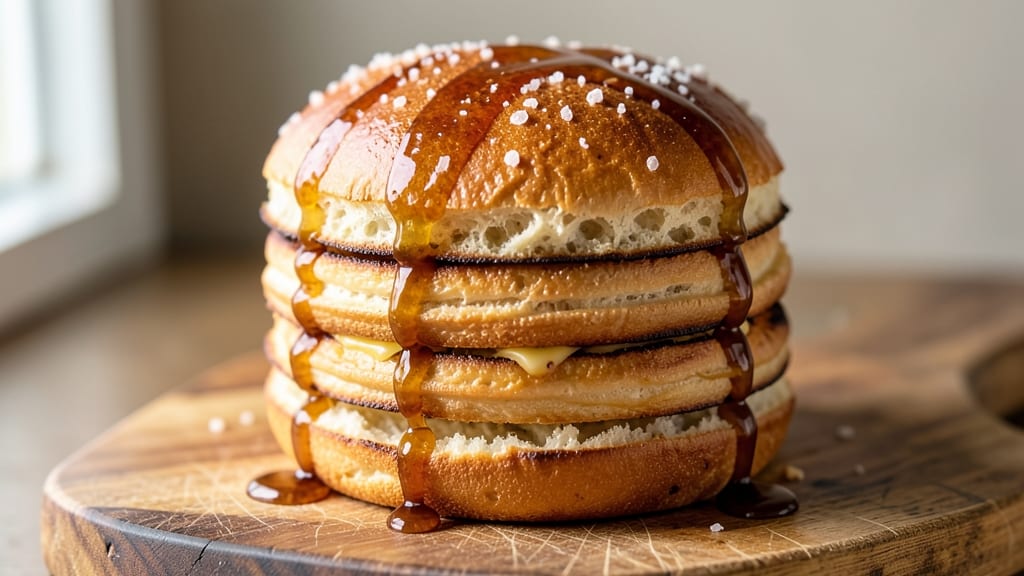
This hamburger bread recipe delivers the perfect soft, pillowy rolls with that signature chewy texture you crave between every bite. After years of testing store-bought and homemade versions, I've perfected a method that combines yeast activation tricks with precise kneading to create buns that stay fresh for days.
The secret lies in the dough's development time and steam during baking—both critical for that ideal crust and tender crumb.
What sets these rolls apart is their foolproof balance of ingredients: high-gluten flour for structure, a touch of sugar for subtle sweetness, and proper hydration for that melt-in-your-mouth quality.
Unlike many recipes that require special equipment, this version uses standard kitchen tools and delivers restaurant-quality results in just under 3 hours from start to finish. The shaping technique alone prevents those dreaded flat tops while creating the perfect pocket for your burger.
By the time they emerge from the oven, you'll have golden-brown rolls with a crisp exterior and cloud-soft interior that's impossible to resist. The aroma alone will have everyone gathering at your table, and the texture holds up perfectly for sandwiches, sliders, or even toasted for breakfast.
This is the hamburger bread recipe that finally makes homemade worth the effort—no more settling for store-bought when you can achieve this level of perfection.
For those who want to customize, I've included variations for garlic-herb infused rolls, everything bagel seasoning, and even a vegan-friendly version that maintains the same ideal texture. The key to success remains the same regardless of variation: precise timing and temperature control during proofing and baking.
Let's get started on making the best hamburger buns you've ever tasted.
Ingredients for hamburger bread
Twelve ingredients, twelve perfect rolls—this is the game-changer for homemade hamburger bread.
| Ingredient | Amount | Notes |
|---|---|---|
| High-Gluten Bread Flour 🌾 | 4 cups | King Arthur or Bob's Red Mill preferred |
| Active Dry Yeast 🍞 | 2 ¼ tsp | Fresh yeast in pinch if available |
| Granulated Sugar 🍚 | ½ cup | White or light brown preferred |
| Unsalted Butter 🧈 | ½ cup | Cold, cubed for dough development |
| Large Eggs 🥚 | 2 whole | Room temperature for even mixing |
| Whole Milk 🥛 | 1 ¼ cups | Warmed to 100°F for yeast activation |
| Diamond Crystal Kosher Salt 🧂 | 1 ½ tsp | Fine grain for even distribution |
| Vegetable Oil 🫒 | 2 tbsp | For greasing bowls and pans |
| Cornmeal 🌽 | ½ cup | For dusting work surface |
| Cold Water 💧 | ¼ cup | Reserved for final dough adjustment |
| Coarse Cornmeal 🌽 | ¼ cup | For breading rolls before baking |
The flour is non-negotiable—high-gluten bread flour gives you that signature chewy texture. King Arthur or Bob's Red Mill are my go-tos, but any high-gluten blend works. Skip the all-purpose, or you'll end up with sad, flat buns. Yeast is the heart of the matter: fresh yeast if you can find it, but active dry works perfectly fine. Just make sure it's not expired—nothing ruins a recipe like dead yeast. The butter should be cold and cubed—this creates pockets of fat that make the rolls pillowy. I always grab European-style butter from Trader Joe's for that extra richness, but any good unsalted butter will do.
No warm milk? Warm water plus a splash of honey activates the yeast just as well. Running short on eggs? Flax eggs (1 tbsp ground flax + 3 tbsp water per egg) work beautifully for a vegan version—just add them to the dough last. The sugar can be swapped for honey or maple syrup, but keep the amount the same. For the shaping technique, cornmeal on your work surface prevents sticking and gives that perfect texture. If you can't find coarse cornmeal for the final breading, semolina or panko works in a pinch. The key is to keep everything cold until the final proof—this ensures those perfect rise and chew.
Freshly baked rolls stay warm for 30 minutes in a clean kitchen towel-lined basket. For longer storage, freeze them fully cooled on a tray first, then transfer to a bag. They keep for 3 months frozen—just thaw at room temp for 20 minutes before toasting. The secret to reheating? Steam them in a covered pot for 5 minutes to restore that bakery-fresh texture. I always make a double batch—one for burgers, one for breakfast—they're that good.
Why You'll Love This Recipe
- No-Knead Magic: I swear by this dough—just mix, let it rise, and forget it. The high-gluten flour does all the work, giving you that perfect chewy texture without a single elbow grease.
- Buttery Rich Crust: That sugar and butter combo? It’s what makes these golden and irresistible. The crust cracks just enough to stay crispy, while the inside stays soft—like a hug for your sandwich.
- Tailgate or Tea Time: I’ve made these for game days (they hold up in coolers!) and Sunday brunches. Same recipe, different vibes—whether you’re feeding a crowd or just treating yourself.
- Dollar Stretch: A single batch costs me pennies but lasts for days. Freeze extras, toast them fresh, and watch your grocery budget breathe easier. (Yes, even on a Tuesday night.)
Step-by-step instructions for soft, pillowy hamburger rolls
Here's the method that guarantees tender, chewy rolls with that irresistible soft center—every single time.
Activate the Yeast for Maximum Rise
In a small bowl, combine the 1.25 cups whole milk warmed to 100°F with the 2.25 tsp active dry yeast and 0.5 cup granulated sugar. Let it sit for 5-7 minutes until frothy with bubbles—this confirms your yeast is alive and ready to work. The sugar feeds the yeast, while the warm milk creates the perfect environment for rapid activation.
Here's the thing—if your mixture doesn't bubble within 10 minutes, your yeast is dead. Toss it and start fresh with a new packet. This is non-negotiable for perfect rolls. While waiting, whisk in the 1.5 tsp diamond crystal kosher salt to dissolve completely—this ensures even distribution throughout the dough.
Develop the Dough with High-Gluten Flour
In the bowl of a stand mixer fitted with the dough hook, combine the 4 cups high-gluten bread flour with the yeast mixture. Add the 2 whole large eggs, 0.5 cup unsalted butter (cut into cubes), and 2 tbsp vegetable oil. Mix on low speed for 2 minutes until everything comes together into a shaggy mass.
Increase speed to medium and knead for 8-10 minutes until the dough becomes smooth, elastic, and pulls away from the bowl. The high-gluten flour gives these rolls their signature chew, while the butter creates that tender crumb. You'll know it's ready when the dough forms a windowpane—press your fingers into it and watch it spring back. If it sticks, add the 0.25 cup cold water 1 tablespoon at a time until perfect consistency is reached.
First Rise for Optimal Flavor Development
Lightly grease a large bowl with vegetable oil, then transfer the dough. Cover with plastic wrap and let rise in a warm place (75-80°F) for 1.5-2 hours, or until doubled in size. This first rise allows the gluten to relax and the yeast to ferment properly, which builds flavor and creates that airy texture.
Don't skip this step—rushing the rise leads to dense rolls. Here's a pro tip: Place the bowl on top of your turned-off oven with the light on (creates gentle heat) or use a proofing box. The dough should puff up dramatically and have a spongy feel when pressed gently. Poke it with your finger—if it springs back slowly, it's ready.
Shape and Second Rise for Perfect Rolls
Punch down the dough to release air, then turn it out onto a surface dusted with 0.5 cup cornmeal. Divide into 12 equal pieces (about 2.5 ounces each) and roll each into a smooth ball. Arrange them in a greased 9x13-inch baking pan, seam-side down, and cover with a clean kitchen towel.
Let rise for 45-60 minutes until the rolls have puffed to nearly double their size. The cornmeal prevents sticking and adds a subtle crunch. Here's where attention to detail pays off—rolls that touch each other during the final rise will develop uneven browning. Space them just close enough to create that classic hamburger roll shape.
Bake to Golden Perfection with Coarse Cornmeal
Preheat your oven to 375°F. While it heats, brush the risen rolls with a bit of melted butter for extra richness. Sprinkle generously with 0.25 cup coarse cornmeal—this creates that beautiful crunchy exterior while keeping the interior soft. Bake for 18-22 minutes until golden brown and internal temperature reaches 190°F.
Real talk: Your oven might run hot, so start checking at the 20-minute mark. The rolls should sound hollow when tapped on the bottom. If the tops brown too quickly, tent with foil. Let cool on a wire rack for 10 minutes before serving—this prevents soggy bottoms. The result? Pillowy soft centers with just enough chew, perfect for holding any burger patty without falling apart.
Pro Tips For Making Hamburger Bread
- Bloom Yeast Slowly: Mix the yeast with warm water and sugar first, then let it sit for 5-7 minutes until frothy before adding flour. I used to dump everything in at once, and my dough always ended up sluggish—this step guarantees a strong, airy rise.
- Chill Dough Overnight: Shape the dough, cover it, and refrigerate for 12-16 hours before baking. The cold slows fermentation, deepens flavor, and makes shaping easier—no more sticky, stubborn dough in the morning.
- Butter Should Be Cool: Use softened, not melted, unsalted butter when mixing—about 65°F (18°C). Melted butter weakens gluten; cool butter creates flaky layers without greasing the pan like a mess.
- Proof Until Doubled: Don’t rush the final rise—wait until the dough pokes back slowly (not fast) and fills 75% of the pan. Overproofed bread collapses; underproofed bread stays dense. A toothpick test works: clean withdrawal = ready.
Storing and reheating this dish
Room-Temp Revival
Freshly baked rolls stay warm and soft for 30 minutes in a clean kitchen towel-lined basket. For longer storage, let them cool completely before placing in an airtight container at room temperature.
They'll maintain their texture for 2-3 days, though I recommend reheating within 48 hours for best results. The key is to avoid condensation—never store them in a sealed container while still warm, or you'll end up with soggy bread. 🌟
Steam Reheating
This is my go-to method for restoring that bakery-fresh texture. Place cooled rolls in a steamer basket over 1 inch of boiling water and cover with a lid. Steam for 5-7 minutes until warmed through.
The steam mimics the oven's environment, reactivating the gluten structure and preventing dryness. For extra crispiness, sprinkle with a pinch of cornmeal before reheating. 💫
Oven Refresh
Preheat oven to 300°F and place rolls on a baking sheet. Cover loosely with aluminum foil and bake for 8-10 minutes. This gentle heat method preserves moisture better than microwave reheating.
For a crispy exterior, remove the foil for the last 2 minutes of heating. I always reheat rolls this way when making sliders—they hold their shape perfectly for stacking. ✨
Freezer Storage
Freeze rolls fully cooled on a parchment-lined tray to prevent sticking. Once solid, transfer to a freezer bag with parchment between layers. They'll keep for 3 months without quality loss. To use, thaw at room temperature for 20 minutes before reheating.
For quick service, you can reheat directly from frozen in the oven at 350°F for 15-18 minutes with foil, then crisp in the broiler for 1-2 minutes. 🥶
Microwave Shortcut
When you're in a hurry, place rolls on a microwave-safe plate with a damp paper towel over them. Heat on 50% power for 20-30 seconds, then check. The damp towel prevents drying, while the lower power prevents rubbery texture.
For best results, use this method only on rolls stored for 24 hours or less—older rolls reheat better with steam or oven methods. 🔥
Toasting Tricks
For breakfast sandwiches, toast rolls in a butter-flavored nonstick pan over medium heat for 1-2 minutes per side until golden. The butter adds richness and creates a perfect crust. For extra flavor, add a pinch of garlic powder or smoked paprika to the butter before toasting.
I often make a batch of rolls specifically for breakfast—trust me, they're worth it. 🍳
Nutrition facts
Frequently asked questions
Why does this recipe use high-gluten flour instead of all-purpose?
The high-gluten flour creates that signature chewy texture hamburger buns are known for. All-purpose flour would make the rolls too soft and prone to falling apart when holding burger patties. The extra gluten also helps maintain structure during the long proofing times.
Can I make these rolls without a stand mixer?
Use your hands to knead the dough for 10-12 minutes until smooth and elastic. The key is to develop the gluten properly—work the dough vigorously until it passes the windowpane test (when you stretch a small piece, it should thin without tearing). For best results, use a dough scraper to help with the kneading process.
How do I know when the dough is fully proofed?
Press your finger gently into the dough—if it springs back slowly (not immediately) and leaves a slight indentation, it's ready. For the first rise, the dough should double in size. For the second rise, the rolls should puff to nearly double their size and feel light when touched.
What's the best way to store homemade hamburger buns?
Keep them fresh for 2-3 days at room temperature in an airtight container, or freeze for up to 3 months. For reheating, steam is best—place rolls in a steamer basket over boiling water for 5-7 minutes to restore that bakery-fresh texture. Never microwave without a damp towel, or they'll turn rubbery.
Can I add seeds or herbs to the dough?
Yes! Add 1-2 tablespoons of seeds (sesame, poppy, or everything bagel) or 1 teaspoon of dried herbs (garlic, rosemary, or parsley) during the final kneading stage. Just reduce the flour by 1 tablespoon to maintain proper dough consistency. For extra flavor, brush the tops with melted butter and sprinkle with seeds before baking.