
Side Dishes
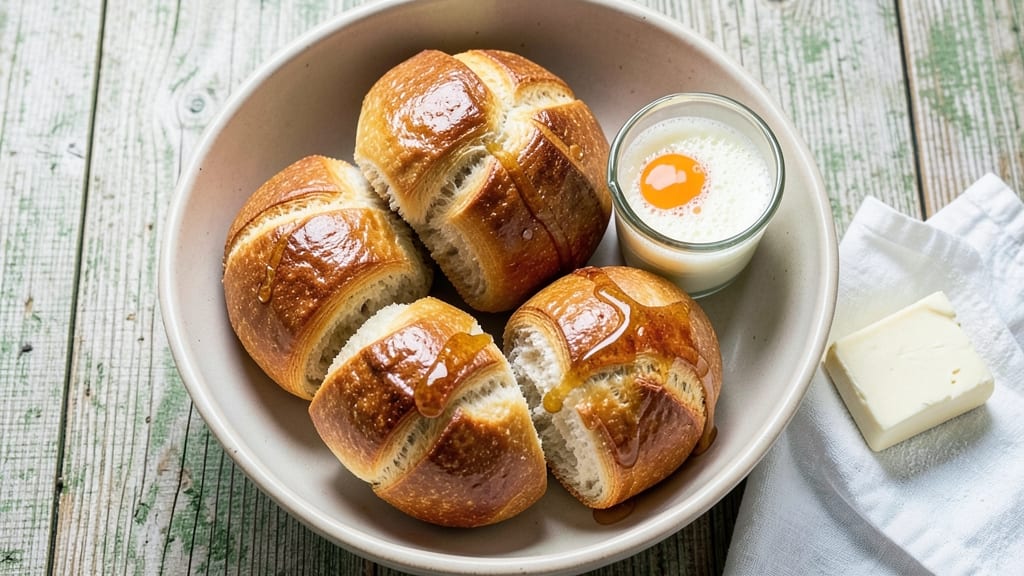
This German bread roll recipe transforms your kitchen into a bakery with buttery, golden buns that crackle when you bite in—just like the ones from your favorite European café. The secret lies in a precise dough ratio and proper proofing, which I’ve perfected after years of trial and error.
These rolls aren’t just side dishes; they’re the star of any meal, absorbing flavors beautifully while delivering that signature crispy crust and soft, pillowy center.
What sets these bread rolls apart is the foolproof method I’ve developed, which requires no special equipment beyond a mixing bowl and baking sheet. The dough comes together in under 10 minutes, then rests while you prepare the rest of your meal.
A touch of melted butter brushed on before baking ensures that golden, shatteringly crisp exterior that’s impossible to resist. The interior stays tender and airy, thanks to a slow rise and careful shaping—no dense, heavy rolls here.
By the time you pull them from the oven, your kitchen will smell like a German bakery, and the aroma alone will have everyone gathering around the table. These rolls are perfect for serving alongside soups, stews, or roasted meats, or even as a standalone snack with butter and jam.
The best part? They reheat beautifully, making them ideal for meal prep or leftovers—though I can’t promise they’ll last that long.
For those who love tradition, you can add a sprinkle of coarse salt or sesame seeds before baking, or even shape them into classic pretzel buns with a little extra effort. The dough is forgiving, so don’t stress over perfection—just focus on the buttery, golden results. Let’s get baking!
Ingredients for german bread roll
Twelve golden buns made with just nine simple ingredients—no fancy equipment needed.
| Ingredient | Amount | Notes |
|---|---|---|
| All-Purpose Flour 🌾 | 5 cups | Plus 1 tbsp for dusting |
| Active Dry Yeast 🍞 | 2 ¼ tsp | Or 1 packet (0.25 oz) |
| Granulated Sugar 🍚 | 1 tbsp | Feeds the yeast |
| Unsalted Butter 🧈 | ½ cup | Cold, cubed (1 stick) |
| Warm Water 💧 | 1 ¼ cups | 110°F (43°C) ideal |
| Large Eggs 🥚 | 1 whole | Room temperature |
| Salt 🧂 | 1 ½ tsp | Kosher or sea salt |
| Melted Butter 🧈 | ¼ cup | For brushing (2 tbsp) |
| Coarse Salt 🧂 | ¼ tsp | For sprinkling (optional) |
| Sesame Seeds 🌾 | 1 tbsp | For topping (optional) |
The yeast is the magic here—make sure it's fresh (test it in warm water with sugar; it should foam in 5-10 minutes). King Arthur or Bob's Red Mill flour gives the best texture, but any all-purpose works. The butter matters too—Plugrá or Land O'Lakes unsalted melts beautifully. For the water, warm it to body temperature (like bathwater). Too hot and you'll kill the yeast; too cold and it won't activate. If your kitchen's cold, let the water sit for 5 minutes after microwaving.
No yeast? Instant yeast works 1:1, but active dry needs the 5-minute proofing step. Short on butter? Olive oil or shortening in a pinch (though butter gives that signature flavor). The dough should be slightly sticky but not wet—add 1 tbsp more flour if needed. For the melted butter for brushing, microwave it 40 seconds to just melt, then cool slightly so it doesn't cook the dough. Pro tip: Use a kitchen scale if you're ambitious—it's more precise than cups for the flour.
Dough keeps 24 hours in the fridge, wrapped tightly in plastic. For longer storage, freeze shaped rolls (unbaked) for up to 3 months—thaw overnight in the fridge before baking. These reheat beautifully: 5 minutes at 350°F wrapped in foil, or 10 seconds in the microwave (cover with damp paper towel). Leftovers? Toss them in a bread bag—they stay fresh for 3-4 days. The golden ones disappear first, so bake extra if you can.
Why You'll Love This Recipe
- No-Knead Magic: I swear by this trick—just mix the dough, let it rise, and bake. That butter gets worked right into the flour, so you’re not fighting a stiff dough or kneading until your arms give out. Honestly, my lazy Sundays thank me every time.
- Buttery Bliss: That warm butter melting into the dough? It’s the secret weapon. The rolls develop this golden crust with a tender, almost cake-like crumb inside—like a hug from a bakery, but made in your kitchen. (Yes, even on a Tuesday night.)
- Weekday Workhorse: Freeze half the batch fresh out of the oven, and you’ve got dinner ready in 10 minutes later. Toss them in a basket for breakfast, pair with soup, or serve alongside roasts—this dough does it all without extra effort.
- Pantry Staple Power: Five ingredients, all of which you already own. No specialty flours or pricey yeast packets—just flour, sugar, butter, and water. I’ll be real: this is my go-to when I’m broke or too tired to shop, and it never lets me down.
Step-by-step instructions for German bread rolls
Here's how to create bakery-style bread rolls with a crispy crust and tender crumb.
Activate the Yeast for Perfect Rise
In a small bowl, combine the 1.25 cups warm water (about 110°F), 1 tbsp granulated sugar, and 2.25 tsp active dry yeast. Let it sit for 5-10 minutes until foamy. This step ensures your yeast is alive and ready to work—if it doesn't bubble, your rolls won't rise properly.
I like to test the water temperature first by dipping my finger in—it should feel warm but not hot. Too hot kills yeast, too cold wakes it up too slowly. Once it's foamy, you're ready for the next step. Don't rush this; patience here means fluffy rolls later.
Mix the Dough Until Smooth
In a large bowl, whisk together the 5 cups all-purpose flour and 1.5 tsp salt. Make a well in the center and pour in the yeast mixture, 1 whole large egg, and 0.5 cup cold cubed unsalted butter. Mix with a wooden spoon until a shaggy dough forms.
Here's the thing—don't overmix yet. The butter needs to stay cold to create those tender layers. Once it comes together, turn it out onto a lightly floured surface and knead for 8-10 minutes until smooth and elastic. You'll know it's ready when it springs back slowly when poked.
Shape and Let the Dough Rest
Divide the dough into 12 equal pieces (about 2 ounces each) and shape them into smooth balls. I press down gently on each one to release air bubbles—this prevents cracks when they bake. Place them on a parchment-lined baking sheet, cover with a clean kitchen towel, and let rise for 1-1.5 hours until nearly doubled in size.
The dough should feel light and airy when pressed gently. If it rises too fast in a warm kitchen, reduce the time slightly. This resting period develops flavor and structure—don't skip it, even if you're eager to bake.
Bake to Golden Perfection
Preheat your oven to 375°F. Brush the tops of the rolls with 0.25 cup melted butter and sprinkle with 0.25 tsp coarse salt and 1 tbsp sesame seeds if using. Bake for 15-18 minutes until deep golden brown and hollow-sounding when tapped on the bottom.
Watch closely after 12 minutes—the rolls darken quickly. For extra browning, place them on the middle rack where it's hottest. The aroma when they come out should make your kitchen smell like a German bakery.
Pro Tips For Making German Bread Roll
- Test Yeast First: Sprinkle that active dry yeast in warm water with a pinch of sugar—if it bubbles within 5 minutes, you’re good to go. I learned this the hard way after mixing dough with dead yeast and wondering why it never rose.
- Use Room-Temp Butter: Softened butter at 65°F (18°C) blends smoother into the dough and gives those rolls a tender crumb. Stick it in the microwave for 15 seconds if it’s straight from the fridge—no waiting hours.
- Shape Rolls Tight: Pack the dough balls snugly, like you’re rolling a marble. Loose rolls flatten during baking, and no one wants a sad, pancake-like bread roll. Press the seams flat to seal in flavor.
- Steam the Oven: Toss a metal tray of boiling water in the oven for the first 5 minutes—this mimics a bakery’s steam injection and guarantees a crisp crust without burning. Your rolls will look like they came from a German bakery window.
Perfect pairings for this dish
Buttery Spreads
Nothing beats these bread rolls with a generous smear of European-style butter like Plugrá Cultured Butter or Land O'Lakes Unsalted Butter. The rich, slightly tangy flavor pairs perfectly with the rolls' crispy crust.
For a gourmet touch, try herb-infused butter—mix softened butter with 1 tbsp chopped fresh parsley and ½ tsp garlic powder, then spread warm. 🧈
Sweet Toppings
These rolls shine with classic German sweet pairings. A drizzle of honey or apricot jam elevates them instantly. For a festive touch, sprinkle with crushed pistachios or toasted flaked sea salt before serving.
I love serving them with dark chocolate shavings for a sophisticated contrast. The sweetness cuts through the buttery richness beautifully.
Savory Pairings
Transform these rolls into a hearty meal by serving alongside smoked sausages like bratwurst or knackwurst. A warm German mustard (like Dijon-style) or spicy brown mustard adds depth. For a lighter option, pair with creamy coleslaw or pickled vegetables—the tangy crunch balances the rolls' soft interior perfectly.
Cheese Combinations
Add a slice of aged Gouda or sharp cheddar between two rolls for a cheesy twist. For a German-inspired bite, try Emmentaler cheese—its nutty flavor complements the buttery rolls.
Warm the cheese slightly before serving to enhance its meltiness. A sprinkle of black pepper or fresh dill adds freshness to this savory pairing.
Beverage Pairings
Sip a dark roast coffee or espresso with these rolls for a classic German café experience. For something lighter, try a German wheat beer like Weihenstephaner Hefeweissbier—its citrusy notes brighten the buttery flavors. A cold sparkling apple cider is a refreshing alternative, especially during warmer months. 🍺
Meal Prep Ideas
Make a batch of these rolls ahead and freeze them unbaked for up to 3 months. Reheat in the oven at 350°F for 5-7 minutes until golden. They're perfect for soup pairings—just warm them alongside your favorite broth-based dish.
For a cozy dinner, serve with roasted chicken or beef stew to soak up every last bit of sauce. 💡
Nutrition facts
Frequently asked questions
Why do German bread rolls need a second rise?
The second rise—called proofing—is crucial for developing the rolls' signature texture. During this 1-1.5 hour rest, the yeast ferments slowly, creating tiny air pockets that make the crumb light and airy. Skipping this step results in dense, heavy rolls instead of the tender, bakery-style buns you want. Think of it as letting the dough "relax" before baking.
Can I make these rolls without a stand mixer?
This dough comes together perfectly by hand. After mixing the ingredients in a bowl, turn it onto a lightly floured surface and knead for 8-10 minutes until smooth and elastic. The key is to keep the butter cold at first—this creates those tender layers even without a mixer. Just use your knuckles for strength!
What if my rolls don't brown enough?
Try these fixes: Place the baking sheet on the middle rack (the hottest zone) and increase oven temp to 400°F for the last 2-3 minutes. For extra browning, brush the tops with melted butter again before baking. If your oven runs hot, reduce the temp to 350°F and bake for 20-22 minutes instead.
How can I shape them like bakery rolls?
For that professional look, gently press each dough ball to flatten slightly (about 1/2-inch thick), then roll your fingers over the top to create ridges. Place them close together on the baking sheet—they'll touch slightly as they rise, creating that classic bakery-style cluster. No special tools needed!
Can I substitute bread flour for all-purpose?
While possible, it's not recommended for this recipe. Bread flour has more protein, which can make the rolls denser and chewier. Stick with all-purpose for that perfect balance of crispy crust and soft interior. If you must substitute, reduce by 1-2 tbsp since bread flour absorbs more liquid.