
Desserts
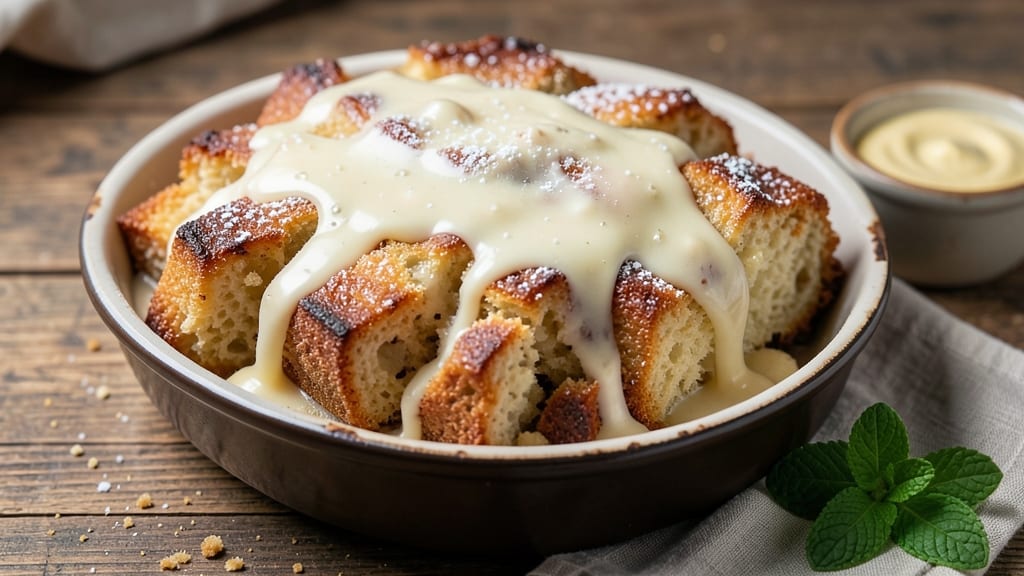
This bread pudding with vanilla cream sauce recipe transforms stale bread into a decadent dessert that feels like a restaurant classic. The secret lies in a rich custard base infused with warm vanilla swirls and a velvety cream sauce that ties everything together—creamy, comforting, and impossible to resist.
I perfected this version after years of testing, balancing texture and flavor to deliver a dessert that’s both impressive and foolproof.
The custard begins with a simple but precise mix of eggs, milk, and sugar, baked until the center is just set but still tender. What sets this apart is the vanilla cream sauce, a silky drizzle that adds depth without overpowering the bread’s natural toasted notes.
The sauce thickens as it cools, creating a luxurious finish that elevates every bite to restaurant-quality.
By the time you pull it from the oven, you’ll have golden-brown bread pudding with a custardy interior, served with a generous swirl of that silky vanilla cream sauce.
The contrast of warm, spiced pudding against the cool, velvety sauce makes this dessert unforgettable—perfect for holidays, dinner parties, or a cozy weeknight treat.
Leftovers reheat beautifully, and the sauce can be made ahead, so you’re never without a showstopping dessert. Let’s get started on creating this timeless classic.
Ingredients for bread pudding with vanilla cream sauce
Six ingredients transform stale bread into restaurant-style dessert with golden custard and velvety vanilla sauce.
| Ingredient | Amount | Notes |
|---|---|---|
| Day-Old Bread 🍞 | 6 cups | Cubed, crusts removed (baguette or challah ideal) |
| Large Eggs 🥚 | 4 whole | Room temperature for even baking |
| Whole Milk 🥛 | 2 ½ cups | Full-fat for creaminess (warmed) |
| Granulated Sugar 🍚 | 1 ¼ cups | Light brown sugar adds depth |
| Pure Vanilla Extract 🌿 | 2 tbsp | Bourbon or Madagascar preferred |
| Unsalted Butter 🧈 | ½ cup | Melted, full-fat for richness |
| Ground Cinnamon 🌶️ | 1 ½ tsp | Freshly ground for warmth |
| Salt 🧂 | ½ tsp | Fine sea salt preferred |
| Heavy Whipping Cream 🥛 | 1 ½ cups | Full-fat for sauce thickness |
| Powdered Sugar 🍚 | ½ cup | For sauce sweetness |
| Vanilla Bean Paste 🌿 | 1 tbsp | Or 1 scraped vanilla bean |
| Lemon Zest 🍋 | 1 tsp | Brightens the sauce |
The bread is everything here. Day-old baguette or challah gives the best texture—crusts make it gummy, so remove those. I always use Whole Foods' sourdough when I'm feeling fancy, but any crustless loaf works. Toast the cubes lightly first (optional but worth it)—it deepens the flavor. For the custard, room-temperature eggs mix smoother, so pull them out 30 minutes before baking. The milk should be warm but not hot—just enough to dissolve the sugar without scrambling the eggs.
No vanilla bean paste? Double the extract and add a pinch of salt to mimic the depth. Short on heavy cream? Half-and-half plus 1 tbsp butter works in a pinch, but the sauce won't be as silky. The powdered sugar in the sauce is non-negotiable—it's what gives that velvety finish. For the bread cubes, French bread or brioche add extra richness, but don't overthink it. The key is consistency: all cubes should be roughly the same size so they bake evenly. If you're using a mix of breads, soak the denser ones first (like challah) to prevent dry spots.
This reheats like a dream—just pop it in the oven at 350°F for 10-15 minutes until bubbly. The sauce keeps for 5 days in the fridge, but I always make extra because it's perfect over ice cream too. Store the bread pudding covered at room temp for 2 days max—it's best fresh from the oven. For make-ahead magic, assemble the pudding the night before and bake in the morning. The sauce can be made 3 days ahead—just whisk vigorously before serving.
Why You'll Love This Recipe
- No Waste, All Flavor: I swear by using day-old bread—this recipe turns stale loaves into something magical. Just tear it up, no fancy slicing, and watch it soak up that creamy vanilla milk mixture like a dream.
- Vanilla Kiss Magic: That pure vanilla extract isn’t just flavoring—it’s the star. The warm, custardy center with the golden top? It’s like dessert hugs you in the best way, especially when drizzled with that silky cream sauce.
- Breakfast or Dessert: Honestly, I make this for both. Serve it warm with a scoop of ice cream for a decadent treat, or cut into squares for a hearty breakfast with a sprinkle of cinnamon. No rules here—just satisfaction.
- Budget Comfort: Eggs, milk, sugar, bread—this is my go-to when I need something rich without breaking the bank. Plus, leftovers reheat like a dream, so I’m never scrambling for an easy meal.
Step-by-step instructions for bread pudding with vanilla cream sauce
Here's how to create a rich, custardy bread pudding with a velvety vanilla cream sauce that ties everything together.
Prepare the Bread and Custard Base
Cut the 6 cups day-old bread into 1-inch cubes, removing any crusts for a cleaner texture. Spread them evenly on a baking sheet and toast in a 350°F oven for 5-7 minutes until just warmed through. This step prevents a soggy pudding—you want the bread to absorb moisture gradually, not all at once.
In a large mixing bowl, whisk together the 4 whole large eggs, 2.5 cups whole milk, 1.25 cups granulated sugar, 2 tablespoons pure vanilla extract, 1.5 teaspoons ground cinnamon, and 0.5 teaspoon salt until fully combined. The mixture should be smooth with no visible streaks of egg or sugar. This is your custard base, and getting it perfectly blended ensures an even texture throughout the pudding.
Assemble and Bake the Bread Pudding
Gently fold the toasted bread cubes into the custard mixture, making sure each piece is well coated. Transfer the mixture to a greased 9x13-inch baking dish and press down lightly to help the bread soak up the custard evenly. The bread should be submerged but not packed too tightly—this allows for even baking and a tender crumb.
Bake at 350°F for 40-45 minutes until the top is golden brown and the center is just set—when you gently shake the dish, it should jiggle slightly but not be liquid. Inserting a toothpick should come out with a few moist crumbs, not wet batter. Overbaking dries out the pudding, so keep an eye on it in the last 5 minutes.
Make the Vanilla Cream Sauce
While the bread pudding bakes, melt the 0.5 cup unsalted butter in a small saucepan over low heat. Once melted, whisk in the 1.5 cups heavy whipping cream, 0.5 cup powdered sugar, 1 tablespoon vanilla bean paste, and 1 teaspoon lemon zest. Simmer the mixture gently for 5-7 minutes until it thickens slightly—it should coat the back of a spoon but still be pourable. This sauce is the star of the dish, adding a luxurious, silky finish.
Strain the sauce through a fine-mesh sieve to remove any lumps, then return it to the saucepan and keep it warm over low heat until ready to serve. The lemon zest brightens the vanilla flavor, while the powdered sugar ensures just the right level of sweetness without overpowering the bread pudding.
Serve Warm with Cream Sauce
Let the bread pudding rest for 10 minutes after baking—this allows it to set slightly and makes it easier to slice. Cut into squares and serve immediately with the warm vanilla cream sauce drizzled generously over the top. The contrast of the custardy, spiced bread pudding with the cool, velvety sauce is pure comfort in every bite.
For an extra touch, garnish with a sprinkle of ground cinnamon or a dusting of powdered sugar right before serving. The sauce should cling beautifully to the pudding, creating those signature swirls that make this dish so special. Enjoy it warm, straight from the oven, for the best experience.
Pro Tips For Making Bread Pudding With Vanilla Cream Sauce
- USE CUBED BREAD: Bread pudding’s texture hinges on surface area—torn chunks soak up custard unevenly, leaving dry pockets. Cut your day-old bread into ½-inch cubes (no smaller) so every bite gets that creamy, custard-drenched payoff. (Yes, it’s tedious, but your first slice will be worth it.)
- WHISK EGGS COLD: I used to whisk eggs straight from the fridge, and the custard always ended up grainy. Pour the eggs into a bowl first, then let them sit at room temp for 10 minutes while you prep other ingredients. Cold eggs create a thicker, lumpier sauce—no one wants that.
- SAVE THE MILK: Don’t dump the milk straight into the custard mix; it’ll cool the eggs too fast, making them scramble instead of emulsify. Heat the milk to 180°F (82°C) first, then whisk it into the eggs in a slow, steady stream while stirring constantly. (This is where your arm gets a workout.)
- SALT THE SAUCE: The vanilla cream sauce is where flavor lives, but unsalted custard tastes flat. After tempering the milk into the eggs, add ½ teaspoon salt (yes, even if your bread is salted) and let it dissolve completely. Trust me—you’ll taste the difference in every spoonful.
Common mistakes when making this recipe
Uneven Bread Soaking
Skipping the toast step or using uneven bread cubes leads to a soggy bottom and dry top. I’ve seen this happen when people rush—always toast cubes for 5-7 minutes at 350°F to create a dry surface that absorbs custard evenly.
For extra insurance, use 1-inch cubes consistently—no smaller than ½ inch or they’ll turn to mush. 🌶️
Overmixing the Custard
Vigorously whisking the egg-milk mixture can incorporate too many air bubbles, causing the pudding to collapse or develop a dense texture. Whisk just until the sugar dissolves—about 30 seconds with a fork or 1 minute with a whisk.
Overmixing is a silent killer of that perfect custardy crumb. For even better results, whisk gently by hand rather than using an electric mixer.
Skipping the Rest Time
Cutting into the pudding immediately after baking is a cardinal sin—it’ll fall apart like a house of cards. The 10-minute rest lets the custard firm up just enough to hold its shape when sliced.
I’ve learned this the hard way: rushing this step means serving a pudding that’s more soup than dessert. 💡
Underbaking or Overbaking
The center should be just set when you pull it from the oven—no jiggle, but no toothpick coming out completely clean either. At 350°F, 40-45 minutes is the sweet spot, but ovens vary.
Start checking at 35 minutes—overbaking turns the pudding dry, while underbaking leaves it gummy. A toothpick test is your best friend here.
Sauce Too Thin or Too Thick
The sauce needs to be silky but not runny—simmer it until it coats the back of a spoon but still drizzles easily. If it’s too thin, simmer 2-3 extra minutes*; if too thick, whisk in 1-2 tablespoons warm milk.
I’ve ruined a sauce by walking away too soon—keep an eye on it! The lemon zest adds brightness, but skip it if you prefer pure vanilla flavor.
Not Preheating the Dish
Cold baking dishes absorb heat from your oven, slowing cooking and risking uneven doneness. Always grease your 9x13-inch dish with butter first, then place it in a 350°F oven for 5 minutes before adding the pudding.
This ensures even heat distribution and a golden crust. Trust me, this small step makes a huge difference in texture. ⏰
Nutrition facts
Frequently asked questions
Can I use fresh bread instead of day-old?
Fresh bread works in a pinch, but it'll make your pudding denser and potentially gummy. The starch in fresh bread absorbs too much liquid too quickly, creating a soggy texture. If you must use it, toast the cubes for 10-12 minutes at 350°F to dry them out first. For best results, stick with day-old bread—it's the golden standard for this recipe.
How do I adjust the recipe for a smaller or larger batch?
This recipe scales beautifully! For a 4-serving batch, reduce all ingredients by 2/3. For 8-10 servings, increase by 1.5x. The key is maintaining the same ratio of bread to custard—1 cup bread per 1/4 cup custard mixture. Always adjust baking time by 5-7 minutes per additional inch of dish diameter. A 9-inch round pan would need about 35-40 minutes at 350°F.
Can I make the vanilla cream sauce ahead of time?
The sauce actually improves overnight—it thickens as it chills. Make it up to 3 days ahead and store in the fridge. Before serving, whisk vigorously to restore its silky texture. For extra richness, whisk in 1 tablespoon warm heavy cream while reheating. Pro tip: The sauce also works perfectly over vanilla ice cream or pancakes.
Why did my bread pudding turn out dry?
Dry pudding usually means overbaking or not enough custard. Check your baking time—40-45 minutes at 350°F should give you a tender center. If using a different bread type (like brioche), you might need 1-2 extra tablespoons of milk in the custard. Another common mistake is skipping the toast step—always warm the bread cubes first to prevent moisture overload.
Can I substitute vanilla extract with vanilla sugar?
Yes, but with adjustments! Replace the 2 tbsp vanilla extract with 2 tbsp vanilla sugar plus 1 extra tsp extract. The sugar adds sweetness and depth, but you'll need to reduce the granulated sugar in the custard by 1 tbsp to balance flavors. For the sauce, use 1.5 tbsp vanilla sugar instead of the paste—it'll give a similar aromatic punch.