
Side Dishes
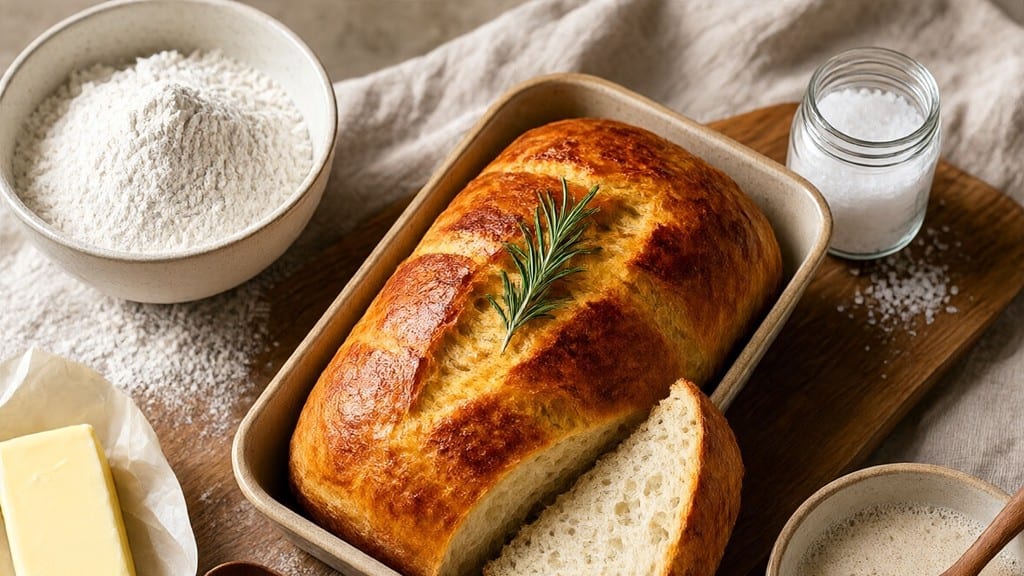
Barefoot Contessa's bread recipe delivers the perfect balance of crusty exterior and buttery swirls that make every slice irresistible. Ina Garten’s signature approach combines simplicity with professional results, ensuring your kitchen smells like a French bakery without the fuss.
The secret lies in precise timing and a few key techniques that transform basic ingredients into something extraordinary.
This recipe requires just five simple ingredients—flour, yeast, butter, sugar, and salt—but the magic happens in how they come together. You’ll shape the dough into a classic loaf with pockets of melted butter that create tender, flavorful layers.
The dough needs two hours of resting time, which allows the gluten to relax and develop properly for that perfect crusty crumb.
By the time you pull this bread from the oven, you’ll have a loaf with a golden, crackling crust and a soft, airy interior threaded with buttery swirls. The aroma alone will have everyone gathering around your table, and each bite will taste like a slice of heaven.
This is the kind of bread that disappears quickly—so make sure to bake two loaves.
Perfect for serving with soups, sandwiches, or simply slathered with butter, this bread is a foolproof addition to any meal. The method is straightforward, but the results are anything but basic. Let’s get started on creating your own restaurant-quality loaf at home.
Ingredients for barefoot contessa bread
Five core ingredients transform into golden, buttery loaves with a restaurant-quality crumb.
| Ingredient | Amount | Notes |
|---|---|---|
| All-Purpose Flour 🌾 | 5 cups | Spooned and leveled, not scooped |
| Active Dry Yeast 🍞 | 2 ¼ tsp | Fresh yeast at half the amount |
| Unsalted Butter 🧈 | ¾ cup | Cold, cubed for butter swirls |
| Granulated Sugar 🍚 | 1 tbsp | Light brown sugar for depth |
| Diamond Crystal Kosher Salt 🧂 | 1 ½ tsp | Fine grain preferred |
| Warm Water 💧 | 1 ¼ cups | 110°F for ideal yeast activation |
| Extra-Virgin Olive Oil 🫒 | 2 tsp | For dough handling |
The flour is non-negotiable—King Arthur or Gold Medal are my go-tos for that perfect crumb. Diamond Crystal kosher salt is essential; it dissolves better than table salt and enhances flavor without overpowering. For the butter, Plugrá or Land O’Lakes unsalted work best—avoid salted, as it alters the dough’s balance. The yeast? Fresh yeast from the refrigerated section (like Saf-Instant) gives better results than dry, but if you must use active dry, proof it first in warm water with a pinch of sugar. Pro tip: Store flour in the freezer to preserve freshness—it keeps for up to 6 months without losing lift.
No kosher salt? Substitute half the amount of table salt, but taste as you go—the flavor profile shifts. Running short on butter? Vegetable shortening at the same weight works in a pinch (though texture won’t be identical). The olive oil can be swapped for avocado oil, but stick to extra-virgin for that fruity depth. For a gluten-free version, swap flour for a 1:1 GF blend like King Arthur’s, but expect a denser crumb. The warm water is critical—too hot kills yeast, too cold stalls it. Use a thermometer to hit 110°F every time. If your kitchen’s drafty, pre-warm the water in a microwave for 30 seconds, then let it sit for a minute.
This dough is a two-hour commitment, but it’s worth it. Shape the loaves into oval boules (not round) for even baking, and dimple the tops with your fingers before baking—it creates those gorgeous buttery pockets. Bake at 375°F for 35-40 minutes until the crust is deep golden and sounds hollow when tapped. Cool on a wire rack for at least 1 hour—cutting too soon makes it gummy. Freeze extras by wrapping tightly in foil; reheat at 350°F for 10 minutes to restore crispness. The swirls? Fold in cold butter cubes during the final knead—don’t overwork the dough, or they’ll melt into oblivion.
Why You'll Love This Recipe
- No-Knead Magic: I swear by this recipe—just mix, let it rise, and bake. No stand mixer, no fancy techniques, just a bowl and your hands. That butter gets worked into the flour until it’s almost like a crumbly dough, and honestly? It’s the easiest way to get restaurant-quality bread at home.
- Buttery Crust, Soft Core: The secret’s in that cold butter cutting into the flour—it creates pockets of air that toast into golden, crisp edges while keeping the inside tender. Sprinkle a little sugar in the dough, and you’ve got a subtle sweetness that makes every slice feel like a treat.
- Weeknight Workhorse: This bread is my go-to for sandwiches, toast, or even French toast. Make a big batch on Sunday, and you’ve got breakfast, lunch, or a snack covered all week. Between us, I’ve even used it to soak up soup broth like a pro—no fancy bread basket needed.
- Budget-Friendly Staple: Five ingredients, one bowl, zero waste. That kosher salt? A pinch goes a long way, and the yeast stretches to feed a crowd. I’ve made this for dinner guests, potlucks, and lazy mornings—it’s the kind of bread that never feels like a splurge.
Step-by-step instructions for crusty bread with buttery swirls
Here's the method that delivers that iconic Barefoot Contessa texture—crispy crust, airy crumb, and golden butter swirls.
Activate the Yeast and Create the Dough
In a large bowl, combine the 1.25 cups warm water (about 110°F) with the 1 tbsp granulated sugar and 2.25 tsp active dry yeast. Let it sit for 5-10 minutes until frothy—this tells you the yeast is alive and ready to work. If it doesn’t bubble, your yeast is stale, and you’ll need to start over.
In a separate bowl, whisk together the 5 cups all-purpose flour and 1.5 tsp diamond crystal kosher salt. Create a well in the center and pour in the yeast mixture. Using a wooden spoon, gently stir until a shaggy dough forms. This is where the magic begins—don’t overwork it yet.
Add the 2 tsp extra-virgin olive oil and mix until fully incorporated. The dough will be sticky, but that’s perfect. Cover the bowl with a damp towel and let it rest for 10 minutes—this allows the flour to fully hydrate and the gluten to start relaxing.
Knead and Develop the Dough
Turn the dough onto a lightly floured surface and knead for 8-10 minutes until smooth and elastic. You’ll know it’s ready when it springs back slowly when poked. If it feels too sticky, wet your hands slightly—flouring too much will toughen the bread.
Here’s the trick: fold the dough over itself like a letter, then press down gently. Rotate the dough a quarter turn and repeat. This technique builds strength without overworking the gluten, which is key for that tender crumb. The dough should feel like soft modeling clay when you’re done.
Place the dough back in the bowl, cover it, and let it rise in a warm spot for 1-1.5 hours or until it doubles in size. You’ll see bubbles forming on the surface and along the sides of the bowl—this is your cue that fermentation is working.
Shape and Add the Butter Swirls
Once the dough has risen, punch it down gently to release the air. On a lightly floured surface, shape it into a rough rectangle about 12x8 inches. This is where the butter swirls come into play—roll out the 0.75 cup unsalted butter (cold, cubed) into a log about 12 inches long and 1 inch thick.
Place the butter log diagonally across the dough, then roll it up tightly like a jelly roll. Seal the seam by pinching it closed. This step is all about precision—if the butter leaks out, your bread won’t have those beautiful swirls. Place the log seam-side down in a 9x5-inch loaf pan and cover it with a towel.
Let the dough rise again for 30-45 minutes until it’s puffy and just about fills the pan. Preheat your oven to 375°F while it rises—this ensures the bread goes in hot and bakes evenly.
Bake to Golden Perfection
Bake the bread for 35-40 minutes until the top is deep golden brown and sounds hollow when tapped on the bottom. The butter swirls should be visible through the crust, and the edges should pull away slightly from the pan.
For extra crispiness, I like to turn the oven to broil for the last 2-3 minutes—keep a close eye on it to avoid burning. The moment it’s done, remove it from the pan and let it cool on a wire rack for at least 15 minutes before slicing. This resting time is crucial—it allows the crumb to set and the flavors to meld.
Slice it thick and serve warm with a pat of that same unsalted butter you used in the swirls. The contrast of the crispy crust, tender crumb, and rich butter will have everyone asking for seconds—this is the Barefoot Contessa magic in action.
Pro Tips For Making Barefoot Contessa Bread
- Weigh Your Flour: The Barefoot Contessa recipe calls for flour by volume, but I learned the hard way—packing that cup too tightly or scooping loosely throws off the ratio. Use a kitchen scale if possible (12 ounces = 340g), or spoon flour into the cup without packing, then level it off. The dough will feel just right when it’s not too stiff or too slack.
- Bloom Yeast in Warm Water: Skip the dry yeast straight into the dough—it’s a rookie move. Mix the yeast with warm water (110°F, not hot) and a pinch of sugar first, then let it sit for 5–10 minutes until frothy. This guarantees it’s active before it hits the flour, saving you from dough that refuses to rise.
- Don’t Rush the First Rise: I used to double-check the clock every 10 minutes, but the dough needs time—at least 1.5 to 2 hours in a warm spot until it’s puffy and jiggly. Cover it loosely with a towel; if it’s too tight, condensation will make the dough sticky and weak. Patience here means a lighter, airier loaf.
- Chill the Dough Before Shaping: The recipe lets you shape the dough right after the first rise, but I now chill it for 30 minutes first. Cold dough is easier to handle, stretches less when shaping, and gives a tighter crumb. Plus, it’s a great excuse to grab a coffee while you wait.
Regional styles of barefoot contessa bread
Classic French Baguette Twist
Transform this recipe into a Barefoot Contessa-inspired baguette by dividing the dough into 3 equal portions after the first rise. Shape each into a 12-inch oval with a slightly tapered end, then dimple the tops with your fingertips.
Brush with egg wash (1 egg + 1 tbsp water) and bake at 425°F for 20-25 minutes until deeply golden. The result? A crispy, crackly crust with those signature buttery swirls inside—perfect for dipping in olive oil. 🥖
Italian Focaccia Fusion
For an Italian flair, replace the loaf pan with a 9x13-inch baking sheet lined with parchment paper. After shaping the dough into a rectangle, press it into the pan until it reaches the edges.
Dimple the surface with your fingers, then dot with 2 tbsp olive oil and sprinkle with 1 tsp flaky sea salt and 1 tsp dried rosemary. Bake at 375°F for 30 minutes until puffed and golden.
Finish with a drizzle of olive oil and flaky salt for an authentic focaccia experience. 🌿
Sweet Brioche Variation
Add ¼ cup granulated sugar and 1 large egg to the dough for a sweeter, richer bread. Roll out the butter log as usual, but fold in ½ cup chopped candied pecans or chocolate chips before sealing. Shape into a round boulo instead of a loaf for a brioche-like texture.
Bake at 350°F for 40-45 minutes until the center reaches 190°F. Serve warm with a dusting of powdered sugar for a dessert-worthy treat. 🍯
Herb & Cheese Loaf
Infuse the dough with 2 tbsp chopped fresh herbs (like thyme or parsley) and ½ cup shredded Gruyère cheese. After shaping the butter log, sprinkle the cheese and herbs evenly over the dough before rolling.
Bake as directed, then brush the crust with garlic-infused olive oil after removing from the oven. The cheese melts into the butter swirls, creating a savory, flavorful loaf perfect for charcuterie boards. 🧀
Sourdough Adaptation
For a sourdough twist, replace 1 cup of the all-purpose flour with 1 cup active sourdough starter (fed and bubbly). Increase the yeast to 2.5 tsp to compensate for the lower rise.
Shape the dough into a round boule and bake at 450°F for 25 minutes, then reduce to 400°F for 20 minutes to develop that signature tangy crust. The butter swirls add richness to balance the sourdough’s acidity. 🍞
Gluten-Free Option
Swap the all-purpose flour for a 1:1 gluten-free baking blend (like King Arthur’s Measure for Measure). Use 1 tsp xanthan gum to improve elasticity, and reduce the water by 2 tbsp since GF flours absorb less.
The butter swirls will still shine, though the crust may be slightly denser. Bake at 375°F for 45-50 minutes, covering loosely with foil if it browns too quickly. 🌱
Nutrition facts
Frequently asked questions
Why does the Barefoot Contessa bread have butter swirls?
The butter swirls create pockets of rich flavor throughout the loaf, making each slice taste like a decadent treat. When melted during baking, they create tender layers that contrast beautifully with the crispy crust. This technique is inspired by French brioche but simplified for home baking.
Can I make this bread without a loaf pan?
Shape the dough into a free-form loaf or round boule instead. For best results, place it on a parchment-lined baking sheet. The baking time may increase slightly (45-50 minutes), but you’ll still get that perfect crust and buttery interior.
What if my dough doesn't rise properly?
Check your yeast first—it should be fresh (within 4 months) and activated in warm (110°F) water. If the kitchen is cold, place the dough in a warm oven with the light on (or a proofing box) to encourage rising. Never skip the resting times—they’re crucial for gluten development.
How do I store leftovers to keep them fresh?
Wrap cooled bread tightly in plastic wrap or foil, then place in an airtight container. It stays fresh for 2-3 days at room temperature. For longer storage, freeze sliced bread (wrapped individually) for up to 3 months. Reheat slices in a 350°F oven for 5-10 minutes to restore crispiness.
Can I add herbs or cheese to this recipe?
Yes! Fold in 1 tbsp chopped herbs (like rosemary or thyme) or ½ cup shredded cheese (Gruyère works well) during the final knead. Just reduce the butter slightly to maintain the proper dough consistency. The flavors will infuse beautifully into the buttery swirls.