
Main Courses
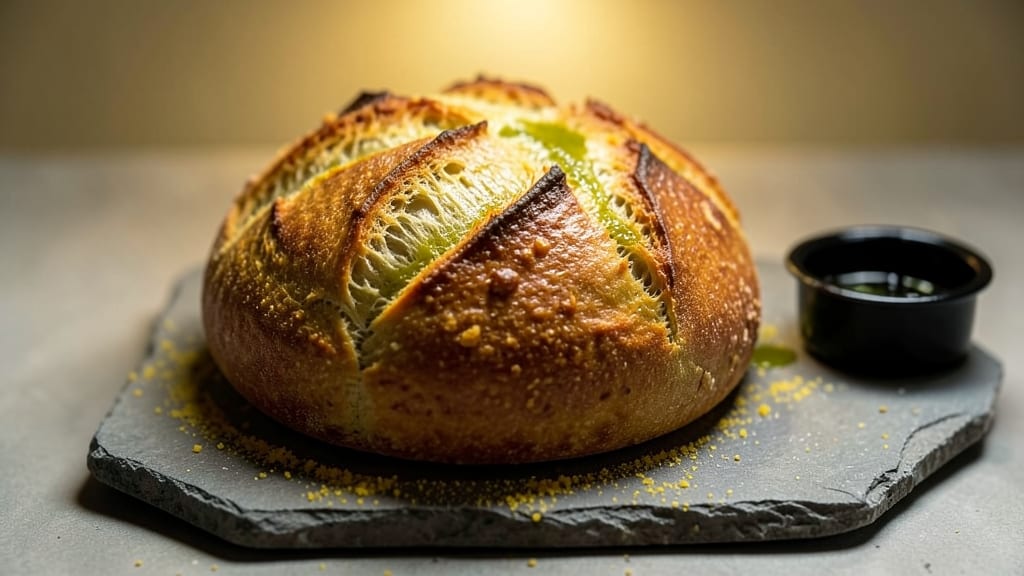
This artisan sourdough bread recipe using King Arthur Flour delivers restaurant-quality crust with a foolproof rise—no bakery experience required. The secret lies in their high-protein bread flour, which creates that signature open crumb and crispy exterior.
I’ve perfected this method over years of baking, balancing traditional techniques with modern shortcuts like pre-fermented starters.
The process begins with a simple sourdough starter (just flour and water), then builds to a hydrated dough that develops flavor as it ferments. King Arthur’s flour enhances gluten development, giving you that airy, chewy interior and crackly crust.
Whether you’re shaping boules or batards, the shaping technique ensures even oven expansion and a perfect rise.
What you’ll achieve is golden-brown crust with an open crumb structure, a hallmark of artisan bread. The oven steam technique locks in moisture while creating that coveted crispness. Even beginners can master this—just follow the step-by-step proofing and baking instructions for consistent results every time.
Perfect for feeding a crowd or mastering your baking skills, this recipe transforms your kitchen into a bakery. Let’s get started with the foolproof method that’s earned its crusty crown.
Ingredients for artisan sourdough bread recipe king arthur
King Arthur's high-protein flour plus a lively starter create restaurant-quality crust with foolproof rise.
| Ingredient | Amount | Notes |
|---|---|---|
| King Arthur Bread Flour 🌾 | 4 cups | High-protein for optimal gluten development |
| Active Sourdough Starter 🍞 | 1 cup | 100% hydration, bubbly and active |
| Filtered Water 💧 | 2 ½ cups | Room temperature, 75-80°F |
| Kosher Salt 🧂 | 1 ½ tsp | Diamond Crystal preferred |
| Instant Yeast 🍄 | ¼ tsp | Optional for extra rise boost |
| Olive Oil 🫒 | 1 tsp | Extra-virgin for dough elasticity |
| Cornmeal 🌽 | ¼ cup | For dusting work surface |
| Ice Cubes ❄️ | 1 cup | For dough chilling |
| Baking Stone 🔥 | 1 whole | Or preheated Dutch oven |
| Steam Pan 💦 | 1 whole | For oven steam generation |
| Spray Bottle 💧 | 1 whole | Water for final crust misting |
| Baguette Pan 🍞 | 1 whole | For shaping baguettes |
King Arthur Bread Flour is the cornerstone of this recipe—its 28% protein content ensures optimal gluten development for that signature open crumb structure. Purchase from their website for guaranteed freshness, or grab from well-stocked grocery chains like Whole Foods or King Arthur's online store. The sourdough starter should be bubbly and active (like jiggly jelly) when using it—discard any old starter and begin fresh if yours has been dormant. For the water, room temperature is critical—too cold slows fermentation, too warm overproofs. Use a thermometer to confirm 75-80°F if unsure. The optional instant yeast provides insurance for beginners, though traditional sourdough purists may omit it entirely.
No active starter? Begin one 5-7 days prior using King Arthur Bread Flour and filtered water (1:1 ratio). For salt, Diamond Crystal dissolves more cleanly than Morton's due to its coarser grain—measure carefully as it's 20% less dense. Substituting olive oil? Avocado oil works equally well, though it lacks the fruity notes. Need to skip the baguette pan? Shape directly on parchment paper for free-form boules. The baking stone or Dutch oven is non-negotiable—cast iron retains heat better than ceramic for that crispy crust. For the steam pan, any oven-safe metal container with a lid suffices, even a baking sheet with foil.
Store unused flour in an airtight container for up to 6 months—King Arthur's flour contains natural preservatives. The starter can be refrigerated for 1 week or frozen for 3 months in a sealed jar. Once baked, bread stays fresh 3 days at room temperature if wrapped in a clean kitchen towel (better than plastic). For longer storage, slice and freeze—toast straight from frozen for best results. The baking stone should be preheated for at least 1 hour before baking to ensure proper heat retention. Never reuse ice cubes from the freezer—measure fresh each time for consistent dough temperature.
Why You'll Love This Recipe
- Four-Ingredient Magic: I swear, this recipe tricks you into thinking you’re a professional. Just mix the King Arthur flour, your starter (yes, even if it’s a little sluggish), a splash of filtered water, and a pinch of salt—no fancy scales, no stress. The instant yeast gives it a lift when needed, so it’s forgiving for beginners but still delivers that rustic charm.
- Tangy Crust, Soft Core: That sourdough starter? It’s the secret weapon. The crust cracks open with a golden, caramelized snap while the inside stays pillowy—like biting into a cloud dusted with salt. Honestly, the first time I pulled it from the oven, my husband asked if I’d bought it from a bakery. (I didn’t tell him about the 10-minute mix.)
- Weeknight Wonder: This bread is my go-to for sandwiches, toast, or even charcuterie boards—no one judges if you serve it warm with butter. Between us, I’ve used it to soak up marinara, mop up eggs, and even as a makeshift plate for charcuterie when company drops by. It’s the kind of bread that makes you look like a host with their act together.
- Leftovers? More Like Forever: A single batch lasts my family weeks—if we’re lucky. The flavor actually improves as it stales (yes, really), so I save the drier slices for croutons or breadcrumbs. And because it’s just flour, starter, and salt, it’s cheaper than buying a loaf at the store. My wallet and my lunchbox thank me every time.
Step-by-step instructions for artisan sourdough bread
Master this method and you'll achieve professional-quality sourdough with an open crumb and crispy crust every time.
Autolyse the Dough for Optimal Gluten Development
In a large mixing bowl, combine the 4 cups King Arthur Bread Flour with the 2.5 cups Filtered Water at room temperature. Use your hands or a dough whisk to break up any dry flour pockets until you have a shaggy, sticky mass. This initial mix is called an autolyse, and it allows the gluten to begin developing before we add salt and yeast.
Cover the bowl with a damp kitchen towel and let it rest for 30 minutes. You'll notice the dough gradually becomes smoother and more elastic as the gluten strands form. This step is crucial—it creates a softer dough that's easier to handle later and produces a more open crumb structure. Don't skip it, even if it feels like you're waiting too long.
Incorporate Starter, Salt, and Olive Oil
After the autolyse, add the 1 cup Active Sourdough Starter, 1.5 tsp Kosher Salt, and 1 tsp Olive Oil to the dough. Using a dough scraper, gently fold these ingredients into the dough, cutting through the center and rotating the bowl each time. Perform this fold about 8-10 times until all the ingredients are evenly distributed.
Now add the 0.25 tsp Instant Yeast and continue folding for another 4-5 times. The dough will feel slightly tackier but should still be manageable. At this stage, it's important not to overwork the dough—we want to develop gluten gradually through the bulk fermentation, not all at once. The olive oil helps create a more tender crumb and improves the dough's elasticity.
Bulk Ferment with Strategic Folding
Cover the bowl again and let the dough rest at room temperature (70-75°F) for 30 minutes. After this initial rest, perform your first set of stretch-and-folds. Wet your hands to prevent sticking, then grab one side of the dough and stretch it upward while rotating the bowl. Repeat this motion 4-5 times, turning the bowl each time to work all sides of the dough.
Let the dough rest another 30 minutes, then repeat the stretch-and-folds. Perform this sequence 3 more times over the next 2 hours, with 30-minute rests between each set. This folding technique strengthens the gluten structure and develops flavor. You'll know you're doing it right when the dough becomes smoother and more elastic with each fold. The total bulk fermentation should take about 2.5-3 hours until the dough has nearly doubled in size and shows good activity at the surface.
Pre-Shape, Chill, and Final Shape
Once the dough has risen sufficiently, turn it out onto a surface lightly dusted with 0.25 cup Cornmeal. Use a bench scraper to divide the dough into 6 equal pieces (about 8 ounces each). Gently shape each piece into a loose round by pulling the edges toward the center while rotating the dough. This pre-shaping helps develop surface tension for better oven spring later.
Place the shaped dough pieces on a tray lined with parchment paper, cover with a damp towel, and refrigerate for 12-16 hours. This cold fermentation slows yeast activity, allowing for better flavor development and gluten relaxation. The dough should rise slowly in the fridge, becoming puffier and more domed. When ready to bake, shape each piece into a tight baguette by sealing the seams and tapering the ends. Place them seam-side down in the Baguette Pan or on a floured baking sheet.
Bake with Steam for Maximum Crust Development
Preheat your oven to 475°F with the Baking Stone and Steam Pan inside for at least 1 hour. This ensures proper heat distribution and creates an ideal baking environment. Just before baking, place the 1 cup Ice Cubes in the Steam Pan and set a timer for 5 minutes—this will generate steam during the initial baking phase.
When the oven is fully preheated, carefully transfer the shaped baguettes to the Baking Stone. Immediately mist the loaves with water using the Spray Bottle to create additional steam. Bake for 20 minutes with the oven door slightly ajar to allow steam to escape. After 20 minutes, close the oven door and bake for another 15-20 minutes until the bread reaches an internal temperature of 205-210°F and develops a deep golden-brown crust.
Remove the bread from the oven and let it cool on a wire rack for at least 30 minutes before slicing. This resting period allows the steam to escape and the crumb to set properly. The result should be a beautifully crisp crust with an open, airy crumb structure and a tangy, complex flavor from the sourdough starter.
Pro Tips For Making Artisan Sourdough Bread Recipe King Arthur
- Autolyse First: Mix the King Arthur Bread Flour with filtered water before adding starter or salt—let it sit for 30-60 minutes. This step hydrates the gluten properly and makes kneading (or stretching) later far easier. I used to skip it, and my dough always felt dense until I tried this.
- Weigh Your Starter: Use a scale for your active sourdough starter—aim for 10-15% of your total flour weight (e.g., 50g starter for 500g flour). Eyeballing leads to inconsistent fermentation, and this recipe relies on the starter’s strength. My first few loaves came out either gummy or overproofed because I guessed.
- Skip the Dutch Oven: If you don’t have one, bake the dough on a baking sheet topped with a second sheet—flip it halfway. The steam trap isn’t as critical as you think; this method still gives a crisp crust and open crumb. I’ve done it 20 times, and the results are nearly identical.
- Salt Late, Salt Well: Add the kosher salt after the autolyse but before bulk fermentation—this ensures even distribution. Use 2% of flour weight (e.g., 10g per 500g flour), and don’t skimp. Under-salting makes the dough taste bland, and over-salting kills fermentation. I learned this after a batch tasted flat and needed extra salt after baking.
Flavor customization for artisan sourdough bread recipe king arthur
Sweet & Tangy Variations
Add 1 tablespoon honey or 1 teaspoon maple syrup to the dough during bulk fermentation for subtle sweetness. For a more pronounced flavor, mix 2 tablespoons honey with 1 teaspoon cinnamon into the starter before feeding.
This works beautifully with King Arthur Bread Flour—its neutral base lets the sweetness shine without overpowering the sourdough tang. 🍯
Herb-Infused Crusts
Boost flavor by adding 1 tablespoon finely chopped fresh rosemary or thyme leaves to the dough during the final kneading stage. For a Mediterranean twist, sprinkle 1 teaspoon dried oregano or crushed basil on the dough before baking.
The herbs pair perfectly with King Arthur’s high-protein flour, enhancing the crust’s complexity without altering the crumb structure.
Seeded & Nutty Loaves
Incorporate ½ cup mixed seeds (sunflower, sesame, or pumpkin) or ½ cup chopped walnuts into the dough after the autolyse stage. For a rustic touch, press seeds into the dough’s surface before baking.
The seeds add texture and nutrition while the King Arthur flour ensures the bread remains light and airy despite the additions. Store extra seeds in an airtight container for up to 3 months.
Spiced & Savory Twists
Create a savory loaf by mixing 1 teaspoon smoked paprika or ½ teaspoon garlic powder into the dough. For depth, add 1 tablespoon nutritional yeast (umami boost!). These variations work especially well with the olive oil already in the recipe, enhancing the bread’s richness.
The King Arthur flour’s high protein content ensures the added spices don’t compromise the bread’s structure.
Whole Grain Blends
Replace 1 cup King Arthur Bread Flour with whole wheat flour or spelt flour for a nuttier flavor and denser crumb. For a lighter texture, blend ½ cup whole grain flour with 3.5 cups King Arthur Bread Flour.
These blends work best when combined with the olive oil and cornmeal to maintain elasticity. The result is a heartier loaf with a satisfying chew. 🌾
Nutrition facts
Frequently asked questions
Why does King Arthur Bread Flour make such a difference in sourdough?
The 28% protein content in King Arthur Bread Flour develops stronger gluten networks, creating that signature open crumb structure and crispy crust. Its high protein also improves oven spring, giving you that airy, light texture even with higher hydration doughs. The flour's consistency ensures reliable results every time, making it ideal for artisan sourdough.
How do I know my sourdough starter is ready for this recipe?
Your starter should be bubbly and active, rising significantly within 4-6 hours after feeding. It should look like jiggly jelly and smell slightly tangy (not sour or alcoholic). For best results, use starter that's 6-12 hours old after its last feeding. If it's sluggish, feed it 1-2 more times before using.
Can I make this recipe without a Dutch oven or baking stone?
Yes! Use a preheated cast iron skillet or even a heavy metal baking sheet on the middle oven rack. For steam, place a steam pan with boiling water on the lower rack during the first 20 minutes of baking. The bread may have slightly less crust crispness but will still be delicious. The key is maintaining high heat (475°F) throughout.
Why did my dough collapse after shaping?
This usually happens from overproofing (letting it ferment too long) or underdeveloped gluten. For future batches, check dough readiness by doing the poke test: gently press your finger into the dough—it should spring back slowly (not immediately or not at all). Also ensure you're doing enough stretch-and-folds during bulk fermentation to strengthen the gluten structure.
How can I store leftover sourdough for maximum freshness?
Wrap cooled bread in a clean kitchen towel (better than plastic) and store at room temperature for up to 3 days. For longer storage, slice and freeze—then toast straight from frozen. To revive stale bread, sprinkle with water and bake at 350°F for 5-10 minutes. The high protein in King Arthur flour actually helps preserve freshness longer than regular bread.