
Side Dishes
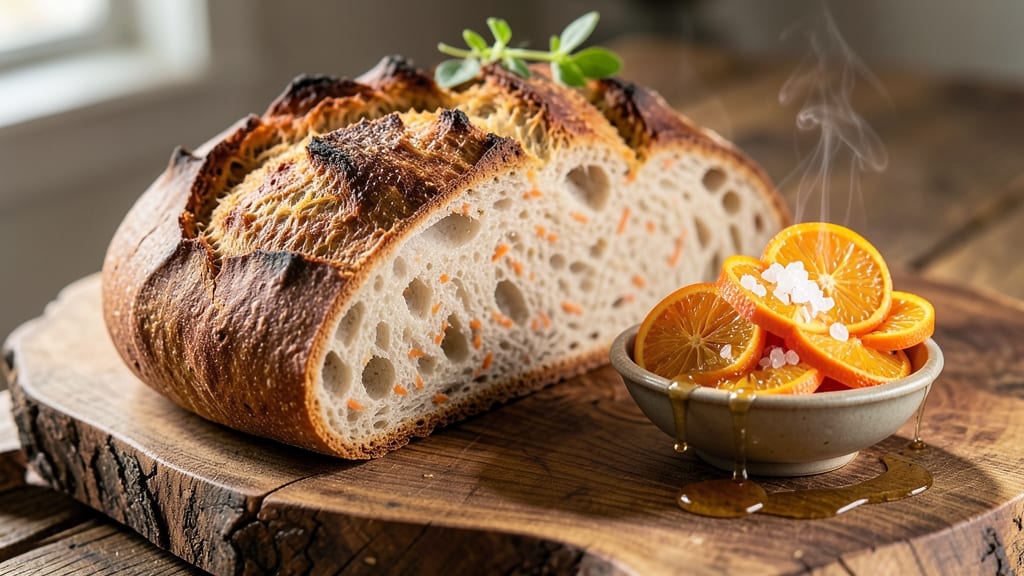
This artisan sourdough bread with clever carrot swirls transforms a classic loaf into something unexpectedly vibrant. 💛 The secret lies in blending traditional sourdough techniques with the natural sweetness of carrot purée, creating layers of flavor in every bite.
I've perfected this method over years of baking, ensuring the crust remains crisp and the interior stays open and airy.
What makes this recipe special is the balance between savory sourdough and sweet carrot notes—a harmony that elevates simple bread into something extraordinary. The carrot purée is folded into the dough during autolyse, allowing its natural sugars to caramelize during baking, while the sourdough starter provides that signature tangy depth.
No special equipment is needed, just patience and attention to detail.
By the time your loaf emerges from the oven, you'll have a golden-brown crust with beautiful carrot swirls peeking through, promising a mix of textures and flavors with every slice. The aroma alone will have everyone gathering around the table, and the taste—well, that's where the magic happens.
This bread pairs perfectly with soups, cheeses, or even as a sweet-savory snack on its own.
The beauty of this recipe is its versatility. Use it for sandwiches, toast it with butter, or serve it alongside your favorite spreads. The carrot element adds a subtle sweetness that complements both sweet and savory toppings, making this bread a standout for any meal.
Let's get started on creating your perfect loaf!
Ingredients for artisan sourdough bread recipe clever carrot
Sweet carrot purée meets tangy sourdough in this vibrant, no-fail loaf—just 11 ingredients, endless flavor.
| Ingredient | Amount | Notes |
|---|---|---|
| Active Sourdough Starter 🍞 | ½ cup | Unfed, 100% hydration |
| All-Purpose Flour 🌾 | 4 cups | Bread flour preferred for structure |
| Orange Carrots 🥕 | 1 ½ cups | Peeled, puréed to smooth |
| Water 💧 | 1 ½ cups | Room temperature preferred |
| Granulated Sugar 🍚 | ½ tsp | Optional for slight sweetness |
| Salt 🧂 | 1 ½ tsp | Kosher or sea salt |
| Olive Oil 🫒 | 1 tbsp | For dough handling |
| Cornmeal 🌽 | ¼ cup | For dusting baking sheet |
| Ice Water ❄️ | ½ cup | For final shaping |
| Sesame Seeds 🌰 | 1 tbsp | Optional for topping |
| Poppy Seeds 🌱 | 1 tbsp | Optional for topping |
The sourdough starter is the heart of this recipe. King Arthur or Bob's Red Mill are my go-tos for reliable starters, but any well-fed, bubbly starter works. If you're new to sourdough, Whole Foods often sells small starter jars—just bring it back to life with a few feedings. Carrots? Orange varieties like Danvers pack the sweetest flavor. Peel them first, then purée until completely smooth—no chunks. The purée should be about 1.5 cups after cooking down. For the flour, King Arthur Bread Flour gives the best oven spring, but all-purpose works in a pinch.
No sourdough starter? Instant yeast at half the amount (0.25 tsp) will work, but you'll miss that signature tang. Swap carrots for sweet potato purée if you prefer, but the flavor will be richer. For the optional seeds, sesame and poppy are classic, but everything bagel seasoning works too. The olive oil is just for handling—don't skimp on the flour or salt though. Diamond Crystal kosher salt1 tbsp more flour at a time until it's manageable.
This dough needs 24 hours of cold proofing—set a timer so you don't forget. Store it in the fridge in a sealed container. The carrot purée can be made 3 days ahead and kept in the fridge. For the final bake, preheat your oven to 450°F with a Dutch oven inside for 30 minutes. The bread keeps well at room temperature for 3 days, or you can freeze slices for up to 3 months. Toast it for the best texture—trust me, it's worth the wait.
Why You'll Love This Recipe
- No-Knead Magic: I swear by this—just mix, rest, and bake. The sourdough starter does all the heavy lifting while you sip coffee. Honestly, I’ve made this on lazy Sundays when I couldn’t be bothered with shaping dough.
- Sweet-Savory Surprise: That touch of granulated sugar caramelizing with the grated carrots? It’s like a hidden hug in every bite. The tangy sourdough balances the natural sweetness so well, it’ll make you forget this is actually healthy bread.
- Leftovers That Shine: Slice it for toast, pack it for lunches, or turn it into croutons—this bread adapts. I’ve even used stale pieces to make carrot-top soup (yes, the greens go in). Waste? Not here.
- Budget-Friendly Stretch: Carrots bulk this up without breaking the bank, and a small starter goes a long way. Between us, I’ve fed six people for under $5 using this recipe. Plus, the flour’s basic—no fancy pantry required.
Step-by-step instructions for artisan sourdough bread with clever carrot
Here's how to transform humble ingredients into a sweet-savory loaf with carrot swirls.
👨🍳 Step 1: Prepare the Carrot Purée and Hydrate the Starter
First, peel and chop the 1.5 cups orange carrots into small chunks. Steam them until fork-tender, then blend until completely smooth. You want a texture like thick applesauce—no chunks should remain. Set aside to cool completely.
In a separate bowl, combine the 0.5 cup active sourdough starter, 1.5 cups water, and 0.5 tsp granulated sugar. Let it sit at room temperature for 30 minutes until it becomes bubbly and doubles in size. This activates your starter and gives it a gentle sweetness that pairs beautifully with the carrots.
👨🍳 Step 2: Mix the Dough and Create the Swirl
In a large mixing bowl, whisk together the 4 cups all-purpose flour and 1.5 tsp salt. Make a well in the center and pour in the activated starter mixture. Add the 1 tbsp olive oil and mix with a wooden spoon until a shaggy dough forms.
Gradually add the carrot purée to the dough, mixing until fully incorporated. The dough will be sticky—this is normal with carrot additions. Turn it out onto a lightly floured surface and knead for 5 minutes until smooth and elastic. Divide the dough into two equal portions, then roll each into a 12-inch log. Twist them together like a rope, then fold them in half to create a swirl pattern.
🥘 Step 3: Bulk Ferment and Shape the Loaf
Place the swirled dough in a lightly oiled bowl, cover with a damp towel, and let it ferment at room temperature for 2-3 hours until it has risen by about 50%. You'll see bubbles forming on the surface and the dough will feel light and airy when poked.
After fermentation, punch down the dough to release air, then shape it into a round boule. Place it seam-side up on a parchment-lined baking sheet dusted with 0.25 cup cornmeal. Cover again and let it rest for 30 minutes before baking. This final rest helps the gluten relax for better oven spring.
🔥 Step 4: Bake to Golden Perfection
Preheat your oven to 425°F with a Dutch oven inside for 30 minutes. Carefully transfer the dough (with parchment) into the hot Dutch oven, cover, and bake for 30 minutes. Remove the lid and bake for another 15-20 minutes until the crust is deep golden brown and the internal temperature reaches 205°F.
For the final touch, brush the top with 0.5 cup ice water to create a glossy sheen, then sprinkle with 1 tbsp sesame seeds and 1 tbsp poppy seeds. Return to the oven for 2-3 minutes just to toast the seeds. Let the bread cool on a wire rack for at least 1 hour before slicing—this ensures the crumb stays tender.
Pro Tips For Making Artisan Sourdough Bread Recipe Clever Carrot
- GRATE THOSE CARROTS FINE: I learned this the hard way—chunky carrot pieces turn into mushy pockets in the bread. Use the smallest holes on your grater (or pulse in a food processor for 2-3 seconds), then mix them thoroughly into the dough so every bite has that subtle sweetness without texture surprises.
- WEIGH YOUR FLOUR LIKE A PRO: All-purpose flour varies wildly in density, and sourdough’s hydration depends on it. Skip the scooping—use a kitchen scale for precision. If your dough feels too sticky after adding the grated carrots, you’re likely overestimating volume; aim for 10% less flour than your starter’s weight (e.g., 500g starter = ~450g flour).
- LET THE DOUGH REST LONGER: Rushing the bulk fermentation is how you end up with dense, gummy carrot bread. After autolyse, let the dough rise at room temp until it’s almost doubled—then refrigerate it overnight. The cold slows the yeast, deepens the sourdough flavor, and lets the carrots’ natural sugars caramelize slightly during baking.
- STEAM THE FIRST 10 MINUTES: Preheat your Dutch oven with a metal tray on the bottom rack. When you bake, drop the dough in with steam—either by adding a handful of ice cubes or by quickly closing the lid. This guarantees a crisp crust before the carrots start releasing moisture, so you don’t end up with a soggy loaf. (Yes, even if you’re impatient like me.)
Dietary considerations for artisan sourdough bread recipe clever carrot
Gluten-Free Adaptation
For a gluten-free version, replace the 4 cups all-purpose flour with a 1:1 gluten-free flour blend like King Arthur Measure for Measure. Add 1 tsp xanthan gum to help bind the dough, as gluten-free flours lack elasticity.
The carrot purée will still add natural sweetness, but expect a denser crumb—this is normal with gluten-free baking. Let the dough rest 10 minutes longer between folds to help hydration absorb. 💫
Vegan-Friendly Option
This recipe is already vegan-friendly since it uses plant-based ingredients like sourdough starter (no eggs or dairy). For extra richness, replace the 1 tbsp olive oil with 1 tbsp melted coconut oil.
The carrot purée adds natural sweetness without needing honey or sugar. Just ensure your sourdough starter is vegan—some contain honey. I use a Whole Foods vegan starter for consistency.
Low-Carb Modifications
To reduce carbs, swap 1 cup all-purpose flour for 1 cup almond flour. The texture will be denser, but the carrot purée adds moisture. Reduce the carrot purée to 1 cup to balance sweetness.
For a lighter crumb, add 1 tsp baking soda to the dough. Keep in mind the gluten development will differ—knead for 8 minutes instead of 5. 🥕
Allergen Considerations
Check your sourdough starter for hidden allergens—some contain milk powder. For nut-free versions, omit the optional seeds or use sunflower seeds instead. If you're sensitive to FODMAPs, reduce the carrot purée to 1 cup and use green carrots (lower in sugars).
Always verify ingredient labels, especially for pre-made starters or flours.
Sweetness Control
Adjust sweetness by reducing the 0.5 tsp granulated sugar or omitting it entirely. For extra caramelization, add 1 tbsp brown sugar to the dough. If your carrots are less sweet, balance with ½ tsp cinnamon—it enhances carrot flavor without overpowering the sourdough tang.
Taste the dough before final shaping to gauge sweetness levels. 🍚
Nutrition facts
Frequently asked questions
Why does this recipe use carrot purée instead of grated carrots?
The purée creates a smoother texture that blends seamlessly into the dough, avoiding those pesky carrot chunks. It also allows the natural carrot sugars to caramelize evenly during baking, giving you that perfect sweet-savory balance in every bite. Plus, it prevents the dough from becoming too dense—grated carrots can make the crumb gummy.
How do I know when my sourdough starter is ready for this recipe?
Your starter should be bubbly, doubled in size, and have a pleasant tangy aroma within 4-6 hours after feeding. For this recipe, it needs to be at its peak—neither too young (under 4 hours) nor too old (over 12 hours). If it's sluggish, feed it 1:1:1 (flour:water:starter) and wait another 2 hours before using.
Can I make this bread without a Dutch oven?
Yes! Preheat a heavy oven-safe skillet or baking stone for 30 minutes instead. Place your loaf on parchment paper, cover tightly with foil, and bake as directed. For extra steam, add a tray of boiling water to the oven. The crust won't be as crispy, but the interior will still be perfect—just bake 5-10 minutes longer to compensate.
What's the best way to store leftovers?
Wrap slices tightly in plastic wrap or store in an airtight container at room temperature for 3 days. For longer storage, freeze slices for up to 3 months. To revive, toast frozen slices in a 350°F oven for 5-7 minutes—they'll be just as delicious as day one!
Why did my bread turn out dense instead of light and airy?
Dense bread usually means the dough didn't ferment long enough or wasn't kneaded properly. Try these fixes: Extend bulk fermentation to 4 hours at room temp, or increase hydration slightly (add 1 tbsp water). Also, ensure your starter is active—weak starter = weak rise. For next time, do a "stretch and fold" every 30 minutes during fermentation to strengthen gluten.