
Side Dishes
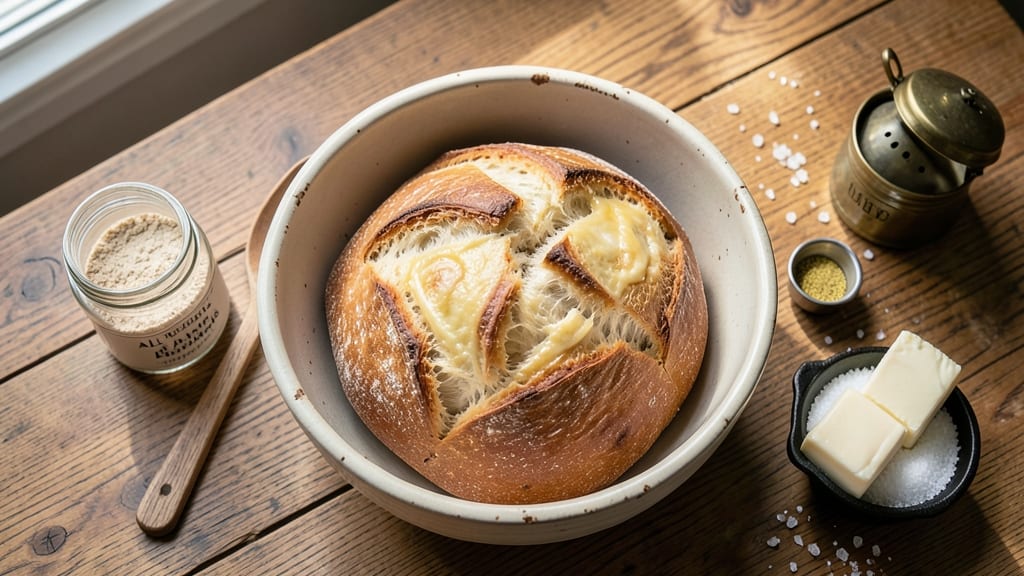
This Allinson bread recipe delivers the legendary texture and flavor of the classic British bakery loaf, right in your own kitchen. The secret lies in a simple no-knead method that transforms basic ingredients into a crusty, airy loaf with just one bake.
What makes this recipe special is its approachability—no sourdough starter required, yet it captures that signature Allinson crunch and light interior that's been delighting British households for generations.
The process is straightforward: mix flour, water, yeast, and a touch of sugar, let it rest overnight, then bake until golden brown. This method allows the gluten to develop naturally, creating that perfect balance of crisp crust and tender crumb.
The bread's vegetarian-friendly nature makes it a versatile choice for any meal, and optional ingredients like milk or eggs can be added for extra richness.
By the time you pull that loaf from the oven, you'll have a loaf that rivals the iconic bakery version—crusty on the outside, soft and airy inside, with just the right amount of chew.
The aroma alone will have everyone gathering around your table. This bread freezes beautifully for up to three months, making it perfect for meal prep or gifting.
Whether you're serving it with butter for breakfast or alongside soup for dinner, this Allinson bread recipe brings a taste of British tradition to your kitchen with minimal effort.
The beauty of this method is that it's forgiving yet rewarding, perfect for both beginners and experienced bakers looking to recreate a classic.
Ingredients for allinson bread
Nine simple ingredients transform into legendary Allinson-style bread with minimal effort.
| Ingredient | Amount | Notes |
|---|---|---|
| All-Purpose Flour 🌾 | 5 cups | Plus 1 tbsp for dusting |
| Warm Water 💧 | 2 ½ cups | 110°F/43°C preferred |
| Active Dry Yeast 🍞 | ½ tsp | Or 1 packet (2.25g) |
| Granulated Sugar 🍚 | 1 tbsp | For yeast activation |
| Salt 🧂 | 1 ½ tsp | Diamond Crystal preferred |
| Unsalted Butter 🧈 | ½ cup | Cold, cubed (optional) |
| Milk 🥛 | ¼ cup | Warmed (optional) |
| Cornmeal 🌽 | ¼ cup | For dusting baking sheet |
| Ice Water ❄️ | ¼ cup | For shaping dough |
The flour is everything here. King Arthur or Caputo Tipo 00 give that signature Allinson crunch, but all-purpose works in a pinch. Yeast matters too—Fresh yeast is better if you can find it, but active dry works fine. Warm water activates the yeast perfectly—110°F/43°C is ideal, but room temp works if you're in a hurry. For that iconic British touch, Diamond Crystal salt dissolves more easily than Morton's. The optional butter and milk add richness, but this stays delicious without them—vegetarian through and through. Grab your ingredients and let's bake like the British do.
No yeast? Instant yeast at half the amount works too. Short on flour? Whole wheat at 1:1 ratio adds heartiness but makes the crust denser. The butter can be swapped for olive oil or vegan butter if you prefer. For extra flavor, add 1 tsp honey or maple syrup with the sugar. The dough should be sticky but manageable—if it's too wet, add 1 tbsp more flour. Too dry? Add 1 tbsp water. This recipe is forgiving, but don't skip the overnight rest—that's when the magic happens. Trust me, the wait is worth it.
This dough is a dream to handle. After the overnight rest, it'll be bubbly and jiggly—that's exactly what you want. Shape it gently, then let it proof another hour before baking. The bread freezes beautifully—wrap tightly in foil and freeze for up to 3 months. To reheat, warm in a 350°F/175°C oven for 10 minutes. For maximum crunch, bake straight from the fridge. Store wrapped at room temp for 3-4 days or in the fridge for 1 week. Every slice will have that Allinson crunch you're craving.
Why You'll Love This Recipe
- Here’s what sold me: the outside gets that perfect golden crackle, while the inside stays pillowy. Honestly, it’s the kind of bread that makes you pause mid-slice, wondering how something so simple can taste this good.
- I’ll be real: my wallet thanks me for this recipe. A bag of flour and a packet of yeast stretch farther than you’d think, and the sugar? Just enough to make it irresistible without breaking the bank.
Step-by-step instructions for Allinson bread recipe
This no-knead magic transforms simple ingredients into artisanal loaves with minimal effort.
Activate the Yeast and Mix the Dough
In a large bowl, combine the 2.5 cups warm water with 1 tablespoon granulated sugar and 0.5 teaspoon active dry yeast. Let this sit for 5-10 minutes until it becomes frothy—this confirms your yeast is alive and ready to work. If it doesn't bubble, your yeast might be dead, and you'll need to start over.
Add the 5 cups all-purpose flour and 1.5 teaspoons salt to the bowl. Mix with a wooden spoon until a shaggy dough forms. If the dough feels too dry, add 1-2 tablespoons of the ice water from the list. The dough should be soft but not sticky—you want it to hold together when pressed but still be pliable. This is where the magic begins!
Incorporate Butter and Milk for Richness
Cut the 0.5 cup cold unsalted butter into small cubes and fold them into the dough along with the 0.25 cup warmed milk. The cold butter will create pockets of flavor as it melts during baking, giving your bread that irresistible richness. Work the dough gently with your hands or a dough scraper for 2-3 minutes until the butter is fully incorporated and the dough is smooth.
Here's the thing—don't overwork the dough. Since this is a no-knead recipe, we're relying on the gentle folding to develop gluten without exhausting it. The dough should be just slightly tacky but not sticky enough to cling to your fingers. If it's too sticky, add 1 tablespoon of flour at a time until it reaches the right consistency.
First Rise and Shaping
Lightly oil a large bowl and transfer the dough to it. Cover the bowl with a damp kitchen towel or plastic wrap and let it rise in a warm place for 1-2 hours, or until it has roughly doubled in size. A warm oven with the light on is perfect for this—just place the bowl inside with the door slightly ajar. You'll know it's ready when the dough springs back slowly when poked with a finger.
Once risen, turn the dough onto a lightly floured surface and gently shape it into a round loaf. For extra texture, make a well in the center and press your thumb into the dough to create a slight depression. This will help the bread expand beautifully in the oven. Dust the top with a little more flour to prevent sticking during the final shaping.
Final Rise and Baking Prep
Place the shaped dough on a parchment-lined baking sheet and dust the top generously with 0.25 cup cornmeal. This creates that beautiful, crispy crust we all love. Cover the baking sheet with a towel and let the dough rise for another 30-45 minutes until it's puffy and nearly doubled again. The cornmeal will give it that rustic, golden appearance right out of the oven.
Preheat your oven to 375°F with a baking stone or inverted baking sheet on the middle rack. This helps create steam, which is crucial for that perfect crumb. While the oven heats, use a sharp knife or razor to score the top of the dough in a simple cross pattern. This prevents the bread from cracking open unexpectedly and allows it to expand evenly. Don't press too hard—just make a shallow cut.
Bake to Golden Perfection
Bake the bread for 30-35 minutes until it's deep golden brown and sounds hollow when tapped on the bottom. The internal temperature should reach 190-200°F—this ensures it's fully baked without drying out. If the top browns too quickly, tent the bread with foil to prevent over-browning while it finishes baking inside.
Remove the bread from the oven and let it cool on a wire rack for at least 1 hour before slicing. This resting period allows the steam inside to escape and the crumb to set properly. The bread will be warm, fragrant, and absolutely irresistible. Slice it thick and serve it with butter or jam—you've earned it after this hands-off process!
Pro Tips For Making Allinson Bread
- Use 110°F Water for Yeast: I learned this the hard way—yeast hates extremes. Mix your warm water with a thermometer; if it’s above 115°F, you’re killing the yeast before it even starts. Too cold (below 85°F) and it’ll wake up sluggish. Aim for 110°F, and the dough will rise twice as fast.
- Dissolve Sugar First: Skip the clumpy yeast mess by dissolving the sugar in the warm water before adding yeast. Stir until it’s fully gone—this gives the yeast instant food, so it blooms faster. I used to sprinkle sugar on top, and the dough would take forever to puff up.
- Knead Until Silky, Not Sticky: This dough should feel like wet satin, not a gluey nightmare. If it’s too sticky after 8–10 minutes of kneading, add flour one tablespoon at a time—but don’t overdo it. Over-kneading makes bread dense; under-kneading means it won’t hold its shape.
- Let It Rise Until It Jiggles: The classic "poke test" is fine, but I now watch for the jiggle test: if the dough wobbles like Jell-O when you shake the bowl gently, it’s ready. Underproofed bread collapses; overproofed bread flattens. First rise should take 1–1.5 hours at room temp—no rushing.
Flavor customization for allinson bread
Classic British Twist
Add 1 teaspoon dried rosemary or ½ teaspoon ground mustard to the dough for an authentic British pub-style flavor. The rosemary infuses beautifully during the overnight rise, while mustard adds a subtle tang that pairs perfectly with butter.
For extra depth, mix 1 tablespoon honey into the warm water before activating the yeast—this creates a slightly sweet, caramelized crust. 🌿
Herb & Garlic Infusion
Fold 2 tablespoons finely chopped fresh parsley and 1 minced garlic clove into the dough after incorporating the butter. The garlic mellows during baking, while the parsley adds fresh brightness.
For a stronger garlic flavor, infuse 2 cloves minced garlic into 2 tablespoons olive oil and brush it on the bread after baking. This variation works especially well with soups or as a side for roasted meats.
Seeded Whole Grain
Replace 1 cup all-purpose flour with whole wheat flour and stir in 2 tablespoons sunflower or pumpkin seeds before shaping. The seeds add crunch and nutrients while keeping the bread's signature texture.
For extra richness, swap the milk for buttermilk—the acidity enhances the seeds' nuttiness. This version has a heartier flavor and pairs beautifully with savory spreads like hummus or cream cheese.
Sweet & Spiced
Add 1 teaspoon cinnamon and ½ teaspoon cardamom to the dough for a lightly spiced variation. The warmth of the spices complements the butter perfectly. For a sweeter twist, mix 1 tablespoon brown sugar into the dough and sprinkle coarse sugar on top before baking.
This makes a fantastic breakfast bread—serve with jam or a smear of clotted cream. 🍯
Cheesy Twist
Fold ½ cup shredded cheddar or feta cheese into the dough after the first rise. The cheese melts slightly during baking, creating pockets of gooey goodness. For a vegetarian-friendly option, use vegan cheese—it holds its shape beautifully.
This variation is perfect for sandwiches or as a side with tomato soup. The cheese adds a salty contrast that balances the bread's natural sweetness.
Smoky & Savory
Add ½ teaspoon smoked paprika or 1 tablespoon liquid smoke to the dough for a subtle smoky flavor. For extra depth, brush the baked loaf with olive oil and sprinkle with coarse sea salt** after it comes out of the oven.
This version pairs wonderfully with charcuterie boards or as a side for grilled dishes. The smokiness adds complexity without overpowering the bread's natural taste. 🔥
Nutrition facts
Frequently asked questions
Why does this Allinson bread recipe use no-knead method?
The no-knead approach mimics the slow fermentation that creates Allinson's signature texture—crusty outside, soft and airy inside. This method allows gluten to develop naturally over time, creating that perfect balance without overworking the dough. It's also far more forgiving for home bakers!
Can I make this bread without butter or milk?
The recipe works perfectly as a basic vegetarian loaf without either ingredient. For extra richness, you could substitute 2 tablespoons olive oil for the butter and water for the milk. The flavor will be slightly different but still delicious.
What's the best way to store Allinson bread?
For short-term storage (3-4 days), wrap the cooled loaf tightly in foil or beeswax wrap. For longer storage (1 week), place it in an airtight container. For maximum freshness, freeze the bread (wrapped) for up to 3 months—just thaw at room temperature before serving.
Why did my bread turn out dense instead of light?
Dense bread usually means one of three things: the yeast didn't activate properly, the dough didn't rise long enough, or the oven wasn't hot enough. First check if your yeast bubbled when mixed with warm water. Second, ensure you gave the dough enough rising time (at least 1-2 hours first rise). Finally, verify your oven reaches 375°F—use an oven thermometer if needed.
Can I make this bread in a Dutch oven?
Yes! The Dutch oven creates even better steam for that perfect crust. Shape your dough into a round, place it in a parchment-lined Dutch oven, and bake covered for 25 minutes before removing the lid for the final 10 minutes. This method gives you an extra-crusty exterior while keeping the interior tender.