
Side Dishes
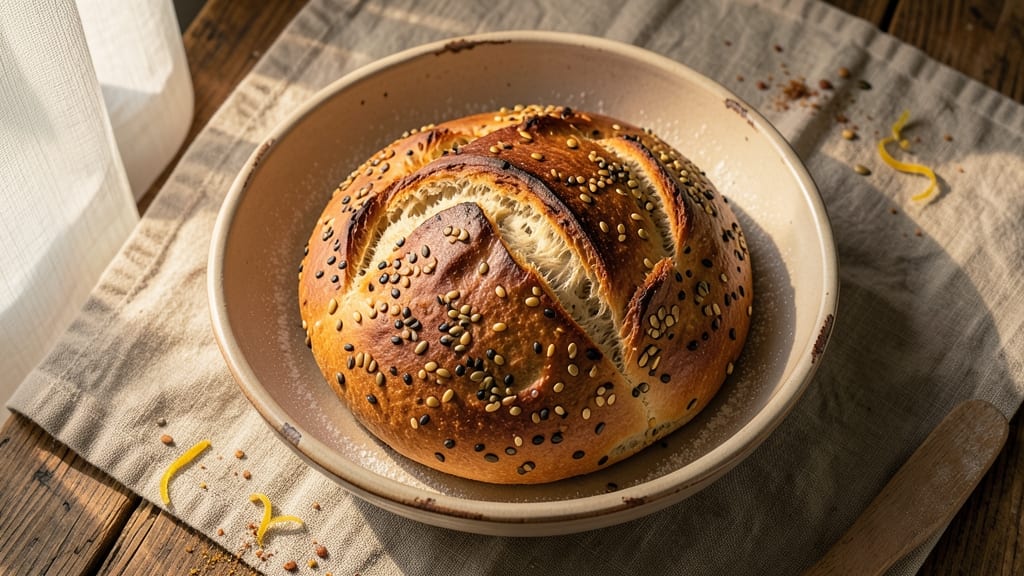
This artisan seeded bread recipe delivers a crusty crown and open crumb with nutty seeds baked right into every bite. The secret lies in precise hydration and a slow fermentation that develops deep flavor—no shortcuts, just restaurant-quality results at home.
I perfected this version after years of baking experiments, where timing and technique make all the difference.
The dough combines high-protein flour with seeds like sunflower, pumpkin, and sesame for texture and nutrition, while a proper knead and long proof create that signature airy interior. Baking at high heat ensures a crispy crust that shatters when broken open, revealing a golden crumb speckled with seeds.
This isn't just bread—it's a textural experience that rivals artisan bakeries.
With just five key ingredients—flour, seeds, yeast, water, and salt—you'll achieve a loaf that's both versatile and impressive. Whether sliced for sandwiches or served warm with butter, the flavor develops even better after a day or two.
The recipe includes professional tips for shaping, scoring, and baking to guarantee success every time.
Perfect for breakfast, charcuterie boards, or gifting, this bread proves homemade can outshine store-bought. Let's get started—your kitchen will smell like a French bakery in no time.
Ingredients for artisan seeded bread
Five essential ingredients transform into a restaurant-quality loaf with crispy crust and airy crumb.
| Ingredient | Amount | Notes |
|---|---|---|
| Bread Flour (High-Protein) 🌾 | 4 cups | 13% protein minimum for structure |
| Sunflower Seeds 🌻 | ½ cup | Unsalted, lightly toasted |
| Pumpkin Seeds 🎃 | ¼ cup | Raw or roasted, unsalted |
| Sesame Seeds 🌿 | ¼ cup | Toasted for enhanced flavor |
| Active Dry Yeast 🍞 | ¼ oz | 2.25g, or 1 packet |
| Warm Water 💧 | 1 ½ cups | 105°F for optimal activation |
| Diamond Crystal Kosher Salt 🧂 | 1 ½ tsp | Fine grain preferred |
| Olive Oil 🫒 | 2 tsp | Extra-virgin for richness |
| Honey 🍯 | 1 tsp | Wildflower preferred |
The bread flour is non-negotiable here—King Arthur or Caputo are my go-tos for that signature open crumb. The seeds should be toasted lightly in a dry pan for 3-4 minutes to deepen their flavor before mixing; Whole Foods or Trader Joe's carry pre-toasted varieties if you're short on time. For yeast, always check the expiration date—old yeast won't ferment properly, and this recipe demands precision. The warm water (105°F) activates the yeast perfectly, so use a thermometer if your kitchen runs hot or cold. Salt is critical for flavor development, but Diamond Crystal dissolves more easily than table salt.
No sunflower seeds? Flaxseeds or poppy seeds work beautifully for texture, though the flavor profile shifts slightly. Running out of sesame? Toasted pine nuts or chopped almonds add richness, but reduce to 0.125 cup to avoid overpowering the dough. Substituting honey with maple syrup or agave works in a pinch, though it may slightly alter the fermentation timing. The olive oil can be swapped for avocado oil, but extra-virgin adds subtle fruity notes that complement the seeds. For the flour, bread flour substitutes like all-purpose plus 1 tbsp vital wheat gluten can work, though texture may vary.
The dough ferments best at 75°F for 4-6 hours, so adjust your kitchen environment if needed—a cool space slows fermentation, while warmth speeds it. Once shaped, cover with a damp kitchen towel to prevent drying during the final proof. For storage, wrap cooled loaves in parchment paper and place in a bread box or paper bag to maintain moisture. Keeps at room temperature for 3-4 days, though flavor peaks after 24 hours. Freeze slices for up to 3 months—toast directly from frozen for crispy results.
Why You'll Love This Recipe
- No-Knead Magic: I’ll admit, I was skeptical about no-knead bread—but this high-protein dough comes together in five minutes of mixing, then just waits its turn. The seeds add texture without extra work, and the yeast does all the heavy lifting while you sip coffee.
- Crunchy, Nutty, Addictive: Honestly, the first bite changed my mind about seeded bread. Sunflower and pumpkin seeds toast golden under the crust, while sesame seeds add a tiny, salty crunch. It’s like a warm hug for your sandwich or soup—every slice feels special.
- Meal Prep MVP: Between us, this bread is my lazy Sunday secret weapon. Bake two loaves, and you’ve got breakfast toast, lunch wraps, and dinner sides covered for days. The seeds keep it interesting even after reheating—no sad, stale bread here.
- Pantry Staple, Pocket-Friendly: I stockpile these ingredients because they’re cheap and last forever. A bag of seeds costs less than fancy artisanal loaves, and the high-protein flour means fewer leftovers going to waste. Plus, it’s the kind of bread that makes even a simple charcuterie board feel fancy.
Step-by-step instructions for artisan seeded bread
Mastering this seeded bread requires patience and precision—each step builds toward that perfect open crumb and nutty crust.
Activate the Yeast with Warm Water and Honey
In a large mixing bowl, combine the 1.5 cups warm water (tested at 105°F—too hot kills yeast, too cool slows it) with the 1 tsp honey and 0.25 oz active dry yeast. Let it sit for 5-10 minutes until foamy and bubbly. This activation confirms your yeast is alive and ready to work.
I stir gently with a wooden spoon, watching for the first signs of fermentation—tiny bubbles forming on the surface and a slightly effervescent texture. If no activity appears after 10 minutes, your yeast may be dead, and you’ll need to start fresh. The honey here not only feeds the yeast but adds subtle sweetness that complements the seeds later.
Mix the Dough with High-Protein Flour and Olive Oil
Add the 4 cups bread flour (high-protein) and 1.5 tsp Diamond Crystal kosher salt to the yeast mixture. Stir with a wooden spoon until a shaggy dough forms, then incorporate the 2 tsp olive oil. The oil adds richness and helps create that tender, open crumb we’re after.
Once combined, turn the dough onto a lightly floured surface and knead for 8-10 minutes by hand (or 5-6 minutes in a stand mixer with a dough hook). You’ll know it’s ready when it springs back slowly when poked and feels smooth but slightly tacky. Over-kneading develops gluten too much, making the bread dense—stop when it’s just right.
Incorporate the Seeds and Bulk Ferment
Return the dough to the bowl and fold in the 0.5 cup sunflower seeds, 0.25 cup pumpkin seeds, and 0.25 cup sesame seeds. Mix gently to distribute them evenly—this ensures every bite has that satisfying crunch and nutty depth. Cover the bowl with a damp towel and let it rise in a warm place for 1-2 hours, or until it has nearly doubled in size.
The seeds should be toasted before adding for maximum flavor, but if using raw, toast them in a dry pan for 2-3 minutes until fragrant. During fermentation, the dough should puff up noticeably and feel light when pressed. If it doesn’t rise well, your kitchen may be too cool—try placing the bowl near a warm oven with the light on.
Shape and Proof the Dough for Structure
Punch down the dough to release air, then divide it into 4 equal portions (about 1 pound each). Shape each into a boule (round loaf) by pulling the edges toward the center and sealing the seam tightly. Place the shaped dough on a floured baking sheet, cover, and let it proof for another 30-45 minutes until puffy and jiggly.
For a professional finish, I dimple the tops lightly with my fingers—this creates steam vents during baking and gives that classic artisan look. The dough should spring back slowly when pressed, indicating it’s ready for the oven. If it collapses, it needs more time; if it stays indented, it’s over-proofed.
Bake for a Crusty Crown and Open Crumb
Preheat your oven to 425°F with a Dutch oven inside for 30 minutes. Transfer the shaped dough (still on the baking sheet) into the hot Dutch oven, cover tightly, and bake for 25 minutes. Remove the lid and bake for another 15-20 minutes until the crust is deep golden brown and the internal temperature reaches 190-200°F.
The steam from the Dutch oven creates that signature open crumb, while the uncovered finish develops the crispy crust. Tap the bottom—it should sound hollow. If the crust darkens too quickly, tent loosely with foil to prevent burning. Let the bread cool on a wire rack for at least 1 hour before slicing to preserve texture.
Pro Tips For Making Artisan Seeded Bread
- TOAST SEEDS FIRST: DESCRIPTION:
- WEIGH YOUR FLOUR: DESCRIPTION:
- SKIP THE OVER-KNEAD: DESCRIPTION:
- STEAM THE OVEN: DESCRIPTION:
Creative variations of this artisan seeded bread
Savory Herb Twist
Swap out the seeds for a mix of dried rosemary, thyme, and oregano (about 1 tbsp each) combined with 1 tbsp sesame seeds for a fragrant twist. Toast the herbs in a dry pan for 1 minute until aromatic before mixing into the dough.
Pair with garlic-infused olive oil for an extra layer of flavor—this version shines with grilled meats or roasted vegetables. 🌿
Sweet Honey-Oat Crunch
Replace 25% of the seeds with rolled oats (about 0.25 cup) and add 1 extra tbsp honey to the dough. Toast the oats in the same pan as the seeds for 2-3 minutes until golden.
This variation delivers a caramelized sweetness perfect for breakfast toast or dessert pairings with nut butter. Store in an airtight container for up to 5 days—the oats stay crispy longer than seeds.
Global Seed Blends
Mediterranean Style: Use chia seeds, poppy seeds, and crushed fennel seeds (reduce total to 0.75 cup combined). The anise notes from fennel elevate cheese plates or cured meats. Japanese-Inspired: Swap seeds for black sesame and toasted nori strips (finely chopped) for an umami punch—ideal with miso soup or sushi rolls. Always toast seeds for 30 seconds to enhance flavor.
Whole Grain Boost
Replace 1 cup of bread flour with whole wheat flour or spelt flour for added fiber and nuttiness. Reduce water by 2 tbsp since whole grains absorb more moisture.
The seeds (especially sunflower and pumpkin) complement the earthy whole grain texture. This version works well as a sandwich bread or open-faced toast with avocado and chili flakes.
Spiced Chai Version
Add 1 tsp chai spice blend (cinnamon, cardamom, ginger, cloves) to the dough along with the seeds. Toast the seeds with ½ tsp cinnamon for 1 minute before mixing.
The warm spices pair beautifully with spiced butter or chai tea. Store in a cool, dark place to preserve the aromatic oils—flavor peaks after 2 days. 🌟
Nutrition facts
Frequently asked questions
Why does this recipe use high-protein bread flour instead of all-purpose?
The 13% protein content in bread flour develops more gluten during kneading, creating that signature open crumb and chewy texture we want. All-purpose flour (10-11% protein) would yield a denser loaf with less structure. Think of it as the difference between a fluffy croissant and a dense baguette—protein matters!
Can I make this bread without a Dutch oven?
Yes! If you lack a Dutch oven, use a heavy baking sheet or place the dough on a parchment-lined sheet pan. For extra steam, place a metal bowl filled with hot water on the lower oven rack. The crust won't be quite as crispy, but you'll still get a great open crumb. Preheat the oven for 45 minutes to ensure even heat distribution.
How do I know when the dough is properly kneaded?
Perform the "windowpane test": stretch a small piece of dough between your fingers. If it forms a thin, translucent membrane without tearing (like a windowpane), it's ready. The dough should also spring back slowly when poked with a finger—not instantly. Over-kneading makes bread tough, so stop when it feels smooth and slightly tacky.
What if my bread turns out dense instead of crusty?
Dense bread usually means one of three things: underproofed dough (needs more rising time), over-kneading (weakens gluten structure), or insufficient oven heat. For next time, let the dough proof until it doubles in size and preheat the oven with the Dutch oven inside for 30+ minutes. Also check your yeast—old yeast won't ferment properly.
Can I substitute seeds with nuts for extra richness?
Replace seeds with chopped walnuts, pecans, or almonds (use 0.5 cup total) and reduce flour by 1 tbsp since nuts add moisture. Toast the nuts first for 3-4 minutes until fragrant. The flavor becomes more buttery, but the texture will be slightly denser than with seeds. Pair with honey butter for maximum indulgence.