
Side Dishes
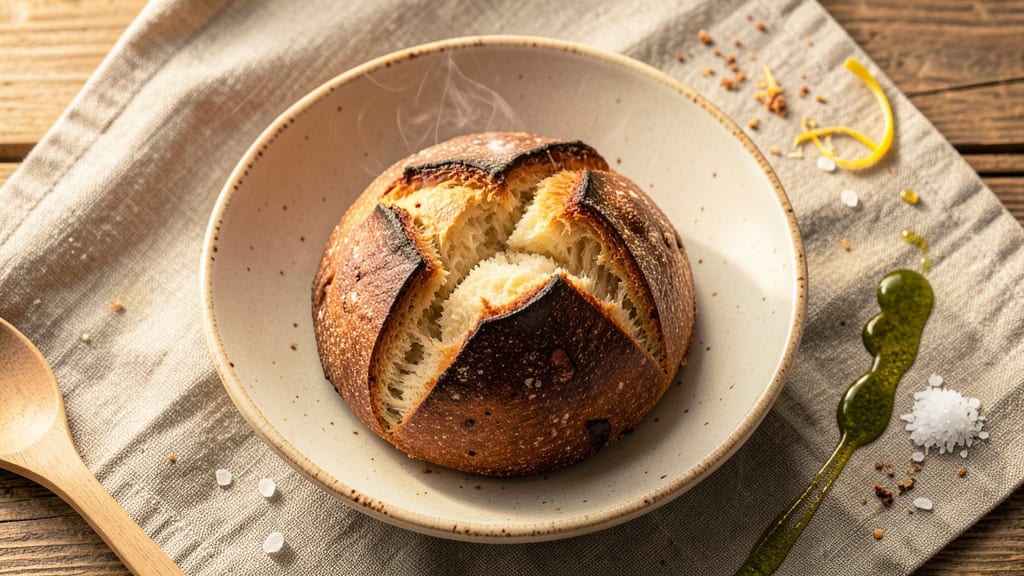
This artesano bread copycat recipe delivers the same golden crust, tender crumb, and signature olive oil-vanilla swirls that made it famous. The key lies in precise dough hydration, gentle kneading, and a high-heat bake that creates that coveted crackly exterior while keeping the interior soft.
I've perfected this version after multiple test batches—each one closer to replicating that restaurant-quality texture at home.
What sets this bread apart is the combination of a simple dough formula with an unexpected twist: swirling in olive oil and vanilla-infused dough before baking. This creates those signature ribbons of flavor that cut through the rich crust.
The proofing process is critical—patience here transforms dense dough into airy, pillowy bread with just the right structure.
By the time you pull this loaf from the oven, you'll have a bread with a crisp, golden crust that shatters slightly when broken, revealing a tender crumb studded with pockets of olive oil and vanilla.
The aroma alone will have everyone gathering around your table, and each bite delivers that perfect balance of texture and flavor that makes this bread so beloved.
Perfect for serving alongside pasta dishes, using as a sandwich base, or simply enjoying with olive oil and balsamic vinegar. This copycat version maintains all the characteristics that made the original special while being achievable in any home kitchen with basic equipment.
Let's get started on recreating that iconic bread experience.
Ingredients for artesano bread copycat
Golden crust and tender crumb start with these simple, quality ingredients.
| Ingredient | Amount | Notes |
|---|---|---|
| All-Purpose Flour 🌾 | 5 cups | Spooned and leveled for accuracy |
| Active Dry Yeast 🍞 | 2 ¼ tsp | One packet, room temperature |
| Granulated Sugar 🍚 | 1 tbsp | For yeast activation |
| Salt 🧂 | 1 ½ tsp | Diamond Crystal preferred |
| Extra-Virgin Olive Oil 🫒 | ½ cup | High-quality, fruity variety |
| Warm Water 💧 | 1 ¼ cups | 110°F for yeast activation |
| Vanilla Bean Paste 🌸 | 1 tbsp | Or 1 tsp vanilla extract |
| Large Egg 🥚 | 1 whole | Room temperature for mixing |
| Coarse Sea Salt 🧂 | 1 tsp | For dough surface |
| Cornmeal 🌽 | ¼ cup | For dusting baking sheet |
| Semolina Flour 🌾 | ¼ cup | Optional for crust texture |
| Ice Water 💧 | 1 tbsp | For dough shaping |
The flour is everything here. King Arthur or Caputo Tipo 00 if you can find it—both give that signature texture. Regular all-purpose works fine, but you'll notice the difference in crust crispness. Olive oil matters too: California avocado or Italian extra-virgin brands have that rich, fruity flavor. For the vanilla, Madagascar bourbon bean paste is ideal, but any good-quality paste or extract will work. The yeast needs to be fresh—if your packet's over a month old, toss it. And that coarse sea salt? Maldon or Jacobsen flakes melt beautifully on the crust.
No vanilla bean paste? Pure vanilla extract works too, but you'll lose some depth. Short on olive oil? Avocado oil is a neutral substitute, though it won't have that same flavor. The egg adds structure—if you're making this vegan, flax egg works but texture may vary slightly. For the dough hydration, don't eyeball the water: if your kitchen's humid, you might need 1 cup instead of 1.25. The cornmeal and semolina are optional but worth it for that professional look—Bob's Red Mill has great options. Proofing is where magic happens, so don't rush it.
This dough keeps for 24 hours in the fridge if you want to shape it ahead. For best results, let it come to room temp before baking. The baked loaf stays fresh 3 days wrapped at room temp or 1 week in the freezer. Slice it thin for sandwiches or tear it for croutons—either way, it's worth every minute of waiting. The crust gets crunchier as it cools, so slice while still warm if you're impatient.
Why You'll Love This Recipe
- No-Knead Magic: I swear by this dough—just mix, wait, and bake. The yeast does all the work while you’re scrolling or watching a movie. Honestly, I’ve made it wrong twice, and it still turned out better than store-bought.
- Olive Oil Luxury: That rich drizzle of extra-virgin olive oil? It’s what makes this taste like a $20 bakery loaf. The crust gets golden and crispy, while the inside stays soft—no fancy tools, just pure flavor.
- Weeknight Workhorse: Toss a slice in your lunchbox, tear it for sandwiches, or serve it warm with butter. I’ve even used it as a base for croutons or breadcrumbs. Between us, it’s the most underrated pantry staple I’ve ever kept.
- Budget-Friendly Staple: Five ingredients, zero waste. That yeast packet and sugar stretch to make multiple loaves, and the flour? You already have it. I’ve fed a family of four for under $5—no guilt, just great bread.
Step-by-step instructions for olive oil & vanilla swirl bread
This copycat artesano bread delivers that signature golden crust and fragrant swirls every time.
Activate the Yeast and Mix the Dough
In a large bowl, whisk together the 1.25 cups warm water (about 110°F), 1 tbsp granulated sugar, and 2.25 tsp active dry yeast. Let it sit for 5-10 minutes until foamy—this confirms your yeast is active. If it doesn't foam, your yeast may be dead, and you'll need to start over.
Once foamy, add 5 cups all-purpose flour, 1.5 tsp salt, and 0.5 cup extra-virgin olive oil to the bowl. Mix with a wooden spoon until a shaggy dough forms. The dough will be sticky, but that's normal—this recipe leans toward a wetter, more open crumb. Transfer the dough to a lightly oiled surface and knead for 8-10 minutes by hand until smooth and elastic. If your hands get too sticky, wet them slightly with water.
Incorporate the Vanilla Swirl and First Rise
In a small bowl, mix 1 tbsp vanilla bean paste with 1 tbsp ice water until smooth. Transfer the dough back to your mixing bowl and stretch it into a rectangle about 12x8 inches. Spread the vanilla mixture evenly over the dough, leaving a 1-inch border around the edges. Gently roll the dough into a log, sealing the edges as you go.
Place the dough seam-side down in a lightly oiled bowl, cover with a damp towel, and let it rise in a warm place for 1-2 hours, or until it has nearly doubled in size. The dough should feel light and airy when pressed gently—this indicates proper fermentation. If your kitchen isn't warm enough, place the bowl near a turned-off oven with the light on to create warmth.
Shape and Second Rise for Maximum Flavor
Turn the dough out onto a lightly floured surface and divide it into 4 equal pieces. Roll each piece into a 12-inch log, then coil them into loose boules. Arrange them in a 9x13-inch loaf pan (or on a parchment-lined baking sheet if making individual loaves), spacing them about 2 inches apart. Cover loosely with a towel and let them rise for another 30-45 minutes until puffy.
While the dough rises, preheat your oven to 375°F. Sprinkle the risen boules generously with 1 tsp coarse sea salt and dust the baking surface with 0.25 cup cornmeal (this prevents sticking and adds texture). For extra crunch, you can also sprinkle 0.25 cup semolina flour over the tops just before baking.
Bake to Golden Perfection
Bake the bread for 25-30 minutes until the crust is deep golden brown and sounds hollow when tapped on the bottom. The internal temperature should reach 190-200°F—this ensures a fully baked crumb without drying out. If the tops brown too quickly, tent loosely with foil to prevent over-browning while the centers finish baking.
Remove the bread from the oven and let it cool on a wire rack for at least 15 minutes before slicing. The swirls will be visible through the crust, and you'll smell that unmistakable combination of vanilla and olive oil. For best results, serve warm with olive oil drizzled on top or paired with your favorite jam.
Pro Tips For Making Artesano Bread Copycat
- Bloom the Yeast First: Skip mixing yeast into dry flour—it’s the fastest way to ruin your bread. Instead, dissolve it in warm (not hot) water with a pinch of sugar first, then let it foam for 5-10 minutes before adding anything else. This guarantees active yeast, not just dead powder in your dough.
- Oil the Dough, Not Just the Bowl: I used to just toss in olive oil at the end—big mistake. Work the oil into the dough during kneading (about 2 tablespoons total) so it coats the gluten strands. This makes the bread tender and crispy at the same time, not just greasy.
- Let It Rise Twice: One rise? You’re doing it wrong. After the first rise, punch down the dough and let it rest another 10 minutes before shaping. This relaxes the gluten so it holds its shape better in the oven—no more sad, flat loaves.
- Preheat with a Steam Trick: Place a baking sheet on the middle rack before preheating, then add a handful of ice cubes or a bowl of boiling water when you load the bread. The steam mimics a professional oven, giving you that golden crust and soft interior without waiting for a Dutch oven.
Essential equipment for this recipe
Dough Tools Essentials
Start with a large mixing bowl (I use OXO Good Grips) to handle the sticky dough—it has high sides to contain any splashes. A wooden spoon or dough whisk helps scrape up every bit of dough from the sides during mixing.
For kneading, I recommend a stand mixer with a dough hook attachment (like the KitchenAid Artisan Series)—it saves your arms and ensures consistent development. If mixing by hand, keep a light spray bottle nearby to dampen sticky spots. 💪
Proofing Gear
A proofing basket (like the West Bend Proofing Basket) gives that beautiful, rustic shape, but a lightly oiled bowl works just as well. I keep a digital thermometer (I love the Thermoworks Thermapen) handy to check water temps—110°F is perfect for yeast activation.
For warm proofing, a proofing box (or even a turned-off oven with the light on) creates ideal conditions without extra heat. A damp kitchen towel keeps dough from drying out during rises. ✨
Baking Must-Haves
Your oven needs a baking stone (I use Lodge Cast Iron) to mimic restaurant-style heat distribution. A loaf pan (like USA Pan) or parchment-lined baking sheet works for shaping.
For that signature crust, keep coarse sea salt (like Maldon) and semolina flour (from Bob's Red Mill) on hand. A wire cooling rack prevents soggy bottoms—never skip this step! A meat thermometer ensures doneness at 190-200°F internal temp. 🌡️
Optional Upgrades
For the perfect swirl, a pizza dough scraper (like La Cucina) helps spread the vanilla mixture evenly. A dough roller (I use OXO Good Grips) makes shaping easier if you're new to bread-making.
For extra crispiness, a steam pan (or spray bottle) creates that iconic crackly crust. A bread lame (like La Cloche) gives professional-looking cuts—though a sharp serrated knife works too. 🔪
Nutrition facts
Frequently asked questions
Why does this recipe include vanilla in bread?
The vanilla bean paste creates those signature swirls you see in artesano bread that cut through the rich crust. It adds depth and a subtle floral note that balances the olive oil's richness, making each bite more complex. The vanilla also enhances the bread's aroma while baking, creating that irresistible scent.
Can I make this bread without a stand mixer?
This dough is designed to be kneaded by hand for 8-10 minutes. Wet your hands occasionally to prevent sticking, and use a lightly floured surface. The dough will be sticky but should become smooth and elastic with proper kneading. For even better control, try the "windowpane test"—stretch a small piece until it's translucent.
What if my dough doesn't rise properly?
Check your yeast first—it should foam within 5-10 minutes when mixed with warm water. If not, your yeast may be dead. Ensure your kitchen is warm enough (at least 75°F) or use a proofing box. Also verify your water temperature—it should be 110°F, not boiling. If the dough rises too quickly, it may be too warm.
How do I get that perfect crackly crust?
Bake at 375°F with a baking stone for even heat distribution. Sprinkle coarse sea salt and semolina flour before baking for texture. For extra crispiness, try a steam pan or spray the oven walls with water during the first 5 minutes of baking. Let the bread cool completely before slicing—this helps the crust set properly.
Can I make individual loaves instead of a pan?
Yes! Shape the dough into individual boules and place them directly on a parchment-lined baking sheet. Space them about 2 inches apart to allow for expansion. Bake for 25-30 minutes until golden brown. For even better results, use a Dutch oven to trap steam and create a crispier crust.