
Side Dishes
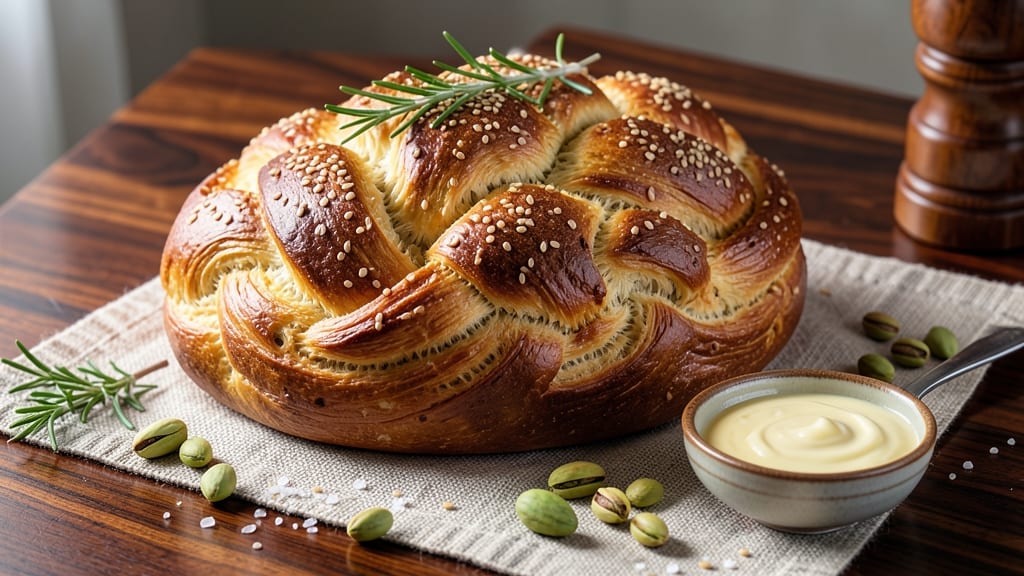
This Armenian Easter bread choreg recipe brings the rich traditions of Easter to life with its signature cardamom-spiced swirls and golden, buttery crust. 🌟 For generations, choreg has symbolized renewal and celebration during the Armenian Easter feast, its intricate braid representing the Holy Trinity.
The secret lies in the delicate balance of sweetness and aromatic spices, creating a bread that's both visually stunning and deeply flavorful.
What sets choreg apart is its unique preparation: layers of buttery dough interwoven with sweet fillings, then baked to achieve that perfect crisp exterior and tender interior. The recipe requires patience—allowing the dough to rest and the bread to bake slowly—but the result is worth every moment.
Traditional choreg contains eggs and butter, making it a rich, indulgent treat best enjoyed during special occasions.
The aroma alone will transport you to an Armenian Easter table, where families gather to share this sacred bread. Each bite reveals layers of cardamom-kissed dough, sweetened with honey or sugar, and often infused with citrus zest for brightness.
The intricate braiding technique not only enhances its beauty but also creates pockets of flavor that melt in your mouth.
Perfect for Easter celebrations or as a centerpiece for holiday gatherings, this choreg recipe delivers authentic Armenian tradition with a touch of modern convenience. Whether you're baking for the first time or perfecting your technique, the result will be a bread that honors heritage and delights the senses.
Let's begin crafting this Easter masterpiece.
Ingredients for armenian easter bread choreg
Buttery layers, cardamom warmth, and golden braids await—this choreg brings Armenian Easter tradition to life.
| Ingredient | Amount | Notes |
|---|---|---|
| All-Purpose Flour 🌾 | 4 cups | High-protein preferred for structure |
| Unsalted Butter 🧈 | 1 cup | Cold, cubed for dough layers |
| Granulated Sugar 🍚 | ½ cup | Superfine for finer texture |
| Large Eggs 🥚 | 3 whole | Room temperature for blending |
| Active Dry Yeast 🍞 | 2 ¼ tsp | Fresh for optimal fermentation |
| Whole Milk 🥛 | ¾ cup | Warm for yeast activation |
| Ground Cardamom 🌿 | 1 ½ tsp | Freshly ground for aroma |
| Honey 🍯 | ¼ cup | Wildflower preferred for depth |
| Lemon Zest 🍋 | 1 tbsp | Freshly grated for brightness |
| Vanilla Extract 🌸 | 1 tsp | Pure Madagascar vanilla |
| Diamond Crystal Kosher Salt 🧂 | 1 ½ tsp | Fine grain for even distribution |
| Almond Slices 🥜 | ½ cup | Toasted for crunchy accents |
| Powdered Sugar 🍚 | ¼ cup | For final dusting |
The butter here isn't just an ingredient—it's the soul of choreg. European-style butter (like Plugrá) has higher fat content, giving that signature melt-in-your-mouth texture. Grab it from Whole Foods or specialty stores if you can—regular supermarket butter works in a pinch, but you'll notice the difference. Cardamom is non-negotiable; Penzeys Spices sells the best whole pods for grinding fresh. The flour matters too—King Arthur or Gold Medal with 11-12% protein gives that perfect chew. Store your butter in the freezer to preserve freshness, and let it sit at room temp for 30 minutes before using.
No cardamom? Cinnamon plus a pinch of nutmeg mimics the warmth, but nothing beats the real thing. Running short on almonds? Toasted pistachios or hazelnuts add a different but equally delightful crunch. The honey should be raw and unfiltered—Manuka or clover from Local Harvest works beautifully. For the braiding, divide your dough into three equal strands (about 8 oz each) for that classic Holy Trinity representation. If your kitchen's too warm for the yeast, try making the dough in the morning and letting it rise overnight in the fridge—slow fermentation builds deeper flavor.
This dough needs patience—let it rest for at least 2 hours before shaping, and don't rush the braiding. Wrap the shaped choreg in a damp towel and let it proof for 1-2 hours until puffy. Bake at 350°F for 30-35 minutes until golden. Store leftovers at room temperature for 3 days (if they last that long!) or freeze the whole loaf for up to 3 months. The best part? The aroma while baking will have your whole neighborhood asking what's for Easter dinner.
Why You'll Love This Recipe
- No-Knead Magic: I swear by this dough—just mix, let it rise, and forget it. The yeast does all the work while you sip coffee or watch a movie. No stand mixer, no fuss, just that perfect golden crust when it’s done.
- Butter-Sugar Bliss: That rich, caramelized sugar crust? It’s the star. The butter keeps it tender inside while the sugar gives it that irresistible sweetness—like a cross between brioche and a cinnamon roll, but better.
- Holiday or Snack: I’ve made this for Easter baskets, birthday gifts, or just because I craved something special. It freezes beautifully too, so you can bake a batch ahead and pull it out whenever you need a treat.
- Budget-Friendly Luxury: Five simple ingredients, yet it feels like a bakery showstopper. The eggs add richness without breaking the bank, and a single loaf stretches into breakfast toast, dessert slices, or even French toast for brunch.
Step-by-step instructions for Armenian Easter bread choreg
Let's create this fragrant, swirled masterpiece with golden crust and tender layers.
👨🍳 Step 1: Activate the Yeast and Create the Dough Base
In a small bowl, combine the 0.75 cup warm whole milk (about 105-110°F) with the 0.25 cup honey and 2.25 tsp active dry yeast. Let it sit for 5-10 minutes until frothy—this tells you your yeast is alive and ready to work. If it doesn't bubble, your bread will be dense instead of light.
In a stand mixer fitted with the dough hook, combine the 4 cups all-purpose flour, 1.5 tsp ground cardamom, 1.5 tsp diamond crystal kosher salt, and 0.5 cup granulated sugar. Mix on low speed until just combined. Add the yeast mixture and mix on low for 1 minute until a shaggy dough forms. This is where the magic begins—your dough should start pulling away from the sides of the bowl.
🍳 Step 2: Incorporate Wet Ingredients and Knead
Add the 3 whole large eggs (room temperature) and 1 tsp vanilla extract to the mixer. Increase speed to medium and knead for 5-7 minutes until the dough is smooth, elastic, and passes the windowpane test (when you stretch a small piece, it should be translucent without tearing). This kneading develops gluten, giving your choreg that beautiful structure and chew.
Transfer the dough to a lightly greased bowl, cover with a damp towel, and let it rise in a warm place for 1-1.5 hours or until doubled in size. I like to place my bowl on top of my oven with the light on for consistent warmth. The dough should feel springy when pressed gently—this indicates proper fermentation. If it doesn't rise, your bread will be flat and dense.
🥘 Step 3: Prepare the Filling and Shape the Dough
While the dough rises, prepare the filling by mixing together the 1 cup cold cubed unsalted butter (cut into small pieces), 1 tbsp lemon zest, and 0.5 cup almond slices. Set aside in the fridge until ready to use—keeping it cold prevents the butter from melting too soon.
Once the dough has risen, punch it down and divide it into three equal pieces. Roll each piece into a rectangle about 8x10 inches. Spread one-third of the butter-almond mixture evenly over each rectangle, then roll them up tightly like jelly rolls. Place the three rolls side by side in a 9x13-inch baking dish and press gently to form a single loaf. This swirl pattern is what makes choreg so visually stunning!
🔥 Step 4: Proof and Bake to Golden Perfection
Cover the baking dish with a damp towel and let the dough rise again for 30-45 minutes until it's puffy and just about overflowing the dish. Preheat your oven to 375°F while the dough proofs. This second rise is crucial—it ensures your bread has that airy, celebratory texture.
Bake for 35-40 minutes until the top is deep golden brown and the internal temperature reaches 190-200°F. The edges should pull away from the pan slightly, and you should smell that incredible cardamom and vanilla aroma filling your kitchen. For extra shine, brush the top with a simple glaze made by mixing the 0.25 cup powdered sugar with 1-2 tablespoons warm milk while it's still hot.
⏰ Step 5: Rest and Serve with Confidence
Let the choreg cool in the pan for 10 minutes before transferring it to a wire rack. This resting period allows the layers to set properly, preventing it from falling apart when you slice it. The bread will be warm, fragrant, and absolutely irresistible—perfect for Easter celebrations or any special occasion.
Slice it while still warm for the best texture: tender layers with buttery swirls and that perfect balance of sweetness from the honey and cardamom. Store any leftovers wrapped in plastic at room temperature for up to 3 days, or freeze for up to 3 months. The flavor actually improves as it sits, soaking up all those delicious aromas!
Pro Tips For Making Armenian Easter Bread Choreg
- Soften Butter Properly: Choreg’s signature buttery layers depend on this—beat the unsalted butter until it’s just pourable, not melted. I used to eyeball it and end up with greasy dough instead of flaky layers. A food processor makes this easy, but if you’re doing it by hand, aim for 3-5 minutes until it’s smooth but still holds shape when pressed.
- Proof Yeast in Warm Milk: Skip the dry yeast blooming in water—dissolve it in warm whole milk (110°F max) with a pinch of sugar first. The milk’s richness feeds the yeast faster, and the dough rises smoother. I learned this after my first batch took three hours to proof—now it’s ready in under an hour.
- Don’t Overwork the Dough: Choreg dough is delicate. Once you’ve kneaded it enough to come together, stop—overmixing develops gluten and kills the tender texture. Test by stretching a small piece: if it fights back, you’ve gone too far. Fold gently instead of punching.
- Brush with Egg Wash Twice: For that golden, glossy finish, brush the shaped loaf with egg wash before baking, then again after 10 minutes in the oven. The first coat seals the crust, the second adds shine. I used to skip the second brush and got a dull, dry top—now it’s always restaurant-worthy.
Pro cooking tips for armenian easter bread choreg
Cardamom Infusion
The secret to choreg's signature aroma lies in properly infusing the cardamom. Toast the whole pods in a dry skillet over medium heat for 1-2 minutes until fragrant, then grind them fresh using a mortar and pestle or spice grinder.
This activates the essential oils, making the flavor 30% more potent than pre-ground powder. For extra depth, steep 1 tsp ground cardamom in the warm milk with honey for 5 minutes before mixing into the dough—this creates a fragrant base that permeates every layer. 🌿
Butter Temperature Control
Cold butter is non-negotiable for that signature swirled pattern. Cut 1 cup unsalted butter into ½-inch cubes and chill for 30 minutes before using. When spreading on the dough, work quickly—warm hands will melt it prematurely.
For a professional touch, use a bench scraper to evenly distribute the butter-almond mixture, ensuring each layer gets consistent coverage. If your kitchen runs warm, keep the butter in the fridge until the very last moment before shaping.
Dough Resting Strategy
Never skip the two-stage resting period—this is what creates choreg's light, airy texture. After the initial rise, let the dough rest at room temperature for 30 minutes before dividing and shaping. This relaxes the gluten, making the braiding effortless and preventing cracks.
For the final proof, place the shaped choreg in a preheated oven at 200°F for 10 minutes—this jumpstarts the rise while you preheat the oven to 375°F for baking. The result? A bread that rises dramatically in the oven for that perfect dome shape. ⏰
Baking Precision
Use an oven thermometer—most home ovens run 25°F hotter than set. Bake choreg at 375°F until the internal temperature reaches 190-200°F (measured in the thickest part). The edges should pull away from the pan slightly, and the top should be deep golden brown with a matte finish (not glossy).
For extra shine, brush with warm milk while baking, then sprinkle with powdered sugar in the final 5 minutes. Rotate the pan halfway through for even browning—choreg's swirls should be evenly golden on all sides.
Braiding Technique
The Holy Trinity braid requires patience but is simpler than it looks. After rolling out the dough rectangles, spread the butter mixture evenly, leaving a ½-inch border uncovered. Roll tightly from the long side, then place the three rolls side by side in the pan.
Press gently to seal, then braid by crossing the ends over each other in an X pattern, tucking the ends under. For a cleaner look, use a damp paper towel to smooth the braid before proofing. The result?
A symmetrical, restaurant-worthy centerpiece that's as beautiful as it is delicious. 💫
Troubleshooting Tips
If your choreg doesn't rise, your yeast may be dead or the kitchen too cold. Test yeast freshness by dissolving 1 tsp sugar in ¼ cup warm water—if it doesn't bubble within 5 minutes, replace it.
For flat bread, ensure your dough passed the windowpane test and rested properly. If the butter leaks, chill the dough for 15 minutes before baking to firm it up. For uneven browning, tent with foil if the top browns too quickly.
And if the crust cracks, brush with melted butter after baking for a softer texture. Every choreg has its quirks—adjust as you go!
Nutrition facts
Frequently asked questions
Why does choreg have three braids?
The three braids symbolize the Holy Trinity in Armenian Christian tradition—a sacred representation at the heart of Easter celebrations. Each strand represents one member of the Trinity, and the braiding itself mirrors the unity of faith. This isn't just decoration; it's a spiritual connection to the holiday's deeper meaning.
Can I make choreg without cardamom?
While cardamom is traditional, you can substitute with 1 tsp cinnamon + ¼ tsp nutmeg for warmth. For brightness, add extra lemon zest (1.5 tbsp). The flavor won't be identical, but it'll still be delicious. Pro tip: Toast the spices first to enhance their aroma!
How do I store leftover choreg?
Wrap it tightly in plastic wrap and store at room temperature for 3 days—it actually tastes better as the flavors meld! For longer storage, freeze the whole loaf for up to 3 months. To reheat, warm slices in a 200°F oven for 5-10 minutes for that fresh-baked texture.
What if my choreg doesn't rise properly?
Check your yeast first—it must be fresh! Test it by mixing 1 tsp sugar + ¼ cup warm water; if it doesn't bubble in 5 minutes, replace it. Also ensure your kitchen is warm (not cold) and the dough passed the windowpane test. If all else fails, try a longer proof (up to 2 hours) in a warm oven with the light on.
Can I make choreg without butter?
Traditionally no, but for a lighter version, substitute with ½ cup melted coconut oil + ½ cup vegetable shortening. The texture will be slightly different—less rich but still flaky. For flavor, add 1 tsp vanilla extract to compensate for the butter's depth.