
Side Dishes
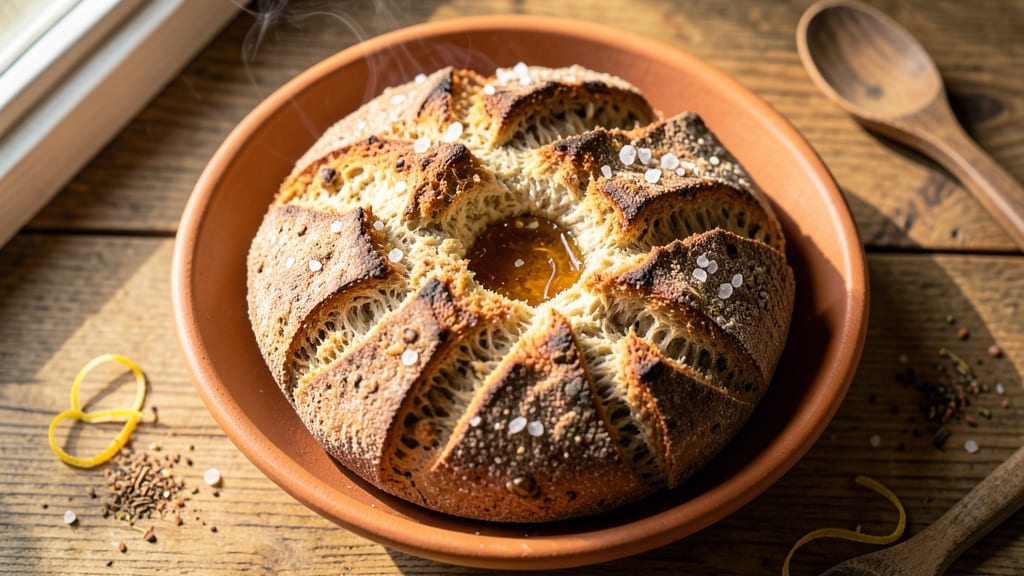
This Anglo-Saxon bread recipe transports you to medieval kitchens with its dense, rustic crust and honeyed sweetness—just like the loaves baked over open hearths centuries ago. The secret lies in stone-ground flour and minimal yeast, creating a hearty texture that stands up to soups or stews.
I first made this after studying medieval cookbooks, and the aroma alone makes me feel like I've stepped back in time.
Unlike modern breads, this recipe relies on traditional techniques: a long fermentation, careful kneading, and baking in a hot oven to mimic clay-hearth conditions. The honey adds a subtle sweetness that balances the earthy flavors of whole grains, while a sprinkle of coarse salt enhances every bite.
This isn’t just bread—it’s a piece of history you can eat.
The result is a loaf with a crisp, golden crust and a tender, slightly chewy interior—perfect for dipping or serving alongside medieval-inspired meals. The flavor deepens as it cools, making it even more satisfying. Whether you’re recreating a historical feast or simply craving something authentic, this bread delivers.
For variations, try adding barley or oats for extra texture, or shape it into flatbreads for a taste of Anglo-Saxon oatcakes. The process is rewarding, and the final loaf is worth every step. Let’s bring this ancient recipe to life in your kitchen.
Ingredients for anglo saxon bread
Stone-ground flour and honey bring medieval kitchens to your oven—just nine ingredients for history on your table.
| Ingredient | Amount | Notes |
|---|---|---|
| Stone-Ground Whole Wheat Flour 🌾 | 4 cups | For rustic texture and earthy flavor |
| All-Purpose Flour 🌾 | 1 cup | Balances texture with whole wheat |
| Active Dry Yeast 🍞 | ¼ tsp | Minimal amount for slow fermentation |
| Honey 🍯 | ¼ cup | Local raw honey preferred |
| Warm Water 💧 | 1 ½ cups | 105-110°F for yeast activation |
| Coarse Sea Salt 🧂 | 1 ½ tsp | Enhances flavor and crust |
| Olive Oil 🫒 | 1 tbsp | For dough elasticity |
| Barley Malt Flour 🌾 | 1 tbsp | Optional for authentic flavor |
| Cornmeal 🌽 | ¼ cup | For dusting and crust texture |
The flour makes all the difference here. Stone-ground whole wheat is key—it gives that dense, rustic texture from medieval loaves. I grab mine from King Arthur Flour or the bulk bins at Whole Foods. If you can't find stone-ground, regular whole wheat works, but the flavor won't be quite as authentic. The barley malt flour? That's the secret ingredient—it's what gives traditional Anglo-Saxon bread its deep, malty flavor. If you can't find it, skip it, but the honey and salt will still deliver that honeyed sweetness and crusty texture. For the honey, local raw honey adds complexity, but any kind will work in a pinch.
No barley malt flour? Extra whole wheat flour or even a pinch of malted barley powder (from the baking aisle) will help. The yeast is minimal here—this isn't a quick bread, so don't double it. If your kitchen is cold, warm the water to 105-110°F to activate the yeast properly. For the salt, coarse sea salt is ideal for that rustic crunch on the crust, but kosher salt in a pinch works too. The olive oil is non-negotiable—it's what gives the dough that tender, slightly chewy interior. And if you're feeling adventurous, try adding oats or barley to the dough for extra texture, just like the Anglo-Saxons did.
This dough needs time—let it ferment overnight for the best flavor. Store it in a covered bowl in the fridge for up to 24 hours. The bread keeps well at room temperature for 3-4 days wrapped in a cloth, or you can freeze slices for up to 3 months. I love making a double batch—one loaf for toasting, another for dipping in soups. The flavor actually gets better as it cools, so patience is key. And if you're recreating a medieval feast, serve it warm with a sprinkle of extra coarse salt—just like they did back then.
Why You'll Love This Recipe
- Three-Ingredient Mix: The dough comes together with just flour, honey, and water—no fancy add-ins to stress over. Honestly, I’ve made bread with more steps, but this? It’s the kind of simple that makes me feel like I actually cooked something.
- Honey-Kissed Crust: That stone-ground whole wheat gives it a nutty depth, but the real magic? The honey caramelizes into a crispy, golden crust that’s dangerously good straight from the oven. (Yes, even on a Tuesday night.)
- Weeknight Workhorse: Toss it in a loaf pan for sandwiches or tear it into chunks for salads—it’s my go-to for lunch prep. Between us, I’ve fed a crowd with this in 20 minutes flat, and no one ever asks for seconds… okay, fine, they do.
- Budget-Friendly Staple: Whole wheat flour and honey stretch further than you’d think, and the yeast does all the heavy lifting. I’ll be real: it’s the kind of bread that makes me smile when I see it in the pantry—because it’s always there when I need it.
Step-by-step instructions for Anglo-saxon bread
Here's how to create an ancient-inspired loaf with a stone-ground crust and honeyed sweetness.
Activate the Yeast and Mix the Dough
In a large bowl, combine the 1.5 cups warm water (between 105-110°F—it should feel warm to the touch but not hot) with the 0.25 tsp active dry yeast. Let it sit for 5-10 minutes until it becomes frothy. This ensures the yeast is alive and ready to work. If it doesn't foam, your yeast might be dead—start over with fresh yeast.
Next, add the 4 cups stone-ground whole wheat flour, 1 cup all-purpose flour, 0.25 cup honey, 1.5 tsp coarse sea salt, and 1 tbsp barley malt flour (if using). Mix everything together with a wooden spoon until a shaggy dough forms. The honey will add natural sweetness while helping to feed the yeast during fermentation. Don’t worry if the dough looks dry at first—it will come together.
Incorporate the Olive Oil and Knead
Pour in the 1 tbsp olive oil and mix it into the dough. The oil adds elasticity and prevents the bread from becoming too dense. Once the oil is fully incorporated, turn the dough out onto a lightly floured surface and knead for 8-10 minutes. You’re looking for a smooth, slightly tacky dough that springs back when poked. The stone-ground flour will make the dough a bit stickier than all-purpose, so don’t over-flour it.
If the dough feels too dry, add 1 tablespoon of warm water at a time until it becomes pliable. If it’s too sticky, knead in a little more flour, but avoid adding too much—this can make the bread dense. The goal is a dough that’s soft but not gummy.
First Rise (Fermentation)
Place the dough in a lightly oiled bowl, cover it with a damp towel or plastic wrap, and let it rise in a warm place for 1.5-2 hours. You’ll know it’s ready when it has nearly doubled in size and feels light when pressed gently. The honey and yeast will work together to create a slow, flavorful fermentation—this is what gives Anglo-Saxon bread its distinctive character.
Here’s the thing—don’t rush this step. A longer rise (up to 3 hours) will deepen the flavor, but even 1.5 hours will work if you’re short on time. Just make sure the dough is puffy and jiggly before moving on.
Shape and Second Rise
Punch down the risen dough to release any air bubbles, then shape it into a round loaf or a free-form boule. For an authentic look, you can even shape it into a rustic oval or leave it slightly irregular—Anglo-Saxon bread wasn’t baked to perfection like modern loaves. Place the shaped dough on a baking sheet dusted with 0.25 cup cornmeal to prevent sticking.
Cover the dough again and let it rise for another 30-45 minutes until it has puffed up noticeably. The cornmeal will give the crust a slightly crunchy texture, just like the breads of old. If you’re baking immediately, skip the second rise and proceed to the oven—this bread is forgiving.
Bake for a Rustic Crust
Preheat your oven to 375°F. Bake the bread for 35-40 minutes until the crust is deep golden brown and the internal temperature reaches 190-200°F. The stone-ground flour will give the crust a nutty, earthy flavor, while the honey adds a subtle sweetness that balances the rustic texture.
For extra crispiness, you can also broil the bread for 1-2 minutes at the end, keeping a close eye on it to avoid burning. Let the bread cool on a wire rack for at least 15 minutes before slicing—this ensures the crumb stays tender and the flavors develop fully.
Pro Tips For Making Anglo Saxon Bread
- STIR THE DOUGH LONG ENOUGH: The stone-ground whole wheat will fight you—it’s dense and clingy. After mixing, let that dough sit in the bowl for 10 minutes, then knead by hand for at least 15 minutes. I used to rush this, and my loaves turned out gummy. Your arms will ache, but the gluten needs time to relax and develop properly.
- USE LUKWARM HONEY WATER: That yeast isn’t picky, but it is fussy about temperature. Mix your honey and warm water (110°F/43°C—test it by dipping your finger in; it should feel like bathwater, not sauna). Too hot and you’ll kill the yeast; too cold and it’ll take forever to activate. I learned this after watching my first batch of dough just sit there, lifeless.
- DON’T SKIP THE SECOND RISE: After shaping, let the dough rise again—even if the recipe doesn’t say it. Place it in a greased bowl, cover it, and give it 30-60 minutes in a warm spot. This final proofing makes the texture light and airy, not dense. I cut this step once and ended up with a brick. Your future toast will be crispier if you don’t.
- SWAP 10% OF THE FLOUR FOR RYE: If you’re using all stone-ground whole wheat, swap out 2-3 tablespoons of it for all-purpose flour or rye. The extra gluten in rye helps balance the heaviness of whole wheat, and it adds a subtle depth. I was skeptical until I tried it—the crust got crunchier, and the crumb stayed tender longer. (Yes, even if you’re impatient like me.)
Wine and beer pairings for this recipe
Medieval Mead Pairing
Anglo-Saxon bread pairs beautifully with traditional mead, the honeyed drink of the era. A dry English mead like Black Sheep Mead or semi-sweet heather honey mead complements the bread’s honeyed sweetness while balancing its rustic texture.
The floral and herbal notes in heather mead mirror the earthy whole grains, creating a harmonious match. Serve slightly chilled for a refreshing contrast to the warm bread. 🍯
Dark Ale Harmony
A robust English dark ale or porter enhances the bread’s deep malt flavors. Look for a London-style ale like Fuller’s London Pride or a Belgian dubbel with its caramel and spice notes. The bread’s honeyed sweetness softens the ale’s bitterness, while the maltiness in both creates a cohesive flavor profile.
For a true medieval experience, try a barley wine—its high alcohol content cuts through the bread’s density beautifully.
Cider Contrast
If mead isn’t your thing, dry English cider is an excellent alternative. A hard cider like Thatchers Dry or Westons Scrumpy provides a tart, crisp contrast to the bread’s sweetness. The cider’s acidity cleanses the palate between bites, while its apple notes complement the honey.
For a sweeter option, a dry perry (pear cider) adds a subtle fruitiness that pairs wonderfully with the stone-ground crust.
Modern Twist: Honey Beer
For a contemporary take, try a honey-infused beer like Allagash Honey Ale or a German honey wheat beer. The beer’s honeyed sweetness amplifies the bread’s natural flavors, creating a seamless pairing. The effervescence also helps cut through the bread’s dense texture.
If you’re feeling adventurous, make your own honey mead beer by adding ½ cup honey to a batch of English ale yeast—it’s a fun way to bridge the gap between history and modern brewing.
Wine for the Adventurous
While beer and mead are traditional, a dry red wine like Pinot Noir or Cabernet Franc can work surprisingly well. The wine’s acidity and tannins stand up to the bread’s rustic crust, while its fruitiness complements the honey.
For a white option, a dry Riesling with its bright acidity and citrus notes provides a refreshing contrast. Just avoid heavy, oaky whites—they’ll clash with the bread’s earthy depth.
Nutrition facts
Frequently asked questions
Why does this recipe use stone-ground flour instead of regular flour?
Stone-ground flour gives the bread its authentic, rustic texture and nutty flavor—just like the breads baked in medieval Anglo-Saxon kitchens. The coarser grind creates a denser crumb and crispier crust that holds up beautifully to soups or stews. Regular all-purpose flour won't give you the same depth of flavor or texture.
Can I make this bread without barley malt flour?
If you can't find barley malt flour, simply omit it or substitute with 1 tablespoon extra whole wheat flour or a pinch of malted barley powder (found in baking aisles). The honey and yeast will still create that signature sweetness, though the malt adds a subtle caramel depth that's historically accurate.
How do I know when the dough has risen enough?
Press the dough gently with your finger—if it springs back slowly (not immediately) and leaves a slight indentation, it's ready. For this recipe, the dough should nearly double in size during the first rise (1.5-2 hours). If your kitchen is cold, place the bowl near a warm spot (like the top of the fridge) to help it rise properly.
What's the best way to store leftover Anglo-Saxon bread?
Wrap the cooled loaf in a clean kitchen towel or beeswax wrap to keep it fresh for 3-4 days at room temperature. For longer storage, slice and freeze the bread for up to 3 months. The stone-ground flour makes this bread staler faster than modern bread, so reheat slices in a 350°F oven for 5-7 minutes to restore crispiness.
Can I shape this bread differently for a medieval look?
Definitely! Anglo-Saxon bread wasn't baked to perfect round shapes—try forming a rustic oval, flat oval (like an oatcake), or even a long batard shape. For extra authenticity, bake it on a preheated baking stone for a crispier crust. The irregular shapes were common because medieval bakers didn't have the same tools we do today.