
Side Dishes
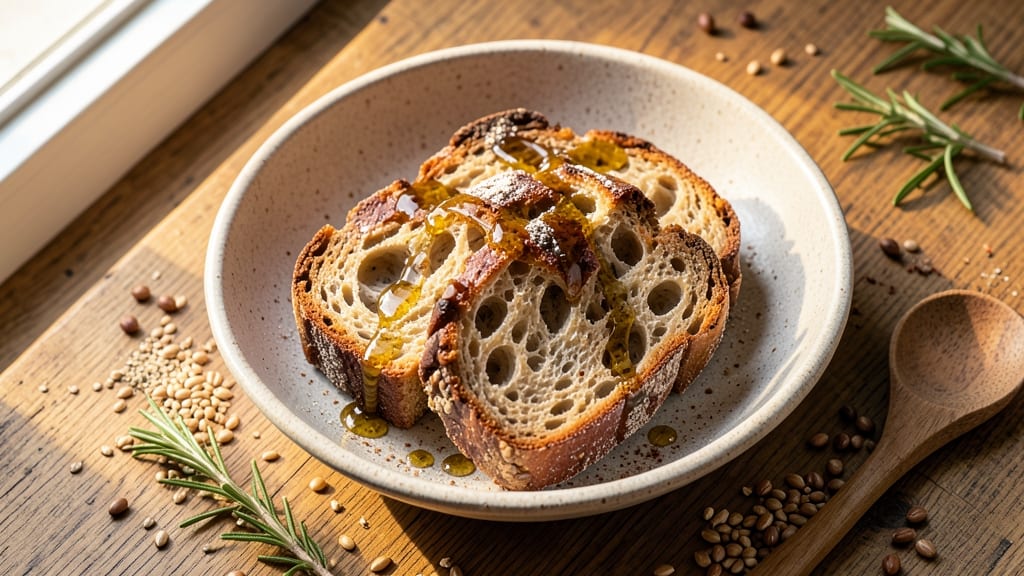
This ancient grains einkorn bread recipe brings the nutty, wholesome flavor of heritage wheat to your table with minimal effort. Unlike modern wheat, einkorn develops a distinct toasty depth when baked, making every slice a taste of history.
The secret lies in balancing hydration and fermentation—just enough time for flavor to bloom without overproofing.
What sets this recipe apart is the nutty richness einkorn delivers, paired with a crisp crust and tender crumb. No special equipment is needed—just a mixing bowl, dough scraper, and a little patience.
The dough comes together in 15 minutes, then ferments overnight for maximum flavor development, though a 4-hour cold proof works in a pinch for impatient bakers.
By the time it emerges from the oven, you’ll have a loaf with a golden, crackling crust and a crumb that’s both airy and substantial. The nutty aroma fills your kitchen, and each bite carries that ancient wheat character—earthy yet delicate.
This bread pairs beautifully with soups, stews, or simply buttered and toasted.
For best results, use 100% einkorn flour (no substitutions) and bake at 375°F for 40-45 minutes. The scoring pattern isn’t just decorative—it controls expansion, ensuring an even rise. Whether you’re baking for tradition or nutrition, this recipe delivers restaurant-quality results at home.
Ingredients for ancient grains einkorn bread
Nine ingredients transform into nutty, heritage-rich einkorn bread with ancient wheat character.
| Ingredient | Amount | Notes |
|---|---|---|
| Einkorn Flour 🌾 | 5 cups | 100% pure, no substitutions |
| Active Dry Yeast 🍞 | ¼ tsp | Instant yeast works too |
| Sea Salt 🧂 | 1 ½ tsp | Fine grain preferred |
| Extra-Virgin Olive Oil 🫒 | ½ cup | For dough enrichment |
| Warm Water 💧 | 1 ¾ cups | 105°F-110°F ideal |
| Honey 🍯 | 1 tbsp | For yeast activation |
| Cornmeal 🌽 | ¼ cup | For dusting baking sheet |
| Ice Water ❄️ | ¼ cup | For final dough adjustment |
| Semolina Flour 🌾 | ¼ cup | For dusting loaf pan |
| Coarse Sea Salt 🧂 | 1 tsp | For sprinkling crust |
Einkorn flour is the star—100% pure is non-negotiable here. Bob's Red Mill and King Arthur Flour carry excellent brands, but check labels for 100% einkorn (some blends mix with modern wheat). The yeast should be fresh—test by dropping a pinch in warm water with a pinch of sugar; if it bubbles within 5 minutes, it's active. For the olive oil, California avocado oil works too, but the fruity notes of extra-virgin add depth. Warm water is critical—too hot kills yeast, too cold slows fermentation. Use a thermometer if you're unsure.
No instant yeast? Active dry yeast needs 5 minutes in warm water with honey first. Short on cornmeal? Semolina or all-purpose flour works in a pinch, though texture differs slightly. The ice water is your secret weapon—add it gradually to the dough to control hydration and prevent stickiness. For a nutty boost, add 1 tbsp ground flaxseed to the dough. Want a darker crust? Swap semolina for whole wheat pastry flour in the pan dusting. The coarse sea salt isn't just for flavor—it creates that signature crackling crust.
Einkorn dough ferments best at 70-75°F—use a proofing box if your kitchen runs cold. The dough keeps 2 days in the fridge, wrapped tightly in plastic. For freezing, shape the loaf, freeze solid, then slice and toast directly from frozen. The crust stays crisp for 3 days at room temperature, but wrap tightly to maintain freshness. Leftovers? Toast slices and freeze for quick breakfast sandwiches—game-changer for busy mornings.
Why You'll Love This Recipe
- Five-Ingredient Magic: I swear by this recipe because it’s that simple—just einkorn flour, yeast, salt, olive oil, and water. No fancy mixers, no measuring cups that never align, just mix, knead (okay, fine, fold a few times), and let the dough do the work.
- Nutty, Chewy Bliss: That einkorn flour? It’s like a lighter, sweeter wheat—subtly toasty with a hint of caramel that sticks with you. Drizzle it with olive oil straight from the oven, and you’ve got a bread that tastes like a Mediterranean vacation in every bite.
- Weeknight & Picnic Hero: Between us, this bread is my go-to for everything. Toast it for breakfast, pack slices for lunch, or tear it over salads—it’s sturdy enough to handle travel but still soft enough to eat with your hands. (Yes, even on a Tuesday night.)
- Budget-Friendly Staple: Einkorn flour might sound fancy, but a little goes a long way, and this recipe makes two loaves—enough to feed my family for days. The olive oil adds richness without breaking the bank, and the dough keeps beautifully for 3-4 days, so no sad, crusty leftovers here.
Step-by-step instructions for ancient grains einkorn bread
This nutty, ancient-grain loaf comes together with simple steps and big flavor—let's bake it right.
Activate the Yeast and Mix the Dough Base
In a large mixing bowl, combine the 5 cups Einkorn Flour, 1.5 tsp Sea Salt, and 0.5 cup Extra-Virgin Olive Oil. Make a well in the center and add the 1.75 cups Warm Water (between 105°F-110°F) and 1 tbsp Honey. Stir with a wooden spoon until just combined—you're looking for a shaggy, sticky mixture with no dry flour remaining.
In a separate small bowl, sprinkle the 0.25 tsp Active Dry Yeast over ¼ cup of the warm water from your mixing bowl. Let it sit for 5 minutes until it becomes foamy—this confirms it's active. If it doesn't foam, your yeast may be dead, and you'll need to start over. Pour this yeast mixture into the flour mixture and stir again until fully incorporated. The dough will feel sticky but should come together when pressed gently.
Knead the Dough by Hand for Maximum Development
Lightly flour a clean work surface and turn out the dough. Sprinkle a thin layer of einkorn flour over the surface to prevent sticking. Knead the dough for 8-10 minutes by pressing down, folding, and turning it over. You're working the gluten, and you'll know it's ready when the dough becomes smooth, elastic, and springs back slightly when poked.
Here's the thing—einkorn flour has a lower gluten content than modern wheat, so don't over-knead or you'll develop too much gluten and lose that delicate, ancient-grain texture. The dough should feel slightly tacky but not wet. If it's too sticky, add 1 tablespoon of einkorn flour at a time until it's manageable.
Let the Dough Rise Until Nearly Doubled
Lightly grease a large bowl with extra-virgin olive oil and place the dough inside. Cover the bowl with a damp kitchen towel or plastic wrap and let it rise in a warm place (like your oven with the light on) for 1.5-2 hours. The dough should rise until it's about 50-75% larger in volume—it won't double like modern wheat dough, but it should visibly puff up and feel lighter when pressed gently.
If your kitchen is cool, place the bowl on top of your turned-off oven with the pilot light on to create a warm environment. Avoid direct sunlight, which can cause uneven rising. Once the dough has risen sufficiently, it's time to shape and let it rise again for that perfect oven-spring.
Shape the Loaf and Final Proof
Punch down the dough gently to release any air bubbles, then shape it into a loaf by folding the sides toward the center and rolling it into a log. Place the shaped loaf seam-side down in a 9x5-inch loaf pan that's been lightly greased with extra-virgin olive oil. Sprinkle the 0.25 cup Semolina Flour evenly over the top of the dough—this creates a beautiful crust and prevents sticking.
Cover the pan with a damp towel and let the dough proof for another 30-45 minutes until it's risen about 1 inch above the pan. The surface should look slightly domed and feel firm to the touch. Preheat your oven to 375°F while the dough proofs—you want everything ready to go when the time comes.
Bake to Golden Perfection with Steam
Once the oven is fully preheated, remove the towel and carefully transfer the loaf pan to the middle rack. Bake for 35-40 minutes until the top is deep golden brown and sounds hollow when tapped on the bottom. If the top browns too quickly, tent it loosely with aluminum foil to prevent over-browning while the interior finishes baking.
About 5 minutes before the bread is done, sprinkle the 1 tsp Coarse Sea Salt evenly over the top for that classic breadhouse flavor. Remove the bread from the oven and let it cool in the pan for 10 minutes, then transfer it to a wire rack to cool completely. The internal temperature should read 190°F-200°F when fully baked—this ensures a tender crumb.
Dust with Cornmeal for Final Presentation
Once the bread has cooled completely, dust the top generously with 0.25 cup Cornmeal using a fine-mesh sieve. This adds texture and prevents the crust from getting soggy. Slice the bread with a sharp serrated knife for clean cuts, and serve it warm or at room temperature with butter, olive oil, or your favorite jam.
This ancient-grain loaf keeps well at room temperature for 2-3 days wrapped in a clean kitchen towel. For longer storage, slice and freeze the bread—it reheats beautifully in a toaster or oven. The nutty flavor of the einkorn shines through with every bite, making it worth the effort.
Pro Tips For Making Ancient Grains Einkorn Bread
- Hydrate the Yeast First: Einkorn’s lower gluten means yeast needs a head start. Mix the yeast with warm water (around 100°F) and a pinch of salt for 5 minutes before adding flour—this guarantees fermentation kicks off strong, even if your kitchen isn’t toasty.
- Weigh Your Einkorn: Einkorn flour’s density varies wildly between brands. Use a kitchen scale for accuracy—1 cup of einkorn isn’t the same as 1 cup of all-purpose. Aim for 500g flour per recipe; eyeballing leads to dense, gummy loaves.
- Skip the Over-Kneading: Einkorn dough is delicate. Knead just until the gluten starts to form (about 3–4 minutes by hand), then stop. Overworking it turns the crumb tough—this isn’t sourdough; it’s about gentle development.
- Oil the Bowl Twice: Einkorn dough sticks like glue. Coat your rising bowl with olive oil before adding dough, then give it a final light oil spray after shaping. Trust me, you’ll curse the countertop otherwise.
Dietary considerations for this ancient grains einkorn bread
Gluten Sensitivity
Einkorn bread is naturally lower in gluten than modern wheat varieties, making it a softer option for those with mild gluten sensitivity. However, it's not gluten-free—it contains gluten proteins, though in a form that's easier to digest for many people.
If you're highly sensitive, try a 1:1 einkorn/gluten-free flour blend (like Bob's Red Mill Gluten-Free 1-to-1) for a similar texture. Always test small batches first, as reactions vary. 🌾
Grain-Free Adaptations
For a grain-free version, replace the einkorn flour with almond flour or cassava flour—both work well in bread recipes.
Use 1 cup almond flour plus ½ cup cassava flour as a substitute for the 5 cups einkorn flour, but reduce the water by ¼ cup since these flours absorb less moisture. Add 1 extra egg to bind the dough, and expect a denser, sweeter loaf.
The crust will be crispier, but the crumb will lack the airy quality of traditional einkorn.
Low-Carb Modifications
To reduce carbs, swap ½ cup einkorn flour for ½ cup psyllium husk powder—this adds fiber and improves rise without significantly altering flavor. For a keto-friendly approach, use 1 cup finely ground flaxseed meal (replace 1 cup einkorn) and ½ cup coconut flour (replace ½ cup einkorn).
The dough will be stickier, so add 1 extra egg and reduce water by ⅓ cup. Bake at 350°F for 30-35 minutes—these adaptations yield a denser, seed-rich loaf with a nutty depth. 🥜
Allergen Considerations
Einkorn bread is naturally free of common allergens like nuts, dairy, and eggs, making it safe for many dietary restrictions. However, always check your einkorn flour brand—some blends may process in facilities handling nuts or soy.
For egg-free baking, replace the egg with 1 tbsp ground flaxseed mixed with 3 tbsp water (let it sit for 5 minutes to gel). If avoiding olive oil, use avocado oil or melted coconut oil—just note the flavor shift. For dairy-free needs, this recipe already complies.
Nutritional Boosts
Enhance the bread’s nutritional profile by adding 1 tbsp ground chia seeds or 1 tbsp hemp seeds to the dough—they add omega-3s and protein without altering texture much. For a higher-protein loaf, mix in ½ cup vital wheat gluten (not gluten-free gluten!) to replace ½ cup einkorn flour.
This increases elasticity but requires 5 extra minutes of kneading. For iron-rich bread, sprinkle 1 tbsp nutritional yeast on top before baking—it adds a cheesy, umami note while boosting B vitamins. 💪
Nutrition facts
Frequently asked questions
Why does einkorn bread taste different from regular wheat bread?
Einkorn has a distinct nutty, slightly sweet flavor that comes from its ancient wheat genetics and lower gluten content. Unlike modern wheat, it lacks the strong wheat taste we're used to, offering a more complex, earthy profile. The lack of modern breeding also means no artificial additives—just pure grain flavor!
Can I make this einkorn bread without a loaf pan?
Shape the dough into a free-form boule or batard instead, and bake on a parchment-lined sheet. Brush with olive oil before baking for extra crust color. The baking time stays the same (35-40 minutes at 375°F), but check for doneness earlier—free-form bread often browns faster.
How do I know when the dough is properly kneaded?
Einkorn dough should feel smooth and slightly tacky, not wet. Press your finger gently—it should spring back slowly (not snap back like modern wheat). If it tears easily, knead 2 more minutes. Remember: einkorn develops less gluten, so don't overwork it or you'll lose that delicate ancient-grain texture.
What if my einkorn bread turns out dense instead of light?
Dense bread usually means over-kneading or underproofing. For future batches, knead only until smooth (8-10 minutes) and let the dough rise until it's 50-75% larger (not fully doubled). Also check your yeast—it should foam within 5 minutes when activated. Cold weather? Use a proofing box or warm oven with light on.
Can I substitute einkorn flour with spelt or kamut?
While spelt and kamut are ancient grains, they have different protein structures. For best results, stick with 100% einkorn flour—it's the only one that gives that signature nutty flavor and tender crumb. If you must substitute, try a 50/50 blend with whole wheat, but expect a denser texture. The flavor will be closer to modern wheat.