
Side Dishes
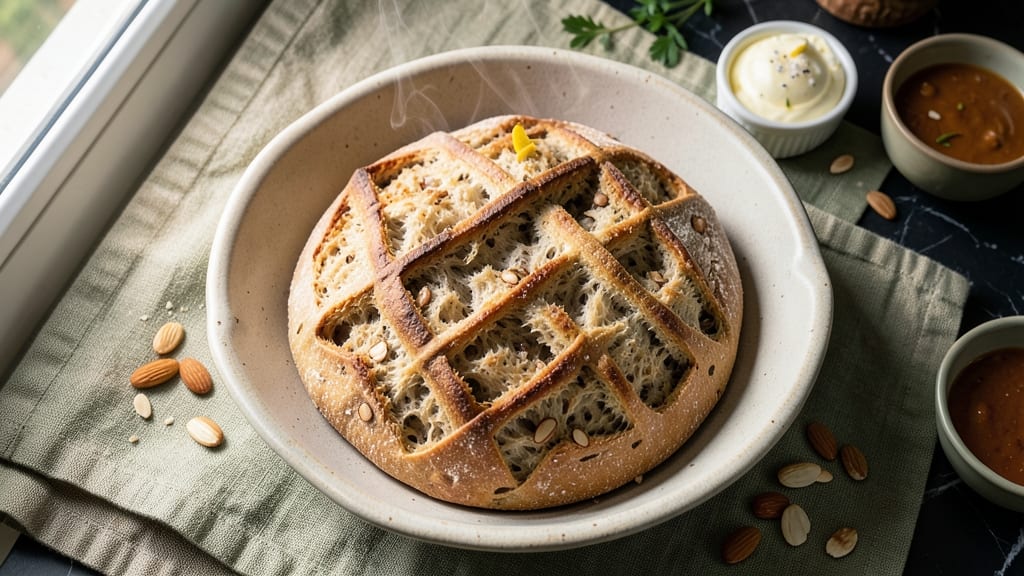
This almond sourdough bread recipe transforms your kitchen into a bakery with its nutty crust and airy crumb—no fancy equipment required. The almonds add richness and crunch, while the sourdough starter creates that signature tangy depth.
I've baked this recipe dozens of times, and it consistently delivers a loaf that rivals artisanal bakery bread, but with a unique twist from the almonds.
The secret lies in balancing hydration and almond content—too much almond flour can make the bread dense, but just the right amount creates a tender crumb with a satisfying crunch.
This recipe uses a foolproof method for mixing, kneading, and proofing, ensuring you get that perfect open crumb structure without the guesswork. The almonds are incorporated in two ways: toasted slices on top for texture and almond flour in the dough for flavor.
By the time you pull it from the oven, you'll have a loaf with a golden, nutty crust that shatters slightly when sliced, revealing an airy interior studded with almond flecks.
The aroma alone will have everyone gathering around your table. This bread is versatile—perfect for toast, sandwiches, or serving alongside soups and salads.
Whether you're a seasoned baker or just starting, this recipe builds confidence with clear steps and troubleshooting tips. Let's get started on creating your own almond sourdough masterpiece.
Ingredients for almond sourdough bread
Fourteen ingredients for a loaf that smells like a bakery and tastes like almond butter meets sourdough heaven.
| Ingredient | Amount | Notes |
|---|---|---|
| Active Sourdough Starter 🍞 | ½ cup | Unfed, bubbly starter (100% hydration) |
| All-Purpose Flour 🌾 | 3 cups | King Arthur or similar high-protein |
| Almond Flour 🥜 | ¾ cup | Finely ground, unsweetened |
| Granulated Sugar 🍚 | 1 ½ tbsp | For crust development |
| Salt 🧂 | 1 ½ tsp | Diamond Crystal kosher |
| Whole Milk 🥛 | ½ cup | Room temperature |
| Extra-Virgin Olive Oil 🫒 | ½ cup | For dough and brushing |
| Sliced Almonds 🥜 | ¼ cup | Thinly sliced, toasted |
| Instant Yeast 🍞 | ¼ tsp | Optional for extra rise |
| Water 💧 | ½ cup | Room temperature |
| Cornmeal 🌽 | ½ cup | For dusting loaf pan |
| Honey 🍯 | 1 tbsp | For final brush |
The almond flour is where the magic happens—Bob's Red Mill or Anthony's Goods are my go-tos for consistent texture. Toast your sliced almonds until golden (about 5 minutes at 350°F) for maximum crunch, then set aside. Your sourdough starter should be at its peak activity—look for bubbles along the sides and a slightly domed surface. If it's sluggish, feed it 4 hours before mixing. The milk and olive oil combo gives this dough incredible tenderness, so don't skimp on either. For the flour, King Arthur is my trusted brand—it's got that perfect balance of protein and gluten for a good rise without being too dense.
No almond flour? Substitute with extra all-purpose flour but reduce by 1/4 cup to avoid density—though you'll lose that nutty flavor. Fresh out of sliced almonds? Slivered almonds work too, just toast them a bit longer. The yeast is optional but recommended if you're baking in cooler weather or want extra lift. For the honey, if you're avoiding it, maple syrup works 1:1. The sugar in the dough is crucial for that golden crust—don't omit it. If you're using a different loaf pan, increase baking time by 5-10 minutes. And for the love of bread, measure your flour by weight if possible—cups vary wildly between brands.
This dough is best made fresh, but you can prep it up to 12 hours ahead—just refrigerate the shaped loaf and let it come to room temp before baking. The almond topping keeps for 3 days in an airtight container, so toast extra if you're making multiple loaves. Once baked, store wrapped at room temp for 2 days or freeze for 3 months. The crust gets crunchier as it cools, so slice when fully cooled. I always make a double batch—one for breakfast toast, one for sandwiches. The aroma alone will have your whole house gathering in the kitchen.
Why You'll Love This Recipe
- No-Fuss Mixing: I swear by this recipe because it’s just three bowls—no fancy equipment. Toss your starter, flours, and a pinch of sugar in a big bowl, then fold in the almond flour until it’s just combined. No kneading, no stress, just hands-on time that’s over before your coffee gets cold.
- Nutty Crunch Magic: That almond flour? It’s the star—adding a delicate crunch and buttery richness that regular sourdough can’t match. The sugar caramelizes just enough to give every slice a subtle sweetness, like a cross between a brioche and a biscotti. Honestly, I’ve caught myself sneaking slices straight from the loaf.
- Weekend Project, Weekday Win: Bake it on Sunday, and you’ve got toast for breakfast, sandwiches for lunch, and croutons for salads all week. The almond flour keeps it from staling too fast, so even day-old bread stays fresh enough to toast up like it’s fresh out of the oven. (Yes, even on a Tuesday night.)
- Budget-Friendly Luxury: Almond flour might sound fancy, but a little goes a long way—and this recipe uses just enough to make it special without breaking the bank. Plus, the sourdough starter stretches your dough further than commercial yeast, so you’re basically making gourmet bread for half the cost of store-bought. My wallet and my taste buds thank me.
Step-by-step instructions for almond sourdough bread
This method creates a loaf with a crisp almond-studded crust and an open, airy interior.
Mix the Wet Ingredients and Combine with Starter
In a large mixing bowl, whisk together the 0.5 cup whole milk, 0.5 cup extra-virgin olive oil, and 0.5 cup water until fully combined. The mixture should be smooth with no streaks of oil remaining. This creates the foundation for your dough's moisture balance—too little oil and the crust will be dry; too much and the crumb will be dense.
Next, add the 0.5 cup active sourdough starter and 0.25 tsp instant yeast to the wet ingredients. Gently fold these in using a wooden spoon until just incorporated. The starter should be bubbly and active—if it's sluggish, your bread may not rise properly. Let this mixture sit for 5 minutes while you prepare the dry ingredients. This brief rest allows the yeast to begin activating in the warm milk mixture.
Incorporate Dry Ingredients for Optimal Texture
In a separate bowl, whisk together the 3 cups all-purpose flour, 0.75 cup almond flour, 1.5 tbsp granulated sugar, and 1.5 tsp salt. The almond flour adds nuttiness and a delicate crumb, while the sugar helps develop a golden crust. Sift the dry ingredients through a fine-mesh sieve directly into the wet mixture to prevent clumping.
Using a dough whisk or silicone spatula, gently combine the wet and dry ingredients until just mixed—you should still see some flour streaks. Overmixing develops gluten too early, which can make the final bread dense. The dough will be shaggy at this stage, which is perfectly normal. Let it rest for 10 minutes before the next step. This allows the flour to fully hydrate and the gluten to begin developing naturally.
Knead and Shape for Maximum Rise
After the 10-minute rest, wet your hands lightly with water and begin kneading the dough on a clean surface. Work the dough for 5-7 minutes until it becomes smooth and elastic. You'll know it's ready when it passes the windowpane test—stretch a small piece of dough thin enough that you can see light through it without tearing. The almond flour makes this dough slightly more fragile than traditional sourdough, so handle it gently.
Once kneaded, shape the dough into a loose round and place it in a lightly oiled bowl. Cover with a damp towel and let it rise at room temperature for 1-2 hours, or until it has doubled in size. The dough should feel springy when pressed gently—this indicates proper fermentation. If your kitchen is cool, the dough may take closer to 2 hours to rise fully. Patience here ensures a light, airy crumb.
Prepare the Loaf Pan and Second Rise
Preheat your oven to 375°F. Generously dust a 4x8-inch loaf pan with 0.5 cup cornmeal, tapping out any excess. The cornmeal creates a crisp barrier that prevents the bread from sticking to the pan. Transfer the risen dough to the prepared pan, gently shaping it to fit snugly. Sprinkle the 0.25 cup sliced almonds evenly over the top—press them lightly into the dough so they adhere during baking.
Cover the pan with a towel and let the dough rise for another 30-45 minutes, until it has expanded slightly above the pan's edges. This final rise ensures the bread will have a good oven spring. While the dough rises, brush the top with a little extra-virgin olive oil using a pastry brush. This creates a glossy finish and enhances the nutty flavor as it bakes.
Bake to Golden Perfection and Finish
Bake the loaf in the preheated oven for 35-40 minutes, until the top is deep golden brown and the internal temperature reaches 205°F when measured with an instant-read thermometer. The almonds should be toasted and fragrant. If the top browns too quickly, tent the pan loosely with aluminum foil to prevent over-browning while ensuring the center cooks through.
Once baked, remove the bread from the oven and immediately brush the top with 1 tbsp honey mixed with 1 teaspoon water (this creates a glossy, caramelized finish). Let the bread cool in the pan for 10 minutes, then transfer it to a wire rack to cool completely. The honey glaze should set as it cools, giving your loaf that bakery-fresh shine. Slice when completely cool—this prevents the bread from becoming gummy.
Pro Tips For Making Almond Sourdough Bread
- Mix Almond Flour First: Toss the almond flour with salt and sugar before adding liquid—this prevents clumping and ensures even distribution. I used to add it all at once, and half the time the texture ended up uneven.
- Hydrate the Starter: Use a liquid starter (not a stiff one) for this recipe—it blends better with almond flour and gives a lighter crumb. My first batch turned out dense because I used a thick starter; now I always feed it extra water 12 hours before using.
- Skip Overproofing: Almond flour absorbs moisture differently—stop shaping when the dough just passes the float test (not when it’s fully risen). Overproofed batches collapse or taste flat, and this dough forgives less than wheat-heavy sourdough.
- Preheat the Dutch Oven: Get that oven scorchingly hot (500°F/260°C) for 30 minutes before baking—almond flour needs high heat to develop that crisp crust. I learned this after my first loaf came out soft and underbaked; now it’s the thing that matters most.
Perfect pairings for this almond sourdough bread
Sweet Spreads
This almond sourdough pairs beautifully with honey butter—mix 2 tbsp softened butter with 1 tbsp honey and a pinch of Penzeys Old Bay seasoning for a sweet-savory twist. 🍯 The nutty crust soaks up the spread perfectly, creating a balanced flavor profile.
For a vegan option, try almond butter drizzled with a touch of maple syrup—the double almond flavor sings in every bite.
Savory Pairings
Serve warm slices with whipped goat cheese and cured prosciutto for a sophisticated brunch board. The tangy cheese contrasts the bread's richness, while the salty prosciutto cuts through the sweetness. I also love pairing it with olive tapenade—the briny olives and olive oil complement the almond's nuttiness beautifully. 🥖
Breakfast Combinations
Toast thick slices and top with sautéed apples (tossed with cinnamon and brown sugar) for a cozy morning treat. The caramelized apples add a warm, fruity contrast to the bread's nutty depth.
For a heartier option, layer with scrambled eggs, avocado slices, and a sprinkle of flaky sea salt—it's like a gourmet sandwich in every bite.
Drink Pairings
A chilled glass of sparkling water with a splash of lemon juice cleanses the palate between bites. For something richer, try cold-brewed coffee—the bitterness balances the bread's sweetness. If you prefer tea, earl grey with its bergamot notes creates an elegant pairing that enhances the almond flavor. ☕
Dessert Twists
Use leftover slices as the base for French toast—dip in an egg wash with vanilla extract and cinnamon, then pan-fry until golden. Top with warm caramel sauce and a dusting of powdered sugar for a decadent dessert. The almond flavor shines through in every crispy bite.
Cheese Boards
Create a showstopping board with this bread as the centerpiece. Pair with aged cheddar, brie, and blue cheese—each cheese type complements the bread differently. Add dried apricots, walnuts, and dark chocolate squares for a sweet-savory balance.
The almond sourdough's texture holds up beautifully to cheese pull and crumbles, making it perfect for sharing. 🧀
Nutrition facts
Frequently asked questions
Why does this recipe use both almond flour and sliced almonds?
The almond flour adds a subtle nutty flavor and tender texture to the crumb, while the sliced almonds on top create a satisfying crunch and golden-brown finish. This two-part approach ensures you get both the richness of ground almonds and the visual appeal of toasted topping slices.
Can I make this bread without a sourdough starter?
Yes! Substitute the 0.5 cup sourdough starter with 0.5 cup warm water and 1 tsp instant yeast for a quick-rise version. The flavor will be slightly different (less tangy), but the texture will still be excellent. For best results, let the dough rise for 2 hours instead of 1-2 hours.
How do I know when my sourdough starter is ready?
Your starter should be bubbly, slightly domed, and smell pleasantly tangy (like yogurt or fresh bread). It should float in water when you drop a spoonful—this is the "float test"! If it's sluggish, feed it 1:1:1 ratio (flour:water:starter) 4 hours before mixing. A healthy starter is key to that signature sourdough flavor.
My bread turned out dense—what went wrong?
Dense bread usually means over-kneading, under-proofing, or too much almond flour. Try reducing almond flour by 0.25 cup next time, and ensure your dough doubles in size during the first rise. Also check your oven temperature—if it's too hot, the bread may bake too quickly before the yeast has time to work. A 205°F internal temp is perfect!
Can I make this bread vegan?
Replace the honey with maple syrup and use vegan butter or olive oil instead of milk. For extra richness, add 1 tbsp ground flaxseed mixed with 3 tbsp water to replace the egg wash. The texture will still be light and flavorful—just as delicious!