
Side Dishes
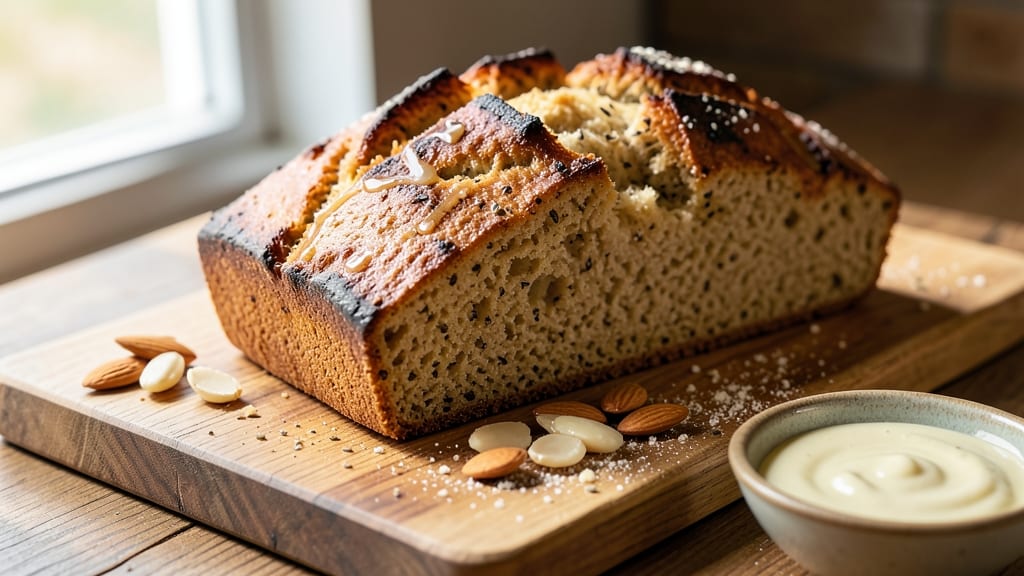
This almond pulp bread recipe transforms humble almond pulp into a moist, nutty loaf with a crisp crust and tender crumb. 🌟 The secret lies in blending almond pulp with plant-based ingredients to create a bread that's both hearty and delicate—perfect for sandwiches, toast, or serving alongside soups.
What makes this recipe special is how it repurposes almond pulp, a byproduct often discarded, into something extraordinary.
Unlike traditional breads, this version relies on aquafaba (chickpea brine) for structure and flaxseed as a yeast substitute, ensuring a vegan-friendly rise without compromising texture. The dough requires a gentle hand—overmixing disrupts the gluten-free structure, so we focus on folding and resting.
Baking at 350°F for 35-40 minutes yields a golden crust with a fragrant, nutty aroma that fills your kitchen.
The result is a bread with a moist crumb and subtle almond sweetness, ideal for those seeking a nutritious yet indulgent option. The crust stays crisp for days, while the interior remains soft, making every slice satisfying.
This recipe is a game-changer for plant-based bakers looking to elevate their repertoire with minimal effort.
Pair it with jam for breakfast or use it to make open-faced sandwiches—its versatility ensures it becomes a staple in your kitchen. Let’s get baking!
Ingredients for almond pulp bread
Transform almond pulp into a golden loaf with crisp crust and tender crumb—just these ingredients.
| Ingredient | Amount | Notes |
|---|---|---|
| Almond Pulp 🌰 | 2 ½ cups | Freshly processed, no additives |
| Aquafaba 🥫 | 1 cup | Fresh chickpea brine, whisked |
| Ground Flaxseed 🌾 | 3 tbsp | Mixed with 9 tbsp water for flax egg |
| All-Purpose Flour 🌾 | 1 ½ cups | Gluten-free blend preferred |
| Almond Flour 🌰 | ½ cup | Fine texture for smoothness |
| Brown Sugar 🍯 | ¼ cup | Lightly packed for sweetness |
| Active Dry Yeast 🍞 | ½ tsp | Vegan-certified for safety |
| Olive Oil 🫒 | ¼ cup | Extra-virgin for richness |
| Warm Water 💧 | ¾ cup | 110°F for yeast activation |
| Salt 🧂 | 1 tsp | Fine sea salt preferred |
| Vanilla Extract 🌸 | 1 tsp | Pure alcohol-free preferred |
| Baking Powder 🍞 | 1 tsp | Aluminum-free for gluten-free |
| Apple Cider Vinegar 🍎 | 1 tbsp | For tangy depth |
Almond pulp is the star here, so source fresh from reputable almond mills—avoid pre-packaged versions with additives. Bob’s Red Mill or Nuts.com offer high-quality, pure almond pulp perfect for baking. For aquafaba, use the brine from canned chickpeas (like Great Northern or Garbanzo brands)—never the water from cooking dried beans. The flaxseed should be freshly ground; pre-ground loses potency quickly. If you can’t find vegan-certified yeast, Saf-Instant works well and activates without warm water, which is ideal for this recipe’s delicate structure.
No almond pulp? Substitute with extra almond flour (up to 1 cup) but expect a denser texture. Aquafaba can be replaced with 1/4 cup applesauce or mashed banana, though the rise won’t be as tall. For the flax egg, chia seeds work at 1 tbsp chia + 3 tbsp water, but flaxseed provides better binding. Swap brown sugar for maple syrup or coconut sugar (reduce by 1 tbsp if using liquid sweeteners). If you’re avoiding yeast entirely, baking soda + vinegar creates a quick rise, though the crumb will be denser. Always whisk aquafaba until frothy—this mimics egg whites’ structure in traditional bread.
Store the baked loaf in an airtight container at room temperature for up to 3 days, though it’s best enjoyed fresh. For longer storage, slice and freeze portions for up to 3 months—toast directly from frozen. The crust stays crisp for 2 days if wrapped in parchment, while the crumb softens slightly but remains moist. To reheat, wrap slices in foil and warm in a 350°F oven for 5 minutes. This bread freezes beautifully, making it perfect for batch baking—portion before freezing for convenient single slices.
Why You'll Love This Recipe
- No Waste Magic: I swear by this trick—using almond pulp from homemade almond milk? That’s not trash, that’s gold. No extra shopping, no extra cost, just repurposing what’s already in your fridge.
- Nutty Crunch Surprise: The almond flour gives it this texture—light, airy, with just the right chew. And the aquafaba? It’s the secret to that tender crumb without a drop of dairy or eggs.
- Breakfast to Brunch: Toast it for breakfast, tear it into croutons for salads, or serve it warm with jam—it’s that adaptable. Honestly, I’ve even used it as a base for savory dips when I’m lazy.
- Budget-Friendly Staple: Ground flaxseed and aquafaba stretch every ingredient. You’re not just making bread—you’re stocking your pantry with a versatile, affordable staple that lasts for days.
Step-by-step instructions for almond pulp bread
This method transforms humble almond pulp into a bread with a nutty crust and irresistibly moist crumb.
👨🍳 Step 1: Create the Flax Egg and Activate the Yeast
In a small bowl, whisk together the 3 tbsp ground flaxseed with 9 tbsp warm water (about 110°F). Let it sit for 5 minutes until it thickens into a gel-like consistency—this is your flax egg substitute. The mixture should resemble raw egg whites in viscosity.
In a separate bowl, combine the 0.75 cup warm water, 0.5 tsp active dry yeast, and 1 tbsp apple cider vinegar. Let this mixture sit for 5-7 minutes until it becomes frothy. You'll see bubbles form on the surface—this confirms the yeast is active and ready to work. The vinegar adds tangy depth while helping the yeast activate more efficiently.
🥘 Step 2: Mix Wet Ingredients for Perfect Texture
In a large mixing bowl, combine the 2.5 cups almond pulp, 1 cup aquafaba, 0.25 cup olive oil, 0.25 cup brown sugar, 1 tsp vanilla extract, and the yeast mixture. Using a hand mixer or stand mixer with the paddle attachment, beat on medium speed for 2-3 minutes until completely smooth and well incorporated.
The aquafaba adds structure while keeping the bread moist, while the olive oil ensures a tender crumb. Here's the thing—don't overmix or you'll develop gluten that could make the bread dense. You're aiming for a thick, pourable batter at this stage. The almond pulp will give that signature nutty flavor we're after.
👨🍳 Step 3: Incorporate Dry Ingredients Gently
In a medium bowl, whisk together the 1.5 cups all-purpose flour, 0.5 cup almond flour, 1 tsp salt, and 1 tsp baking powder. Gradually add this dry mixture to your wet ingredients while mixing on low speed. Add the flax egg last and mix just until combined—you should still see some flour streaks.
Overmixing develops gluten, which would make this bread tough. We want that tender, moist crumb. The almond flour adds richness and helps bind everything together. Once fully combined, the batter should be thick but still spreadable. If it's too stiff, add 1-2 tablespoons of warm water to loosen it.
⏰ Step 4: Let the Dough Rest for Optimal Rise
Transfer the batter to a greased 9x5-inch loaf pan and smooth the top with a spatula. Cover the pan tightly with plastic wrap and let it rest at room temperature for 1 hour. This resting period allows the gluten to relax slightly and helps the bread develop better structure.
I know it seems counterintuitive to wait after mixing, but this step is crucial. The yeast needs time to begin working before baking. The batter will rise slightly during this time—you should see it puff up about ½ inch above the pan's edge. This indicates the yeast is active and ready for the oven.
🔥 Step 5: Bake to Golden Perfection
Preheat your oven to 350°F. Bake the bread for 50-55 minutes until the top is golden brown and a toothpick inserted in the center comes out clean. The bread is done when it springs back slightly when pressed in the center—this indicates proper doneness.
Here's where the magic happens: the almond pulp creates that beautiful nutty crust while keeping the interior moist. For extra browning, you can brush the top with a little warm water after 30 minutes in the oven. Let the bread cool in the pan for 10 minutes, then transfer to a wire rack to cool completely before slicing. This resting period ensures clean slices without crumbling.
Pro Tips For Making Almond Pulp Bread
- Whisk Aquafaba Hard: Beat the aquafaba until it’s glossy and holds stiff peaks—like meringue, but not quite. I used to skip this, and the bread turned out dense. Five minutes with a hand mixer makes all the difference for that light, airy crumb.
- Toast Almond Flour First: Dry-toast your almond flour in a 350°F oven for 8–10 minutes before mixing. This removes moisture and deepens the nutty flavor—no weird gummy texture later. (Yes, even if you’re impatient like me.)
- Don’t Overmix the Dough: Combine wet and dry ingredients just until combined—lumps are fine. Overworking the flaxseed and almond pulp tightens the gluten, and your bread will end up tough. Two turns of a spatula is all it takes.
- Preheat Pan and Proof Longer: Get your loaf pan piping hot before baking, then let the dough rise 10–15 minutes extra. The extra heat helps the almond pulp set properly, and the longer rise gives you that tall, proud rise. (Your future self will thank you.)
Best sauces and condiments for almond pulp bread
Sweet Almond Glaze
This simple glaze enhances the bread’s natural sweetness while adding a glossy finish. Whisk together 2 tbsp almond butter (like Justin’s unsweetened), 1 tbsp maple syrup, and 1 tsp vanilla extract.
Brush onto warm bread slices or drizzle over the loaf after baking. The almond butter complements the nutty flavor beautifully, while the maple syrup adds subtle caramel notes. 🌟
Herbed Olive Oil
For a savory twist, infuse ¼ cup extra-virgin olive oil with 1 tsp dried rosemary, 1 tsp dried thyme, and a pinch of flaky sea salt. Heat gently for 5 minutes, then strain.
Drizzle over toasted slices or use as a dip for bread cubes. The herbs cut through the richness of the almond pulp, balancing flavors perfectly.
Spiced Honey Butter
Combine 2 tbsp vegan butter (like Miyoko’s coconut oil-based), 1 tbsp raw honey, and ¼ tsp cinnamon in a small saucepan. Warm on low heat, stirring until melted and smooth.
Spread on warm bread for a cozy, slightly sweet contrast. The cinnamon adds warmth, while the honey deepens the almond’s natural sweetness. ✨
Tahini Cream
Mix 2 tbsp tahini, 1 tbsp lemon juice, and 1 tbsp warm water. Thin with more water if needed for a drizzle. This creamy, tangy sauce pairs wonderfully with the bread’s nutty depth.
Use it as a spread or dip—it’s especially delicious with sliced apples or pears. The tahini’s earthiness mirrors the almond pulp’s flavor profile. 💫
Chocolate-Dipped Slices
Melt 2 oz vegan dark chocolate, then dip half of each slice into the chocolate. Place on parchment-lined trays and chill for 10 minutes. The chocolate’s bitterness contrasts the bread’s sweetness, creating a decadent treat.
Store in an airtight container for up to 3 days. This is my go-to for dessert-style bread slices!
Nutrition facts
Frequently asked questions
Can I substitute almond pulp with almond flour?
You can try, but results will differ. Almond pulp has a finer texture and more moisture than almond flour, which gives this bread its signature tender crumb. For best results, use 1 cup almond flour + 1 tbsp water per 2.5 cups almond pulp—this mimics the moisture content. The bread will be denser but still delicious. The nutty flavor remains, though the texture will be slightly firmer.
Why did my bread turn out dense instead of light?
Overmixing or skipping the 1-hour rest are the most common culprits. This recipe relies on gentle folding and proper yeast activation. If the yeast didn't bubble or the batter was overworked, the gluten structure won't develop properly. Try reducing mixing time to 1-2 minutes and ensure your yeast is fresh (test it in warm water first). The aquafaba also needs to be whisked until frothy—this mimics egg whites' structure.
How do I store and reheat almond pulp bread?
Keep the loaf in an airtight container at room temperature for up to 3 days—the crust stays crisp while the crumb remains moist. For longer storage, slice and freeze portions for up to 3 months. To reheat, wrap slices in foil and warm in a 350°F oven for 5 minutes. For extra crispiness, toast directly from frozen. Never microwave—it makes the bread rubbery. The crust reheats beautifully this way!
Can I make this bread without yeast?
Yes, but expect a denser texture. Replace the yeast with 1 tsp baking soda + 1 tbsp apple cider vinegar (let it fizz for 5 minutes before mixing). The bread will rise quickly but won't be as light. For better results, use 1/2 cup mashed banana or applesauce instead of aquafaba—these add moisture and help with rise. Bake immediately after mixing, as there's no proofing time. The flavor will still be nutty and delicious!
What's the best way to use up extra almond pulp?
This versatile ingredient works in more than just bread! Blend it into energy balls with dates and cocoa, or stir into muffin batter for extra moisture. You can also make almond pulp pancakes by replacing half the flour with pulp. For savory options, mix into veggie burgers or use as a binder in meatballs. The key is balancing it with other ingredients—too much can make mixtures gummy. Start with 1/4 cup pulp per recipe and adjust to taste.