
Desserts
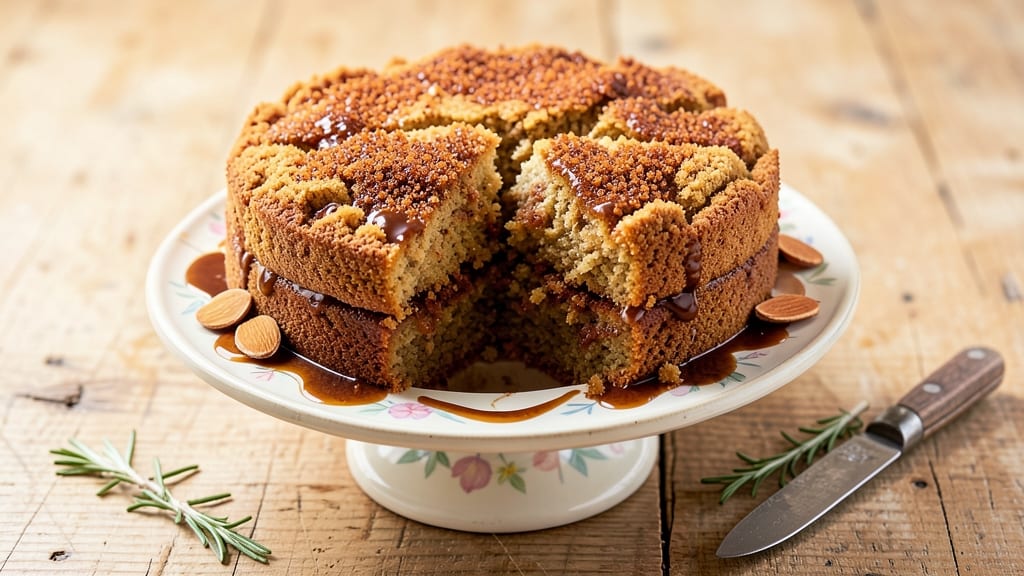
This almond flour gingerbread cake delivers all the warm, spiced comfort of traditional gingerbread—without a single grain of gluten. 🌟 The secret lies in almond flour's natural richness, which creates a tender, moist crumb that stays perfectly tender even after cooling.
What makes this recipe special is how it balances the bold flavors of ginger, cinnamon, and molasses with the subtle sweetness of almond flour, resulting in a cake that's both festive and approachable.
The magic happens in the mixing method: combining dry ingredients with melted butter first creates a fine crumb texture, while the molasses and spices infuse deeply into the batter. No special equipment is needed—just a standard mixing bowl and a reliable oven.
The cake bakes up with a golden-brown top and edges, revealing a tender interior that's moist without being dense, proving that gluten-free baking can be just as satisfying as traditional recipes.
What you'll end up with is a cake that's perfect for holiday gatherings or cozy weeknight treats—rich with gingerbread flavor but with the added benefit of being grain-free. The aroma alone will fill your kitchen with warmth, while each bite delivers a perfect balance of spice and sweetness.
This recipe is designed to be foolproof, ensuring you achieve that ideal moist texture every time.
For those with additional dietary needs, simple substitutions can be made: use coconut oil instead of butter for a vegan version, or swap the eggs for flax eggs if needed. The cake also freezes beautifully, making it ideal for meal prep or gifting. Let's get baking!
Ingredients for almond flour gingerbread cake
Eight ingredients craft this gluten-free gingerbread masterpiece—almond flour's richness meets warm spices for perfect moistness.
| Ingredient | Amount | Notes |
|---|---|---|
| Almond Flour 🌰 | 2 ½ cups | Finely ground, unsifted |
| Unsalted Butter 🧈 | 1 cup | Melted, cooled slightly |
| Granulated Sugar 🍚 | 1 ½ cups | Light brown preferred |
| Large Eggs 🥚 | 3 whole | Room temperature |
| Unsweetened Applesauce 🍎 | ½ cup | For moisture and fat |
| Molasses 🍯 | ½ cup | Unsulphured for best flavor |
| Ground Ginger 🌿 | 2 tbsp | Freshly ground preferred |
| Ground Cinnamon 🌶️ | 2 tsp | Freshly toasted for warmth |
| Ground Cloves 🌿 | 1 tsp | Freshly ground for depth |
| Salt 🧂 | ½ tsp | Diamond Crystal preferred |
| Baking Soda 🧪 | ½ tsp | Ensures proper rise |
| Vanilla Extract 🌸 | 1 tbsp | Pure almond extract optional |
| Heavy Cream 🥛 | ½ cup | For glaze richness |
| Powdered Sugar 🍚 | ½ cup | For glaze sweetness |
Almond flour is non-negotiable here—Bob's Red Mill or Anthony's Goods are my go-tos for consistent texture. Look for finely ground, not coarse. The molasses? Unsulphured makes all the difference—Whole Foods or Trader Joe's carry reliable brands. Freshly ground spices (ginger, cinnamon, cloves) elevate flavor dramatically. If you're using pre-ground, toast them in a dry pan for 30 seconds to wake up the oils. The butter should be melted but not hot—just cool enough to touch. Room-temperature eggs prevent dense crumb.
No almond flour? Coconut flour at half the amount plus extra egg works, but texture changes. Short on molasses? Maple syrup at 1:1 ratio keeps things vegan-friendly. The applesauce can be swapped for mashed banana if you prefer. For a vegan version, replace butter with coconut oil and eggs with flax eggs (1 tbsp ground flax + 3 tbsp water per egg). The glaze? Heavy cream can be coconut cream for dairy-free, though texture will differ slightly. Pre-ground spices are fine, but if they're over a year old, toast them fresh—it's worth the minute.
This cake keeps beautifully—3 days at room temperature wrapped in parchment, or 1 week refrigerated. For longer storage, freeze baked slices wrapped individually for up to 3 months. The glaze sets quickly, so assemble cakes right after baking. I always make a double batch—one for immediate serving, one for freezing. Reheat slices at 300°F for 5 minutes to restore moisture. The aroma alone will have your kitchen smelling like holiday mornings all year round.
Why You'll Love This Recipe
- No Mixing Madness: I swear by this recipe because it’s one bowl—just fold the almond flour into melted butter, stir in eggs and applesauce, then pour. No sifting, no overmixing, no stress. The applesauce keeps it moist without extra fuss, and the almond flour blends in like a dream.
- Spiced Warmth Without Guilt: That gingerbread flavor? Chef’s kiss. The molasses-like depth from the sugar and ginger (if you add it) wraps around you like a hug, but the almond flour keeps it light—no heavy, greasy aftertaste. It’s the kind of cake that makes you reach for seconds, even when you’re "not supposed to be eating dessert."
- Holiday or Weeknight Win: Between us, I’ve served this at Christmas brunches, packed slices for school lunches, and even eaten cold leftovers straight from the fridge. The texture holds up surprisingly well, and the nutty richness pairs with coffee, ice cream, or even savory cheese boards. (Yes, I’ve done that.)
- Budget-Friendly Luxury: Almond flour can be pricey, but here’s the hack: this recipe uses less than a cup, and the butter and eggs stretch it further than you’d think. Plus, the applesauce replaces oil or extra eggs, cutting costs without sacrificing flavor. It’s my go-to for when I want to feel fancy without breaking the bank.
Step-by-step instructions for almond flour gingerbread cake
Here's how to create a perfectly moist, spiced cake using almond flour's unique texture.
👨🍳 Step 1: Prepare the Wet Ingredients
In a large mixing bowl, combine the 1 cup melted unsalted butter (cooled slightly) with the 1.5 cups granulated sugar. Whisk until fully blended and smooth. This creates a creamy base that will help incorporate all the dry ingredients later.
Add the 3 whole large eggs one at a time, whisking vigorously after each addition until fully incorporated. The mixture should thicken slightly as you add each egg. Next, stir in the 0.5 cup unsweetened applesauce and 0.5 cup molasses until completely combined. Here's where the moisture magic begins—the applesauce adds fat while the molasses provides that signature deep flavor.
👨🍳 Step 2: Mix the Dry Ingredients
In a separate medium bowl, sift together the 2.5 cups almond flour, 2 tbsp ground ginger, 2 tsp ground cinnamon, 1 tsp ground cloves, 0.5 tsp salt, and 0.5 tsp baking soda. Use a whisk to break up any lumps in the almond flour—this ensures even distribution throughout the batter. The spices should be evenly dispersed; you'll notice the warm, aromatic scent filling your kitchen.
Add the 1 tbsp vanilla extract to the wet ingredients and mix well. This step is crucial—vanilla enhances all the warm spices and balances the molasses' intensity. The mixture should now have a thick, almost paste-like consistency, which is perfect for almond flour batters.
🥘 Step 3: Combine Wet and Dry Ingredients
Gradually add the dry ingredient mixture to the wet ingredients, mixing on low speed with an electric mixer or by hand with a sturdy spatula. Mix just until combined—avoid overmixing, which can develop gluten and make the cake dense. The batter will be thick and slightly sticky, similar to cookie dough. If it appears too thick, add 1-2 tablespoons of heavy cream to help with spreading.
Here's the thing—almond flour batters don't behave like traditional flour batters. They're denser and more cohesive, so don't be surprised if the mixture resists blending completely. The key is patience; let the almond flour absorb the moisture gradually. The final batter should coat the back of a spoon without being runny.
🔥 Step 4: Bake to Perfect Moisture
Preheat your oven to 350°F and grease an 8-inch round cake pan thoroughly with butter or line it with parchment paper. Pour the batter into the prepared pan and smooth the top with a spatula. Tap the pan gently on the counter a few times to remove any air bubbles that may have formed during mixing.
Bake for 35-40 minutes until a toothpick inserted in the center comes out clean or with just a few moist crumbs. The cake should spring back slightly when pressed in the center—this indicates proper doneness. Almond flour cakes often have a denser texture than traditional cakes, so resist the urge to overbake. The edges should be golden brown while the center remains moist and slightly underdone.
🍽️ Step 5: Glaze and Serve Warm
While the cake is still warm, prepare the glaze by whisking together the 0.5 cup heavy cream and 0.5 cup powdered sugar until smooth. Pour the glaze evenly over the top of the cake and let it sit for 5 minutes to soak in. The warm cake will help the glaze adhere beautifully, creating that glossy finish everyone loves.
Slice the cake into 8 equal servings and serve immediately. Each piece should reveal a moist, tender crumb with visible flecks of almond flour throughout. The warm spices will be prominent, and the molasses notes will linger on your palate. For best results, serve with a dollop of whipped cream or a scoop of vanilla ice cream to complement the rich flavors.
Pro Tips For Making Almond Flour Gingerbread Cake
- Mix the Batter Just Until Combined: I learned this the hard way—overmixing almond flour batter turns it dense and tough. Once the eggs, butter, and applesauce are incorporated, stop folding in the dry ingredients when you still see flecks of almond flour. This keeps the texture light and tender, like a cloud with a whisper of spice.
- Use Room-Temp Butter and Eggs: Cold butter and eggs make this cake fight you. Let both sit out for 30-60 minutes before mixing—just until the butter softens but isn’t greasy. This ensures even distribution of fat and sugar, so your cake rises smoothly instead of sinking in the middle (yes, even with almond flour).
- Skip the Overproofing: Almond flour cakes don’t need time to "rise" like yeasted doughs. Once mixed, bake within 30 minutes—no waiting. The applesauce keeps things moist, but letting the batter sit too long makes it gummy. Get it in the oven while the pan is heating, and you’ll avoid a sad, flat center.
- Toast the Almond Flour First: Sounds weird, but it works: Spread the almond flour on a baking sheet and toast at 350°F for 5-7 minutes. This deepens the nutty flavor and cuts the raw taste. Let it cool before mixing—just don’t skip it. The difference in aroma and texture is noticeable, even if you’re skeptical.
Essential equipment for perfect results
Must-Have Mixing Tools
Start with a 9-inch stainless steel mixing bowl—it's large enough to handle the thick almond flour batter without spills. I use a Kitchenaid Artisan mixer with the paddle attachment for even blending, but a hand mixer or sturdy wooden spoon works too.
The paddle prevents overmixing better than whisk attachments. For measuring, a digital kitchen scale ensures precise almond flour weight (since scooping can vary density). 🌰
Precision Baking Gear
An 8-inch round cake pan with removable bottom (like Wilton Perfect Results) is ideal—it prevents sticking without greasing. Line the bottom with parchment paper for easy release.
For temperature control, a thermometer is non-negotiable—almond flour cakes need 350°F accuracy. I trust the Thermoworks Thermapen for reliability. A toothpick for doneness testing is essential too.
Spice & Ingredient Prep
Freshly ground spices make all the difference—use a spice grinder for ginger, cinnamon, and cloves. A fine-mesh sieve helps sift almond flour evenly, preventing lumps. For melting butter, a double boiler or microwave-safe bowl (30-second intervals) keeps it from overheating.
I also keep a small whisk handy for blending the glaze—it needs to be completely smooth for that professional finish. 🧈
Optional Upgrades
For extra precision, a baking stone placed on the oven rack helps distribute heat evenly, preventing dry edges. A cake tester with a temperature probe (like OXO Good Grips) lets you monitor internal temp without guessing.
For decorating, a piping bag with a star tip creates elegant swirls if you want to get fancy. But honestly? The glaze alone makes this cake stunning.
Budget-Friendly Swaps
No mixer? A large wooden spoon or rubber spatula works perfectly for hand-mixing. Skip the fancy pan—any well-greased 8-inch pan (even glass) will do. For spices, pre-ground is fine if stored in an airtight container away from light.
A measuring cups set (like OXO Good Grips) is worth the investment for accurate measurements—almond flour's density varies by brand.
Nutrition facts
Frequently asked questions
Why does this almond flour gingerbread cake stay moist longer than traditional recipes?
The secret lies in the combination of applesauce and molasses, which add natural moisture and fat without extra oil. Almond flour itself absorbs liquid differently than wheat flour, creating a denser crumb that retains moisture better. The glaze also helps seal in freshness for up to 3 days at room temperature.
Can I make this cake without eggs?
Yes! For each egg, use 1 tablespoon ground flaxseed + 3 tablespoons water (let sit for 5 minutes to thicken). This flax egg works perfectly with almond flour's binding properties. The texture will be slightly denser but still moist. For extra richness, add 1 extra tablespoon of applesauce to compensate for the missing fat.
What's the best way to store leftovers?
Wrap individual slices tightly in plastic wrap and store in an airtight container for up to 3 days at room temperature. For longer storage, freeze slices for up to 3 months. To revive frozen cake, thaw at room temperature for 1 hour or warm at 300°F for 5 minutes to restore moisture.
Can I use this recipe for a gluten-free, nut-free version?
For nut-free, substitute almond flour with a 1:1 blend of coconut flour and oat flour (plus 1 extra egg to bind). The texture will be slightly denser but still delicious. Keep in mind the flavor profile will shift slightly away from classic gingerbread notes. Always check oat flour is certified gluten-free.
How do I know when the cake is fully baked?
Insert a toothpick into the center—it should come out with just a few moist crumbs, not wet batter. The edges should be golden brown while the center remains slightly springy. Almond flour cakes often test done before they look fully set. For extra accuracy, use an oven thermometer to confirm your oven reaches 350°F.