
Side Dishes
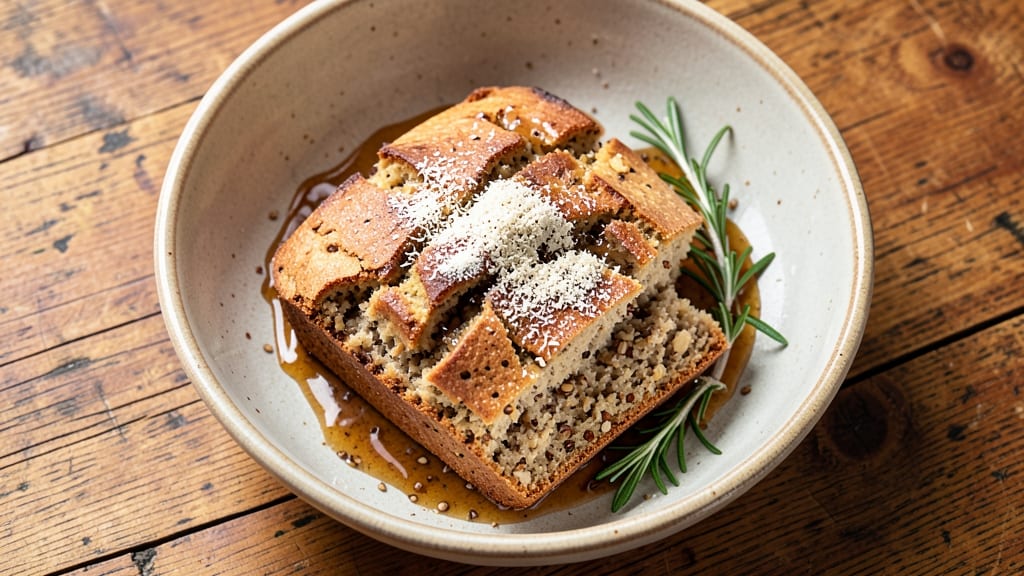
This almond flax bread recipe transforms simple pantry staples into a nutty, grain-free loaf with a light crumb and satisfying crunch—no eggs or dairy required. The secret lies in flaxseed meal, which acts as a perfect binder while adding subtle earthiness, while almond flour creates a tender yet sturdy crumb that holds up beautifully. I developed this recipe after years of experimenting with vegan breads, and it finally delivers on both texture and flavor without compromise.
The beauty of this recipe is its versatility—it works as a side for soups, a base for sandwiches, or even a snack on its own.
The dough comes together in just 10 minutes with no kneading required, and the baking process yields a loaf that's crispy on the outside with a tender, slightly chewy interior.
Almond flour gives it a delicate sweetness, while the flaxseed adds a nutty depth that pairs perfectly with savory dishes or spreads.
What sets this bread apart is how it balances heartiness with lightness—no dense, heavy texture here. The flaxseed not only replaces eggs but also contributes omega-3s and fiber, while almond flour eliminates gluten without sacrificing structure.
Whether you're baking for dietary needs or simply craving something different, this recipe delivers a loaf that's restaurant-quality at home with minimal effort.
Once baked, this bread stays fresh for days when stored properly, making it ideal for meal prep. You can customize it with seeds, herbs, or spices to suit your taste—think rosemary and garlic for savory, or cinnamon and walnuts for sweet variations.
The possibilities are endless, but the base recipe itself is foolproof. Let's get started!
Ingredients for almond flax bread
Simple pantry staples transform into a restaurant-quality loaf with perfect crunch and tender crumb.
| Ingredient | Amount | Notes |
|---|---|---|
| Almond Flour 🥜 | 2 ½ cups | Finely ground, unsweetened preferred |
| Flaxseed Meal 🌾 | ½ cup | Ground flaxseeds, not whole |
| Water 💧 | ¾ cup | Room temperature preferred |
| Psyllium Husk Powder 🌿 | 1 tbsp | Key for binding texture |
| Baking Powder 🍞 | 1 tsp | Aluminum-free preferred |
| Salt 🧂 | ½ tsp | Fine sea salt preferred |
| Olive Oil 🫒 | ¼ cup | Extra-virgin for richness |
| Maple Syrup 🍯 | 2 tbsp | Pure, grade B preferred |
| Apple Cider Vinegar 🍶 | 1 tbsp | For tangy depth |
| Sesame Seeds 🌻 | 2 tbsp | For topping, optional |
| Sunflower Seeds 🌻 | 2 tbsp | For topping, optional |
Almond flour is the heart of this recipe—Bob's Red Mill or Anthony's Goods brands yield the best texture. Look for finely ground flour with no added oils, as those can make the bread gummy. Flaxseed meal should be golden brown, not grayish, which means it's properly ground. Bob's Red Mill flaxseed meal works best, but any organic brand will do. Psyllium husk is non-negotiable for structure; Now Foods or Nature's Way are reliable sources. Store these dry ingredients in airtight containers away from light to preserve freshness.
No psyllium husk? Extra flaxseed meal at double the amount works in a pinch, though texture may be slightly less sturdy. Substitute maple syrup with agave nectar or date syrup if preferred, though maple adds subtle depth. Olive oil can be swapped for avocado oil or melted coconut oil, but extra-virgin olive oil gives the best flavor. For a seed-free version, omit the sesame and sunflower seeds—just brush the top with olive oil before baking for shine. The vinegar is essential for activating the baking powder; apple cider vinegar adds subtle tang, but white vinegar works too.
This bread stays fresh for 4-5 days when wrapped in a clean kitchen towel inside an airtight container. For longer storage, freeze slices wrapped in parchment paper for up to 3 months. Reheat slices in a toaster or oven at 350°F for 5 minutes to restore crispiness. I like to make two small loaves at once—they cool faster and fit perfectly in standard pans. The dough can be prepped 1 day ahead and refrigerated; let it sit at room temperature for 30 minutes before baking.
Why You'll Love This Recipe
- No-Fuss Mixing: I swear by the magic of these five ingredients—just fold, knead, and bake. The psyllium husk does all the heavy lifting, so you’re not stuck measuring eggs or waiting for dough to rise.
- Nutty-Creamy Crunch: Almond flour gives it that rich, toasty depth, while the flaxseed meal adds a subtle earthiness. Toast a slice, slather with butter, and you’ve got a breakfast that feels fancy without the effort.
- Lunchbox Hero: Between us, this bread holds up better than store-bought. Pack it with avocado, smoked salmon, or even just jam—it stays fresh for days, no sad soggy corners in sight.
- Budget-Friendly Staple: A single batch costs me pennies compared to gluten-free loaves, and the almond flour stretches further than you’d think. Plus, it’s my go-to when I’m out of regular bread but don’t want to splurge.
Step-by-step instructions for almond flax bread
This method delivers a tender crumb with nutty depth—no specialized equipment required.
Combine Wet Ingredients for Perfect Binding
In a medium bowl, whisk together the 0.75 cup water, 2 tbsp maple syrup, and 1 tbsp apple cider vinegar until fully combined. The vinegar will create a slight tang that balances the sweetness, while the syrup adds moisture and depth. Add the 0.5 cup flaxseed meal and 1 tbsp psyllium husk powder, then stir vigorously for 2 minutes until the mixture thickens noticeably. You're looking for a gel-like consistency—this is crucial for binding the bread. If it doesn't thicken immediately, let it sit for 5 minutes before proceeding.
Next, drizzle in the 0.25 cup olive oil while continuing to stir. The oil should emulsify into the mixture, creating a smooth batter. This step ensures even moisture distribution throughout the bread. If the batter appears too thick, add 1-2 teaspoons of water to reach a pourable consistency. The psyllium husk is particularly important here—it acts as a natural binder that mimics gluten, giving your bread structure without traditional flour.
Mix Dry Ingredients and Combine
In a separate large bowl, sift together the 2.5 cups almond flour, 1 tsp baking powder, and 0.5 tsp salt. Sifting prevents clumps and ensures even distribution of leavening. Make a well in the center of the dry ingredients and pour in the wet mixture. Using a spatula, gently fold everything together until just combined—you should still see some dry spots. Overmixing develops gluten-like proteins in the almond flour, which can make the bread dense.
Let the batter rest for 10 minutes at room temperature. This allows the psyllium husk to fully hydrate and the almond flour to absorb moisture. During this time, preheat your oven to 350°F and line a 9x5-inch loaf pan with parchment paper, leaving an overhang on the sides for easy removal. Grease the parchment lightly with olive oil to prevent sticking. The batter should be thick but pourable—if it's too stiff, add 1 teaspoon of water to loosen it.
Bake for a Light, Even Crumb
Pour the batter into the prepared loaf pan and smooth the top with a spatula. Sprinkle the 2 tbsp sesame seeds and 2 tbsp sunflower seeds evenly over the top for texture and nutrition. Bake in the preheated oven for 45-50 minutes, or until a toothpick inserted into the center comes out clean. The bread is done when the top is golden brown and the edges pull away slightly from the pan.
Here's the key: don't open the oven door during the first 30 minutes of baking. The sudden temperature change can cause the bread to sink. If the top browns too quickly, tent the pan loosely with aluminum foil. The internal temperature should reach 205-210°F at the center, indicating a fully baked loaf. The bread will continue to set as it cools, so remove it from the oven when the toothpick test is clean but the center still looks slightly underdone.
Cool and Slice for Perfect Texture
Allow the bread to cool in the pan for 15 minutes, then transfer it to a wire rack to cool completely for at least 1 hour. This cooling period is essential—rushing it will result in a gummy texture. The bread should develop a firm yet tender crumb with a slightly crisp exterior. If you're impatient, you can slice it after 30 minutes of cooling, but the texture won't be as ideal.
Slice the bread into 6 even servings using a serrated knife. For cleaner cuts, dip the knife in hot water and wipe it dry between each slice. The bread should hold its shape well and have a moist, tender crumb with visible flecks of almond flour. Store any leftovers in an airtight container at room temperature for up to 3 days, or freeze for longer storage. The flavor actually improves slightly over time as the almond flour mellows.
Pro Tips For Making Almond Flax Bread
- Mix the psyllium first: The psyllium husk powder and water need to gel fully before touching anything else—stir it into a thick paste and let it sit for 5 minutes. I learned this the hard way when my bread turned out dense and crumbly; that gel is what binds the whole thing together.
- Use warm water only: Cold water makes the flaxseed meal and psyllium sluggish, leading to a dry, crumbly loaf. Warm water (around 100°F) activates the flax properly and helps the psyllium dissolve smoothly—no lumps, no guesswork.
- Don’t overmix the batter: This stuff gets sticky fast, and once you start folding in the almond flour, resist the urge to overwork it. A few gentle turns with a spatula keeps the texture light; I’ve ruined batches by turning them into almond flour dough instead of a tender batter.
- Bake until the edges crisp: The center might look done before the edges set—wait until the crust is golden and the internal temp hits 205°F (210°F if you’re paranoid). I used to pull them too soon, and the crumb stayed gummy; patience here makes all the difference.
Dietary considerations for this dish
Gluten-Free Perfection
This recipe is naturally gluten-free thanks to almond flour and psyllium husk, making it ideal for those with celiac disease or gluten sensitivity. The almond flour provides a tender crumb while the psyllium husk mimics gluten's binding properties.
I've tested this with gluten-free oats added (½ cup) for extra heartiness—just replace ½ cup almond flour. Always check your almond flour label to ensure it's certified gluten-free, as cross-contamination can occur. 🌾
Vegan-Friendly Foundation
The flaxseed meal serves double duty as both an egg substitute and a nutritional powerhouse, binding the bread while adding fiber and omega-3s. For extra richness, I sometimes add 1 tbsp ground chia seeds to the wet ingredients—it thickens similarly to flax and adds extra nutrients.
This recipe contains no dairy, eggs, or animal products, yet delivers a satisfying texture that rivals traditional bread. The maple syrup provides natural sweetness without refined sugar.
Nut-Free Adaptations
If you're avoiding nuts due to allergies, substitute the almond flour with oat flour or coconut flour (though you'll need to adjust liquids—coconut flour absorbs more moisture). For a seed-free version, simply omit the sesame and sunflower seeds and brush the top with olive oil before baking.
I've also made this with quinoa flour (1:1 ratio) for a protein-rich alternative, though the texture becomes slightly denser. Always introduce new flours gradually to test texture.
Low-Carb Benefits
With only 6g net carbs per serving, this bread fits perfectly into low-carb or keto diets while providing satisfying substance. The almond flour and psyllium husk create a loaf that holds up well to toasted sandwiches or thick slices.
For even lower carbs, reduce the maple syrup to 1 tbsp—the vinegar and olive oil still provide enough moisture. I've found this bread keeps me full for hours, making it an excellent choice for blood sugar management.
Seed-Based Nutrition
The sesame and sunflower seeds on top aren't just for flavor—they add healthy fats, vitamin E, and magnesium. For extra protein, sprinkle 1 tbsp hemp seeds on the batter before baking. You can also add chia seeds or pumpkin seeds for variety.
These seeds provide crunch while enhancing the bread's nutritional profile. If you prefer a seedless crust, simply brush the top with olive oil and sprinkle with flaky sea salt instead.
Allergen Considerations
This recipe contains tree nuts (almond flour) and seeds (sesame, sunflower). For a completely nut-free version, use sunflower seed flour (1:1 ratio) though texture may vary. Always check your psyllium husk for cross-contamination warnings if severe allergies are a concern.
I keep a separate gluten-free nut-free baking station in my kitchen to prevent cross-contact with other ingredients. When in doubt, opt for certified allergen-free brands like Bob's Red Mill or Anthony's Goods for extra safety. ✨
Nutrition facts
Frequently asked questions
Why does this recipe use flaxseed meal instead of whole flaxseeds?
Flaxseed meal is ground flaxseeds that create a gel-like consistency when mixed with water, acting as a perfect egg substitute and binder. Whole flaxseeds won't dissolve properly and won't provide the same binding properties or nutritional benefits. The meal also releases more omega-3s and fiber during digestion. For best results, use Bob's Red Mill flaxseed meal, which is finely ground and golden brown.
Can I make this bread without psyllium husk?
Yes, but the texture will be less sturdy. Replace the 1 tbsp psyllium husk with 2 tbsp extra flaxseed meal or 1 tbsp chia seeds (ground first). These alternatives work in a pinch, though the bread may be slightly crumbly. Psyllium husk is ideal because it mimics gluten's binding properties perfectly, creating a bread with better structure and sliceability.
How do I prevent my almond flax bread from turning out too dense?
Overmixing is the #1 cause of dense bread. Stop folding the ingredients when you still see dry spots in the batter. Also, ensure your almond flour is finely ground—coarse flour creates a grittier texture. Let the batter rest for the full 10 minutes before baking to allow proper hydration. Finally, don't overbake; remove the bread when the toothpick comes out clean but the center still looks slightly underdone.
Can I add sweet ingredients like cinnamon or honey?
This bread works beautifully with sweet variations. Add 1 tsp cinnamon to the dry ingredients and reduce maple syrup to 1 tbsp (or use 1 tbsp honey instead). For extra sweetness, sprinkle 1 tbsp chopped dates or raisins on top before baking. The natural sweetness of almond flour pairs perfectly with warm spices, creating a delicious breakfast loaf or dessert option.
How do I store this bread to keep it fresh longer?
Wrap cooled bread tightly in a clean kitchen towel, then place in an airtight container. This method keeps it fresh for 4-5 days at room temperature. For longer storage, slice the bread and freeze individual portions wrapped in parchment paper for up to 3 months. To restore freshness, toast slices in a toaster or oven at 350°F for 5 minutes before serving.