
Side Dishes
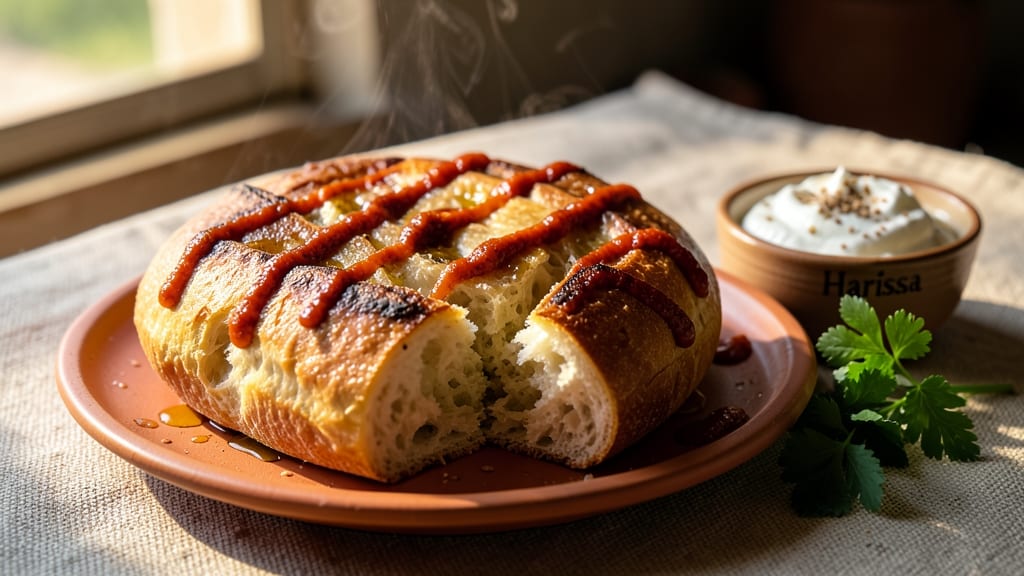
This Algerian bread recipe delivers the perfect balance of flaky layers and aromatic crunch that defines traditional North African baking. 🌟 The secret lies in a simple yet precise dough made with flour, olive oil, and yeast, shaped into rounds before baking to achieve that signature crispy crust and tender interior.
What sets this apart is the optional harissa and semolina topping, adding a North African twist that elevates everyday meals.
The dough preparation is straightforward but requires patience—kneading until smooth and letting it rest ensures the bread develops its signature texture.
Shaping the dough into rounds and baking at high heat creates those irresistible layers, while the harissa and semolina topping adds a subtle spicy crunch that pairs perfectly with soups, stews, or as a standalone snack.
This recipe captures the heart of Algerian cuisine in every bite, bringing a taste of tradition to your kitchen.
What makes this bread truly special is its versatility—serve it warm with olive oil and za'atar, or use it to soak up flavors in tagines and couscous dishes. The combination of flaky layers and aromatic toppings makes it a standout side that transforms any meal into something extraordinary.
Whether you're baking for a family gathering or a quiet weeknight dinner, this Algerian bread recipe delivers restaurant-quality results at home.
For an added touch, sprinkle nigella seeds or sesame seeds on top before baking to enhance the visual appeal and add a nutty depth of flavor. The bread stays fresh for days when stored properly, making it ideal for meal prep or sharing with neighbors.
Let’s bring the flavors of Algeria to your table with this timeless recipe.
Ingredients for algerian bread
Eight simple ingredients create North African flaky perfection with harissa heat and semolina crunch.
| Ingredient | Amount | Notes |
|---|---|---|
| All-Purpose Flour 🌾 | 4 cups | High-protein for better structure |
| Active Dry Yeast 🍞 | 2 ¼ tsp | One packet, room temperature |
| Extra-Virgin Olive Oil 🫒 | ½ cup | Lightly fragrant variety preferred |
| Warm Water 💧 | 1 ¼ cups | 105-110°F for yeast activation |
| Salt 🧂 | 1 ½ tsp | Fine sea salt preferred |
| Harissa Paste 🌶️ | 1 tbsp | Adjust for spice preference |
| Semolina 🌾 | ½ cup | Fine grind for even coating |
| Sesame Seeds 🌰 | 2 tbsp | Toasted for extra flavor |
| Nigella Seeds 🌿 | 1 tbsp | Optional, for decorative crunch |
| Za'atar Seasoning 🌿 | 1 tbsp | For finishing after baking |
| Cornmeal 🌽 | ¼ cup | For dusting baking sheets |
The flour makes all the difference here—King Arthur or Bread Flour from Whole Foods or King Arthur Flour website gives that professional texture. Active dry yeast needs to be fresh (test by dropping in warm water—it should foam in 5-10 minutes). For the olive oil, California Extra Virgin or Colavita brands add subtle fruity notes that complement the harissa. Most grocery stores carry these, but specialty markets like Middle Eastern grocers often have authentic Algerian brands if you want to go all-in on authenticity. The harissa? Bella brand is my go-to—it's got that perfect balance of heat and smokiness without being overwhelming.
No harissa? Mix 1 tsp smoked paprika + 1/2 tsp cayenne + 1/2 tsp garlic powder for a quick substitute. Semolina can be swapped for fine cornmeal in a pinch, though it won't be as toasty. The sesame and nigella seeds are optional but add that signature North African crunch—Trader Joe's sells both in bulk for great prices. For the za'atar, Bella or Al Wadi brands are excellent, but any good-quality Middle Eastern blend works. If you're making this ahead, pre-mix your toppings in a small bowl so they're ready to go when the dough is shaped—saves time during baking.
Freshly baked Algerian bread stays at its best for 2-3 days when wrapped in a clean kitchen towel. For longer storage, freeze the cooled loaves wrapped in plastic for up to 3 months—thaw at room temperature before rewarming. The harissa topping actually gets better the next day as the flavors meld. I like to reheat slices in a dry skillet for 30 seconds per side to restore that crispy crust. These breads freeze beautifully too—portion into individual slices before freezing for perfect single-serving reheats.
Why You'll Love This Recipe
- Five-Ingredient Magic: I swear by this—just flour, yeast, olive oil, water, and salt. That’s it. No fancy pantry trips, no measuring cups stressing me out. The dough comes together faster than my coffee brews, and honestly? It’s the kind of recipe that makes me feel like a baking pro without the fuss.
- Olive Oil Luxury: Between us, that rich extra-virgin olive oil is the star. It doesn’t just flavor the dough—it gives it this golden sheen and a subtle depth that makes every bite taste like a little Mediterranean vacation. (Yes, even on a Tuesday night.)
- Morning to Picnic: This bread stays fresh for days, so I bake a batch on Sundays and use it all week—toasted with jam, dipped in soup, or packed in lunchboxes. My kids fight over the leftovers, and I don’t even have to reheat it. Win.
- Budget Baking: A single batch costs me pennies but feeds the whole family. The dough’s forgiving, so I can eyeball measurements without guilt, and the olive oil stretches further than store-bought loaves. My wallet and taste buds thank me every time.
Step-by-step instructions for Algerian bread with harissa and semolina crunch
Master the art of creating delicate layers and aromatic crunch in this traditional Algerian flatbread.
👨🍳 Step 1: Activate the Yeast and Mix the Dough
In a large mixing bowl, combine the 1.25 cups warm water (tested at 105-110°F—it should feel warm to touch but not hot) with the 2.25 tsp active dry yeast. Let it sit for 5-10 minutes until frothy. This activation ensures your dough will rise properly and develop that signature airy texture.
Add the 4 cups all-purpose flour and 1.5 tsp salt to the yeast mixture. Mix with a wooden spoon until a shaggy dough forms. Then incorporate the 0.5 cup extra-virgin olive oil and 1 tbsp harissa paste. The harissa adds depth and a subtle heat that permeates every layer of the bread.
🍳 Step 2: Knead Until Silky Smooth
Turn the dough onto a lightly floured surface and knead for 8-10 minutes until smooth and elastic. You'll know it's ready when it springs back slowly when poked. This kneading develops gluten, which creates those signature flaky layers. If the dough feels too sticky, add flour 1 tablespoon at a time—but don't overdo it, or you'll lose the bread's tenderness.
Real talk: The harissa paste might make the dough look unusually colored, but that's normal. It's what gives this bread its distinctive flavor. Once kneaded, shape the dough into a ball, place it back in the bowl, cover with a damp towel, and let it rise in a warm place for 1-2 hours or until doubled in size. You're aiming for a light, airy texture—like a cloud that's ready to transform into golden layers.
🥘 Step 3: Divide, Shape, and Prepare for Baking
Once the dough has risen, punch it down to release air, then divide it into 8 equal pieces (about 8 ounces each). Roll each piece into a ball, then flatten into 6-inch rounds about ¼-inch thick. This shaping creates the perfect canvas for those crispy, flaky layers.
In a small bowl, mix the 0.5 cup semolina with the 2 tbsp sesame seeds and 1 tbsp nigella seeds. Roll each flattened dough round in this mixture, pressing gently to adhere. The semolina adds a delightful crunch, while the seeds bring nutty depth and visual appeal. Let the shaped breads rest for 10 minutes while you preheat your oven.
🔥 Step 4: Bake for Perfect Crispy Layers
Preheat your oven to 400°F and line a baking sheet with parchment paper. Lightly dust the paper with 0.25 cup cornmeal to prevent sticking. Arrange the semolina-coated bread rounds on the prepared sheet, spacing them about 1 inch apart—they'll puff up as they bake.
Bake for 12-15 minutes until the edges are golden brown and the tops look puffed and slightly crisp. The harissa-infused dough will release an intoxicating aroma as it bakes—this is your cue that it's nearly done. For extra flavor, brush the tops with a little more extra-virgin olive oil right after removing from the oven.
🍽️ Step 5: Finish with Za'atar and Serve Warm
While still warm, transfer the baked bread to a wire rack. Immediately sprinkle each piece generously with 1 tbsp za'atar seasoning, pressing lightly to help it adhere. The za'atar adds a complex blend of herbs, lemon zest, and sesame oil that complements the harissa perfectly. Let the bread cool for 5 minutes before serving—this allows the flavors to meld and the layers to set.
Serve warm with your favorite dips, soups, or simply enjoy as-is. Each bite should deliver a symphony of textures: crispy semolina crust, tender layers, and a subtle spicy kick from the harissa. The nigella seeds add a delightful pop, while the za'atar ties it all together with its earthy, citrusy notes. This bread keeps well for 2 days in an airtight container, but it's best enjoyed fresh from the oven.
Pro Tips For Making Algerian Bread
- Use Olive Oil for Dough: Algerian bread relies on that signature olive oil flavor—don’t water it down. Replace half the warm water with extra-virgin olive oil (about 2 tbsp per batch) to keep the dough supple and infused with real Mediterranean taste. (Yes, it’ll make your kitchen smell amazing.)
- Test Yeast First: I learned this the hard way—skip the proof test, and you’ll end up with flat, sad bread. Mix 1 tsp yeast with ¼ cup warm water and 1 tsp sugar; wait 10 minutes for bubbles. If nothing happens, toss the yeast and start fresh.
- Shape Tightly, Rest Long: Algerian bread needs a snug shape to hold its form. Roll the dough into a tight log, pinch the seams, and let it rest 30 minutes under a damp towel. This relaxes the gluten and guarantees a clean, even bake.
- Steam the Oven: Crank the oven to 450°F (230°C) with a baking sheet on the bottom before adding your bread. As soon as you place the dough in, pour ¼ cup hot water into the pan. The steam mimics a bakery’s crust—crispy outside, soft inside.
Wine and beer pairings for algerian bread
White Wine Pairings
For this Algerian bread, I reach for crisp, dry white wines that cut through the richness of the olive oil and harissa. A Sauvignon Blanc from the Loire Valley—like Sancerre—works beautifully with its bright citrus and herbal notes that complement the nigella seeds and za'atar.
The wine’s acidity balances the spicy harissa, creating a refreshing contrast. 🍷
Another fantastic option is a Vermentino from Sardinia, Italy. Its mineral-driven profile and subtle almond notes harmonize with the semolina crunch and sesame seeds. Look for a bottle labeled "Superiore" for extra depth. Avoid overly oaky whites like Chardonnay, as they’ll clash with the bread’s delicate flavors.
Light Red Wine Options
If you prefer red, go for light-bodied styles like Pinot Noir from Oregon or Gamay from Beaujolais. The Pinot Noir’s red fruit and earthiness pair wonderfully with the harissa’s smoky undertones, while the Gamay’s juicy berry notes brighten the semolina’s toasty crunch.
Serve slightly chilled (55-60°F) to enhance their freshness.
Beer Pairings
A crisp Belgian Witbier like Hoegaarden or Stella Artois is my go-to beer pairing. The coriander and orange peel notes in Witbiers mirror the za'atar’s citrusy herbs, while the effervescence cleanses the palate between bites.
For a local option, try a German Helles Lager—its mild malt sweetness balances the harissa’s heat without overpowering the bread’s delicate layers. 🍺
Non-Alcoholic Options
For a refreshing non-alcoholic match, serve this bread with sparkling mint lemonade. Mix 1 cup sparkling water, ½ cup fresh lemon juice, 2 tbsp honey, and 4 mint leaves.
The effervescence and citrus echo the wine pairings, while the mint adds a fresh contrast to the harissa’s spice. Chill thoroughly before serving.
Coffee Pairing
If you’re serving this bread as a snack with coffee, opt for a light roast Turkish or Algerian-style coffee. The bread’s semolina and sesame seeds pair beautifully with the coffee’s nutty, spiced notes.
Serve the coffee in small cups with a side of date syrup for dipping—this combination is a staple in Algerian cafés and creates a cozy, aromatic experience. ☕
Nutrition facts
Frequently asked questions
What makes Algerian bread different from regular flatbread?
The key difference lies in the dough composition and shaping technique. Algerian bread typically uses a yeasted dough with olive oil and harissa for depth, while many flatbreads rely on quick-rise methods or yeast-free bases. The dough is shaped into rounds and baked until puffed, creating signature flaky layers that regular flatbreads lack. The semolina and seed toppings also add a distinctive crunch and nutty flavor profile.
Can I make this bread without harissa?
Simply omit the harissa and use 1 tsp smoked paprika + ½ tsp cayenne for a mild spice substitute. The bread will still develop its flaky texture and work beautifully with Middle Eastern dishes. For a completely neutral version, just skip the harissa entirely—it's purely for flavor enhancement. The semolina and za'atar toppings will still provide that authentic North African touch.
How do I store Algerian bread to keep it fresh?
Wrap cooled bread in a clean kitchen towel and store at room temperature for up to 2-3 days. For longer storage, freeze individual slices wrapped in plastic for 3 months. Reheat slices in a dry skillet for 30 seconds per side to restore crispiness. The harissa flavor actually improves overnight as the spices meld with the dough layers.
What's the best way to reheat Algerian bread?
For maximum crispiness, place slices in a dry skillet over medium heat for 30-45 seconds per side until golden. Alternatively, wrap in foil and warm in a 350°F oven for 5-7 minutes. The semolina topping benefits most from quick skillet reheating, while the harissa flavor shines when warmed gently to avoid burning.
Can I use whole wheat flour instead of all-purpose?
You can substitute up to 50% whole wheat flour for a nuttier version, but expect slightly denser texture. For best results, replace 2 cups all-purpose with 2 cups whole wheat flour and add 1 extra tablespoon olive oil to maintain moisture. The harissa and semolina will still provide that signature Algerian flavor, though the bread may brown faster during baking.