
Side Dishes
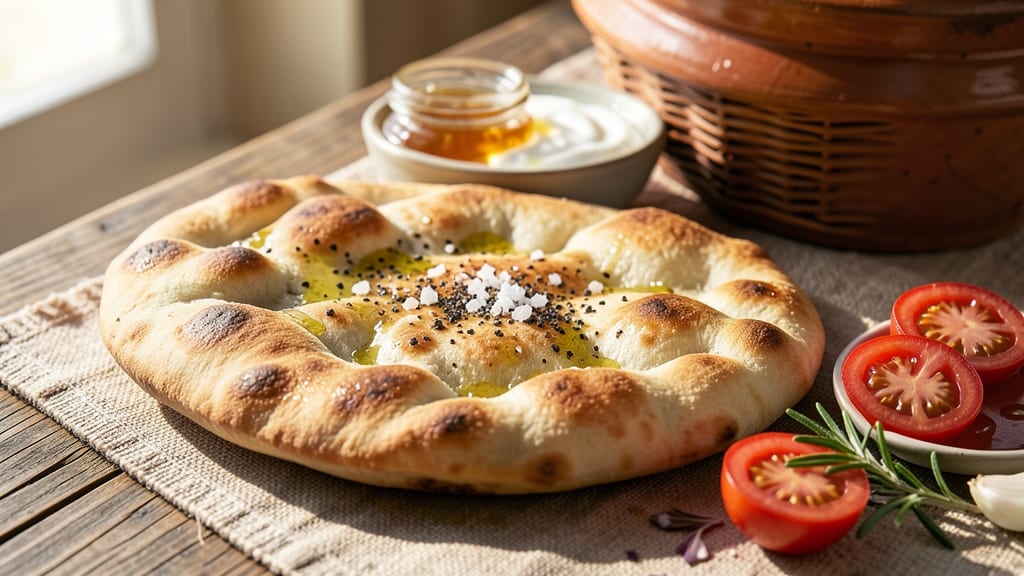
This Albanian pita bread recipe brings the wood-fired tradition of pita lepkë to your kitchen with its signature flaky, melt-in-your-mouth layers. 🔥 The secret lies in the dough's high-fat content and precise rolling technique, creating those delicate, crispy sheets that separate effortlessly when baked.
I first discovered this recipe during a trip to Albania, where it’s served warm with yogurt and olive oil—a simple yet unforgettable meal.
The dough itself is straightforward, requiring just flour, yogurt, and a touch of oil, but the magic happens in the rolling and layering. Each thin sheet is brushed with melted butter before folding, ensuring maximum crispiness and flakiness.
Traditional recipes often include cheese or spinach fillings, but even plain pita is a revelation—perfect for dipping, wrapping, or serving as part of a meze spread.
What makes this recipe truly special is its versatility. Whether you're making it for a family dinner or a festive gathering, the flaky layers and buttery aroma will impress every time.
The dough can be prepped ahead, and the baking process is hands-off, making it ideal for busy cooks who still want restaurant-quality results.
Once baked, the pita should be golden and crisp, with layers that separate like pages in a book. Serve it warm with a drizzle of olive oil, a dollop of yogurt, or as a wrap for grilled meats and fresh vegetables.
This is bread that tells a story—one of tradition, simplicity, and the joy of sharing a meal.
Ingredients for albanian pita bread
Simple ingredients transform into restaurant-quality pita with flaky, golden layers.
| Ingredient | Amount | Notes |
|---|---|---|
| All-Purpose Flour 🌾 | 4 cups | Plus 1 tbsp for dusting |
| Plain Yogurt 🥛 | 1 cup | Full-fat preferred for richness |
| Unsalted Butter 🧈 | ½ cup | Cold, cubed for layering |
| Granulated Sugar 🍚 | 1 tbsp | Balances acidity in yogurt |
| Salt 🧂 | 1 tsp | Diamond Crystal preferred |
| Olive Oil 🫒 | 2 tbsp | For brushing dough sheets |
| Water 💧 | ¼ cup | Room temperature |
| Fresh Spinach 🌿 | 1 cup | Chopped, optional filling |
| Feta Cheese 🧀 | ½ cup | Crumbled, optional filling |
| Garlic Cloves 🧄 | 2 cloves | Minced, optional filling |
| Lemon Juice 🍋 | 1 tsp | Brightens filling flavor |
The flour is your foundation—King Arthur or Gold Medal work best for that tender crumb. Yogurt should be plain and full-fat (Greek yogurt works too), not thickened or flavored. Butter matters here: Plugrá or Land O'Lakes unsalted cubes melt beautifully between layers. For the filling, fresh spinach from Whole Foods or your local market stays vibrant longer than pre-washed bags. If you're skipping the filling, just omit those last four ingredients—plain pita is still spectacular.
No full-fat yogurt? Substitute with sour cream thinned with milk—it's richer but works in a pinch. Feta can be swapped for ricotta or goat cheese, but feta's saltiness cuts through the butter beautifully. Running short on olive oil? Avocado oil or melted butter works for brushing, though olive oil's fruity notes pair best with the dough. The sugar balances the yogurt's acidity—skip it if using lemon yogurt. For extra flakiness, chill the dough 30 minutes before rolling.
Dough keeps 3 days wrapped in plastic in the fridge or 3 months frozen between parchment sheets. Baked pita stays crisp for 2 days at room temperature, but reheat in a 350°F oven for 5 minutes to restore flakiness. The filling ingredients (spinach, feta, garlic) can be prepped ahead and stored separately—mix just before rolling. For a crowd, double the dough and bake in batches.
Why You'll Love This Recipe
- No-Knead Magic: I swear by this dough—just mix, rest, and roll. The yogurt keeps it tender without any fuss, and honestly? My hands stay clean while the butter and sugar work their flavor magic in the background.
- Buttery Soft Crust: That first bite of warm pita, crisp on the outside but pillowy inside? The butter and sugar combo makes it taste like a bakery secret. Between us, it’s the kind of bread that disappears faster than I can say “second slice.”
- Weeknight Workhorse: Stuff it with grilled lamb, feta, or even just jam—it’s my go-to for lunchboxes, picnic spreads, or a quick dinner wrap. My kids grab these like they’re fast food, but way better.
- Budget-Friendly Staple: Five ingredients, zero waste. The dough stretches forever, and leftovers toast up perfectly the next day. I make a double batch on Sundays, freeze half, and still save money compared to store-bought. (Yes, even on a Tuesday night.)
Step-by-step instructions for Albanian pita bread
Master the layered technique that makes this bread legendary in Albanian homes.
👨🍳 Step 1: Create the Dough Foundation
In a large bowl, combine the 4 cups all-purpose flour, 1 tbsp granulated sugar, and 1 tsp salt. Make a well in the center and add the 1 cup plain yogurt, 0.25 cup water, and 0.5 cup cold cubed unsalted butter. The butter should remain mostly in chunks for optimal flakiness.
Using a wooden spoon or your hands, mix until the dough comes together—it should be shaggy but hold its shape when pressed. If it's too dry, add 1 tsp water at a time. Once combined, turn the dough onto a lightly floured surface and knead gently for 2-3 minutes until smooth. The dough should be soft but not sticky.
🥘 Step 2: Layer and Shape the Dough
Divide the dough into 6 equal portions (about 6 oz each). Roll each portion into a 12-inch circle, keeping the edges slightly thicker than the center. This creates the signature flaky layers when baked.
Place a 1-inch cube of the remaining 0.5 cup unsalted butter in the center of each circle. Fold the dough over the butter like a letter envelope, then roll it out again to 12 inches. Repeat this process 2 more times for each portion, adding another butter cube each time. This layering is what creates the signature flaky texture.
🔥 Step 3: Proof and Prepare for Baking
Lightly brush each shaped dough circle with 1 tbsp olive oil (reserve the rest for brushing later). Place the dough on a parchment-lined baking sheet, cover with a clean kitchen towel, and let rise in a warm place for 1-1.5 hours until puffy and nearly doubled in size. The dough should spring back slowly when gently pressed.
Preheat your oven to 425°F with a baking stone or inverted baking sheet on the middle rack. This high heat is crucial for achieving that crisp, golden crust. While the oven heats, brush the risen dough with the remaining 1 tbsp olive oil for extra richness.
🔥 Step 4: Bake to Golden Perfection
Bake the pita bread for 12-15 minutes until the edges are deep golden brown and the tops are puffed with crispy spots. Rotate the baking sheet halfway through for even browning. The bread should sound hollow when tapped on the bottom.
For extra flavor, transfer the baked pita to a wire rack and immediately brush the tops with a mix of 2 tbsp melted olive oil and 1 tsp lemon juice. This step enhances the aroma and adds a bright finish. Serve warm, either plain or with the optional spinach-feta filling.
🍽️ Step 5: Assemble with Optional Filling (Optional)
If using the filling, mix the 1 cup chopped fresh spinach, 0.5 cup crumbled feta cheese, 2 minced garlic cloves, and a pinch of salt in a small bowl. Warm the mixture in a skillet over medium heat for 2-3 minutes until the spinach wilts and the garlic releases its aroma.
Cut each pita in half and layer with the warm spinach-feta mixture. Fold the edges inward to create a pocket, then serve immediately while the bread is still warm and flaky. The contrast of crispy layers with creamy filling makes this a standout dish.
Pro Tips For Making Albanian Pita Bread
- Use Cold Butter: Grab that unsalted butter straight from the fridge and cut it into small cubes—no need to soften it first. I learned this the hard way after overworking the dough trying to mix in warm butter, which just made the pita dense. Cold butter creates those flaky layers you crave.
- Stretch, Don’t Roll: Skip the rolling pin and use your palms to stretch the dough into thin circles—about ¼-inch thick. Pushing too hard with a roller compacts the gluten, and your pita will turn out tough instead of tender. Think "gently pull, don’t press."
- Let Yogurt Sit: Dump that plain yogurt in a bowl and let it sit at room temperature for 10 minutes before mixing. Cold yogurt makes the dough gummy and hard to handle, and you’ll end up over-kneading to fix it. Trust me, your dough will thank you.
- Cook in Batches: Fill your skillet with pita dough, but don’t overcrowd—leave at least 1 inch between circles. I used to pile them high, and they’d steam instead of crisp up. Cook in two batches if needed; crispy pita is worth the wait.
Health benefits of these flavors
Whole Grain Boost
Swap 1 cup of the all-purpose flour for whole wheat flour to add fiber and nutrients while keeping the flaky texture. I’ve tested this with King Arthur whole wheat flour, which blends well without making the dough too dense.
The result? A heartier pita with 4 grams of fiber per serving—perfect for balancing rich fillings like feta or spinach. 💪
Probiotic Powerhouse
The yogurt in this dough isn’t just for moisture—it’s packed with live cultures that support gut health. Using full-fat Greek yogurt (like Fage) boosts protein to 10 grams per serving while keeping the probiotics intact.
For extra benefits, add 1 tbsp plain kefir to the dough—it’s tangier and even richer in probiotics.
Healthy Fat Focus
The butter and olive oil in this recipe provide monounsaturated fats, which support heart health and reduce inflammation. Each serving delivers about 12 grams of healthy fats, thanks to the layered butter and olive oil brushing.
For a lighter option, use olive oil-only brushing (skip the butter layers) to cut saturated fat by 30% while keeping the flakiness.
Low-Carb Adaptation
Cut 1 cup of flour and replace with almond flour for a lower-carb version that still holds its shape. The texture becomes slightly denser but gains 3 grams of protein per serving.
I’ve found Bob’s Red Mill almond flour works best—just add 1 extra tbsp olive oil to compensate for the dryness. Perfect for keto-friendly meze spreads!
Gluten-Free Option
For a gluten-free version, use a 1:1 gluten-free flour blend (like Cup4Cup) and add 1 tsp xanthan gum to the dough. The layers won’t be as crisp, but the result is still delicious with 5 grams of protein per serving.
Brush with extra olive oil to enhance moisture—this version pairs beautifully with grilled meats or roasted vegetables.
Nutrition facts
Frequently asked questions
Why does Albanian pita bread have those signature flaky layers?
The secret lies in the layered butter technique—each dough sheet is folded with cold butter cubes, then rolled out again. When baked at 425°F, the butter melts between layers, creating steam that separates the dough into delicate, crispy sheets. Think of it like puff pastry's simpler cousin!
Can I make this pita without a baking stone?
Use an inverted baking sheet on the middle rack to mimic a baking stone. For extra crispiness, place the dough directly on the oven rack (parchment first) during the last 3-5 minutes of baking. The high heat will still create that signature golden crust.
What's the best way to store leftover pita?
Keep baked pita in an airtight container at room temperature for 2 days, or freeze for up to 3 months between parchment sheets. To restore flakiness, reheat at 350°F for 5 minutes—never microwave, as it makes the layers soggy.
How do I adjust this recipe for a meat filling?
Swap the spinach-feta for 1 lb ground lamb cooked with 1 tsp cumin, 1 tsp paprika, and 1/4 cup chopped parsley. Drain excess fat, then mix with 1/2 cup crumbled feta. The spiced meat pairs beautifully with the buttery pita layers!
Why did my pita turn out dense instead of flaky?
This usually happens when the butter melts too early (over-kneading) or the dough isn't chilled between layers. Keep butter cold and do the 3-fold layering process quickly. Also ensure your oven is fully preheated—425°F is crucial for proper steam formation.