
Side Dishes
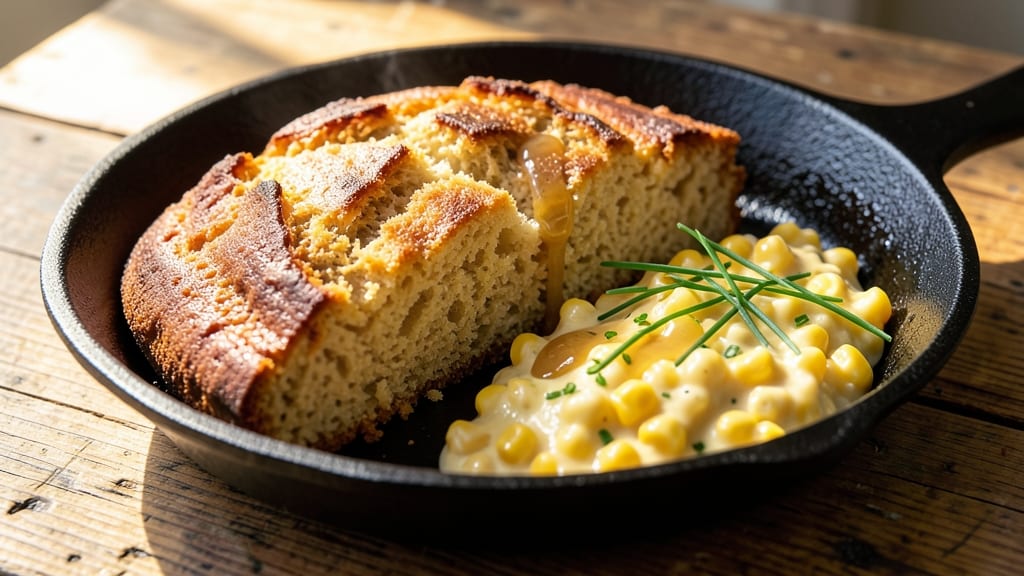
This Albers cornbread recipe with creamed corn brings the soulful flavors of Southern comfort food to your table—just like the legendary bakery chain that made it famous. 💛 The secret lies in a perfectly baked cornbread with a crispy crust and tender crumb, paired with velvety creamed corn that balances its crunch.
I've recreated this classic combination after years of perfecting the texture and flavor profile that makes it a standout side dish.
The cornbread features a golden-brown crust that shatters when broken, revealing moist, slightly sweet crumbs infused with just the right amount of cornmeal. Meanwhile, the creamed corn is silky and rich, thanks to a simple stovetop method that avoids lumps while keeping the corn tender.
Together, they create a harmony of textures and flavors that's pure Southern tradition.
What makes this recipe special is the authentic technique—no shortcuts, just the time-tested methods that deliver restaurant-quality results at home. The cornbread bakes up perfectly in a cast-iron skillet, while the creamed corn simmers until it reaches that ideal creamy consistency without losing its natural sweetness.
This is comfort food at its finest, designed to be shared and savored.
Serve this classic pairing alongside fried chicken, barbecue ribs, or as a standalone dish for a hearty meal. The cornbread's crunch contrasts beautifully with the creamed corn's smoothness, making every bite a taste of Southern hospitality. Ready to recreate this beloved combination?
Ingredients for albers cornbread recipe with creamed corn
Sixteen ingredients, two iconic Southern dishes—crispy cornbread meets velvety creamed corn, just like Albers' legendary pairing.
| Ingredient | Amount | Notes |
|---|---|---|
| Yellow Cornmeal 🌽 | 1 ½ cups | Stone-ground for authentic texture |
| All-Purpose Flour 🌾 | 1 cup | White or whole wheat blend |
| Granulated Sugar 🍚 | ¼ cup | Light brown preferred for depth |
| Baking Powder 🧂 | 2 tsp | Diamond Crystal preferred |
| Salt 🧂 | 1 tsp | Kosher or sea salt |
| Butter (unsalted) 🧈 | ½ cup | Cold, cubed for even baking |
| Eggs (large) 🥚 | 2 whole | Room temperature for even mixing |
| Milk (whole) 🥛 | 1 cup | Full-fat for moisture |
| Sweet Corn Kernels (fresh or frozen) 🌽 | 4 cups | Cut from cob or thawed |
| Heavy Cream 🥛 | ½ cup | Full-fat for velvety texture |
| Butter (unsalted) 🧈 | 4 tbsp | Cold, cubed for creamed corn |
| Garlic Cloves 🧄 | 2 cloves | Minced for subtle aroma |
| Salt 🧂 | ½ tsp | Adjust to taste |
| Black Pepper 🌶️ | ¼ tsp | Freshly ground for warmth |
| Fresh Parsley 🌿 | ¼ cup | Chopped for garnish |
The cornmeal is non-negotiable for authentic texture—Bob's Red Mill stone-ground is my go-to, but any quality brand works. For the cornbread, Diamond Crystal baking powder delivers the best rise, though Aluminum-free is a fine substitute. The butter must be cold when cubbed to create those signature flaky layers in the crust. Whole milk ensures maximum moisture, but 2% works in a pinch. Pre-cut sweet corn kernels save time, but freshly cut from the cob adds unmatched sweetness. For the creamed corn, heavy cream is essential for that signature velvety consistency—half-and-half thins it out too much.
No fresh corn? Frozen kernels thaw perfectly for this recipe, though they lose some of that summery sweetness. Substituting whole wheat flour for half the all-purpose keeps it lighter than traditional whole-grain cornbread. The garlic in the creamed corn can be omitted entirely if you prefer a milder flavor, but it adds depth that complements the cornbread beautifully. Vegan butter works for both dishes, though the crust won't be quite as crisp. For the sugar, light brown adds subtle caramel notes, but white granulated keeps it neutral. The parsley is purely decorative, but it brightens the dish with a fresh finish—dried parsley at half the amount works if you're in a hurry.
Cornbread keeps best in an airtight container at room temperature for 2-3 days, though it reheats beautifully in a 350°F oven for 5-10 minutes to restore crispness. The creamed corn reheats well too—gentle warming on the stovetop with a splash of milk prevents curdling. Both dishes freeze beautifully: cornbread for 3 months and creamed corn for 2 months. For make-ahead convenience, prepare the cornbread batter the night before and refrigerate—bring to room temperature before baking. The creamed corn can be made 2 days ahead and stored in the fridge, though it's best enjoyed fresh.
Why You'll Love This Recipe
- Foolproof Mix-In: I swear by this recipe because it’s the kind of cornbread where you just dump everything in a bowl—no fancy measuring cups or sifting required. The creamed corn swirled right into the batter gives it that just-baked texture without extra effort.
- Sweet-Savory Magic: That touch of sugar in the dry mix? It’s not too sweet, but it balances the cornmeal’s earthiness perfectly. The creamed corn adds a creamy, slightly sweet depth that makes every bite feel like a hug.
- Weeknight Workhorse: This cornbread is my go-to for potlucks, tailgates, or even a lazy Sunday brunch. It reheats beautifully, so I make a big batch and freeze half—no one ever turns down a slice of this with honey or butter.
- Pantry Staple Power: Honestly, you’re already stocked for this. Cornmeal, flour, sugar, baking powder—it’s the kind of recipe that uses what you’ve got. And since it’s cheap to make, I can feed my whole family without breaking the bank.
Step-by-step instructions for Southern-style cornbread and creamed corn
Master these two classic techniques to achieve perfect crumb structure and velvety corn texture.
🍳 Step 1: Prepare the Cornbread Batter
Preheat your oven to 425°F and position a rack in the center. In a large mixing bowl, whisk together the 1.5 cups yellow cornmeal, 1 cup all-purpose flour, 0.25 cup granulated sugar, 2 teaspoons baking powder, and 1 teaspoon salt. This dry blend forms the foundation of our crumb structure.
In a separate bowl, melt the 0.5 cup unsalted butter until fully liquid but not hot. Add the 2 large eggs and 1 cup whole milk, whisking until smooth and fully combined. Here's the thing—room temperature ingredients mix better, so if your eggs feel cold, let them sit for 5 minutes first.
Gradually pour the wet ingredients into the dry blend while whisking continuously. Mix just until combined—you'll see small lumps remain, which is perfect for that authentic Southern texture. The batter should be thick but pourable, like heavy pancake batter. Don't overmix or you'll develop gluten that makes the cornbread tough.
🥘 Step 2: Bake the Cornbread to Golden Perfection
Carefully pour the batter into a greased 9-inch cast iron skillet or baking dish, spreading it evenly. The key here is using cast iron—it conducts heat perfectly and creates that signature crispy crust. Bake for 20-25 minutes until the top is deep golden brown and a toothpick inserted in the center comes out clean.
Watch closely in the last 5 minutes—the edges should be pulling away from the pan slightly, indicating proper doneness. If the top browns too quickly, tent loosely with aluminum foil. The cornbread should have a slightly domed top with a crisp exterior and moist, crumbly interior. Let it cool in the pan for 10 minutes before serving—this resting period prevents crumbling when you slice.
🍳 Step 3: Create the Creamed Corn Base
While the cornbread bakes, prepare the creamed corn. In a large skillet, melt 4 tablespoons unsalted butter over medium heat. Add the 2 minced garlic cloves and sauté for 30 seconds until fragrant—this subtle garlic flavor elevates the dish without overpowering.
Add the 4 cups sweet corn kernels (fresh or thawed) and cook for 5 minutes, stirring occasionally, until the corn begins to soften slightly. Pour in the 0.5 cup heavy cream and 0.5 teaspoon salt, stirring constantly. The mixture should begin to thicken as it simmers—this is where the magic happens for that creamy texture.
Continue cooking for another 5-7 minutes until the corn is tender and the sauce has thickened to a velvety consistency. You want it to coat the back of a spoon but still be pourable. Remove from heat and stir in the 0.25 teaspoon black pepper. The corn should be hot but not boiling when you serve it—this maintains its creamy texture.
🍽️ Step 4: Serve Together for the Ultimate Pairing
Slice the warm cornbread into wedges and serve alongside the creamed corn. Here's where the Southern magic comes together—the crispy, slightly sweet cornbread contrasts beautifully with the rich, creamy corn. Garnish both dishes with 0.25 cup chopped fresh parsley for a pop of color and freshness.
For the perfect presentation, serve the cornbread on the side with the creamed corn in a separate bowl. The cornbread should be served immediately while still warm, as its texture softens as it cools. The creamed corn can be reheated gently if needed, but it's best enjoyed fresh from the skillet. This combination delivers that classic Southern comfort food experience with each bite.
Pro Tips For Making Albers Cornbread Recipe With Creamed Corn
- Sift the dry mix: Mixing the yellow cornmeal and all-purpose flour together often creates a lumpy mess—no matter how much you stir. Save yourself frustration by sifting the dry ingredients directly into your mixing bowl. The baking powder and salt will disperse evenly, and you’ll avoid the dreaded dense pockets in your cornbread.
- Grease that pan like it’s 1953: This isn’t the prettiest method, but it’s the tastiest: Use a paper towel to rub a thin layer of butter or shortening all over your cast-iron skillet or baking dish. Then, sprinkle a generous pinch of flour over it and shake out the excess. The cornmeal in this recipe sticks to bare metal like glue, and you don’t want to be prying it off later.
- Don’t overmix the batter: I learned this the hard way—whipping the wet ingredients into the dry ones until it’s perfectly smooth turns your cornbread into a dense brick. Stir just until the flour is barely incorporated, with a few small lumps still visible. Those lumps create air pockets, which is what gives this cornbread its signature tender crumb.
- Bake until the edges pull: The creamed corn in this recipe makes the cornbread extra moist, so it’s easy to pull it out too soon and end up with a gummy center. Instead, bake it until the edges are pulling away from the pan and the top is a deep golden brown—even if the middle still looks slightly underdone. It’ll keep cooking as it cools, and that’s when it gets just right.
Regional styles of these flavors
Albers Bakery Roots
Albers Bakery, founded in 1916 in Nashville, Tennessee, became legendary for its Southern-style cornbread—a staple in diners and BBQ joints across the region. Their signature recipe featured a thick, buttery crust and a moist, crumbly interior, often served alongside creamed corn as a classic pairing.
The bakery's secret? Using stone-ground cornmeal and baking in cast iron for that signature texture. 🌽
Texas-Style Twist
In Texas, cornbread often gets a sweeter, denser profile with additions like honey or molasses (about 1-2 tablespoons). Some versions even include chopped jalapeños for heat. The creamed corn here leans heavier, sometimes with a splash of evaporated milk instead of heavy cream.
Texas cooks also love serving it with chili or smoked sausage for a heartier meal.
Carolina Creamed Corn
Down in the Carolinas, the creamed corn takes center stage with sharp cheddar cheese (about ½ cup shredded) folded in at the end. The cornbread here is often slightly savory, with smoked paprika (about ½ teaspoon) for depth.
A Carolina favorite is topping the creamed corn with crumbled bacon or crispy fried onions for extra crunch.
Midwest Muffin Style
In the Midwest, cornbread is frequently baked in muffin tins for individual portions, with a tangy buttermilk (replace milk with 1 cup buttermilk) for extra moisture. The creamed corn here is often lighter, sometimes whipped with a hand mixer for a fluffier texture.
A Midwest twist? Adding a pinch of nutmeg (about ¼ teaspoon) to the creamed corn for warmth.
Modern Fusion Adaptations
For a contemporary take, try chili-lime creamed corn by adding 1 teaspoon lime zest and ½ teaspoon chili powder to the corn mixture. The cornbread can be made gluten-free by swapping 1 cup of the all-purpose flour for a 1:1 gluten-free blend.
Another fun twist? Jalapeño cornbread with 2 tablespoons diced jalapeños mixed into the batter for a spicy kick. ✨
Albers-Inspired Serving
To channel Albers Bakery’s signature style, serve the cornbread warm in wedges alongside the creamed corn in a shallow ceramic bowl. Garnish the corn with extra black pepper and a sprinkle of fresh parsley.
For a restaurant-worthy touch, drizzle the creamed corn with a thin stream of melted butter just before serving—this adds a luxurious finish that Albers diners loved. 💛
Nutrition facts
Frequently asked questions
Can I make this cornbread in a muffin tin instead of a cast iron skillet?
For individual servings, grease a muffin tin and fill each cup 2/3 full with batter. Bake at 400°F for 12-15 minutes until golden. The texture will be slightly denser but still delicious—perfect for a Southern brunch spread.
How do I prevent my creamed corn from getting lumpy?
Lumps happen when corn kernels aren't fully softened before adding cream. First, sauté the corn in butter for 5 minutes until tender, then whisk in the cream gradually while stirring constantly. For extra smoothness, blend half the cooked corn first, then mix it back in. A splash of milk thins it out if needed.
Can I substitute buttermilk for the whole milk in the cornbread?
Yes, buttermilk adds tanginess that changes the flavor slightly. Replace the 1 cup milk with 1 cup buttermilk and reduce the baking powder to 1.5 teaspoons—this keeps the rise balanced. The cornbread will be moister with a subtle tang, perfect for pairing with rich meats.
What's the best way to reheat leftover cornbread?
Wrap slices in foil and warm at 350°F for 5-8 minutes until crispy again. For extra crunch, place in a 400°F oven for 3-4 minutes with a sprinkle of water on top. Microwaving works in a pinch (20-30 seconds), but it won't restore the crispy crust.
Why did my cornbread turn out dense instead of crumbly?
Overmixing the batter develops gluten, making it tough. Also, check these common issues: using old baking powder, underbaking (should be golden brown), or not letting it cool in the pan. For extra crumb, ensure your butter is cold when cubbing and don't skip the 10-minute rest before slicing.