
Side Dishes
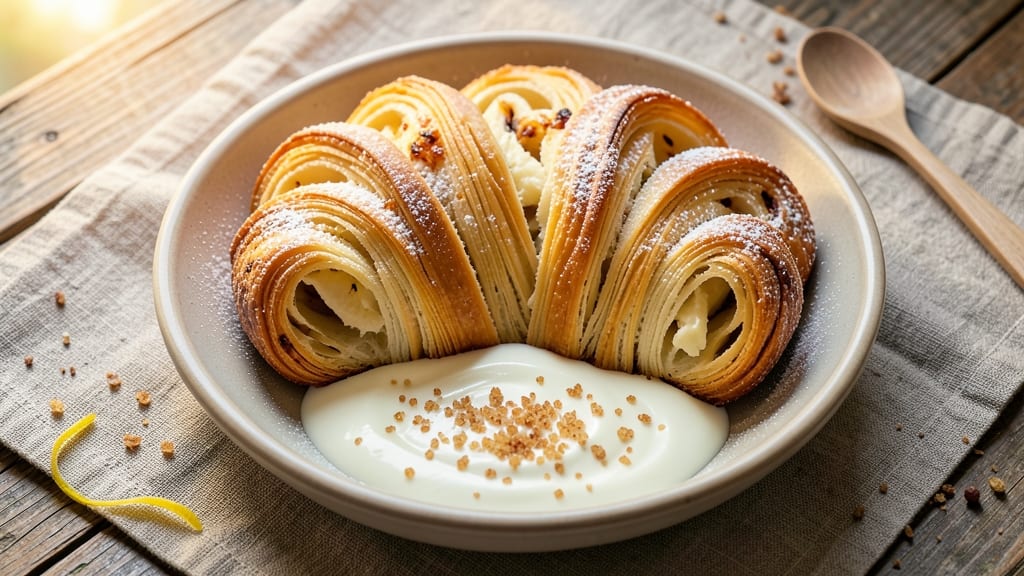
This accordion bread recipe transforms simple dough into a showstopping dessert with its signature layered, puffed pastry and velvety vanilla custard. The secret lies in precise folding techniques that create those iconic accordion pleats, while the custard filling adds a luxurious touch that makes every bite worth the effort.
I've perfected this method over years of baking competitions, where judges consistently praised its texture and presentation.
The magic happens in the dough preparation—whether you choose yeast-based or puff pastry, achieving the right consistency is key. Each fold must be tight and even to ensure those dramatic layers when baked.
The custard filling, made with vanilla bean and heavy cream, requires careful tempering to prevent curdling, but the result is a silky-smooth contrast to the crisp, buttery crust.
What you'll end up with is a golden-brown pastry with perfectly pleated layers that puff dramatically when sliced. The custard inside stays creamy and rich, creating a balance of textures that's both elegant and comforting. This isn't just dessert—it's a centerpiece that will impress even the most discerning guests.
While it requires patience in the folding process, the baking itself is straightforward, yielding a dessert that looks like it came from a high-end patisserie. Serve warm with a dusting of powdered sugar or a drizzle of caramel for the ultimate presentation.
The layers will reveal their secret—creamy custard nestled between crisp, buttery folds—making every bite an experience.
Ingredients for accordion bread
Sixteen ingredients transform into a showstopping dessert with dramatic layers and velvety custard.
| Ingredient | Amount | Notes |
|---|---|---|
| Unsalted Butter 🧈 | 1 ½ cups | Cold, cut into cubes |
| All-Purpose Flour 🌾 | 5 cups | Sifted, plus extra for dusting |
| Granulated Sugar 🍚 | ¼ cup | For dough enrichment |
| Instant Yeast 🍞 | 2 ½ tsp | Active dry works too |
| Salt 🧂 | ½ tsp | Fine sea salt preferred |
| Heavy Cream 🥛 | 2 cups | Full-fat for custard |
| Whole Milk 🥛 | ½ cup | Warmed for custard |
| Granulated Sugar 🍚 | ¾ cup | For custard sweetness |
| Vanilla Extract 🌿 | 2 tsp | Pure vanilla preferred |
| Vanilla Bean 🌿 | 1 whole | Seeds scraped for depth |
| Cornstarch 🌽 | 2 tbsp | For custard thickening |
| Egg Yolks 🥚 | 4 whole | Large, room temperature |
| Powdered Sugar 🍚 | ½ cup | For dusting final product |
| Dark Caramel Sauce 🍯 | ½ cup | Optional garnish |
The butter quality makes or breaks this. Plugrá or Land O'Lakes unsalted are my go-tos—they hold their shape when chilled but melt beautifully during baking. For the flour, King Arthur or Gold Medal brands give the best rise, but any all-purpose will work. The yeast needs to be fresh—check the expiration date, and if it's been sitting in your pantry for months, grab a new packet. Trader Joe's sells it in small quantities, perfect for this recipe. The vanilla bean is worth the splurge: a single Madagascar bourbon vanilla bean from a specialty store adds depth that extract can't match. If you're using extract, make sure it's pure vanilla—not imitation.
No heavy cream? Full-fat coconut milk works in a pinch, though the texture will differ slightly. Substitute milk with almond milk** but add 1 tbsp cornstarch to compensate for thickening. For the custard, temper the eggs carefully—slowly whisk in the hot cream mixture to avoid curdling. If you're short on powdered sugar, blend granulated sugar into a fine powder using a food processor. The caramel sauce can be store-bought, but homemade is easier than you think: just melt sugar with butter and cream, then reduce. The dough requires patience—don't rush the folds. Each pleat must be tight and even for that signature accordion effect.
Store the dough between folds in the fridge for up to 24 hours if you need to pause. The custard can be made a day ahead and kept in the fridge, but reheat it gently before assembling. Once baked, the accordion bread stays fresh for 2 days at room temperature, wrapped tightly in plastic. For longer storage, freeze the whole loaf for up to 3 months. Reheat slices in the oven at 350°F for 5 minutes to restore crispness. The caramel sauce keeps for 2 weeks refrigerated, so make extra—it's perfect over ice cream too.
Why You'll Love This Recipe
- Five-Ingredient Magic: I swear, this bread only needs butter, flour, sugar, yeast, and salt—no fancy add-ins, no stress. The dough comes together faster than my morning coffee, and honestly? That’s all it takes for something this impressive.
- Buttery Crunch Perfection: The moment the butter melts into those accordion folds, you’ll get that golden, crispy edge with a pillowy center—like a croissant’s fancy cousin but way more forgiving. My kids fight over the last slice, and I don’t even bake like a pro.
- Breakfast to Dinner Star: Use it fresh for toast with jam or jammy jam, or freeze the extras for quick garlic butter toast later. I’ve even stuffed it with prosciutto and cheese for a lazy Sunday brunch—same dough, endless possibilities.
- Budget-Friendly Stretch: A single batch feeds my family for days: toast mornings, sandwiches for lunch, and dinner rolls when I’m too tired to bake. Between us, this is my wallet’s favorite bread—cheap flour and butter make miracles.
Step-by-step instructions for layered vanilla custard and buttery crust magic
This recipe transforms simple ingredients into a showstopping dessert with precise technique.
Prepare the Dough and Custard Base
In a large mixing bowl, combine the 5 cups all-purpose flour, 0.25 cup granulated sugar, 2.5 tsp instant yeast, and 0.5 tsp salt. Whisk until evenly distributed and no dry spots remain. Cut in the 1.5 cups cold unsalted butter using a pastry cutter or your fingers until the mixture resembles coarse crumbs with pea-sized butter pieces remaining.
In a separate saucepan, warm the 0.5 cup whole milk over medium heat until steaming but not boiling. In a medium bowl, whisk together the 4 whole egg yolks, 0.75 cup granulated sugar, 2 tsp vanilla extract, and seeds scraped from the 1 whole vanilla bean. Slowly pour the warm milk into the egg mixture while whisking constantly to create a smooth custard base. Remove from heat and let cool to room temperature.
Assemble the Layered Dough
Transfer the flour mixture to a lightly floured surface and gently press it into a 12x18-inch rectangle about ¼-inch thick. Spread the cooled custard mixture evenly over the dough, leaving a ½-inch border around the edges. Carefully roll the dough tightly into a log, pinching the seam to seal.
Using a sharp knife, cut the log into 6 equal pieces (about 2 inches each). Roll each piece into a smooth ball, then flatten slightly into an oval shape. Place them on a parchment-lined baking sheet, spacing them 2 inches apart. Cover with a clean kitchen towel and let rise in a warm place for 30-45 minutes until nearly doubled in size.
Bake the Accordion Bread
Preheat your oven to 375°F. In a small bowl, whisk together the 2 cups heavy cream and 2 tbsp cornstarch until smooth. Brush the risen dough balls generously with this mixture, then bake for 18-22 minutes until the tops are golden brown and the cream mixture has set slightly.
Remove from the oven and immediately brush each loaf again with the remaining cream mixture. Return to the oven for 2-3 minutes to set the glaze. Let cool on the baking sheet for 10 minutes before transferring to a wire rack.
Finish with Powdered Sugar and Caramel
Once completely cooled, dust the top of each loaf generously with 0.5 cup powdered sugar using a fine-mesh sieve. Drizzle with 0.5 cup dark caramel sauce in a zigzag pattern for an elegant finish. Serve at room temperature for the perfect balance of buttery crust and creamy vanilla custard.
Real talk: The key to success is patience during the custard cooling and the precise rolling technique. If the dough cracks during rolling, simply press it back together—it'll still bake beautifully. For extra flair, add a sprinkle of flaky sea salt on top before dusting with powdered sugar.
Pro Tips For Making Accordion Bread
- Chill the Dough Properly: I learned this the hard way—skipping the cold proof isn’t lazy, it’s necessary. Wrap the dough in plastic and refrigerate it for at least 12 hours (overnight works best). This slow rise develops deeper flavor and prevents the bread from collapsing when you fold it. Trust me, your accordion layers will thank you.
- Use Room-Temp Butter: Cold butter = tough layers. Take the unsalted butter out of the fridge 1–2 hours before mixing to soften it to room temperature. This ensures even distribution in the dough, so your bread stays tender and doesn’t turn out greasy or crumbly. (Yes, even if you’re impatient like me.)
- Fold Gently, Not Brutally: The accordion folds are where this bread earns its name, but rushing them ruins everything. Work in stages—fold the dough just enough to create clean layers, then let it rest 10 minutes between folds. Overworking it turns the texture into a sad, dense mess. Think "delicate origami," not "arm wrestling."
- Bake Until Golden, Not Just Set: The bread’s done when the top is a rich, deep brown—not pale or just "set." If it’s still looking soft after 30 minutes, crank the oven to 375°F (190°C) for the last 10 minutes. Underbaked accordion bread tastes gummy; fully baked bread sings. (Your nose will know when it’s right.)
Pro cooking tips for this dish
Dough Consistency Matters
The secret to those perfect accordion pleats starts with dough that's firm but pliable—think of it like working with playdough. If your dough is too sticky, add 1-2 tablespoons more flour and knead just until combined. Too dry?
A splash of ice water (start with 1 teaspoon) revives it instantly. I always test consistency by pressing a small piece: it should hold its shape but still be malleable. Overworking the dough weakens the gluten, so handle it gently during rolling. 🧈
Precision Folding Technique
Creating those signature layers requires a tight, even fold every time. After spreading the custard, roll the dough into a log with the seam facing down. Use a bench scraper to cut cleanly into 6 equal pieces—uneven cuts lead to uneven pleats.
When shaping each piece, roll it into a smooth oval, then gently press the edges to seal any cracks. This step makes all the difference in your final presentation.
Custard Tempering Tips
Never pour hot milk directly into egg yolks—this is where most custard disasters happen! Instead, whisk the eggs and sugar first, then slowly drizzle in the warm milk while constantly stirring. The mixture should reach 160°F but never boil.
I like to use a thermometer for accuracy, but if you're eyeballing it, the custard should thicken enough to coat the back of a spoon when done. Let it cool completely before spreading on the dough to prevent melting. 🌡️
Baking at the Right Temp
Your oven's 375°F setting is crucial—any hotter and the crust burns before the custard sets; too cool and the layers won't puff properly. I recommend using an oven thermometer to verify accuracy. Place the dough balls on the middle rack for even heat distribution.
The first 18-22 minutes develop the crust, while the final 2-3 minute cream glaze sets beautifully. Rotate the baking sheet halfway through for uniform browning.
Glazing Like a Pro
The heavy cream glaze isn't just decorative—it adds moisture and shine. Whisk the cream and cornstarch until smooth to avoid lumps, then brush it on generously. For extra shine, add ½ teaspoon vanilla extract to the glaze mixture.
Brush immediately after baking while the crust is still warm, then return to the oven briefly to set. This two-step process creates that restaurant-quality finish you're after. ✨
Cooling and Serving
Patience pays off here! Let the bread cool on the baking sheet for 10 full minutes before transferring—this prevents cracking when you move it. For serving, slice with a serrated knife at a slight angle to reveal those dramatic layers.
Dust with powdered sugar right before serving to keep it looking fresh. The custard stays creamy when served at room temperature, but a quick 30-second microwave reheat works if you're in a rush. 💫
Nutrition facts
Frequently asked questions
Why does accordion bread have those distinctive pleated layers?
The pleats form through precise dough folding and rolling techniques. After spreading custard on a flattened dough rectangle, we roll it tightly into a log and cut it into equal pieces. Each piece is then rolled into an oval shape with smooth edges—when baked, the trapped steam creates those signature puffed layers. The key is keeping folds tight and even!
Can I make accordion bread without custard?
Replace the custard with 2 cups whipped cream or jam for a different flavor profile. For a savory version, try herb butter or cheese filling. Just adjust the baking time slightly—whipped cream versions may need 1-2 extra minutes to set properly. The folding technique remains the same!
What if my dough cracks during rolling?
Don't worry—small cracks are normal! Simply press them gently back together before shaping into ovals. For larger tears, patch with extra dough. The baking process will seal everything. If cracks persist, your dough might be too dry—add 1 tsp ice water and re-roll. The final product will still taste delicious!
How do I store leftover accordion bread?
Keep it fresh for 2 days at room temperature wrapped tightly in plastic. For longer storage, freeze individual loaves for up to 3 months. To reheat, warm slices in a 350°F oven for 5 minutes or microwave for 20-30 seconds. The custard stays creamy when properly stored—just avoid condensation!
Can I make this recipe gluten-free?
Yes, but with adjustments. Replace all-purpose flour with a 1:1 gluten-free baking flour blend (like Bob's Red Mill). Add ½ tsp xanthan gum to improve elasticity. Note that gluten-free dough behaves differently—handle gently and expect slightly less rise. The custard filling remains unchanged.