
Side Dishes
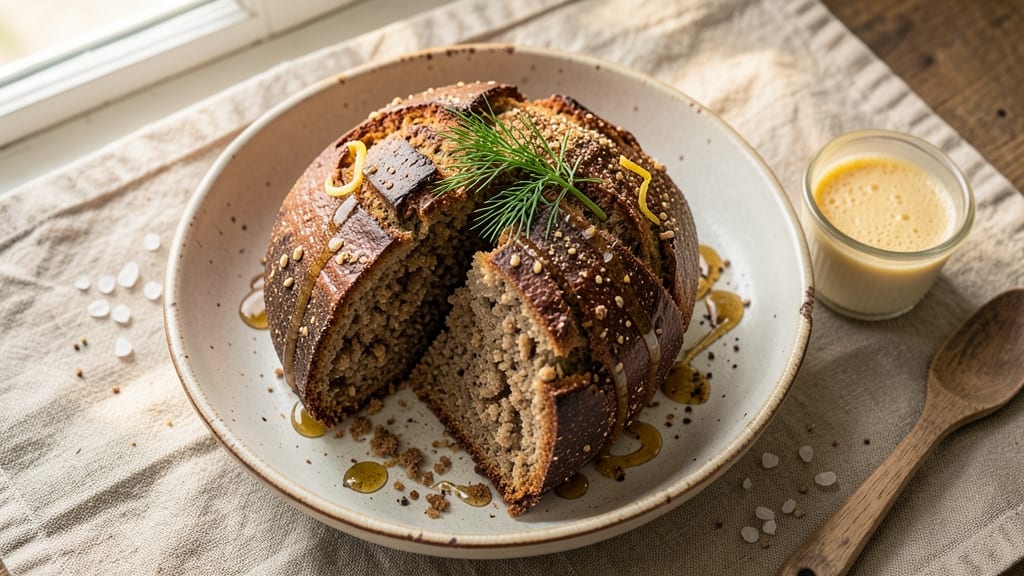
This 50 rye bread recipe delivers the perfect balance of deeply savory crust and open, airy crumb—a texture and flavor that elevates any meal. The secret lies in a long fermentation that develops complex malt notes and a high hydration dough that creates that signature open crumb structure.
Unlike quick breads, this recipe builds flavor through time, rewarding patience with a loaf that tastes even better the next day.
What sets this rye bread apart is the combination of dark rye flour and whole grains, which contribute a robust, slightly tangy flavor that pairs beautifully with butter, smoked fish, or sharp cheeses.
The recipe includes both traditional sour dough methods for authentic depth and modern yeast shortcuts for predictable results—giving you flexibility based on your experience level. Whether you're baking for a special occasion or simply craving homemade bread, this loaf delivers restaurant-quality texture with minimal fuss.
The crust develops a deep, caramelized color with a satisfying crunch, while the interior remains soft and open, perfect for slicing thick or using in sandwiches. The dough requires minimal kneading and a cool fermentation (overnight in the fridge), making it ideal for hands-off baking.
By the time you pull it from the oven, your kitchen will smell like a European bakery, and every slice will taste like it.
Serve warm with cultured butter, pair with smoked salmon and cream cheese, or use as the base for classic Reuben sandwiches.
This rye bread is versatile enough for everyday meals but impressive enough for guests—proof that great bread doesn’t require complicated techniques, just time and attention to detail. Let’s get started on mastering this loaf.
Ingredients for 50 rye bread
These twelve ingredients transform into a loaf with a deeply savory crust and signature open crumb magic.
| Ingredient | Amount | Notes |
|---|---|---|
| Dark Rye Flour 🌾 | 3 cups | High-extraction for robust flavor |
| All-Purpose Flour 🌾 | 1 cup | For structural balance |
| Active Dry Yeast 🍞 | ¼ oz | Or 2¼ tsp for fresh yeast |
| Granulated Sugar 🍬 | ½ tbsp | Feeds yeast fermentation |
| Salt 🧂 | 2 tsp | Diamond Crystal preferred |
| Whole Wheat Flour 🌾 | ½ cup | For added texture and nuttiness |
| Rolled Oats 🥣 | ½ cup | Old-fashioned, toasted lightly |
| Malt Powder 🍺 | 1 tbsp | Enhances malt flavor profile |
| Cold Water 💧 | 1 ½ cups | Room temp for activation |
| Honey 🍯 | 1 tbsp | For subtle sweetness |
| Unsalted Butter 🧈 | ¼ cup | Cold, cubed for dough enrichment |
| Cornmeal 🌽 | ¼ cup | For dusting and crust texture |
The dark rye flour is non-negotiable here—King Arthur or Bob's Red Mill deliver the robust malt flavor you're after. If you're new to rye, grab the high-extraction version from a well-stocked grocery store's baking aisle, not the light rye that's just wheat with caramel coloring. The rolled oats? Toast them lightly in a dry pan first—this deepens their nuttiness and prevents a gummy texture. For the yeast, King Arthur brand is my go-to, but any active dry yeast will work as long as it's fresh (check the date—it expires!). The malt powder adds that authentic European bakery aroma; if you can't find it, malted barley flour works in a pinch, though the flavor won't be identical.
No honey? Maple syrup at half the amount keeps things vegan-friendly while adding similar depth. Running short on butter? Coconut oil or extra olive oil maintains moisture, though the flavor will shift slightly. The rolled oats can be swapped for crushed graham crackers if you're in a bind, but you'll lose that toasty crunch. For the flours, King Arthur all-purpose is my standard, but Gold Medal works just as well. If you're feeling ambitious, spelt flour can replace up to half the all-purpose for a more ancient-grain profile. The sugar can be omitted entirely if you prefer a more rustic, unsweetened loaf—just know the crust will be slightly less caramelized.
This dough needs time—at least 12 hours in the fridge for optimal flavor development. Store the shaped loaf in a paper bag at room temperature for up to 3 days, or freeze for up to 3 months. For best results, slice when cold—this prevents the crumb from getting gummy. The crust stays crisp for about 2 days if wrapped in foil, but it's best enjoyed fresh. Double the recipe if you're planning to freeze portions; individual loaves freeze beautifully and thaw overnight on the counter.
Why You'll Love This Recipe
- No-Knead Magic: I swear by this—just mix the dark rye flour with all-purpose, sprinkle in yeast and sugar, and let the dough rise while you do anything else. The dark rye gives it that deep, earthy backbone without requiring a stand mixer or your undivided attention.
- Tangy Crust, Soft Core: That dark rye flour? It’s the star. The crust gets this addictive, slightly crispy bite, while the inside stays tender—like a hug for your sandwich. Honestly, I’ve had people ask if I baked it twice.
- Weeknight Workhorse: Breakfast toast, lunch sandwiches, dinner rolls—this bread does it all. I keep a loaf in the freezer for lazy mornings or last-minute guests. The yeast and sugar combo keeps it fresh longer than store-bought, too.
- Pantry Stretch: Between us, dark rye flour is cheaper than you’d think, and it makes two loaves with minimal extra cost. Plus, the salt and sugar balance means you can use it for everything from open-faced dinners to budget-friendly charcuterie boards.
Step-by-step instructions for deeply savory crust with open crumb magic
Let's craft this rustic rye masterpiece—where bold flavor meets perfect texture.
Activate the Yeast and Prepare the Dough Base
In a small bowl, combine the 1.5 cups cold water, 0.25 oz active dry yeast, 0.5 tbsp granulated sugar, and 1 tbsp honey. Let this sit for 10-15 minutes until it becomes frothy and bubbly—this confirms your yeast is alive and ready to work. I like to test it by gently poking the surface with my finger; if it springs back slowly, it's active.
In a large mixing bowl, whisk together the 3 cups dark rye flour, 1 cup all-purpose flour, 0.5 cup whole wheat flour, 2 tsp salt, and 1 tbsp malt powder. The rye flour will be coarse and dense compared to all-purpose, so don't be surprised if it looks different. This blend creates the signature dense yet open crumb structure we're after.
Combine Wet and Dry Ingredients
Pour the activated yeast mixture into the dry ingredients and stir with a wooden spoon until a shaggy dough forms. The rye flour will absorb moisture slowly, so be patient—this isn't like working with all-purpose flour where things come together quickly. Add the 0.5 cup rolled oats and 0.25 cup cold cubed butter to the bowl and mix until the butter begins to incorporate.
At this point, the dough will be sticky and may not look like traditional bread dough. That's normal! The high rye content makes it behave differently. Cover the bowl with a damp kitchen towel and let it rest for 15 minutes. This allows the flour to hydrate properly and makes the next steps easier.
Develop the Dough with Wet Hands
After the rest, wet your hands thoroughly with water and begin kneading the dough directly in the bowl. The extra moisture prevents sticking. Work the dough for 8-10 minutes until it becomes smooth and elastic. You'll notice it's stickier than wheat bread dough, so don't be tempted to add more flour—this is what gives rye its signature texture.
When the dough passes the windowpane test (stretch a small piece and it shouldn't tear immediately), it's ready. Lightly oil a large bowl, place the dough inside, and cover with plastic wrap. Let it rise in a warm spot for 1-2 hours, or until it has nearly doubled in size. The rye dough rises more slowly than wheat dough, so be patient—rushing this step results in a dense loaf.
Shape and Proof the Loaf
Turn the dough onto a lightly floured surface and gently shape it into a round boule (ball shape). The rye dough is fragile, so handle it with care—don't press too hard or you'll deflate it. Place the shaped dough seam-side down in a greased 9x5-inch loaf pan and cover again with plastic wrap.
Let the dough proof for another 1-2 hours until it rises about 1 inch above the pan. The edges should look slightly puffy, and when you gently press the center, it should spring back slowly. Preheat your oven to 375°F during the final 30 minutes of proofing—this ensures the oven is ready when you're.
Bake to Golden Perfection
Before baking, score the top of the loaf with a sharp knife in a crosshatch pattern. This allows steam to escape and creates that beautiful open crumb we're after. Sprinkle the 0.25 cup cornmeal evenly over the top—this adds texture and prevents the crust from becoming too dark.
Bake for 45-50 minutes until the crust is deep golden brown and sounds hollow when tapped on the bottom. The internal temperature should reach 190-200°F when measured with an instant-read thermometer. If the top browns too quickly, tent loosely with foil after 30 minutes to prevent burning while the interior finishes baking.
Remove from the oven and let cool in the pan for 10 minutes, then transfer to a wire rack. The bread will continue to firm up as it cools, developing that satisfying crust. Slice when completely cooled—this prevents the crumb from tearing. Each slice should reveal an open, airy texture with a dense yet tender crumb, and that deep, savory flavor that makes rye bread so special.
Pro Tips For Making 50 Rye Bread
- WEIGH THE FLOUR: Mixing dark rye and all-purpose flour by volume leads to dense, uneven bread—this recipe demands precision. Use a kitchen scale for both flours: 350g dark rye and 150g all-purpose. The dark rye absorbs more water, and skipping the scale means guessing, which ruins texture.
- HYDRATE THE YEAST PROPERLY: Active dry yeast needs warmth to wake up, but this recipe’s rye-heavy dough can drown it if you’re lazy. Mix the yeast with just the warm water (110°F/43°C) and 1 tsp sugar first, then let it foam for 5–10 minutes before adding dry ingredients. Cold water kills it; waiting too long makes it sluggish—both sabotage rise.
- SALT THE WATER, NOT THE DOUGH: Adding all the salt to the dry ingredients creates clumps that yeast can’t escape, slowing fermentation. Instead, dissolve the full 2 tsp salt in the water first—it disperses evenly and seasons the dough from the start. (Yes, even if the recipe says “add to flour,” I’ve tried both ways.)
- STEAM THE FIRST 20 MINUTES: Rye bread’s crust turns tough if baked too dry. After scoring, cover the loaf with a damp towel or foil and bake at 375°F (190°C) for 20 minutes. The steam keeps the crumb soft while the crust sets—no soggy bottom, no brick-like exterior. (I learned this after my first loaf cracked open like a dried riverbed.)
Storing and reheating this dish
Room Temperature Storage
Store your rye bread at room temperature in a paper bag or wrapped in a clean kitchen towel to maintain freshness for up to 3 days. The paper bag helps trap moisture while allowing the crust to stay crisp.
I like to place it on the counter away from direct sunlight—this prevents the crust from becoming soggy while keeping the interior soft. 🌾
Refrigerator Preservation
For longer storage, wrap the cooled loaf tightly in plastic wrap or place it in an airtight container. Refrigeration extends freshness to 5-7 days, though the crust may lose some crispness over time.
To revive stale bread, preheat your oven to 300°F for 5 minutes and warm the slices for 2-3 minutes until toasted.
Freezing for Long-Term
Slice the bread before freezing for convenience—wrap individual slices in parchment paper and place them in a freezer bag with all air removed. This method keeps slices fresh for up to 3 months.
For whole loaves, wrap tightly in plastic wrap followed by foil to prevent freezer burn. Thaw overnight at room temperature or warm directly in the oven at 350°F for 10-15 minutes.
Reheating Methods
For a crispy crust, reheat slices in a skillet over medium heat for 1-2 minutes per side until golden brown. The skillet method mimics fresh bread texture perfectly. For a quicker option, use the toaster or toaster oven set to 375°F for 2-3 minutes—this works well for large batches.
Reviving Stale Bread
If your rye bread loses its crispness, don't toss it! Place slices on a baking sheet and broil for 2-3 minutes until toasted. This restores the crust while keeping the interior moist.
For extra flavor, brush slices with melted butter before broiling—it adds a delicious richness that pairs perfectly with this hearty bread. ✨
Nutrition facts
Frequently asked questions
Why does my rye bread turn out dense instead of open and airy?
Rye dough behaves differently than wheat dough—it needs time and patience! The high rye content absorbs moisture slowly, so don't rush fermentation. Let it rise for the full 1-2 hours at room temperature, then refrigerate overnight for deeper flavor and better crumb. Also, avoid over-kneading, which can make the dough tough. The sticky texture is normal—just wet your hands when handling it!
Can I substitute dark rye flour with pumpernickel?
Yes, you can use pumpernickel flour as a 1:1 substitute, but expect a slightly darker, sweeter flavor with less tang. Pumpernickel is often mixed with molasses, which adds richness. For a more authentic rye taste, stick with high-extraction dark rye flour. If you're using pumpernickel, reduce the honey to 0.5 tbsp to balance the sweetness.
How do I know when the dough is fully proofed?
Look for visual and tactile cues: The dough should rise about 1 inch above the pan and look slightly puffy at the edges. Gently press the center—it should spring back slowly (not immediately). For rye, the edges may look less "bubbly" than wheat dough, but the overall volume increase is your best indicator. If unsure, wait another 30 minutes—better to overproof slightly than underproof!
Why does my rye bread crust burn before the inside is cooked?
Rye bread's high moisture content makes the crust brown faster than the interior bakes. To fix this, tent loosely with foil after 30 minutes to slow browning while allowing steam to escape. Also, preheat your oven to 375°F and use a dark metal or glass pan—these conduct heat better and help even baking. For extra insurance, bake at 350°F for the first 20 minutes, then increase to 375°F.
Can I make this rye bread without a loaf pan?
Shape the dough into a boule (round loaf) or batard (oval) and bake on a parchment-lined baking sheet. Brush the top with water before baking for a crispier crust. Bake at 375°F for 40-45 minutes, rotating the pan halfway for even browning. For a rustic look, score the top with a lame or sharp knife before baking—this creates beautiful steam vents and a more artisanal finish.